Mr. Speaker, by direction of the Committee on Rules, I call up House Resolution 1254 and ask for its immediate consideration. Mr. Speaker, for the purpose of debate only, I yield the customary 30…
Mr. Speaker, by direction of the Committee on Rules, I call up House Resolution 1254 and ask for its immediate consideration.
Mr. Speaker, for the purpose of debate only, I yield the customary 30 minutes to the gentleman from Texas (Mr. Burgess), pending which I yield myself such time as I may consume. During consideration of this resolution, all time yielded is for the purpose of debate only.
General Leave
Mr. Speaker, I ask unanimous consent that all Members may have 5 legislative days in which to revise and extend their remarks.
Mr. Speaker, I yield myself such time as I may consume.
Mr. Speaker, the Rules Committee met and reported a rule, House Resolution 1254, which provides for consideration of H.R. 3771, the South Asian Heart Health Awareness and Research Act, under a structured rule. It provides 1 hour of debate, equally divided and controlled by the chair and the ranking minority member of the Committee on Energy and Commerce, making in order one amendment, and provides one motion to recommit.
The rule also provides for consideration of H.R. 5118, the Wildfire Response and Drought Resiliency Act, under a structured rule. The rule self-executes a manager's amendment from Chairman Grijalva, makes in order three amendments, provides 1 hour of debate, equally divided and controlled by the chair and the ranking minority member of the Committee on Natural Resources, and provides one motion to recommit.
The rule also provides for consideration of H.R. 6929, the Susan Muffley Act, under a structured rule. The rule self-executes a manager's amendment from Chairman Neal, makes in order one amendment, provides 1 hour of debate, equally divided and controlled by the chair and the ranking minority member of the Committee on Ways and Means, and provides one motion to recommit.
Finally, the rule provides the majority leader or his designee the ability to en bloc requested roll call votes on suspension bills considered on July 26 through July 29. That authority lasts through July 29.
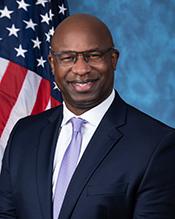
Mr. Speaker, I am grateful to have the opportunity to argue the rule today on three important bills. The first, as I mentioned, is H.R. 3771, which has been brought forward by our colleague from Washington (Ms. Jayapal). We are grateful to her for her leadership on this particular bill, the South Asian Heart Awareness and Research Act.
As you may know, Mr. Speaker, heart disease is the leading cause of death in the United States. South Asian Americans are four times more likely to be at risk of developing heart disease than the general population. Congress must invest in strategies to reverse that deadly trend.
This legislation establishes a grant program to provide for community groups involved in South Asian heart health promotion. The bill also supports health research by authorizing the Secretary of Health and Human Services to conduct research related to cardiovascular disease, type 2 diabetes, and other heart-related diseases among various populations.
Again, I thank Representatives Jayapal and Wilson for not only raising awareness about the risk factors for heart disease but also ensuring that those living with heart disease receive the care, the treatment, and the support that they need.
The rule also provides for consideration of a second bill, H.R. 6929, the Susan Muffley Act of 2022, brought forward by our distinguished colleague from Michigan (Mr. Kildee). We are very grateful to Mr. Kildee for his leadership on this particular bill and the clarion call that he has offered year after year in fighting for relief for those in the manufacturing sector.
As the Speaker may know, the economic downturn that started in December 2007 significantly impacted the manufacturing sector throughout the United States, including Michigan. During this time, the auto industry underwent a major restructuring with the assistance of the Obama administration through the Presidential Task Force on the Auto Industry. General Motors and Chrysler required financial assistance from the Federal Government at that time.
The Delphi Corporation, which Mr. Kildee will explain in greater detail, formerly a wholly owned subsidiary of General Motors, was a major supplier of auto parts and components in the industry. In 2005, Delphi declared bankruptcy due to a downturn in sales. During their reorganization, General Motors agreed to assist Delphi by assuming some of the company's pension liabilities.
General Motors backed out of that deal in July 2009, and the pension plans were terminated by the U.S. Pension Benefit Guaranty Corporation, a government corporation that insures the pension benefits of workers in the private sector.
The Federal Government cut retirement benefits by as much as 70 percent,
Mr. Speaker, for more than 20,000 salaried retirees.
The Susan Muffley Act, brought forward by Mr. Kildee, will right this wrong. The bill is named after Susan Muffley, whose husband was one of the 20,000 retirees who saw their benefits reduced when the plan was terminated. She joined the Delphi Salaried Retirees Association, and she became part of the core leadership of that group, which fought to restore their pension benefits.
Mr. Speaker, fundamentally, this is a pretty simple bill. If you work hard and play by the rules, you should be able to retire with dignity in America.
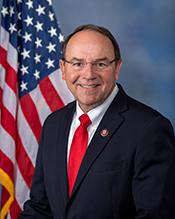
These hardworking retirees have waited too long to receive the benefits that they earned, but thanks to Representatives Kildee and Turner, and with the support of this Chamber, they won't have to wait much longer.
The rule provides for consideration of one final bill, my bill, H.R. 5118, the Wildfire Response and Drought Resiliency Act.
Catastrophic wildfires and drought, exacerbated by the climate crisis, are wreaking havoc on much of the Western United States and across many regions of our country, impacting millions of Americans, including in my State, the great State of Colorado.
This crisis is harming ecosystems, impacting water supplies and food production, and risking the well-being and the livelihood of countless families.
The Wildfire Response and Drought Resiliency Act represents a major step by House Democrats to address the dual crises of wildfire and drought plaguing communities across the country, communities like those in my district, Colorado's Second Congressional District.
The legislation makes specific strategic and targeted investments to protect communities from catastrophic wildfires, reduce risks of future fires, and help our firefighters currently fighting these flames. Similarly, the bill improves drought resiliency by investing in water projects with rapid timelines, modernizing data and technology, and providing near-term drought response.
The package builds on the investments that were made as part of the bipartisan infrastructure law that this Chamber passed last year and supports a whole-of-government commitment to addressing the climate threats that are already impacting millions of Americans.
This bill is a critically important bill, and if I might, I will offer one final story to explain why.
On December 30 of last year, the Marshall fire swept through the city of Louisville, the town of Superior, and unincorporated areas of Boulder County, all incredible communities that I have the privilege of representing here in the United States Congress. That fire destroyed and damaged more than 1,000 homes in a single night. It became the most destructive wildfire that our State has ever known.
Over the last several months, I have heard countless concerns from Coloradans across our great State, including in my district, about future wildfires, about our ability to recover, about our ability to build resiliency and tackle the drought that we are experiencing.
This bill meets those needs. It meets the needs of the American West, and that is why I am proud to support the bill and to present this evening on the rule for consideration of the same.
Mr. Speaker, I reserve the balance of my time.
Mr. Speaker, before I yield to Mr. Kildee, let me just respond a bit to my distinguished colleague from the State of Texas to say, first, I know he made reference to priorities vis-a-vis the appropriations legislation.
I think that most Americans who are watching these proceedings tonight would agree that our work to help Americans stay healthy is an important priority, that our work to increase firefighter pay for those brave firefighters that are sacrificing so much to keep our communities safe, that that is an important priority; that righting a wrong that unjustly impacted tens of thousands of hardworking American families, workers in Michigan and Ohio, that that is an important priority.
I will say with respect to the wildfire bill and the gentleman's comments regarding forest management, I agree with regard to his praise for the Forest Service's 10-year national wildfire plan. That plan was funded through the bipartisan infrastructure bill which, unfortunately, so many of my colleagues on the other side of the aisle opposed.
But for House Democrats getting that bill done, the wildfire plan that my friend praises, would not have been enacted by the Forest Service. The good news, Mr. Speaker, is that my colleague has another opportunity to vote on a bill that would authorize additional projects that he and so many of my colleagues on the other side of the aisle apparently support.
That bill is the bill that we are debating this week. That bill is the Wildfire Response and Drought Resiliency Act because it includes an authorization for funding of additional projects so the Forest Service can continue doing the important work that it is doing in Colorado, Idaho, Utah, Arizona, and across the Western United States.
Mr. Speaker, I yield 3 minutes to the distinguished gentleman from Michigan (Mr. Kildee).
Mr. Speaker, I yield myself such time as I may consume.
I will yield to my distinguished colleague from Colorado in just a moment, but before I do, I would be remiss if I didn't say that I heard the comment that my distinguished colleague from Texas made earlier with great interest regarding the supposed partisanship of the three bills that we are considering today under this rule.
I think it is important for both the Speaker and the American people, those who are watching, to perhaps clarify what it is precisely that we are debating this evening and what we will be debating this week.
Just as a reminder, again, a bill to help Americans stay healthy; a bill to right a wrong that was generated through the bankruptcy of General Motors that impacted hundreds of thousands of Americans, hardworking families in Michigan, Ohio, Pennsylvania, and across our country; and addressing the scourge of wildfires across the United States, including by increasing the pay for our Federal wildland firefighters. That is what these three bills that we are going to be considering this week and that are part of this structured rule are all about.
I have to say to the gentleman from New York, whom I have great respect for, that I say thank you to him for supporting one of these bills, H.R. 6929, the bill brought forward by Mr. Kildee. I was a bit surprised when the gentleman from Texas said that these proposals were not bipartisan, when, in fact, H.R. 6929 is supported by many of my colleagues from the other side of the aisle and led by Mr. Turner of Ohio.
I was just as surprised when he described the bills in that fashion, since H.R. 3771 is also co-led by a Republican member, Mr. Fitzpatrick of Pennsylvania.
I was just as surprised when he characterized our wildfire bill in that fashion, given that Mr. LaMalfa and Mr. Moore have two bills included within that omnibus package.
These are bipartisan solutions in my view and in the view of many of my colleagues, and it is important that we proceed to debating them on the merits, which is precisely why I encourage my colleagues to vote for the rule.
Mr. Speaker, I yield 3 minutes to the gentleman from Colorado (Mr. Perlmutter), a distinguished member of the Rules Committee.
Mr. Speaker, I am prepared to close, and I reserve the balance of my time.
Mr. Speaker, I yield myself the balance of my time.
Mr. Speaker, today's rule is a testament to the hard work of so many of my colleagues and the House Democratic Caucus.
These underlying bills will make our communities more resilient. They count for the impacts of climate change, invest in our Nation's public health infrastructure, and fix a decades-old mistake by restoring terminated pensions for hardworking Americans across our country.
Contrary to what my Republican colleague would have you believe about these bills, two of these bills are bipartisan. They are co-led by Republican Members of the House.
The other bill incorporates multiple bills and legislative proposals that have been introduced by Republican Members of the House.
Mr. Speaker, Americans are worth investing in. Our families, our students, our firefighters, our manufacturers, our communities are worth investing in.
I urge a ``yes'' vote on this rule.
The text of the material previously referred to by Mr. Burgess is as follows:
Amendment to House Resolution 1254
At the end of the resolution, add the following:
Sec. 6. Immediately upon adoption of this resolution, the
House shall proceed to the consideration in the House of the
resolution (H. Res. 1255) expressing continued support for
all U.S. Border Patrol agents who carry out the important
mission of securing our borders. The resolution shall be
considered as read. The previous question shall be considered
as ordered on the resolution and preamble to adoption without
intervening motion or demand for division of the question
except one hour of debate equally divided and controlled by
the chair and ranking minority member of the Committee on
Homeland Security. Clause 1(c) of rule XIX shall not apply to
the consideration of House Resolution 1255.
Mr. Speaker, I yield back the balance of my time, and I move the previous question on the resolution.