

H.R. 7289House117th Congress (2021-2023)Passed House

Federal PFAS Research Evaluation Act

Introduced March 30, 2022

AI-Generated Summary

Updated February 8, 2026 at 10:26 AM UTC

The Federal PFAS Research Evaluation Act directs the EPA, in partnership with agencies such as the NSF, DoD, and NIH, to hire the National Academies to study the science gaps around per‑ and polyfluoroalkyl substances (PFAS). The National Academies must produce two reports—one on human exposure, toxicity and life‑cycle issues, and another on treatment, remediation and safe alternatives—within about a year and a half. After the reports, the Office of Science and Technology Policy must create an implementation plan to coordinate federal PFAS research. The bill provides $3 million for FY 2023 to fund these efforts and applies to federal agencies and ultimately the public affected by PFAS contamination.

Key Provisions

  • EPA and partner agencies must contract the National Academies to assess PFAS exposure, toxicity, life‑cycle and related research gaps, and submit a report to Congress within 540 days of the contract.
  • A separate National Academies study must evaluate management and treatment options for PFAS contamination, identify research gaps, and recommend coordination and socioeconomic considerations, with a report also due within 540 days.
  • Fiscal year 2023 authorizes $3 million for the EPA to carry out these studies.
  • Within 180 days after the reports, the OSTP director must submit an implementation plan for increased federal collaboration on PFAS research, development, and demonstration activities.

Legislative Activity

Stay on top of the latest movement without scrolling through every action

14 earlier actions
SenateIntro Referral Latest Action

Received in the Senate and Read twice and referred to the Committee on Environment and Public Works.

July 27, 2022

View full timeline
HouseIntro Referral

Introduced in House

March 30, 2022

HouseIntro Referral

Referred to the House Committee on Science, Space, and Technology.

March 30, 2022

HouseCommittee

Committee Consideration and Mark-up Session Held.

May 17, 2022

HouseCommittee

Ordered to be Reported (Amended) by Voice Vote.

May 17, 2022

HouseCommittee

Reported (Amended) by the Committee on Science, Space, and Technology. H. Rept. 117-406.

July 13, 2022

HouseCalendars

Placed on the Union Calendar, Calendar No. 313.

July 13, 2022

HouseFloor

Mr. Beyer moved to suspend the rules and pass the bill, as amended.

July 26, 2022 • 2:55 PM

HouseFloor

Considered under suspension of the rules. (consideration: CR H7092-7095)

July 26, 2022 • 2:56 PM

HouseFloor

DEBATE - The House proceeded with forty minutes of debate on H.R. 7289.

July 26, 2022 • 2:56 PM

HouseFloor

At the conclusion of debate, the Yeas and Nays were demanded and ordered. Pursuant to the provisions of clause 8, rule XX, the Chair announced that further proceedings on the motion would be postponed.

July 26, 2022 • 3:05 PM

HouseFloor

Considered as unfinished business. (consideration: CR H7142-7143)

July 26, 2022 • 8:05 PM

HouseFloor

Passed/agreed to in House: On motion to suspend the rules and pass the bill, as amended Agreed to by the Yeas and Nays: (2/3 required): 359 - 62 (Roll no. 389).(text: CR H7092-7093)

July 26, 2022 • 8:14 PM

HouseFloor

On motion to suspend the rules and pass the bill, as amended Agreed to by the Yeas and Nays: (2/3 required): 359 - 62 (Roll no. 389). (text: CR H7092-7093)

July 26, 2022 • 8:14 PM

HouseFloor

Motion to reconsider laid on the table Agreed to without objection.

July 26, 2022 • 8:14 PM

SenateIntro Referral

Received in the Senate and Read twice and referred to the Committee on Environment and Public Works.

July 27, 2022

Floor Debate

13 members

What members said about H.R. 7289 on the floor

7 Republicans6 Democrats
Joe Neguse
Rep. Joe NeguseD-CO-2 · Jul 26, 2022

Mr. Speaker, by direction of the Committee on Rules, I call up House Resolution 1254 and ask for its immediate consideration. Mr. Speaker, for the purpose of debate only, I yield the customary 30…

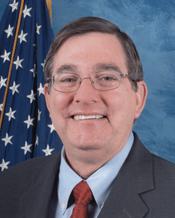
Michael C. Burgess
Rep. Michael C. BurgessR-TX-26 · Jul 26, 2022

Mr. Speaker, I thank Mr. Neguse for yielding me the customary 30 minutes, and I yield myself such time as I may consume. Mr. Speaker, today's rule provides for consideration of three bills, three…

John Katko
Rep. John KatkoR-NY-24 · Jul 26, 2022

Mr. Speaker, I rise today to oppose the previous question so we can immediately consider H. Res. 1255 led by my good friend and colleague Michael Guest, the vice ranking member of the Committee on…

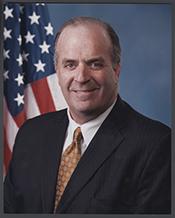
Daniel T. Kildee
Rep. Daniel T. KildeeD-MI-5 · Jul 26, 2022

Mr. Speaker, I thank the gentleman from Colorado (Mr. Neguse), my friend, for yielding to me to speak in favor of this rule, which includes consideration of legislation that I and others drafted, the…

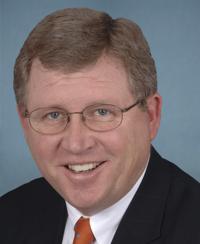
Frank D. Lucas
Rep. Frank D. LucasR-OK-3 · Jul 26, 2022

Madam Speaker, I yield myself such time as I may consume. Madam Speaker, I rise in support of H.R. 7289, the Federal PFAS Research Evaluation Act. PFAS is an acronym for a large range of manufactured…

Show 8 more
Michael Guest
Rep. Michael GuestR-MS-3 · Jul 26, 2022

Mr. Speaker, I rise to oppose the previous question so that we may immediately consider H. Res. 1255. This resolution expresses support for the United States Border Patrol agents and condemns the…

August Pfluger
Rep. August PflugerR-TX-11 · Jul 26, 2022

Mr. Speaker, I thank the ranking member for yielding. I rise today to oppose the previous question so we can immediately consider H.R. 1255 and bring forward my good friend Mr. Guest's resolution…

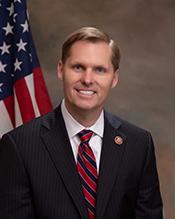
Peter Meijer
Rep. Peter MeijerR-MI-3 · Jul 26, 2022

Madam Speaker, I thank our ranking member, Mr. Lucas, for yielding me time and for his continued leadership on the Science, Space and Technology Committee. Madam Speaker, H.R. 7289, the Federal PFAS…

Donald S. Beyer, Jr.
Rep. Donald S. Beyer, Jr.D-VA-8 · Jul 26, 2022

Madam Speaker, I move to suspend the rules and pass the bill (H.R. 7289) to provide for the National Academies to study and report on a Federal research agenda to advance the understanding of PFAS,…

Ed Perlmutter
Rep. Ed PerlmutterD-CO-7 · Jul 26, 2022

Mr. Speaker, I thank my friend from Colorado for extending me 3 minutes. Mr. Speaker, I rise today in support of the previous question and the rule, especially the section regarding the Wildfire…

Eddie Bernice Johnson
Rep. Eddie Bernice JohnsonD-TX-30 · Jul 26, 2022

Madam Speaker, I rise in support of H.R. 7289, the Federal PFAS Research Evaluation Act, as amended. This bill, introduced by Representatives Lizzie Fletcher and Peter Meijer, is another example of…

Jamaal Bowman
Rep. Jamaal BowmanD-NY-16 · Jul 26, 2022

Madam Speaker, had I been present, I would have voted yea on rollcall No. 386. Members Recorded Pursuant to House Resolution 8, 117th Congress Amodei (Balderson) Babin (Sessions) Blumenauer (Beyer)…

Thomas P. Tiffany
Rep. Thomas P. TiffanyR-WI-7 · Jul 26, 2022

Madam Speaker, on that I demand the yeas and nays.

Bill Text

4 versions available

Reading Mode
Latest
Referred in SenateIssued July 27, 2022

IIB

117th CONGRESS

2d Session

H. R. 7289

IN THE SENATE OF THE UNITED STATES

July 27, 2022

Received; read twice and referred to the Committee on Environment and Public Works

AN ACT

To provide for the National Academies to study and report on a Federal research agenda to advance the understanding of PFAS, and for other purposes.


1.

Short title

This Act may be cited as the Federal PFAS Research Evaluation Act.

2.

Findings

Congress finds the following:

(1)

Perfluoroalkyl and polyfluoroalkyl substances (PFAS) are a group of man-made chemicals that have been used in a wide range of products since the 1940s including firefighting foam, carpeting, packaging, and cookware. There are more than 5,000 types of registered PFAS compounds. This chemical class is not currently regulated at the Federal level.

(2)

PFAS have been detected in air, water, soil, food, biosolids, and more. They can accumulate and remain in the body for a long time, and potentially lead to serious health effects including cancer, low infant birthweight, liver and kidney issues, reproductive and developmental problems, and more.

(3)

There remains much unknown about PFAS toxicity, human and environmental health effects, exposure pathways, as well as effective removal, treatment, and destruction methods, and safe alternatives to PFAS.

(4)

Federal research efforts have been fragmented at various agencies and struggled to effectively address the full scope of challenges presented by PFAS.

(5)

Regulatory action and cleanup depend on scientific analysis of toxicity data, decision making on how best to deal with PFAS, and understanding the significance of the many exposure pathways that exist. A consensus study by the National Academies would help inform decisions by Federal and State Governments, industry, and other stakeholders on how to best address PFAS.

3.

National Academies reports

(a)

Research assessments of PFAS

(1)

In general

Not later than 90 days after the date on which amounts are appropriated for fiscal year 2023 to carry out this section, the Administrator of the Environmental Protection Agency, in consultation with the Director of the National Science Foundation, the Secretary of Defense, the Director of the National Institutes of Health, and other Federal agencies with expertise relevant to understanding PFAS exposure, behavior, and toxicity, shall enter into an agreement with the National Academies to conduct a study and submit a report in accordance with this subsection to further address research and knowledge gaps identified by the Federal Government Human Health PFAS Research Workshop held on October 26 and 27, 2020, and identify research and development needed to identify, categorize, evaluate, and address individual or total PFAS.

(2)

Study and report on human exposure estimation

(A)

In general

The study required to be conducted under paragraph (1) shall, at a minimum—

(i)

consider life-cycle information on the manufacture, use, and disposal of PFAS-containing products to identify potential human exposure sources, including occupational exposures, and potential exposure pathways for the public;

(ii)

evaluate the fate and transport of PFAS and their breakdown products;

(iii)

if feasible, estimate human exposure to individual or total PFAS to determine relative source contributions for various exposure pathways (such as air, water, soil, or food);

(iv)

determine the range of solubility, stability, and volatility of PFAS most likely to be found in the environment and the resulting prevalence in animals and humans;

(v)

give consideration as to whether chemical category-based approaches would be appropriate for evaluating PFAS toxicity and exposure;

(vi)

identify research needed to advance exposure estimation to individual or total PFAS; and

(vii)

identify research needed to advance toxicity and hazard assessment of individual or total PFAS.

(B)

Report

Not later than 540 days after the date on which the agreement described in paragraph (1) is finalized, the National Academies shall submit to Congress a report containing the findings and recommendations of the study described in subparagraph (A) and shall make such report available on a publicly accessible website.

(b)

Research assessment of management and treatment alternatives for PFAS contamination in the environment

(1)

In general

Not later than 90 days after the date on which amounts are appropriated for fiscal year 2023 to carry out this section, the Administrator of the Environmental Protection Agency and the Director of the National Science Foundation, in consultation with the Secretary of Defense and other Federal agencies with expertise relevant to the development of PFAS alternatives and the management and treatment of PFAS, shall jointly enter into an agreement with the National Academies to conduct a study and submit a report in accordance with this subsection to better understand the research and development needed to advance the understanding of the extent and implications of human and environmental contamination by PFAS, how to manage and treat such contamination, and the development of safe alternatives.

(2)

Scope of study

The study described in paragraph (1) shall, at a minimum, include the following:

(A)

An assessment of the best available strategies for PFAS treatment, site remediation, and safe disposal, including demonstration or pilot projects related to destruction methods and alternative materials or tools for firefighters.

(B)

A description of the research gaps relating to such issues, including consideration of emerging or future PFAS and potential classification methods.

(C)

Recommendations on how the Federal Government can best address the research needs identified pursuant to subparagraph (B) through increased collaboration or coordination of existing and new programs.

(D)

Recommendations on how research can best incorporate considerations of socioeconomic issues into the development of research proposals and the conduct of research.

(3)

Report

Not later than 540 days after the date on which the agreement described in paragraph (1) is finalized, the National Academies shall submit to Congress a report containing the findings and recommendations of the study described in paragraph (2) and shall make such report available on a publicly accessible website.

(c)

Authorization of appropriations

There is authorized to be appropriated for fiscal year 2023 $3,000,000 to the Administrator of the Environmental Protection Agency to carry out this section.

4.

Implementation plan

Not later than 180 days after submission to Congress of latest of the National Academies reports under section 3, the Director of the Office of Science and Technology Policy, in coordination with all relevant Federal agencies, shall submit to Congress an implementation plan for increased collaboration and coordination of Federal PFAS research, development, and demonstration activities. In preparing such an implementation plan, the Director shall take into consideration the recommendations included in the reports in section 3.

5.

Definitions

In this Act:

(1)

National Academies

The term National Academies means the National Academies of Sciences, Engineering, and Medicine.


(2)

PFAS

The term PFAS means per- and polyfluoroalkyl substances, including mixtures of such substances.

Passed the House of Representatives July 26, 2022.

Cheryl L. Johnson,

Clerk.