Mr. Speaker, pursuant to House Resolution 1396, I call up the bill (S. 3969) to amend the Help America Vote Act of 2002 to explicitly authorize distribution of grant funds to the voting accessibility…
Mr. Speaker, pursuant to House Resolution 1396, I call up the bill (S. 3969) to amend the Help America Vote Act of 2002 to explicitly authorize distribution of grant funds to the voting accessibility protection and advocacy system of the Commonwealth of the Northern Mariana Islands and the system serving the American Indian consortium, and for other purposes, and ask for its immediate consideration in the House.
Mr. Speaker, I ask unanimous consent that all Members may have 5 legislative days in which to revise and extend their remarks and include extraneous material on S. 3969 in the Record.
Mr. Speaker, I yield myself such time as I may consume.
I rise in strong support of S. 3969, the PAVA Program Inclusion Act.
The bill before us today is a bipartisan, bicameral piece of legislation that makes an important technical correction in the Help America Vote Act's Protection and Advocacy for Voting Access, or PAVA, program to explicitly include the Commonwealth of the Northern Mariana Islands and the
system serving the American Indian consortium as eligible recipients of PAVA funding.
When Congress passed the Help America Vote Act in 2002, it made significant changes to the country's voting process, addressing needed improvements to voting systems and voter access identified in the wake of the 2000 election. Since its enactment, Congress has provided billions of dollars under HAVA to help States improve voters' access to the ballot, including hundreds of millions of dollars in election security funds over fiscal years 2018, 2020, and 2022 and $400 million under the CARES Act to help voters access the ballot during the COVID- 19 pandemic.
Amongst the numerous changes made, HAVA recognized the unique obstacles persons with disabilities face at the polls, authorizing funding for the Protection and Advocacy for Voting Access program, otherwise known as PAVA. The PAVA program funds activities aimed at increasing access to the polls and the ballot for voters with disabilities, ensuring they have access to all aspects of the voting process, and awarding funding to eligible protection and advocacy systems across the country.
Since HAVA's enactment, the millions of dollars in funding allocated under the PAVA program allows protection and advocacy systems across the country to conduct activities such as disability training for poll workers, maintaining voting hotlines, examining polling places for accessibility, and even more.
There are 57 protection and advocacy systems across the 50 States, the District of Columbia, Puerto Rico, the U.S. Virgin Islands, Guam, American Samoa, and the Commonwealth of the Northern Mariana Islands, as well as the American Indian consortium. The P&A affiliated with the American Indian consortium serves Native Americans with disabilities in the Four Corners region of New Mexico, Arizona, Colorado, and Utah.
P&As are federally mandated and protect the rights of persons with disabilities through legally based advocacy. Unfortunately, HAVA's definition excluded the protection and advocacy systems serving the Northern Mariana Islands and the American Indian consortium serving the Four Corners region. I don't think we intended that, and this bill fixes that.
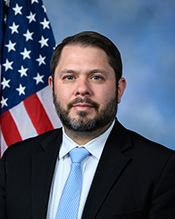
Reintroduced this Congress by our colleague, Representative Ruben Gallego of Arizona, and our former House colleague, Senator Ben Ray Lujan of New Mexico, S. 3969 puts the P&As serving the Northern Mariana Islands and the American Indian consortium on equal footing with all 55 other P&As. It does so without changing the program's overall authorization level or other elements of the program.
Fixing this oversight will help ensure all voters with disabilities, regardless of where they live, can fully participate in the electoral process.
Mr. Speaker, I include in the Record a letter signed by all 57 protection and advocacy systems expressing support for the bill, as well as a letter of support from the National Disability Rights Network and a letter from the designated protection and advocacy systems in California and Illinois, all supporting this bill's package.
January 28, 2020.
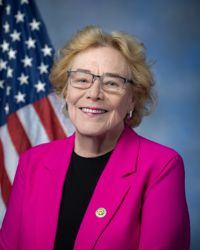
Representative Zoe Lofgren,
Chairwoman, House Administration Committee, Washington, DC.
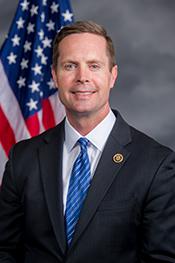
Representative Rodney Davis,
Ranking Member, House Administration Committee, Washington,
Mr. Speaker, language making this correction has passed the House twice this Congress in other legislation, and it should be enacted into law.
The Senate passed this bill by unanimous consent in March, and passing it in the House today will ensure that it will go to the President's desk to become law.
Mr. Speaker, I urge my colleagues to support this bill, and I reserve the balance of my time.
Mr. Speaker, I yield 2 minutes to the gentleman from Arizona (Mr. Gallego), the proponent of this legislation.
Mr. Speaker, I yield 1 minute to the gentleman from Maryland (Mr. Hoyer), our majority leader.
Mr. Speaker, I yield myself such time as I may consume.
We have agreement on this bill from the Senate, and that is a good thing. I should note that we have had discussions, primarily at a staff level, on the election observer measure mentioned by the ranking member and Mr. Steil. We continue to evaluate the proposal, but we found a few concerns. I will mention them now. It is not arbitrary.
I yield to the gentleman from Illinois.
Reclaiming my time. My staff indicates that there have been discussions. Obviously, that was at a staff level. But I have outlined what the concerns are, and I would at this point like to close so that we can let the House get to its other business.
To go on suspension, both sides of the aisle need to agree, and I think that is a very important provision of our procedures that will continue, whichever party is in the majority, and that was how this ended up. Because that bill really is not necessarily connected with this PAVA bill. I will talk about another bill that is not connected with the PAVA bill, and that is the venue bill I mentioned earlier this morning.
I forgot to mention, and I put it into the Record last night, that the Progressive Policy Institute, as well as the chamber of commerce, opposes that venue provision. I do think the fact that Senator Cruz, Senator Cotton, Senator Hawley, Mr. Buck and Mr. Gaetz are for it doesn't persuade me that it is a safe measure to move forward to, even though I very much support the Neguse bill. If this does not pass today, I am sure the Neguse bill will come back because we do need resources to enforce our antitrust laws. I am totally on board with that.
Mr. Speaker, I hope that we will pass this bill from the Senate that will protect disabled voters in the Northern Mariana Islands and the American Indian consortium, that they will have the same access to funding as all the others, and I urge support.
Mr. Speaker, I yield back the balance of my time.