Madam Speaker, pursuant to House Resolution 1153, I call up the bill (H.R. 7910) to amend title 18, United States Code, to provide for an increased age limit on the purchase of certain firearms,…
Madam Speaker, pursuant to House Resolution 1153, I call up the bill (H.R. 7910) to amend title 18, United States Code, to provide for an increased age limit on the purchase of certain firearms, prevent gun trafficking, modernize the prohibition on untraceable firearms, encourage the safe storage of firearms, and for other purposes, and ask for its immediate consideration in the House.
Madam Speaker, I ask unanimous consent that all Members may have 5 legislative days in which to revise and extend their remarks and insert extraneous material on H.R. 7910.
Madam Speaker, I yield 1 minute to the gentlewoman from California (Ms. Pelosi), the distinguished Speaker of the House.
Madam Speaker, I yield myself such time as I may consume.
Madam Speaker, our Nation has been through trying times these last few weeks as we have tried to process the mass shootings in Buffalo, Uvalde, Tulsa, and all too many other cities. Just this past weekend, we learned of yet another horrific incident in Philadelphia and yet more carnage in Tennessee, Arizona, Virginia, and South Carolina. And those are just the stories we saw in the news.
Day after day, we see more lives lost to gun violence in our schools, on our streets, in our houses of worship, and in our homes, touching every region of the country. And we hear the urgent calls from our constituents crying out for us to take action. Today, we heed that call.
H.R. 7910, the Protecting Our Kids Act, is comprehensive legislation to address the scourge of gun violence, a blight that killed nearly 45,000 Americans in 2020 alone.
It builds on the work of several of our colleagues, including:
Anthony Brown's Raise the Age Act, which would raise the lawful age to purchase an AR-15 styled semiautomatic assault rifle from 18 to 21 years old;
Robin Kelly's Prevent Gun Trafficking Act, which would establish new Federal offenses for gun trafficking and straw purchasing;
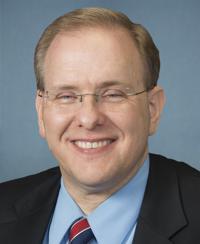
David Cicilline's Untraceable Firearms Act, which would ensure that ghost guns are subject to existing Federal firearms regulations;
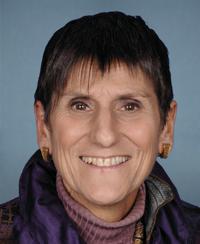
A trio of gun storage proposals--Rosa DeLauro's Ethan's Law, Elissa Slotkin's Safe Guns, Safe Kids Act, and Sheila Jackson Lee's Kimberly Vaughan Firearms Safe Storage Act--which would establish storage regulations that keep guns out of the hands of children and award grants for firearm storage assistance programs;
Dina Titus' Closing the Bump Stock Loophole Act, which would build on existing regulations banning the manufacture, sale, or possession of bump stocks for civilian use;
And Ted Deutch's Keep Americans Safe Act, which would ban the sale, manufacture, and illegal possession of gun magazines that hold more than 15 rounds of ammunition.
I thank each of them for their contributions to this bill and for making this country safer for all Americans.
Madam Speaker, all of us in this Chamber were shaken by the images of parents in Uvalde standing in line to match their DNA to the remains of their 9- and 10-year-old children, parents who should be picking up their children from school right now but who, instead, are picking up the pieces of their lives shattered by this unimaginable loss.
But the question today is: Who among us will have the courage to do something about it? Who will be able to tell mothers and fathers that their children need not go to school in a fortress just to keep them safe? Who will be able to tell children that they did all they could today to ensure that their parents will return safely from the supermarket or their office or an evening out? Who will be able to tell their constituents that they stood with them and not with the gun lobby?
Americans are watching. They are begging us to protect them and their loved ones from gun violence. Who among us will answer their call?
I urge all of my colleagues to join me in supporting this Protecting Our Kids Act, and I reserve the balance of my time.
Madam Speaker, I yield 2 minutes to the distinguished gentlewoman from Texas (Ms. Jackson Lee), the cosponsor of the bill and a member of the Judiciary Committee.
Madam Speaker, I yield the gentlewoman an additional 15 seconds.
Madam Speaker, I yield 2 minutes to the gentleman from California (Mr. Thompson), a cosponsor of the bill and the chairman of the Gun Violence Prevention Task Force.
Madam Speaker, I yield 1 minute to the gentleman from Tennessee (Mr. Cohen), a member of the Judiciary Committee.
Madam Speaker, I yield 1 minute to the gentleman from Georgia (Mr. Johnson), a member of the Judiciary Committee.
Madam Speaker, I include in the Record an article dated May 31, 2022, from The New York Times titled ``California has America's Toughest Gun Laws, and They Work.''
[From the New York Times, May 31, 2022]
California Has America's Toughest Gun Laws, and They Work
(By Shawn Hubler)
The grotesque toll of gun violence is again being debated
in Congress. As Luis Ferre-Sadurni and I reported over the
long weekend, states are not holding their breath.
Particularly this state: In ways that have tended to be
underreported, California has significantly lowered gun
deaths, Dr. Garen J. Wintemute, an emergency room doctor and
longtime firearm violence researcher, told me this week.
``For the last 20, maybe even 25 years--except for the two
years of the pandemic, which have increased homicides and
suicides across the country--our rates of firearm violence
have trended downward,'' said Dr. Wintemute, who directs the
Violence Prevention Research Program at the University of
California, Davis, Medical Center in Sacramento. ``And this
has been at a time when most of the rates in the rest of the
country have gone up.''
California's rate of firearm mortality is among the
nation's lowest, with 8.5 gun deaths per 100,000 people in
2020, compared with 13.7 per 100,000 nationally and 14.2 per
100,000 in Texas, the Centers for Disease Control and
Prevention has reported. And Californians are about 25
percent less likely to die in mass shootings, compared with
residents of other states, according to a recent Public
Policy Institute of California analysis.
I asked Dr. Wintemute how California is different. Here's a
lightly edited excerpt from our conversation, which took
place on Memorial Day after his emergency room shift:
Just a couple of weeks ago, California had a mass shooting.
By what measures are our policies a success?
You have to look at it on a population basis. We do have
more mass shootings in California, but we're also by far the
largest state. I looked a while ago at the rates of firearm
violence across the 21st century--homicide and suicide
together--and the rest of the country was up, but
California's rates were so far down that the average was
flat.
We always hear that nothing works, that even California's
strict gun laws are ineffective.
That's because we evaluate policies one at a time, in
isolation. The results for one policy might be mixed or even
negative. But what California has done over a number of
decades has been to enact a whole bundle of policies that I
think work in synergy, to measurable effect.
It sounds like the ``Swiss cheese model'' public health
experts have used to address Covid.
Yes. The idea is to prevent the holes in the policies from
lining up. But if we rank the states, California's rate of
firearm violence ranks 29th out of 50 states for homicides
and 44th for suicides.
Can you share some examples?
California has done a lot to prevent high-risk people from
purchasing firearms. We've broadened the criteria for keeping
guns out of the hands of people who pose a danger to
themselves or others due to mental illness. If you're
convicted of a violent misdemeanor in California, you can't
have a gun for the next 10 years; that offense has to be a
felony in most states.
We require background checks, and not just from licensed
retailers; in most states, purchases from private parties
require no background checks or record keeping of any kind.
We have a system, that we're evaluating now, for getting guns
back from ``prohibited persons''--people who have been
convicted of violent crimes or who are facing domestic
violence restraining orders. And we enforce these policies,
unlike a lot of other states.
What else?
In the early 1990s, cheap handguns--``Saturday Night
Specials''--were almost entirely manufactured around Los
Angeles. It was a few companies making upward of 800,000
cheap handguns a year. So the state imposed standards for
design and safety. One of the companies has since gone to
Nevada. The rest went belly-up and no one else has come in to
fill the gap.
What about gaps?
Every time California sets a new standard, the gun industry
tries to outwit it. Unregulated ghost guns have become
immensely popular here, precisely because we're such a
tightly regulated market. And the state program to recover
guns from prohibited people has never had the level of
funding it needs to do the whole job--there are only about 40
trained agents for the whole state and a backlog of at least
10,000 people whose guns need to be taken.
Overall, what could the rest of the country learn from
California?
The lower the prevalence of ownership, the lower the rate
of firearm violence--that's been one of the most robust
research findings for decades. Rates of gun ownership are
lower here, in part because of this bundle of state measures.
In the United States overall, something like 25 percent to 30
percent of individuals own guns. In California, it's about 15
percent to 18 percent.
Madam Speaker, the evidence doesn't lie. California's rate of firearm mortality is among the Nation's lowest, with 8.5 gun deaths per 100,000 people in 2020, compared with 13.7 per 100,000 nationally and 14.2 per 100,000 in Texas. Gun safety laws work. It is that simple.
Madam Speaker, I yield 1 minute to the distinguished gentleman from Maryland (Mr. Hoyer).
Madam Speaker, I yield 1 minute to the gentleman from New York (Mr. Jeffries), a member of the Judiciary Committee.
Madam Speaker, I yield 2 minutes to the distinguished gentleman from Rhode Island (Mr. Cicilline), a member of the Judiciary Committee.
Madam Speaker, I yield 1 minute to the distinguished gentleman from California (Mr. Lieu), a member of the Judiciary Committee.
Madam Speaker, I yield 1 minute to the distinguished gentlewoman from Washington (Ms. Jayapal), a member of the Judiciary Committee.
Madam Speaker, I yield 1 minute to the distinguished gentlewoman from Florida (Mrs. Demings), a member of the Judiciary Committee.
Madam Speaker, I yield 1 minute to the distinguished gentleman from California (Mr. Correa), a member of the Judiciary Committee.
Madam Speaker, I yield 1 minute to the distinguished gentlewoman from Texas (Ms. Garcia), a member of the Judiciary Committee.
Madam Speaker, how much time remains on each side.
Madam Speaker, I yield 1 minute to the distinguished gentleman from Colorado (Mr. Neguse), a member of the Judiciary Committee.
Madam Speaker, I yield 1 minute to the distinguished gentlewoman from Pennsylvania (Ms. Dean), the vice chair of the Judiciary Committee.
Madam Speaker, I yield 1 minute to the gentlewoman from Georgia (Mrs. McBath), a member of the Judiciary Committee who knows the tragedy of gun violence personally.
Madam Speaker, I yield 1 minute to the distinguished gentlewoman from Texas (Ms. Escobar), a member of the Judiciary Committee.
Madam Speaker, I yield 1 minute to the distinguished gentleman from New York (Mr. Jones), a member of the Judiciary Committee.
Madam Speaker, I yield 2 minutes to the distinguished gentlewoman from Illinois (Ms. Kelly).
Madam Speaker, I yield 2 minutes to the gentlewoman from Connecticut (Ms. DeLauro), the distinguished chairwoman of the Appropriations Committee.
Madam Speaker, I yield 2 minutes to the distinguished gentleman from Maryland (Mr. Brown).
Madam Speaker, I yield 2 minutes to the distinguished gentleman from Rhode Island (Mr. Langevin).
Madam Speaker, I yield 1 minute to the distinguished gentleman from Michigan, (Mr. Levin).
Madam Speaker, I yield 1 minute to the distinguished gentlewoman from North Carolina (Ms. Manning).
Madam Speaker, I yield 1 minute to the distinguished gentlewoman from California (Ms. Speier).
Madam Speaker, I yield 1 minute to the distinguished gentlewoman from Illinois (Ms. Schakowsky).
Madam Speaker, I yield 1 minute to the distinguished gentlewoman from California (Ms. Eshoo).
Madam Speaker, I yield an additional 10 seconds to the gentlewoman.
Madam Speaker, I include in the Record a May 27, 2022, piece from CNN titled ``States with weaker gun laws have higher rates of firearm related homicides and suicides, study finds.''
[From CNN, May 27, 2022]
States With Weaker Gun Laws Have Higher Rates of Firearm Related
Homicides and Suicides, Study Finds
(By Emma Tucker and Priya Krishnakumar)
A new study published Thursday by a leading non-profit
organization that focuses on gun violence prevention found
that there is a direct correlation in states with weaker gun
laws and higher rates of gun deaths, including homicides,
suicides and accidental killings.
The study by Everytown for Gun Safety determined that
California had the strongest gun laws in the country. Hawaii
topped the list with the lowest rate of gun deaths in the
country while Mississippi led the country with both the
weakest gun laws and highest rate of gun deaths.
``What this project does, is show what we've been saying
for years: Gun laws save lives,'' said Nick Suplina, senior
vice president of law and policy at Everytown for Gun Safety
Support Fund. ``We think this is going to be a really
important tool for lawmakers, reporters and advocates that
have been looking for the kind of visual tool that can make
that case clearly.''
To compile its list, the group used data from the Centers
for Disease Control and Prevention, looked at each state's
rate of gun deaths in 2020 and compared those rates with 50
policies that they say are scientifically proven to be
effective in preventing gun violence, Suplina said.
The research team then weighed the list of gun safety
policies based on their efficacy, ranked each state on its
implementation of those policies and compared that score with
the rates of gun deaths in each state, he said.
The CDC's data includes homicides, accidental killings and
suicides committed by guns. According to the CDC, over 45,000
people in the United States were killed with a firearm in
2020--more than half died by suicide.
The analysis, first reported by CNN, put California at the
top of the list for gun law strength--a composite score of
84.5 out of 100, with one of the lowest rates of gun deaths
per 100,000 residents, at 8.5 out of 30 and below the
national average of 13.6. Hawaii has the lowest rate of gun
deaths in the country with the second strongest gun law
score. It also has the lowest rate of gun ownership, with
firearms in 9 percent of households, the data shows.
As state legislatures begin to convene for their 2022
legislative sessions, lawmakers will consider a breadth of
bills that either loosen or expand gun protections across
various states.
``I have seen firsthand in California that the work we have
done to strengthen gun laws has been both life-saving and
effective,'' said Rep. Mike Thompson (D-CA). chair of the
House Gun Violence Prevention Task Force. ``Gun laws work,
and we need them across the board to ensure that felons,
domestic abusers, and those with mental health issues can't
simply go to the next state over to circumvent the very laws
meant to keep guns out of their hands.''
CNN has reached out to the National Rifle Association (NRA)
to comment on the research, but it declined to do so before
seeing the data.
Mississippi has the weakest gun laws with a score of 3 out
of 100 and has the highest rate of gun deaths per 100,000
residents--28.6 out of 30, the research shows.
Massachusetts has adopted 37 of the 50 policies and has the
second-lowest rate of
gun deaths, while Missouri has only eight of the gun safety
policies and the fourth highest rate of gun deaths in the US.
Louisiana and Wyoming are among the top five states with the
highest gun deaths and the weakest gun safety laws.
``Lawmakers in the states at the bottom can't pretend to be
ignorant about the importance of gun laws after looking at
this report,'' said Shannon Watts, the founder of Moms Demand
Action, which has been fighting for gun safety measures since
the 2012 Sandy Hook Elementary School shooting in Connecticut
that killed 20 children and six educators.
Mother and activist DeAndra Dycus said the gun violence
problem in Indianapolis is ``tearing our community apart.''
Nearly eight years ago, her 13-year-old son, DeAndre
``Dre'' Knox, was shot in the back left side of his head at a
birthday party in Indianapolis when shots were fired during a
confrontation between two boys. DeAndre, now 21, survived
after being on life support for several days, Dycus said, and
he currently lives in a facility with non-verbal quadriplegic
paralysis.
``As a mother, when I look at him, I see everything that
was taken away,'' Dycus said. ``My son was a dreamer. He was
a scholar. He was on this road to being something great.''
``But on the flip side, I see this little boy who has made
such an impact, not just on our city but our country, as it
pertains to what it looks like to survive,'' she said. ``Dre
has embodied that.''
Everytown designated a list of five foundational laws that
have proven to be the most effective in lowering gun violence
rates. These include requirements for a background check and/
or permits to purchase handguns; a permit to carry concealed
guns in public; the secure storage of firearms; the rejection
of `Stand Your Ground' laws; and the enactment of `extreme
risk' laws that temporarily remove a person's access to
firearms when there is evidence that they pose a serious risk
to themselves or others, according to Everytown.
Last year, several conservative states--such as Texas,
Iowa, Tennessee, Montana, Utah and Wyoming--passed
legislation allowing some form of permitless carry as
President Joe Biden pushed forward executive actions to
address gun violence following several high-profile mass
shootings.
In Texas, the controversial ``constitutional carry''
legislation went into effect in September that allows most
Texans who legally own a firearm to carry it openly in public
without obtaining a permit or training.
Supporters of the bill have argued that by removing the
licensing requirement they are removing an ``artificial
barrier'' to residents' right to bear arms under the
Constitution and ensuring more Texans have access to ``the
protection of themselves or their families'' in public. But
law enforcement officials and experts have expressed concerns
that the open carrying of firearms makes it more difficult
for police to quell violence.
``As we've seen gun extremism continue to rise in this
country, we've also seen people who open carry start out at
marches and rallies and then show up in elected officials'
homes, in polling places, statehouses and then on January 6th
at the US Capitol,'' Watts said.
According to Watts, the shooting in a Michigan high school
in December that killed four students is a ``textbook
example'' of why laws that require the secure storage of
firearms are essential to gun safety.
The alleged gunman in that shooting, 15-year-old Ethan
Crumbley, is accused of fatally shooting four classmates and
wounding several others on November 30. His parents were
charged with four counts of involuntary manslaughter in the
same incident. All three have pleaded not guilty.
Prosecutors allege that James Crumbley, the father of the
suspected shooter, bought the gun used in the shooting four
days earlier. The incident prompted outrage over Ethan's
alleged accessibility to the gun, arguing that the shooting
could have been prevented.
Only 23 states currently have some semblance of a secure
storage requirement, Watts said.
Last year, Everytown successfully worked to pass secure
storage laws in Maine, Colorado, and Oregon, among others,
according to Watts.
During this year's legislative session, Watts said the
organization will work with lawmakers in hopes of passing
such laws in at least 14 states. States such as California,
Michigan and New Jersey are working on first-of-its kind
legislation that requires parents to be notified about secure
storage.
Everytown's research shows that 21 of the country's states
have rejected Stand Your Ground laws, which allow individuals
to use deadly force in public as self-defense even if they
can safely walk away from the situation.
Despite strong gun laws, some states still feel the effects
of being close to a state with more lax regulations. For
example, Illinois has the sixth-strongest gun safety laws in
the country, but its neighboring state of Indiana has much
weaker gun laws, Suplina says.
According to Suplina, this could explain why such a high
number of guns purchased in Indiana have ended up in Chicago.
Last year, the U.S. Department of Justice charged six
Indianapolis residents related to the straw purchasing of
firearms. Prosecutors said more than 20 of the guns were
recovered in Chicago after being used in violent crimes,
including murder.
Gun violence overall has risen during the pandemic. More
than two-thirds of the country's 40 most populous cities saw
more homicides last year than in 2020, and most of them were
a result of gun violence, according to a CNN analysis of
police department data. For many cities, the elevated rates
of homicide continued into 2021.
While experts say the reasons for the rise in homicides are
varied, murders are increasingly carried out with guns. The
increase in gun violence was underscored in the FBI's 2020
Uniform Crime Report, which stated that about 77 percent of
reported murders in 2020 were committed with a gun, up from
74 percent in 2019. The agency reported that the number of
homicides increased by nearly 30 percent from 2019, the
largest single-year jump the agency has recorded. There is no
federal database of gun sales, but other independent surveys
have found that gun sales have soared during the Covid-19
pandemic.
Madam Speaker, I yield 1 minute to the distinguished gentlewoman from the District of Columbia (Ms. Norton).
Madam Speaker, I yield 1 minute to the distinguished gentleman from Texas (Mr. Castro).
Madam Speaker, I yield 1 minute to the distinguished gentlewoman from Florida (Ms. Wasserman Schultz).
Madam Speaker, I yield 1 minute to the distinguished gentlewoman from California (Ms. Chu).
Madam Speaker, I yield 1\1/2\ minutes to the distinguished gentleman from Florida (Mr. Deutch), a member of the Judiciary Committee.
Madam Speaker, I yield 1 minute to the distinguished gentleman from California (Mr. Garamendi).
Madam Speaker, I yield 1 minute to the distinguished gentlewoman from New York (Mrs. Carolyn B. Maloney).
Madam Speaker, I yield 1 minute to the gentlewoman from New Jersey (Ms. Sherrill).
Madam Speaker, I yield 1 minute to the distinguished gentleman from New York (Mr. Espaillat).
Madam Speaker, may I inquire how much time each side has remaining?
Madam Speaker, I yield 1 minute to the distinguished gentlewoman from Massachusetts (Ms. Clark).
Madam Speaker, I yield 1 minute to the distinguished gentleman from Oregon (Mr. Blumenauer).
Madam Speaker, I yield 1 minute to the distinguished gentleman from Nevada (Mr. Horsford).
Madam Speaker, I yield 1 minute to the distinguished gentlewoman from California (Ms. Lee).
Madam Speaker, I yield 1 minute to the distinguished gentleman from Texas (Mr. Allred).
Madam Speaker, I yield 1 minute to the distinguished gentlewoman from New York (Ms. Velazquez).
Madam Speaker, I yield 1 minute to the distinguished gentlewoman from Washington (Ms. DelBene).
Madam Speaker, I yield 1 minute to the distinguished gentleman from Illinois (Mr. Danny K. Davis).
Madam Speaker, I yield 1 minute to the distinguished gentlewoman from Michigan (Mrs. Dingell).
Madam Speaker, I yield 1 minute to the distinguished gentlewoman from Nevada (Ms. Titus).
Madam Speaker, I reserve the balance of my time. I am prepared to close.
Madam Speaker, I yield 1 minute to the gentlewoman from Texas (Ms. Jackson Lee).
Madam Speaker, I yield myself such time as I may consume.
Too many cities in this country have become a shorthand for mass shooting: Newtown, San Bernardino, Charleston, Las Vegas, Parkland, Santa Fe, El Paso, Buffalo, Uvalde. The list goes on.
How many more communities must be visited by tragedy before we take action?
How many more parents need to bury their own children because an 18- year old with an AR-15 assault rifle stormed into their school?
How many more children must grow up without a parent because a high- capacity magazine allowed a shooter to spray dozens of bullets through a supermarket?
Let today be the day that we begin to end this cycle of gun violence and we take meaningful action to protect our communities and, most of all, to protect our kids.
You know, the Republicans tell us that we want to defund the police. We
don't want to defund the police. President Biden just said the other day we want to fund the police.
They want to defund the police. They want to disarm the police. What chance does a policeman, with a regular service revolver, have against someone with an AR-15 assault rifle? None at all.
They want to make sure that our police have no chance at all to resist the dishonest people who use weapons of war because weapons of war overwhelm whatever any policeman may have. That is the problem here.
The problem here is that they want to defund--or I shouldn't say defund. They want to disarm our police, compared to the crooks and the murderers who have the weapons of war which can outweigh the service revolvers that any police officer will have.
So we want to protect the police officers. We want them to not be outgunned by the murderers. That is where we are. That is what this bill does. That is perhaps why they are afraid of this bill.
But we must pass this bill to save our police officers, to save our communities, to save our children.
Madam Speaker, I yield back the balance of my time.