H.R. 7441House117th Congress (2021-2023)In Committee

Acute Labor Shortage Solutions Act of 2022

Introduced April 7, 2022

AI-Generated Summary

Updated February 8, 2026 at 10:45 AM UTC

The Acute Labor Shortage Solutions Act of 2022 lets the Secretary of Homeland Security, after consulting the Labor Secretary, temporarily lift annual caps on certain employment‑based immigrant visas when U.S. businesses in specific industries face an acute labor shortage. The exemption can be applied in groups of up to 250 aliens and must be approved within 180 days. It targets a list of NAICS‑coded sectors and is effective for fiscal years 2022 through 2024, with a possible one‑year extension if shortages continue.

Key Provisions

  • Allows DHS, with Labor input, to exempt up to 250 employment‑based immigrant visas per block from numerical limits when an acute labor shortage is identified in designated sectors.
  • Applies only to industries identified by specific NAICS codes listed in the bill.
  • Exempted petitions must be approved no later than 180 days after the act’s effective date.
  • The act is in force for fiscal years 2022‑2024, with the Secretary of Homeland Security able to extend it an additional year if the Labor Secretary confirms ongoing shortages.

Legislative Activity

Stay on top of the latest movement without scrolling through every action

2 earlier actions
HouseCommittee Latest Action

Referred to the Subcommittee on Immigration and Citizenship.

November 1, 2022

View full timeline
HouseIntro Referral

Introduced in House

April 7, 2022

HouseIntro Referral

Referred to the House Committee on the Judiciary.

April 7, 2022

HouseCommittee

Referred to the Subcommittee on Immigration and Citizenship.

November 1, 2022

Bill Text

Latest available legislative text

Reading Mode
Latest
Introduced in HouseIssued April 7, 2022

I

117th CONGRESS

2d Session

H. R. 7441

IN THE HOUSE OF REPRESENTATIVES

April 7, 2022

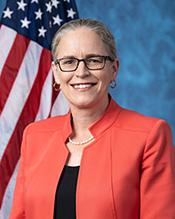
Ms. Bourdeaux (for herself and Mr. Austin Scott of Georgia) introduced the following bill; which was referred to the Committee on the Judiciary

A BILL

To provide for the exemption from numerical limitation of certain employment-based immigrants for purposes of filling a labor shortage, and for other purposes.

1.

Short title

This Act may be cited as the Acute Labor Shortage Solutions Act of 2022.

2.

Labor shortage

(a)

In general

Beginning not later than 90 days after the date of enactment of this Act, the Secretary of Homeland Security, after consultation with the Secretary of Labor, and upon the determination that the needs of American businesses in any sector referred to in subsection (b) is experiencing an acute labor shortage that cannot be satisfied in fiscal year 2022 with United States workers, may exempt aliens, in blocs of not more than 250 aliens, from the numerical limitations under sections 201(d), 202(a) (if such alien is classified under section 203(b)(3)), and 203(b)(3) of the Immigration and Nationality Act (8 U.S.C. 1151(d), 1152(a), and 1153(b)(3)). Any petition subject to such exemption shall be approved not later than 180 days after the effective date of this Act.

(b)

Sectors identified

An industrial sector identified in this section is a classified under any of the following North American Industrial Classification System codes:

(1)

311811.

(2)

311812.

(3)

311813.

(4)

311821.

(5)

311824.

(6)

311830.

(7)

311911.

(8)

311919.

(9)

311920.

(10)

311930.

(11)

311941.

(12)

311942.

(13)

311991.

(14)

311999.

(15)

312111.

(16)

312112.

(17)

312113.

(18)

321211.

(19)

321212.

(20)

321213.

(21)

321214.

(22)

321219.

(23)

321911.

(24)

321912.

(25)

321918.

(26)

321920.

(27)

321991.

(28)

321992.

(29)

321999.

(30)

484110.

(31)

484121.

(32)

484122.

(33)

722310.

(34)

722320.

(35)

722330.

(36)

722410.

(37)

722511.

(38)

722513.

(39)

722514.

(40)

722515.

(41)

811111.

(42)

811112.

(43)

811113.

(44)

811118.

(45)

811121.

(46)

811122.

(47)

811191.

(48)

811192.

(49)

811198.

(c)

Effective date

This Act shall remain in effect only for fiscal years 2022 through 2024, except that the Secretary of Homeland Security may extend such date by an additional 1 fiscal year is if the Secretary of Labor makes a determination that labor shortages in the U.S. warrant such an extension.