Mr. Speaker, pursuant to House Resolution 188, I call up the bill (H.R. 842) to amend the National Labor Relations Act, the Labor Management Relations Act, 1947, and the Labor-Management Reporting…
Mr. Speaker, pursuant to House Resolution 188, I call up the bill (H.R. 842) to amend the National Labor Relations Act, the Labor Management Relations Act, 1947, and the Labor-Management Reporting and Disclosure Act of 1959, and for other purposes, and ask for its immediate consideration.
Mr. Speaker, I ask unanimous consent that all Members have 5 legislative days in which to revise and extend their remarks and include extraneous material on H.R. 842, the Protecting the Right to Organize Act of 2021.
Mr. Speaker, I yield myself such time as I may consume.
Mr. Speaker, I rise in support of H.R. 842, the Protecting the Right to Organize Act of 2021, or the PRO Act.
The American economy needs a strong middle class. Labor unions play an essential role in rebuilding our middle class and improving the lives of workers and their families. There is clear evidence that workers who organize a union have higher wages, better benefits, and safer workplaces.
Regrettably, union membership has dropped over the last 50 years from nearly one-third of all workers in the mid-20th century to just over 10 percent of workers today. The decline of unions and workers' bargaining power are major reasons why income inequality has soared and wages have stagnated for hardworking people.
But this decline in union membership is not a product of workers' choices. A recent survey by MIT found that nearly half of nonunion workers say that they would vote to join a union if given the opportunity.
The gap between worker preferences and union membership is the result of an 85-year-old labor law that lacks the teeth to enforce workers' rights when employers unlawfully retaliate against them for organizing. The National Labor Relations Act, the NLRA, is far too weak to defend workers against intensifying antiunion attacks from special interests.
That is why we must pass the PRO Act. The legislation strengthens workers' rights by making significant upgrades in the NLRA since it was enacted 85 years ago.
First, the PRO Act provides new tools to protect workers from antiunion intimidation and retaliation. It then introduces meaningful penalties for companies that violate workers' rights and closes loopholes they use to exploit workers.
Finally, the PRO Act strengthens safeguards to ensure that workers can hold free, fair, and safe union elections.
Mr. Speaker, it is time for Congress to stand up for workers and ensure that they can exercise their right to join together and negotiate for higher wages, better benefits, and a safe workplace. I urge my colleagues to support the legislation.
Mr. Speaker, I reserve the balance of my time.
Mr. Speaker, I yield 1 minute to the gentlewoman from Oregon (Ms. Bonamici), the chair of the Subcommittee on Civil Rights and Human Services.
Mr. Speaker, during the last Congress we held three hearings and considered 35 amendments.
Mr. Speaker, I yield 2 minutes to the distinguished gentleman from Wisconsin (Mr. Pocan), who is a member of the Committee on Education and Labor and the co-chair of the new Labor Caucus.
Madam Speaker, I yield 1 minute to the gentlewoman from Washington (Ms. Jayapal) who is a distinguished member of the Committee on Education and Labor and is the chair of the Congressional Progressive Caucus.
Mr. Speaker, I yield 1 minute to the distinguished gentleman from Maryland (Mr. Hoyer).
Mr. Speaker, I yield 1 minute to the gentleman from Michigan (Mr. Levin), a distinguished member of the Committee on Education and Labor.
Mr. Speaker, could you advise how much time is available on each side?
Mr. Speaker, I yield 1 minute to the gentleman from Indiana (Mr. Mrvan), a distinguished member of the Committee on Education and Labor.
Mr. Speaker, I yield 1\1/2\ minutes to the gentlewoman from Minnesota (Ms. Omar), a distinguished member of the Committee on Education and Labor.
Mr. Speaker, I yield 1 minute to the gentleman from California (Mr. Takano), a member of the Committee on Education and Labor and chair of the Committee on Veterans' Affairs.
Mr. Speaker, I yield 1 minute to the gentlewoman from Pennsylvania (Ms. Wild), a distinguished member of the Committee on Education and Labor.
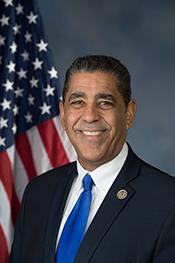
Mr. Speaker, I yield 1 minute to the gentleman from New York (Mr. Espaillat), a distinguished member of the Committee on Education and Labor.
Mr. Speaker, I yield 1 minute to the gentlewoman from California (Ms. Pelosi), the Speaker of the United States House of Representatives.
Mr. Speaker, I yield 1 minute to the gentleman from New York (Mr. Bowman), the vice chair of the Committee on Education and Labor.
Mr. Speaker, the gentleman's amendment was made in order, so we will be considering it.
Mr. Speaker, I yield 1 minute to the gentlewoman from North Carolina (Ms. Adams), the chair of the Workforce Protections Subcommittee.
Mr. Speaker, I yield 1 minute to the gentleman from New York (Mr. Jones), a distinguished member of the Committee on Education and Labor.
Mr. Speaker, reference was made to union officials at the UAW. They were caught and prosecuted under present law. The Trump administration that prosecuted them did not make any recommendations for changes in the law.
Mr. Speaker, I am proud to yield 1 minute to the gentlewoman from Nevada (Ms. Titus).
Mr. Speaker, I yield 1 minute to the gentlewoman from Massachusetts (Mrs. Trahan).
Mr. Speaker, I yield 1 minute to the gentlewoman from Michigan (Mrs. Dingell), the co-chair of the Labor Caucus.
Mr. Speaker, I yield 1 minute to the gentleman from Illinois (Mr. Garcia).
Mr. Speaker, I yield 1 minute to the gentleman from Ohio (Mr. Ryan).
Mr. Speaker, how much time is remaining on each side?
Mr. Speaker, I yield 2 minutes to the gentleman from California (Mr. DeSaulnier), the chair of the Subcommittee on Health, Employment, Labor, and Pensions of the Education and Labor Committee.
Madam Speaker, I yield 2 minutes to the gentleman from New Jersey (Mr. Norcross), a distinguished member of the Committee on Education and Labor.
Madam Speaker, I yield 1 minute to the gentleman from Texas (Mr. Green).
Madam Speaker, I am prepared to close, and I reserve the balance of my time.
Madam Speaker, I yield myself the balance of my time.
Madam Speaker, each of us can agree that hard work in this country should pay off. Yet, for far too long, we have allowed wealthy special interests to pad the profit margins by stripping workers of their rights.
Madam Speaker, we often voice our support for workers. Today, we have the opportunity to match our words with action by taking a historic step to ensure that they can stand together and negotiate for higher pay, better benefits, and safer workplaces.
I want to recognize all the workers and advocates, especially my colleagues on the Committee on Education and Labor, for their leadership on this legislation.
There is an extensive legislative history underpinning this bill, including three hearings and a markup in the 116th Congress. The views of the committee are outlined in the committee report from the last Congress.
Madam Speaker, I include in the Record a Statement of Administration Policy in support of the PRO Act and a statement by President Biden on the House taking up the PRO Act.
Statement of Administration Policy
H.R. 842--Protecting the Right to Organize Act of 2021--Rep. Scott, D-
VA, and 212 cosponsors
The Administration strongly supports House passage of H.R.
842, the Protecting the Right to Organize (PRO) Act of 2021,
which would strengthen the Federal laws that protect workers'
right to organize a union and collectively bargain for better
wages, benefits, and working conditions.
America was not built by Wall Street. It was built by the
middle class, and unions built the middle class. Unions put
power in the hands of workers. They give workers a stronger
voice to increase wages, improve the quality of jobs and
protect job security, protect against racial and all other
forms of discrimination and sexual harassment, and protect
workers' health, safety, and benefits in the workplace.
Unions lift up workers, both union and non-union.
The policy of the United States Government, stated clearly
in the National Labor Relations Act, is to encourage union
organizing and collective bargaining. However, due to anti-
union efforts by many employers for decades, lax enforcement
of existing labor laws, and the failure to restore and
strengthen labor laws to address the real-world of labor-
management relations, only 6.3% percent of private-sector
U.S. wage and salary workers were union members in 2020.
H.R. 842 would strengthen and protect workers' right to
form a union by allowing the National Labor Relations Board
(NLRB) to assess penalties on employers who violate workers'
right to organize and ensuring that workers who suffer
retaliation for exercising these rights receive immediate
relief.
The PRO Act also defends workers' right to strike--a
fundamental economic right--and to engage in boycotts and
other acts of solidarity with workers at other companies
without penalty. It clarifies that employers may not force
employees to waive their rights to join together in
collective or class action litigation. The bill also closes
loopholes in Federal labor law by barring employers from
misclassifying workers as independent contractors and
preventing workers from being denied remedies due to their
immigration status. It establishes an expansive joint
employer standard, allowing workers to collectively bargain
with all the companies that control the terms and conditions
of their employment. The bill allows unions to collect fair-
share fees to cover the cost of collective bargaining and
administering a union contract for all workers who are
protected by the contract's terms. H.R. 842 restores workers'
access to fair union elections and ensures the results are
respected.
The Administration strongly encourages the House to pass
H.R. 842, and looks forward to working with the Congress to
enact this critical legislation that safeguards workers'
rights to organize and bargain collectively. The PRO Act will
strengthen our democracy and advance dignity in the
workplace.
Madam Speaker, I urge my colleagues to support the Protecting the Right to Organize Act, and I yield back the balance of my time.
Madam Speaker, pursuant to section 3 of House Resolution 188, I rise to offer amendments en bloc No 1.
Madam Speaker, I yield 1\1/2\ minutes to the gentlewoman from Florida (Mrs. Murphy).
Madam Speaker, I yield 1 minute to the gentlewoman from Texas (Ms. Jackson Lee).
Madam Speaker, I yield 1 minute to the gentlewoman from Illinois (Ms. Newman).
Madam Speaker, I yield 1 minute to the gentlewoman from Georgia (Ms. Bourdeaux).
Madam Speaker, I yield 1 minute to the gentleman from Michigan (Mr. Levin), a member of the committee.
Madam Speaker, I yield 1 minute to the gentlewoman from Michigan (Ms. Tlaib).
Madam Speaker, I yield 1 minute to the gentleman from New York (Mr. Torres).
Madam Speaker, I yield myself the balance of my time.
Madam Speaker, these amendments will provide whistle-blower protection for workers, expose violations of the Labor-Management Reporting and Disclosure Act, require the Department of Labor to make employment arrangements and payments to union avoidance firms available and more accessible, clarify that nothing in the bill would expand the National Labor Relations Board's jurisdictional standards, direct the NLRB to establish a system of electronic voting in representation elections, clarify that nothing in the bill will be construed to amend the definition of employer or employee in any provisions of State law, direct the GAO to produce a study of the use of sectoral bargaining in peer nations, require that workers are informed of their rights under the bill in a language that they actually speak, direct the GAO to produce a study of the impact of the PRO Act's changes to the definitions of employee and employer, adds a 120-day timeline for the arbitration process when workers and employers are unable to reach a first bargaining agreement, and confirms that the bill will not affect existing provisions for worker privacy.
These amendments make meaningful improvements to the bill.
Madam Speaker, I urge a ``yes'' vote on en bloc 1, and I yield back the balance of my time.
Madam Speaker, pursuant to section 3 of House Resolution 188, I rise to offer amendments en bloc No. 2.
Madam Speaker, I reserve the balance of my time.
Madam Speaker, I yield myself 1 minute.
Madam Speaker, we have heard a lot about complaints about the dues but what we don't hear are complaints about the higher salaries, safer workplaces, and better benefits that are accrued by virtue of investments from the unions. They enjoy those benefits, so it is not unreasonable to expect people to pay a fair share of those costs.
Now, fair share does not include the political activities, does not include the annual holiday parties, but those services that the union is obligated by law to provide, negotiating salaries, negotiating a safe workplace, individualized representation when necessary, whatever they do for union members they have to do for nonunion members, a fair share of those expenses is not unreasonable.
Madam Speaker, I hope that we would defeat these amendments that would undermine that idea, and I reserve the balance of my time.
Madam Speaker, I yield 1 minute to the gentleman from Wisconsin (Mr. Pocan.)
Madam Speaker, I yield myself 1 minute.
Madam Speaker, over 500 attorneys, including 244 Members of the American Bar Association, submitted a letter in support of the persuader rule. It does not require the disclosure of legal representation but only of persuader activities.
Employers hire union avoidance persuaders to consult with them, according to the Department of Labor in 2016, and between 71 and 87 percent of union elections persuaders produce antiunion literature and materials, write speeches and statements, and identify prounion employees for discipline or reward. The employees often do not know that their employer has retained such consultants in its campaign against the union. It is one of the things that they ought to have to disclose.
So, Madam Speaker, I hope that we will defeat this amendment, and I reserve the balance of my time.
Madam Speaker, I yield 1 minute to the gentleman from Michigan (Mr. Levin).
Madam Speaker, I yield 2 minutes to the gentleman from Michigan (Mr. Levin).
Madam Speaker, I yield myself the balance of my time.
Madam Speaker, as a group, these amendments would erode workers' rights, slow down elections, allow workers to freeload, or even prohibit employers from agreeing not to interfere with the election. I would hope that we would defeat these amendments, and I yield back the balance of my time.