Mr. Speaker, it is my privilege to rise as the anchor of the CBC Special Order addressing Caribbean American Heritage Month and to welcome my colleagues to the floor to be able to engage in a very…
Mr. Speaker, it is my privilege to rise as the anchor of the CBC Special Order addressing Caribbean American Heritage Month and to welcome my colleagues to the floor to be able to engage in a very important and provocative discussion.
Let me just say that last weekend, in fact, yesterday, was the national holiday, the Juneteenth independence day. All over America this commemoration brought about knowledge, understanding, jubilation, and honor. So we are delighted to be on the floor today to, in fact, provide an opportunity to expand and to talk about the heritage of so many in this Nation.
General Leave
Mr. Speaker, I ask unanimous consent that all Members have 5 legislative days to revise and extend their remarks and include any extraneous material on the subject of this Special Order.
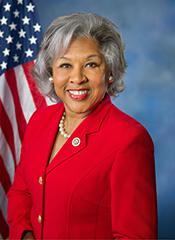
It is my privilege now to, first of all, thank the Honorable Joyce Beatty, who is the chairwoman of the Congressional Black Caucus, for her continued efforts to ensure that the American people know our message and our power, know the work that we are doing, know the success that we are having, and also give us an opportunity to articulate the historical record of African Americans and those who have heritages from elsewhere.
I also take a moment to congratulate her for receiving the Juneteenth honors in Washington, D.C. last Thursday from the Juneteenth Foundation. It was a privilege not only to be with her and to acknowledge many others who received those honors but to be there on such a special night. She was well-deserving.
Mr. Speaker, I yield to the gentlewoman from Ohio (Mrs. Beatty), who is the chair of the Congressional Black Caucus.
Mr. Speaker, I thank Chairwoman Beatty for laying the framework of how enriched the Congressional Black Caucus is with the vast diversity of Members who have these enormous connections and heritage and to honor the leader of this legislation making June Caribbean American Heritage Month and to be astute enough to continue her work as the chair of the State, Foreign Operations, and Related Programs Subcommittee on Appropriations. She has been a lifeline to the Caribbean and astute on many issues from immigration to disasters to the issues of dealing with democracy and humanity.
Mr. Speaker, I thank the gentlewoman for her leadership. Might I add that she also has a strong heritage in Texas and was a very powerful contributor to our celebration of Juneteenth in Texas. Along with her relatives she was at the Ashton Villa site where General Granger came to announce the freedom of the slaves. She did that during Juneteenth in Texas. We were glad to have her.
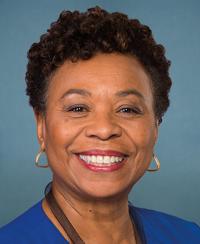
Mr. Speaker, I yield to the gentlewoman from California (Ms. Lee).
Mr. Speaker, I thank the chairwoman for capturing so well the unfinished business as it relates to the Caribbean and overall, and I thank her for being the leader of the resolution to establish Caribbean American Heritage Month that we now are able to commemorate year after year.
It is appropriate that the gentlewoman is the chair of the State, Foreign Operations, and Related Programs Subcommittee because she can have a very large voice on the changing of our treatment of the Caribbean, along with the leadership of our chair of the CBC and CBC members. I thank the gentlewoman so much for that.
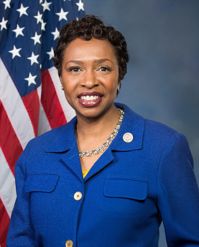
Mr. Speaker, it is my privilege, of course, to now yield to the gentlewoman who hails from Brooklyn that has such a sizable representation of Caribbean Americans. She is a senior member and vice chair of the Energy and Commerce Committee and the founder of and collaborator with the Caribbean-American Caucus here in the United States Congress, and she has worked on a number of immigration issues that really impact our brothers and sisters in the Caribbean.
I must say that, just a few years ago, I think we were shuttling during the Christmas holiday--it seems like it was near the Christmas holiday--from the Hill to the World Bank, trying to work on redoing the treatment that they were giving to Jamaica. I thank the gentlewoman for that leadership. I was pleased to join her in that effort, and we were successful.
Mr. Speaker, I yield to the gentlewoman from New York (Ms. Clarke), and I better say Brooklyn, New York.
I thank the gentlewoman from Brooklyn, New York. What a powerful display of the richness of the Caribbean, the family connections, her pride for this wonderful opportunity to speak about the people in the Caribbean. I am very grateful to you for relating both your familial connections but your predecessor.
So we all have stakeholders in Shirley Chisholm. I guess my pride is as a very young person having introduced her at a church program and then as a lawyer at a lawyer's program, those moments were very special; working in her district for, you might remember her, Carol Bellamy, and getting to know and be around her during that time.
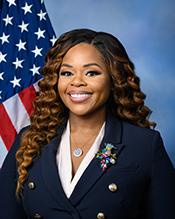
I am delighted to make mention at this point of Representative Jamaal Bowman, who will be presenting his statement into the Record, a very strong, new Member who has exhibited such leadership. He will be one of those that will submit statements into the Record along with Representative Sheila Cherfilus-McCormick. She will likewise present her statement into the Record.
I will proceed now to make my concluding remarks as I celebrate Caribbean American Heritage Month. I thank Congresswoman Barbara Lee for H. Con. Res. 71. I think it was introduced at that time in 2006, and she has done that every single year. She has made the Congressional Black Caucus better for being worldly enough to acknowledge the connection.
I will build on what you have said, Congresswoman Lee. As a member of the Homeland Security Committee, we considered the Caribbean, just a few years back, after 9/11 as the third border of the United States, and it had key importance for the role it played in the security of the United States.
We have not continued that. And I believe as we look to reenhancing our communications and collaboration with the Caribbean, it is to recognize the important role that they are in securing America and securing the Caribbean and the work that they have done with our military, but also our drug enforcement, in a way that protects them and protects the United States.
Millions have emigrated from the Caribbean to the United States since our Nation's founding. Congress should continue to recognize the important contributions of Caribbean Americans to our Nation's history and their role in our Nation's future. Those were the words from that legislation and from Barbara Lee as this bill was introduced.
Today, we celebrate the vibrancy and diversity of the Caribbean- American communities as well as the strong ties reinforced between the United States and our Caribbean neighbors.
We certainly recognize Cuba and know that there are immigration policies that apply to Cuba.
I think at this point, I want to make that sure that all of us in the Congressional Black Caucus continue to work on the issues dealing with Haiti, in particular: The natural disasters, the issues of democracy, the fact that they are a strong and resilient people, that they have many, many needs, but we also want fairness.
As the former ranking member on the Subcommittee on Immigration, Citizenship, and Border Safety, working with the Caribbean Caucus, we are looking forward to the administration working on humanitarian parole on some of the persons here of Haitian decent, so there is a balance and a fairness of their immigration status with others.
These are things that we, in the Congressional Black Caucus, are looking to work on as we cite the very strong ties that we have.
Shirley Chisholm certainly represents sort of an iconic figure. Most persons see her from Brooklyn. I remember her saying as she was appointed to the Committee on Agriculture, a tree does grow in Brooklyn.
She was not going to let herself be denied the status of importance, Mr. Speaker, when this urban member was appointed to the Committee on Agriculture as a point of, you better sit here. She made much out of that and was a great leader on food stamps and other issues dealing with the urban community.
We might not know that W.E.B. Du Bois, a prominent African American, the first to earn a Ph.D. from Harvard. And, of course, Vice President Kamala Harris, the First African American of Jamaican heritage to serve as Vice President of the United States. Supreme Court Justice Sonia Sotomayor, a Latina of Puerto Rican heritage and the first to serve in the United States Supreme Court.
We have noted Alexander Hamilton, the first Secretary of the Treasury. James Weldon Johnson, the writer of Lift Every Voice and Sing, and a key figure of the Harlem renaissance. I can assure you that he was very prominent. This song was very prominent during the Juneteenth celebrations.
Gloria Estefan, one of the best-selling female artists of all time from Cuba with the hit songs ``Conga'' and ``Rhythm is Gonna Get You.''
Then a name that we might not be familiar with: Bad Bunny, Spotify's most streamed artist and album globally of 2020, and the first time a non-English language music artist topped the year-end list.
The history, however, of the Caribbean is many. It is filled with natural resources, natural beauty. It is, along with CARICOM, a perfect partner to the United States.
In addition, I too want to applaud President Joe Biden and Vice President Kamala Harris at the Summit of the Americas. We understand, as we were participating as Members of Congress with Speaker Pelosi, that there was an outstanding meeting that went on with CARICOM to re- cement the relationship between the Caribbean and the United States.
That is important because, as I said, natural resources, natural beauty, a third border against terrorists and against other aspects of danger to the United States, but a partner so that the Caribbean is secure as well as the United States. A bastion of democracy.
That is why we must continue to fight for Haiti as it restores itself, rebuilds itself. We met with the Haitian president there to try to find a pathway for that country to restore itself. As indicated, we can be on the front line working with our Members of Congress, both Democratic and Republican.
I believe that there are a number of codels that have recently gone to the Caribbean, including one led by the chairwoman of the Committee on Financial Services, Maxine Waters, who, in fact, is a member and co- chair of the Caribbean caucus.
But as we study the history, let us realize there is much more synergism than one might imagine, because as we celebrated Juneteenth, it is important for America to remember that slaves were also in the Caribbean.
It was a tragic experience. Over 40 percent of all Africans who were enslaved were sent to the Caribbean islands; estimated at 5 million enslaved Africans beginning as early as the 16th century.
Within the Caribbean, the death rates of enslaved populations were extremely high. It was very hot, and there were a lot of insects, if I might say, that took a toll on many, but they kept on surviving. Untold numbers, however, suffered from inhumane working conditions.
However, the rise of abolitionist movements, coupled with anti- slavery sentiment, and several military and political crises, sowed the seeds for prohibition against slavery in the Caribbean countries.
In fact, I believe Haiti was one of the first free countries, securing independence from France at a very, very early stage.
We honor Caribbean heroes who rebelled against slavery which led to official emancipation in anglophone countries in 1823. Major revolts shocked the world: The Tacky's Rebellion in the 1760s in Jamaica; the Haitian Revolution; Fedon's Revolution in the 1790s in Grenada; the Barbados slave revolt in 1860; and the slave revolt in Jamaica led by Sam Sharpe.
What a unique difference and experience, but yet there was slavery. Emancipation was achieved because of the movements and the legal efforts within respective Caribbean countries.
Those revolts inspired the abolitionists in the United States. The parallel histories of Caribbean countries and the United States are rooted in oppression and the ongoing struggle for lasting true liberation, justice, equality, and freedom.
What is good about this discussion is to reflect on the fact that those enslaved Africans that were in the Caribbean, now, their descendants are the heads of state of all the Caribbean countries and our leaders in the CARICOM.
This is an important partnership for the United States, and it is one that we must utilize and teach our children. We embrace them as our ancestors who suffered in hopes that future generations would not; supporting their children so that a time would come when freedom would reign.
We now have the responsibility as we deal with the Caribbean to reflect on the Caribbean immigrants who have come here to the United States. It has already been noted how they have achieved and succeeded.
We mentioned members of our caucus who are Members of the United States Congress who have that heritage. Since 1820, people of the Caribbean descent have immigrated to the United States.
We want to make sure that the process is fair. We want to make sure that these individuals are not deported randomly.
As I said, we hope to have a response to the Haitians as to the Cubans, those who come from Cuba and have the wet foot, dry foot effort that are not Haitians. We see them being deported from the Mexican-U.S. border. That is not fair.
We have had a relationship with Haiti for centuries. Haiti fought alongside of Americans in the Revolutionary War. They came to be at our side.
Since 2000, the population increased 26 percent to 3.7 million Caribbean-Americans in 2010 and grew another 18 percent to 4.4 million in 2017. Today, there are 13.4 million Americans of that heritage; always hardworking, ready to serve, ready to serve in the United States military, and often found at the front line of aid here in this country.
The fight reached its apex with the Haitian Revolution in 1804. As I indicated, the fight did not end with Britain's Slave Trade Act of 1807 that sought abolish the British slave trade.
The point of my comments is to make sure everyone knew that they were always fighting for justice, they were fighting for equality, and their history is worth studying.
I do want to draw to our attention the connection of H.R. 40, the commission to study slavery and develop reparation proposals. Juneteenth: Healing, restorative, repair as well. Know the story.
I can tell you, across America, I heard one colleague, if I might, from Chicago who said there were so many moments of celebration.
Our majority leader indicated in his own home State, there was one event, Mr. Speaker, that had 6,000 people celebrating Juneteenth. It warms my heart. It was a decade-long fight, and here we are today, really in the eye-opening experience of Juneteenth.
I had the privilege of speaking at the Ashton Villa, the place where General Granger came to make that announcement of the No. 3 order. And to have, as well, the statue of Al Edwards, a State representative who was the first probably in the Nation to drive a State holiday in the State of Texas. He achieved that more than 20 years ago.
Being trained up under that kind of leadership, it was instilled in me that we should have a national holiday, a national Independence Day on the Juneteenth basis. I am so excited about the overwhelming support, unanimous in the Senate, 415 votes in the House, if anyone can imagine.
So, as we talk about these issues, I want the world to see and the Nation to see that over this weekend, the Juneteenth events all over the Nation reflected people coming together from many different backgrounds.
There was a degree of excitement. There were children there, families there, and our celebrations were focused around peace and unity, and they were focused around prayer.
That is what we did in Houston, Texas, at the historic--historic-- Antioch Baptist Church founded in 1866 by Jack Yates. Can you imagine, only 1 year after the Emancipation Proclamation that was issued in 1865, after 2\1/2\ years when the South did not pay any attention to Abe Lincoln's order, President Lincoln's order, that he had to dispatch this general, a West Point grad, a hero on the battlefield, to announce in Texas--I can remember the words. It seems like they are loud in my ears.
To the people of Texas, I now declare that the slaves are free, and they are free to be able to achieve property, they are no longer property, and they are citizens of the United States.
Slavery had not been abolished, but he indicated that the slaves were free and that they could maintain themselves as employer and employee. I would venture to say that even with that pronouncement, most of them, uneducated, had ever heard the words employer and employee. It was master and slave.
The one thing they knew, they were not staying. They were leaving and going up the trail, the Emancipation Trail, into the areas of La Marque in Texas and in Houston, a place called Freedmen's Town and Independence Heights.
They were going under the leadership of Jack Yates, when they got to Houston, who bought in 1872 the first park ever bought in Texas. It was bought by freed slaves, and it was a place where the emancipation Juneteenth celebrations would go for decades and decades and decades.
That history should allow us to pass with ease the commission H.R. 40 that has been percolating now since 1989 and the commission to study slavery and develop reparation proposals. It was modeled after the Civil Liberties Act that was passed in 1988 and signed by Ronald Reagan.
We championed that for the Japanese Americans. It was based on the internment that had happened wrongly of Japanese-Americans, patriots who love the country, who were rounded up, belongings left, take what you can take, properties left to their own devices, if you will, and held in an internment camp.
To this day, the Japanese-American association is a strong advocate for H.R. 40 because of the friendship and collaboration and the work we did, in particular the late John Conyers, who worked with them and then introduced H.R. 40, the Commission to Study and Develop Reparation Proposals for African Americans Act.
I would imagine most people would wonder where that name came from. It came from General Sherman, who wanted to give 40 acres and a mule to the freed slaves. Unfortunately, this is what happens. Elections count, and the next President after the assassination of President Abraham Lincoln did not hold to that commitment.
With that in mind, just know that we have built this Nation on that labor; built this Nation on making cotton king; providing resources to the enriched South, the landed South; creating the Wall Street banks, if you will; and providing an economic engine that propelled this small country into a growing international force.
Mr. Speaker, I think that H.R. 40 is a perfect complement because one of the things it does is it gets a study just to look at the landscape of how slavery impacted this Nation and how it impacted the people, how it impacted New England, the Midwest, California, the South, the Deep South, and the southeastern region where African Americans began to move all across this Nation.
Interestingly enough, California, of course, has already implemented this bill, H.R. 40, and a task force is now working to do enormous work. I refer everyone to a Harvard University medical study that indicated that if reparations had been given preceding COVID-
19, that horrible pandemic would not have so lopsidedly impacted the African-American community.
Let me be very clear that this idea of reparations is a sense of looking systemically at what would be the solutions. The commission is to be able to hear from people across America and to be able to recommend and to engage with people from all backgrounds, not just one background, not just African Americans. I am excited about that dialogue. I think it will be a powerful dialogue.
As we celebrated Juneteenth, as we had this memorial service at the Antioch Baptist Church, what an emotional time we had with song and words and dance and prayer. People left there saying that they were more inspired than they have ever been before to bring us together. It was a diverse audience of people who came even from out of town to do something that was part of my vision that on Juneteenth, and that was happy Father's Day, we would take a moment to honor slaves who were born, who lived and died as a slave and never knew freedom, to give them the honor that they never got.
As I reflect on how this Nation was built by immigrants and how it was built by the ancestors of African Americans today, I do want to continue to emphasize the Members of Congress who have this wonderful heritage and to honor the late Shirley Chisholm, who both became the first African-American woman in the United States Congress and as well became the first African-American person to run for President.
As I do so, let me cite my relatives, Sybil Gooden, Willie Gooden, they excelled as leaders coming from the Caribbean; the Lockets; the Rashfords; and, of course, my grandparents, Olive Clarke Jackson and Albert Jackson, who worked on the Panama Canal. It was so powerful to go to the Panama Canal and see his name written there. It was an emotional experience. Eric Jackson, Allen Jackson, Charles Jackson all served in World War II; Ezra Jackson, my father; and his older brothers who served in World War II. Elaine Oliver and Ollie Oliver, both of those individuals came and made great strides. Their son served in the United States Air Force. An outstanding daughter, Elaine Oliver, worked for me. Of course, Eric Holder, Colin Powell, Patrick Gaspard, Harry Belafonte, many others, our outstanding communications director.
Tonight, we have had a storytelling night of truth. We have had a great celebration of Caribbean American Month, and we have told the history and story of the powerful connection between the Caribbean and the United States of America. That should be a moment of celebration, friendship, unity, heritage, knowledge.
I am delighted to have anchored the Congressional Black Caucus Special Order hour on the Caribbean American Heritage Month, and I thank the chairwoman and the officers of the Congressional Black Caucus and all of our members for continuing to tell the truth.
Mr. Speaker, I yield back the balance of my time.