

II
117th CONGRESS
1st Session
S. 1161
IN THE SENATE OF THE UNITED STATES
April 15, 2021
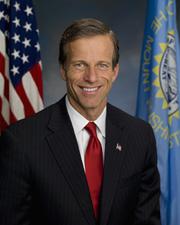
Mr. Thune (for himself and Ms. Hassan) introduced the following bill; which was read twice and referred to the Committee on Commerce, Science, and Transportation
A BILL
To promote focused research and innovation in quantum communications and quantum network infrastructure to bolster internet security, and for other purposes.
Short title
This Act may be cited as the Quantum Network Infrastructure and Workforce Development Act of 2021
.
Definitions
In this Act:
ESEA definitions
The terms elementary school, high school, local educational agency, and secondary school
have the meanings given those terms in section 8101 of the Elementary and Secondary Education Act of 1965 (20 U.S.C. 7801).
Appropriate committees of Congress
The term appropriate committees of Congress has the meaning given such term in section 2 of the National Quantum Initiative Act (15 U.S.C. 8801).
Interagency Working Group
The term Interagency Working Group means the Interagency Working Group on Workforce, Industry, and Infrastructure under the Subcommittee on Quantum Information Science of the National Science and Technology Council.
Q2Work Program
The term Q2Work Program means the Q2Work Program supported by the National Science Foundation.
Quantum information science
The term quantum information science has the meaning given such term in section 2 of the National Quantum Initiative Act (15 U.S.C. 8801).
STEM
The term STEM means science, technology, engineering, and mathematics.
Quantum Networking Working Group report on quantum networking and communications
Report
Not later than 3 years after the date of the enactment of this Act, the Quantum Networking Working Group within the Subcommittee on Quantum Information Science of the National Science and Technology Council shall submit to the appropriate committees of Congress a report detailing a plan for the advancement of quantum networking and communications technology in the United States.
Requirements
The report under subsection (a) shall include—
a framework for interagency collaboration on the advancement of quantum networking and communications research;
a plan for interagency collaboration on the development and drafting of international standards for quantum communications technology, including standards relating to—
quantum cryptography and post-quantum classical cryptography;
network security;
quantum network infrastructure;
transmission of quantum information through optical fiber networks; and
any other technologies considered appropriate by the Working Group;
a proposal for the protection of national security interests relating to the advancement of quantum networking and communications technology;
recommendations to Congress for legislative action relating to the framework, plan, and proposal set forth pursuant to paragraphs (1), (2), and (3), respectively; and
such other matters as the Working Group considers necessary to advance the security of communications and network infrastructure, remain at the forefront of scientific discovery in the quantum information science domain, and transition quantum information science research into the emerging quantum technology economy.
Quantum networking and communications research
Research
The Under Secretary of Commerce for Standards and Technology shall carry out research to facilitate the development and standardization of quantum networking and communications technologies and applications, including research on the following:
Quantum cryptography and post-quantum classical cryptography.
Quantum repeater technology.
Quantum network traffic management.
Quantum transduction.
Long baseline entanglement and teleportation.
Such other technologies, processes, or applications as the Under Secretary considers appropriate.
Implementation
The Under Secretary shall carry out the research required by subsection (a) through such divisions, laboratories, offices and programs of the National Institute of Standards and Technology as the Under Secretary considers appropriate and actively engaged in activities relating to quantum information science.
Development of standards
For quantum technologies deemed by the Under Secretary to be at a readiness level sufficient for standardization, the Under Secretary shall provide technical review and assistance to such other Federal agencies as the Under Secretary considers appropriate for the development of quantum network infrastructure standards.
Authorization of appropriations
In general
There is authorized to be appropriated to the Scientific and Technical Research and Services account of the National Institute of Standards and Technology to carry out this section $10,000,000 for each of fiscal years 2022 through 2026.
Supplement, not supplant
The amounts authorized to be appropriated under paragraph (1) shall supplement and not supplant amounts already appropriated to the account described in such paragraph.
Energy Sciences Network
In general
The Secretary of Energy (referred to in this section as the Secretary
) shall supplement the Energy Sciences Network User Facility (referred to in this section as the Network
) with dedicated quantum network infrastructure to advance development of quantum networking and communications technology.
Purpose
The purpose of subsection (a) is to utilize the Network to advance a broad range of testing and research, including relating to—
the establishment of stable, long-baseline quantum entanglement and teleportation;
quantum repeater technologies for long-baseline communication purposes;
quantum transduction;
the coexistence of quantum and classical information;
multiplexing, forward error correction, wavelength routing algorithms, and other quantum networking infrastructure; and
any other technologies or applications determined necessary by the Secretary.
Authorization of appropriations
There are authorized to be appropriated to the Secretary to carry out this section such sums as are necessary for each of fiscal years 2022 through 2026.
Quantum workforce evaluation and acceleration
Identification of gaps
The National Science Foundation shall enter into an agreement with the National Academies of Sciences, Engineering, and Medicine to conduct a study of ways to support the next generation of quantum leaders.
Scope of study
In carrying out the study described in subsection (a), the National Academies of Sciences, Engineering, and Medicine shall identify—
education gaps, including foundational courses in STEM and areas in need of standardization, in elementary school, middle school, high school, and higher education curricula, that need to be rectified in order to prepare students to participate in the quantum workforce;
the skills and workforce needs of industry, specifically identifying the cross-disciplinary academic degrees or academic courses necessary—
to qualify students for multiple career pathways in quantum information sciences and related fields;
to ensure the United States is competitive in the field of quantum information science while preserving national security; and
to support the development of quantum applications; and
the resources and materials needed to train elementary, middle, and high school educators to effectively teach curricula relevant to the development of a quantum workforce.
Reports
Executive summary
Not later than 1 year after the date of enactment of this Act, the National Academies of Science, Engineering, and Medicine shall prepare and submit to the National Science Foundation, and programs or projects funded by the National Science Foundation, an executive summary of progress regarding the study conducted under subsection (a) that outlines the findings of the Academies as of such date.
Report
Not later than 2 years after the date of enactment of this Act, the National Academies of Science, Engineering, and Medicine shall prepare and submit a report containing the results of the study conducted under subsection (a) to Congress, the National Science Foundation, and programs or projects funded by the National Science Foundation that are relevant to the acceleration of a quantum workforce.
Incorporating QISE into STEM curriculum
In general
The National Science Foundation shall, through programs carried out or supported by the National Science Foundation, prioritize the better integration of quantum information science and engineering (referred to in this section as QISE
) into the STEM curriculum for each grade level from kindergarten through grade 12.
Requirements
The curriculum integration under subsection (a) shall include—
methods to conceptualize QISE for each grade level from kindergarten through grade 12;
methods for strengthening foundational mathematics and science curricula;
age-appropriate materials that apply the principles of quantum information science in STEM fields;
recommendations for the standardization of key concepts, definitions, and curriculum criteria across government, academia, and industry; and
materials that specifically address the findings and outcomes of the study conducted under section 6 and strategies to account for the skills and workforce needs identified through the study.
Coordination
In carrying out this section, the National Science Foundation, including the STEM Education Advisory Panel and the Advancing Informal STEM Learning program and through the National Science Foundation’s role in the National Q–12 Education Partnership and the Q2Work Program, shall coordinate with the Office of Science and Technology Policy, EPSCoR eligible universities, and any Federal agencies or working groups determined necessary by the National Science Foundation.
Review
In implementing this section, the National Science Foundation shall review and provide necessary updates to the related report entitled Key Concepts for Future QIS Learners
(May 2020).
Quantum education pilot program
In general
The National Science Foundation, through the National Science Foundation's role in the National Q–12 Education Partnership and the Q2Work Program, and in coordination with the Directorate for Education and Human Resources, shall carry out a pilot program, to be known as the Next Generation Quantum Leaders Pilot Program
, to provide funding for the education and training of the next generation of students in the fundamental principles of quantum mechanics.
Requirements
In general
In carrying out the pilot program required by subsection (a), the National Science Foundation shall—
publish a call for applications through the National Q–12 Education Partnership website (or similar website) for participation in the pilot program from elementary schools, secondary schools, and State educational agencies;
coordinate with educational service agencies, associations that support STEM educators or local educational agencies, and partnerships through the Q–12 Education Partnership, to encourage elementary schools, secondary schools, and State educational agencies to participate in the program;
accept applications for a period of 5 months in advance of the academic year in which the program shall begin;
select elementary schools, secondary schools, and State educational agencies to participate in the program, in accordance with qualifications determined by the Interagency Working Group, in coordination with the National Q–12 Education Partnership; and
in coordination with the National Q–12 Education Partnership, identify qualifying advanced degree students, or recent advanced degree graduates, with experience in the field of quantum information science to provide feedback and assistance to educators selected to participate in the pilot program.
Prioritization
In selecting program participants under paragraph (1)(D), the Director of the National Science Foundation shall give priority to elementary schools, secondary schools, and local educational agencies located in jurisdictions eligible to participate in the Established Program to Stimulate Competitive Research (commonly known as EPSCoR), including Tribal and rural elementary, middle, and high schools in such jurisdictions.
Consultation
The National Science Foundation shall carry out this section in consultation with the Interagency Working Group.
Reporting
Report and selected participants
Not later than 180 days after the date of enactment of this Act, the Director of the National Science Foundation shall submit to Congress a report on the educational institutions selected to participate in the pilot program required under subsection (a), specifying the percentage from nontraditional geographies, including Tribal or rural school districts.
Report on implementation of curriculum
Not later than 2 years after the date of enactment of this Act, the Director of the National Science Foundation shall submit to Congress a report on implementation of the curricula and materials under the pilot program, including the feasibility and advisability of expanding such pilot program to include additional educational institutions beyond those originally selected to participate in the pilot program.
Authorization of appropriations
There is authorized to be appropriated such funds as may be necessary to carry out this section.
Termination
This section shall cease to have effect on the date that is 3 years after the date of the enactment of this Act.