

S. 1917Senate117th Congress (2021-2023)Enacted

K-12 Cybersecurity Act of 2021

Introduced May 27, 2021

AI-Generated Summary

Updated February 8, 2026 at 3:41 AM UTC

The K-12 Cybersecurity Act of 2021 directs the Department of Homeland Security’s Cybersecurity and Infrastructure Security Agency to help K‑12 schools protect their computer systems and student data. It requires a study of the specific cyber risks schools face, then creates guidelines and training tools that schools can use voluntarily. The effort is aimed at elementary and secondary schools across the United States.

Key Provisions

  • The Director must conduct a study of K‑12 cybersecurity risks within 120 days of the law’s enactment and brief Congress on the findings.
  • Based on the study, the Director must issue cybersecurity recommendations for schools within 60 days of the study’s completion.
  • An online training toolkit for school officials must be developed within 120 days after the recommendations are issued.
  • The study results, recommendations, and training toolkit must be posted publicly on the DHS website.
  • Use of the recommendations by schools is voluntary.
  • The Director must consult with teachers, administrators, federal agencies, cybersecurity experts, and private sector groups while conducting the study and drafting recommendations.

Legislative Activity

Stay on top of the latest movement without scrolling through every action

17 earlier actions
Became Law Latest Action

Became Public Law No: 117-47.

October 8, 2021

View full timeline
SenateIntro Referral

Introduced in Senate

May 27, 2021

SenateIntro Referral

Read twice and referred to the Committee on Homeland Security and Governmental Affairs.

May 27, 2021

SenateCommittee

Committee on Homeland Security and Governmental Affairs. Ordered to be reported without amendment favorably.

July 14, 2021

SenateCommittee

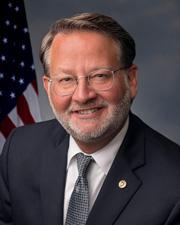
Committee on Homeland Security and Governmental Affairs. Reported by Senator Peters without amendment. With written report No. 117-32.

July 26, 2021

SenateCalendars

Placed on Senate Legislative Calendar under General Orders. Calendar No. 107.

July 26, 2021

SenateFloor

Passed Senate without amendment by Unanimous Consent. (consideration: CR S6189-6190; text: CR S6189-6190)

August 9, 2021

SenateFloor

Message on Senate action sent to the House.

August 10, 2021

HouseFloor

Received in the House.

August 13, 2021 • 12:04 PM

HouseFloor

Held at the desk.

August 13, 2021 • 12:09 PM

HouseFloor

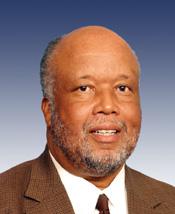
Mr. Thompson (MS) moved to suspend the rules and pass the bill.

September 29, 2021 • 4:00 PM

HouseFloor

Considered under suspension of the rules. (consideration: CR H5538-5539)

September 29, 2021 • 4:00 PM

HouseFloor

DEBATE - The House proceeded with forty minutes of debate on S. 1917.

September 29, 2021 • 4:00 PM

SenateFloor

Passed/agreed to in House: On motion to suspend the rules and pass the bill Agreed to by voice vote.(text: CR H5538)

September 29, 2021 • 4:12 PM

HouseFloor

On motion to suspend the rules and pass the bill Agreed to by voice vote. (text: CR H5538)

September 29, 2021 • 4:12 PM

HouseFloor

Motion to reconsider laid on the table Agreed to without objection.

September 29, 2021 • 4:12 PM

President

Presented to President.

October 5, 2021

Became Law

Signed by President.

October 8, 2021

Became Law

Became Public Law No: 117-47.

October 8, 2021

Floor Debate

4 members

What members said about S. 1917 on the floor

1 Republican3 Democrats
Bennie G. Thompson
Rep. Bennie G. ThompsonD-MS-2 · Sep 29, 2021

Madam Speaker, I move to suspend the rules and pass the bill (S. 1917) to establish a K-12 education cybersecurity initiative, and for other purposes. Madam Speaker, I ask unanimous consent that all…

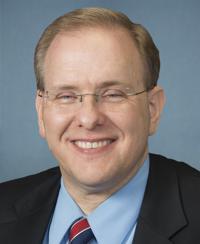
James R. Langevin
Rep. James R. LangevinD-RI-2 · Sep 29, 2021

Mr. Speaker, I thank the gentleman for yielding, and I commend the chairman for his strong leadership on cybersecurity issues and in support of this act before us today. This bill, the House…

Michael Guest
Rep. Michael GuestR-MS-3 · Sep 29, 2021

Mr. Speaker, I yield myself such time as I may consume. I rise today in support of S. 1917, the K-12 Cybersecurity Act of 2021. Schools around our country are increasingly the target of malicious…

Sheldon Whitehouse
Sen. Sheldon WhitehouseD-RI · Aug 9, 2021

Madam President, I ask unanimous consent that the Senate proceed to the immediate consideration of Calendar No. 107, S. 1917. Madam President, I ask unanimous consent that the bill be considered read…

Bill Text

5 versions available

Reading Mode
Latest
Enrolled BillPublication date not provided

One Hundred Seventeenth Congress of the United States of America

1st Session

Begun and held at the City of Washington on Sunday, the third day of January, two thousand and twenty one

S. 1917

AN ACT

To establish a K–12 education cybersecurity initiative, and for other purposes.

1.

Short title

This Act may be cited as the K–12 Cybersecurity Act of 2021.

2.

Findings

Congress finds the following:

(1)

K–12 educational institutions across the United States are facing cyber attacks.

(2)

Cyber attacks place the information systems of K–12 educational institutions at risk of possible disclosure of sensitive student and employee information, including—

(A)

grades and information on scholastic development;

(B)

medical records;

(C)

family records; and

(D)

personally identifiable information.

(3)

Providing K–12 educational institutions with resources to aid cybersecurity efforts will help K–12 educational institutions prevent, detect, and respond to cyber events.

3.

K–12 education cybersecurity initiative

(a)

Definitions

In this section:

(1)

Cybersecurity risk

The term cybersecurity risk has the meaning given the term in section 2209 of the Homeland Security Act of 2002 (6 U.S.C. 659).

(2)

Director

The term Director means the Director of Cybersecurity and Infrastructure Security.

(3)

Information system

The term information system has the meaning given the term in section 3502 of title 44, United States Code.

(4)

K–12 educational institution

The term K–12 educational institution means an elementary school or a secondary school, as those terms are defined in section 8101 of the Elementary and Secondary Education Act of 1965 (20 U.S.C. 7801).

(b)

Study

(1)

In general

Not later than 120 days after the date of enactment of this Act, the Director, in accordance with subsection (g)(1), shall conduct a study on the specific cybersecurity risks facing K–12 educational institutions that—

(A)

analyzes how identified cybersecurity risks specifically impact K–12 educational institutions;

(B)

includes an evaluation of the challenges K–12 educational institutions face in—

(i)

securing—

(I)

information systems owned, leased, or relied upon by K–12 educational institutions; and

(II)

sensitive student and employee records; and

(ii)

implementing cybersecurity protocols;

(C)

identifies cybersecurity challenges relating to remote learning; and

(D)

evaluates the most accessible ways to communicate cybersecurity recommendations and tools.

(2)

Congressional briefing

Not later than 120 days after the date of enactment of this Act, the Director shall provide a Congressional briefing on the study conducted under paragraph (1).

(c)

Cybersecurity Recommendations

Not later than 60 days after the completion of the study required under subsection (b)(1), the Director, in accordance with subsection (g)(1), shall develop recommendations that include cybersecurity guidelines designed to assist K–12 educational institutions in facing the cybersecurity risks described in subsection (b)(1), using the findings of the study.

(d)

Online training toolkit

Not later than 120 days after the completion of the development of the recommendations required under subsection (c), the Director shall develop an online training toolkit designed for officials at K–12 educational institutions to—

(1)

educate the officials about the cybersecurity recommendations developed under subsection (c); and

(2)

provide strategies for the officials to implement the recommendations developed under subsection (c).

(e)

Public availability

The Director shall make available on the website of the Department of Homeland Security with other information relating to school safety the following:

(1)

The findings of the study conducted under subsection (b)(1).

(2)

The cybersecurity recommendations developed under subsection (c).

(3)

The online training toolkit developed under subsection (d).

(f)

Voluntary use

The use of the cybersecurity recommendations developed under (c) by K–12 educational institutions shall be voluntary.

(g)

Consultation

(1)

In general

In the course of the conduction of the study required under subsection (b)(1) and the development of the recommendations required under subsection (c), the Director shall consult with individuals and entities focused on cybersecurity and education, as appropriate, including—

(A)

teachers;

(B)

school administrators;

(C)

Federal agencies;

(D)

non-Federal cybersecurity entities with experience in education issues; and

(E)

private sector organizations.

(2)

Inapplicability of FACA

The Federal Advisory Committee Act (5 U.S.C App.) shall not apply to any consultation under paragraph (1).

Speaker of the House of Representatives

Vice President of the United States and President of the Senate