Mr. Speaker, I move to suspend the rules and pass the bill (S. 2796) to amend the Omnibus Crime Control and Safe Streets Act of 1968 to provide for the eligibility of rural community response pilot…
Mr. Speaker, I move to suspend the rules and pass the bill (S. 2796) to amend the Omnibus Crime Control and Safe Streets Act of 1968 to provide for the eligibility of rural community response pilot programs for funding under the Comprehensive Opioid Abuse Grant Program, and for other purposes.
Mr. Speaker, I ask unanimous consent that all Members may have 5 legislative days in which to revise and extend their remarks and insert extraneous material on S. 2796.
Mr. Speaker, I yield myself such time as I may consume.
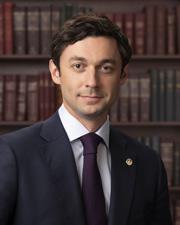
Mr. Speaker, let me acknowledge that this legislation is from Senator Jon Ossoff. I know how important these issues are to him. At the very beginning, I thank him for his leadership. We have worked together as members of the Judiciary Committee, he in the Senate and myself in the House. I applaud him and look forward to more work on this constructive approach to drug use.
S. 2796, the Rural Opioid Abuse Prevention Act of 2022, is bipartisan legislation that would establish a pilot program for rural communities within the Comprehensive Opioid Abuse Grant Program.
The pilot program would make grants to rural areas to implement community response programs in order to reduce opioid overdose deaths. These community response programs would involve collaborations between public safety, public health, and behavioral health systems. The program will seek to identify gaps in current treatment availability and establish treatment programs to reduce opioid overdoses in rural areas.
Data from the Centers for Disease Control and Prevention's National Center for Health Statistics indicates that in 2021 there were an estimated 107,622 drug overdose deaths. The data also shows overdose deaths, including opioids, increased from an estimated 70,029 in 2020 to 80,816 in 2021.
Mr. Speaker, what compounds this, as I proceed in my debate here today, is that, just this morning, I read an article that says Texas rural hospitals are closing by the dozens, impacted by the pandemic and lack of personnel. We have an emerging, surging, if you will, synergism of default: individuals who need care, can't get care, and hospitals in rural communities that are closing.
With more than 200 Americans still dying of drug overdoses each day, it is even more important that we pass this critical legislation to get in the way, if you will.
In my hometown of Houston, overdose deaths have been exacerbated by strained access to treatment caused by the COVID-19 pandemic. Opioid overdose deaths have increased throughout the State of Texas, rising from 4,154 deaths in 2020 to 4,831 deaths in 2021.
When we wanted to get the antidote to opioid, unfortunately, we couldn't get State funding. Police officers and recovery entities, they just couldn't get it because there was a philosophical disbelief that that had anything to do with some of the dangerous drugs out there to be able to help some of those who are in need.
S. 2796 would enable local communities and community organizations to develop and expand initiatives targeting rural and low-resource communities. Eligible applicants of the grant program would be required to have a documented history of providing services in rural communities or regions highly impacted by substance use disorder.
The programs supported by this legislation would be able to identify gaps in treatment access for rural communities, leverage Federal resources to expand treatment options, and ensure rural and remote communities are not forgotten in our effort to address the ongoing impact of opioid abuse disorder across the country. The point that should be made is that rural communities are north, south, east, and west.
Building on the successful Comprehensive Opioid Abuse Grant Program, this bipartisan bill would expand it to include a pilot program targeting rural communities.
Mr. Speaker, I thank Congressman Lamb and Senator Ossoff for introducing this important legislation. I urge all of my colleagues to support the bill, and I reserve the balance of my time.
Mr. Speaker, I yield myself such time as I may consume.
Let me, first of all, again acknowledge Senator Ossoff and Congressman Lamb. This is an important piece of legislation, but my good friend knows that I am going to have to add to this discussion by saying that, again, the question of fentanyl, no one wants to see that proliferated and causing the disastrous conditions that we have.
But listen to the story of Ms. Alfaro, who was 19 years old. She lived in Appleton, Wisconsin, and ``was a recent high school graduate raising a toddler and considering joining the Army when she and a friend bought what they thought was the antianxiety drug Xanax in December 2020.''
The pills were fake and contained fentanyl, an opioid that can be 50 times more powerful.
One of the things that we should understand is fentanyl is everywhere, and it has been determined that most of the fentanyl that comes across the border is brought over by U.S. citizens.
The other aspect that is very important that doesn't specifically cover this bill, but at least this bill provides what the mother indicated, she didn't know anything about these drugs. She wished she could have helped her daughter. Yes, her daughter did lose her life.
The point this legislation is making is let's provide information to these rural communities, but also let's understand some of the techniques that some States and local communities were not providing law enforcement or anyone else. Certainly, that is the fentanyl test strips and Narcan. That
certainly was a problem and continues to be a problem in the State of Texas.
We have to look at this holistically, and I think this legislation focuses, certainly, on getting families information, particularly in the rural areas. This was Appleton, Wisconsin. At least, minimally, there would have been information about this, maybe in a broader way, because the mother of the 19-year-old said, ``Two years ago, I knew nothing about this.''
We have to do a better job of telling the facts about fentanyl that we all want to see be extinguished from causing the loss of life.
I think this legislation for rural communities is a very good start, but we need to make sure that our facts are accurate as we talk about this deadly drug, which we want to get off the streets of this Nation. We need to find ways that can be very effective, and we need to keep working.
Mr. Speaker, I reserve the balance of my time.
Mr. Speaker, I yield myself such time as I may consume.
Mr. Speaker, I would like to offer a number of articles that speak to the importance of this legislation. I thank the gentleman from Iowa for his comments in support, and I know that the gentleman from Ohio will likewise, hopefully, join us.
It is important to speak the obvious. U.S. overdose deaths in 2021 increased half as much as in 2020 but are still up. We know that we need legislation specifically in communities in rural areas that would close or identify the gaps in prevention, treatment, and recovery services for individuals who interact with the criminal justice system in rural areas and create new efforts to address the opioid crisis.
Mr. Speaker, I include in the Record an article from the Centers for Disease Control's National Center for Health Statistics.
[From the Centers for Disease Control and Prevention, May 11, 2022]
U.S. Overdose Deaths in 2021 Increased Half as Much as in 2020--But Are
Still Up 15 Percent
Provisional data from CDC's National Center for Health
Statistics indicate there were an estimated 107,622 drug
overdose deaths in the United States during 2021, an increase
of nearly 15 percent from the 93,655 deaths estimated in
2020. The 2021 increase was half of what it was a year ago,
when overdose deaths rose 30 percent from 2019 to 2020.
The data is featured in an interactive web data
visualization. The 2021 data presented in this visualization
are provisional--they are incomplete and subject to change.
The new data show overdose deaths involving opioids
increased from an estimated 70,029 in 2020 to 80,816 in 2021.
Overdose deaths from synthetic opioids (primarily fentanyl),
psychostimulants such as methamphetamine, and cocaine also
continued to increase in 2021 compared to 2020.
The biggest percentage increase in overdose deaths in 2021
occurred in Alaska, where deaths were up 75.3 percent, while
overdose deaths in Wyoming did not increase at all in 2021
and deaths in Hawaii declined 1.8 percent from the same point
in 2020. The visualization includes:
Reported and predicted (estimated) provisional counts of
deaths due to drug overdose occurring nationally and in each
jurisdiction.
U.S. map of the percentage changes in provisional drug
overdose deaths for the 12-month period ending in December
2021 compared with the 12-month period ending in December
2020, by jurisdiction.
Reported and predicted provisional counts of drug overdose
deaths involving specific drugs or drug classes occurring
nationally and in selected jurisdictions.
NCHS releases both reported and predicted provisional drug
overdose death counts each month. They represent the numbers
of these deaths due to drug overdose occurring in the 12-
month periods ending in the month indicated. These counts
include all seasons of the year and are insensitive to
variations by seasonality. Deaths are reported by the
jurisdiction in which the death occurred.
Mr. Speaker, I think it is important to emphasize that, really, treatment works, and this is an example. ``Thomas Gooch has spent more than 30 years struggling with illegal drugs. The 52- year-old Nashville, Tennessee, native grew up in extreme poverty. He was first incarcerated in 1988 and spent the next 15 years in and out of jail for using and selling narcotics. `Until 2003,' Gooch says. `That was the first time I went to treatment and the last time I used.'''
This has to also be a component, which is the treatment of individuals whose conditions put them in this way.
Mr. Speaker, I include in the Record ``The Opioid Epidemic Is Surging Among Black People Because of Unequal Access to Treatment.''
[From Scientific American, Dec. 1, 2022]
The Opioid Epidemic Is Surging Among Black People Because of Unequal
Access to Treatment
(By Melba Newsome and Gioncarlo Valentine)
In one way or another, Thomas Gooch has spent more than 30
years struggling with illegal drugs. The 52-year-old
Nashville, Tenn., native grew up in extreme poverty. He was
first incarcerated in 1988 and spent the next 15 years in and
out of jail for using and selling narcotics. ``Until 2003,''
Gooch says. ``That was the first time I went to treatment and
the last time I used.'' Since then, for most of 19 years,
Gooch has been trying to get others into recovery or just
keep them alive. He handed out clean needles and injection-
drug equipment--which reduce injuries, infections and
overdose deaths--in Nashville's hardest-hit communities. In
2014 he founded My Father's House, a transitional recovery
facility for fathers struggling with substance use disorder.
But despite Gooch's long experience, the opioid epidemic
recently has brought a level of devastation to the Black
community that has shocked him. ``I had never seen death the
way I've seen death when it comes to opioid addiction,'' he
says. ``There's been so many funerals, it doesn't even make
sense. I personally know at least 50 to 60 individuals who
died from overdoses in the last 10 years.'' That staggering
body count includes Gooch's recently estranged wife in 2020
and a former partner in 2019.
A million people in the U.S. have died of opioid overdoses
since the 1990s. But the face--and race--of the opioid
epidemic has changed in the past decade. Originally white and
middle class, victims are now Black and brown people
struggling with long-term addictions and too few resources.
During 10 brutal years, opioid and stimulant deaths have
increased 575 percent among Black Americans. In 2019 the
overall drug overdose death rate among Black people exceeded
that of whites for the first time: 36.8 versus 31.6 per
100,000. And with the addition of fentanyl, the synthetic
opioid that's 50 to 100 times more powerful than morphine,
Black men older than 55 who survived for decades with a
heroin addiction are dying at rates four times greater than
people of other races in that age group.
The reasons for this dramatic change come down to racial
inequities. Research shows that Black people have a harder
time getting into treatment programs than white people do,
and Black people are less likely to be prescribed the gold
standard medications for substance use therapy. ``If you are
a Black person and have an opioid use disorder, you are
likely to receive treatment five years later than if you're a
white person,'' says Nora D. Volkow, director of the National
Institute on Drug Abuse at the National Institutes of Health.
``Treatments are extraordinarily useful in terms of
preventing overdose death so you can actually recover. Five
years can make the difference between being alive or not.''
Black people with substance use problems are afraid of being
caught up in a punitive criminal justice system and are less
likely to have insurance good enough to allow them to seek
help on their own. And the COVID pandemic disrupted many
recovery and harm-reduction services, particularly for people
of color.
Gooch blames straight-out racial discrimination in the
health-care system, too. ``When we call different places to
try to get people into treatment, the question they ask is
`What drug do they use?' '' he recounts with
exasperation. ``If you say `crack,' all of a sudden they
ain't got no bed available. If you say opioids and heroin,
they will find a bed because that's the demographic they
want. A couple of times I told patients that the only way
they're going to get help is to get drunk and turn themselves
into Vanderbilt Hospital because Vanderbilt will hold them
for five days, and that'll get them into treatment.''
Gooch is one of the people trying to improve access to
therapies for addiction and change the overall dysfunctional
dynamic. Other groups are bringing more effective addiction
treatments within prison walls, reducing the chances of
recidivism on release. A proposed federal law would make
therapy with the commonly used addiction medication methadone
less onerous for an impoverished population, as well as less
stigmatizing. And Volkow is using her platform at the NIH to
highlight the overwhelming research-based evidence for better
ways to understand and treat addiction.
Mr. Speaker, I also include in the Record the article regarding the tragic young lady who died in Appleton, Wisconsin, and even now give sympathy to that family and make sure that we have the basic facts.
``Advocates warn that some of the alarms being sounded by politicians and officials are wrong and potentially dangerous. Among those ideas: that tightening control of the U.S.-Mexico border would stop the flow of the drugs, though experts say the key to reining in the crisis is reducing drug demand.''
She was looking for Xanax. Someone made phony Xanax, and then fentanyl was in it. That is just heartbreaking. It is tragic. We have to know where to spend our resources.
Mr. Speaker, I include in the Record this article: ``Myths about fentanyl persist as opioid continues to cause overdose deaths.''
[From the PBS News Hour, Oct. 28, 2022]
Myths About Fentanyl Persist as Opioid Continues To Cause Overdose
Deaths
Lillianna Alfaro was a recent high school graduate raising
a toddler and considering joining the Army when she and a
friend bought what they thought was the anti-anxiety drug
Xanax in December 2020.
The pills were fake and contained fentanyl, an opioid that
can be 50 times as powerful as the same amount of heroin. It
killed them both.
``Two years ago, I knew nothing about this,'' said Holly
Groelle, the mother of 19-year-old Alfaro, who lived in
Appleton, Wisconsin. ``I felt bad because it was something I
could not have warned her about because I didn't know.''
The drug that killed her daughter was rare a decade ago,
but fentanyl and other lab-produced synthetic opioids now are
driving an overdose crisis deadlier than any the U.S. has
ever seen. Last year, overdoses from all drugs claimed more
than 100,000 lives for the first time, and the deaths this
year have remained at nearly the same level--more than gun
and auto deaths combined.
The federal government counted more accidental overdose
deaths in 2021 alone than it did in the 20-year period from
1979 through 1998. Overdoses in recent years have been many
times more frequent than they were during the black tar
heroin epidemic that led President Richard Nixon to launch
his War on Drugs or during the cocaine crisis in the 1980s.
As fentanyl gains attention, mistaken beliefs persist about
the drug, how it is trafficked and why so many people are
dying.
Experts believe deaths surged not only because the drugs
are so powerful, but also because fentanyl is laced into so
many other illicit drugs, and not because of changes in how
many people are using. In the late 2010s--the most recent
period for which federal data is available--deaths were
skyrocketing even as the number of people using opioids was
dropping.
Advocates warn that some of the alarms being sounded by
politicians and officials are wrong and potentially
dangerous. Among those ideas: that tightening control of the
U.S.-Mexico border would stop the flow of the drugs, though
experts say the key to reining in the crisis is reducing drug
demand; that fentanyl might turn up in kids' trick-or-treat
baskets this Halloween; and that merely touching the drug
briefly can be fatal--something that researchers found untrue
and that advocates worry can make first responders hesitate
about giving lifesaving treatment.
All three ideas were brought up this month in an online
video billed as a pre-Halloween public service announcement
from a dozen Republican U.S. senators.
A report this year from a bipartisan federal commission
found that fentanyl and similar drugs are being made mostly
in labs in Mexico from chemicals shipped primarily from
China.
In New England, fentanyl has largely replaced the supply of
heroin. Across the country, it's being laced into drugs such
as cocaine and methamphetamine, sometimes with deadly
results. And in cases like Alfaro's, it's being mixed in
Mexico or the U.S. with other substances and pressed into
pills meant to look like other drugs.
The U.S. Drug Enforcement Agency has warned that fentanyl
is being sold in multicolored pills and powders--sometimes
referred to as ``rainbow fentanyl''--marketed on social media
to teens and young adults.
Jon DeLena, the agency's associate special agent in charge,
said at the National Crime Prevention Council summit on
fentanyl in Washington this month that there's ``no direct
information that Halloween is specifically being targeted or
young people are being targeted for Halloween,'' but that
hasn't kept that idea from spreading.
Joel Best, an emeritus sociology professor at the
University of Delaware, said that idea falls in with a long
line of Halloween-related scares. He has examined cases since
1958 and has not found a single instance of a child dying
because of something foreign put into Halloween candy--and
few instances of that being done at all.
``If you give a dose of fentanyl to kids in elementary
school, you have an excellent chance of killing them,'' he
said. ``If you do addict them, what are you going to do, try
to take their lunch money? No one is trying to addict little
kids to fentanyl.''
In midterm election campaigns, fentanyl is not getting as
much attention as issues such as inflation and abortion. But
Republicans running for offices including governor and U.S.
Senate in Arkansas, New Mexico and Pennsylvania have framed
the fentanyl crisis as a result of Democrats being lax about
securing the Mexican border or soft on crime as part of a
broader campaign assertion that Democrats foster lawlessness.
And when Democrats highlight the overdose crisis in
campaigns this year, it has often been to tout their roles in
forging settlements to hold drugmakers and distributors
responsible.
Relying heavily on catching fentanyl at the border would be
futile, experts say, because it's easy to move in small,
hard-to-detect quantities.
``I don't think that reducing the supply is going to be the
answer because it's so easy to mail,'' said Adam Wandt, an
assistant professor at John Jay College of Criminal Justice.
Still, some more efforts are planned on the U.S.-Mexico
border, including increasing funding to search more vehicles
crossing ports of entry. The bipartisan commission found
those crossings are where most fentanyl arrives in the
country.
The commission is calling for many of the measures that
other advocates want to see, including better coordination of
the federal response, targeted enforcement, and measures to
prevent overdoses for those who use drugs.
The federal government has been funding efforts along those
lines. It also publicizes big fentanyl seizures by law
enforcement, though it's believed that even the largest busts
make small dents in the national drug supply.
The commission stopped short of calling for increased
penalties for selling fentanyl. Bryce Pardo, associate
director of the RAND Drug Policy Research Center and a
commission staff member, said such a measure would not likely
deter the drug trade. But, he said, dealers who sell the
products most likely to cause death--such as mixing
fentanyl into cocaine or pressing it into fake Xanax could be
targeted effectively.
One California father who lost his 20-year-old daughter is
pushing for prosecutors to file murder charges against those
who supply fatal doses. Matt Capelouto's daughter Alexandra
died from half a pill she bought from a dealer she found on
social media in 2019, while home in Temecula, California,
during a college break. She was told the pill was oxycodone,
Capelouto said, but it contained fentanyl.
The dealer was charged with distributing fentanyl resulting
in death, but he reached a plea deal on a lesser drug charge
and will face up to 20 years in prison.
``It's not that arresting and convicting and putting these
guys behind bars doesn't work,'' Capelouto said. ``The fact
is we don't do it enough to make a difference.''
While some people killed by fentanyl have no idea they're
taking it, others, particularly those with opioid use
disorder, know it is or could be in the mix. But they may not
know how much is in their drugs.
That was the case for Susan Ousterman's son Tyler Cordiero,
who died at 24 in 2020 from a mixture that included fentanyl
after years of using heroin and other opioids.
For nearly two years, Ousterman avoided going by the gas
station near their home in Bensalem, Pennsylvania, where her
son fatally overdosed. But in August, she went to leave two
things there: naloxone, a drug used to reverse overdoses, and
a poster advertising a hotline for people using drugs to call
so the operator could call for help if they become
unresponsive.
Ousterman is funneling her anger and sorrow into preventing
other overdoses.
``Fentanyl is everywhere,'' she said. ``You don't know
what's in an unregulated drug supply. You don't know what
you're taking. You're always taking the chance of dying every
time.''
Mr. Speaker, I yield myself the balance of my time.
I thank the gentleman from Ohio for his work on this bill and indicate that we are pleased to, likewise, support and thank Congressman Lamb and the gentleman from Georgia, Senator Ossoff, for introducing this legislation.
I urge all of my colleagues to support this bill, as well, and to ensure that we provide really deep collaboration in our rural communities to help people who don't have access either to this kind of treatment, knowledge or prevention, and then, as I indicated, to medical care because hospitals are closing.
This is an important legislative initiative. I am hoping that we will support the Rural Opioid Abuse Prevention Act because it is bipartisan legislation. It is time for our Nation to face the increased overall overdoses and deaths in everyday communities large and small.
With more than 200 Americans dying of drug overdoses each day, Congress must act to support small and rural communities in addressing this crisis.
Mr. Speaker, S. 2796, the ``Rural Opioid Abuse Prevention Act of 2022,'' is bipartisan legislation that would establish a pilot program for rural communities within the Comprehensive Opioid Abuse Grant Program.
The pilot program would make grants to rural areas to implement community response programs in order to reduce opioid overdose deaths. These community response programs would involve collaborations between public safety, public health, and behavioral health systems. The pilot programs would seek to identify gaps in current treatment availability and establish treatment programs to reduce opioid overdoses in rural areas.
Data from the Center for Disease Control and Prevention's National Center for Health Statistics indicates that in 2021 there were an estimated 107,622 drug overdose deaths. The data also shows overdose deaths involving opioids increased from an estimated 70,029 in 2020 to 80,816 in 2021.
With more than 200 Americans still dying of drug overdoses each day, it is even more important that we pass this critical legislation. In my hometown of Houston, overdose deaths have been exacerbated by strained access to treatment caused by the COVID-19 pandemic. Opioid overdose deaths have increased throughout the state of Texas, rising from 4,154 deaths in 2020 to 4,831 deaths in 2021.
S. 2796 would enable local governments and community organizations to develop and expand initiatives targeting rural and low resourced communities. Eligible applicants of the grant program would be required to have a documented history of providing services to rural communities or regions highly impacted by substance use disorder. The programs supported by this legislation would be able to identify gaps in treatment access for rural communities, leverage federal resources to expand treatment options, and ensure rural and remote communities are not forgotten in our efforts to address the ongoing impact of opioid abuse disorder across the country.
Building on the successful Comprehensive Opioid Abuse Grant Program, this bipartisan bill would expand it to include a pilot program targeting rural communities.
I want to thank Congressman Lamb and Senator Ossoff for introducing this important legislation. I urge all of my colleagues to support the bill.
Mr. Speaker, I urge my colleagues to support this bill, and I yield back the balance of my time.