Madam President, I ask unanimous consent that the order for the quorum call be rescinded Madam President, I rise today to talk about legislation that we are going to be considering in this month of…
Madam President, I ask unanimous consent that the order for the quorum call be rescinded
Madam President, I rise today to talk about legislation that we are going to be considering in this month of December, critically important legislation for the country. The name of this legislative proposal, which as many people know has passed the House of Representatives, is the Build Back Better Act, which will lower costs for families in ways that I, certainly, have never seen in the time I have been in the Senate. It will also cut taxes for families with children, especially, but for other families as well.
I wanted to start today by talking about a Pennsylvanian because I think
sometimes the only way that we can make sense of some of the policy that we are talking about is to talk about it in terms of its impact on individual Americans and in this case, my case, individual Pennsylvanians.
This is about a mom and her son from a town in Southeastern Pennsylvania, not far from the great city of Philadelphia, Downingtown, PA. Victoria Farrell. There is Victoria and her son Cole. Her son Cole was born with a mitochondrial disease. Cole faces health challenges every single day of his life.
Now, because of her son's condition, Victoria receives help from nurses day and night. Here is what Victoria said about the impact of those nurses on her son Cole and their lives together. She said those nurses are the ``keystone of our lives.'' Victoria also said that the nurses have ``become family.'' That is what these nurses mean to these families every day.
Now, in the case of Victoria and Cole and their family, home- and community-based services allow Cole to remain an active part of his community and to stay at home--to stay at home where he belongs, certainly where Victoria, as any mom, would want him to stay. She is able to have Cole at home instead of being at a place far from their home. These services keep their family together and strengthen their bonds, the bonds between a mother and her son and the bonds between and among other family members.
At its core, Build Back Better is about helping families. But in a particular way, Build Back Better is about caregiving and whether or not we are going to meet our obligations to invest in caregiving in ways that we have talked about a long time here in Washington but have never done. For far too long, our Nation has viewed caregiving as a personal problem for each family to solve on their own.
Caregiving is an economic issue. It is not just an issue for one family to solve. It is an economic issue that affects all of us. And if quality caregiving isn't provided to one family, we are all diminished by that failure. And that is why Build Back Better provides such an opportunity, such a bright opportunity to provide better caregiving.
Caregiving is an economic issue, and it is also a workforce issue. This is one of the problems that stands in the way, a real impediment to getting people back to work, especially in the grip of--and we hope soon in the aftermath of--the pandemic. Caregiving is about getting people back to work, and caregiving is about preparing the workforce of the future.
We know that the pandemic, as horrible as it has been--all of the death, all of the suffering, all of the suffering endured by families, either suffering by way of death or disease or suffering by way of job loss or loss of a small business--with all of that horror, a spotlight was put on some problems that, frankly, a lot of people knew about before, and we all may have pointed to or talked about, but the spotlight finally was imposed upon so many challenges. The spotlight on the Nation's caregiving crisis was one of the most pronounced spotlights that we saw in the whole pandemic.
American workers, but women in particular, are leaving the workforce. This is not out of choice. It is because they cannot find quality, affordable childcare or they can't find quality care for an aging parent or even the option of getting quality care for a parent, a loved one, in a home- or a community-based setting. Many parents can't find the care they need for a child with a disability. Many families don't have the same opportunities that Victoria and other moms have benefited from.
I am the first one to say that it was a great breakthrough when we got the infrastructure legislation passed. I could rattle off all the examples of how it would help Pennsylvania. I will just give you one. That bill we know is separate from Build Back Better, but we are going to be able to repair and replace a lot of bridges in our State. That is a good thing. We are going to have a lot of money to do that. But for some families, for some Pennsylvanians, that bridge to work won't simply be a physical bridge that connects that person to their work-- where they have to physically get to work--for other people, their bridge to work will be quality, affordable childcare. Too often because of where we are in America today, it is not their bridge to work; it is her bridge to work. Her bridge to work will literally be quality, affordable childcare. The physical bridge won't be enough. She is going to need--her family is going to need, for her to get back to work, quality, affordable childcare. Too many families don't have that today.
Her bridge to work also might be making sure or having the peace of mind to know that there is someone home with her mom providing quality care in her mom's home or in another setting. Her bridge to work might be care for a son or a daughter who has a disability or might have multiple disabilities. That is the peace of mind that every mother should have--every parent who is trying to get to work every day--the peace of mind that we can provide by making the right investments. So their bridge to work and her bridge to work is caregiving and so much else.
We also know that we can, in the midst of debating legislation about getting people back to work and lowering costs for families and, frankly, cutting taxes for families raising children--we can also lift up the workforce. The workforce is paid just $12 an hour doing work for all these people we claim to care about.
Every politician that any one of us know, every leading policy advocate will talk about how much we have to care for children, how much we have to invest in better caregiving for seniors and people with disabilities. But then there is no action or hasn't been action until this legislation to lift up the pay of the people who are providing that care. If we really care about those people, we will lift the pay of those taking care of them. You have to ask yourself in America: Who is taking care of the caregiver? We are not taking care of caregivers if they are making 12 bucks an hour to do the most difficult, heroic, and always essential work. We can do that as part of this legislation.
Let me go to some numbers because I think these are relevant. The numbers that I am talking about are waiting lists. You have people on waiting lists who are technically eligible for home- and community- based services, but they are waiting. They are not waiting days or weeks or months; many of them are waiting years on a waiting list. The latest number we saw--and I think this is a big understatement or undercount, but I will just go with the latest number we have--820,000 Americans on a waiting list. Here is the map of the United States. There are 820,000 older Americans and people with disabilities on waiting lists. They are on waiting lists for that section of Medicaid, Medicaid section 1915(c), home- and community-based services waivers. They are waiting for a waiver from their State to have the benefit that Medicaid would provide.
Now, if they were going to a nursing home, they wouldn't have to wait for any waiver. They would be granted that opportunity to have care in a nursing home. A lot of families choose that, and there is great care in those settings. But we should have a similar policy in place--and we don't, but we will, I hope, by the end of December--that doesn't have that waiver, I will just say, impediment or that step that these families are waiting for.
Here are some of the numbers across the country. You can see Pennsylvania. There are about 1,600 on the waiting list. That is a big number. Here are some bigger numbers. I have three for you, just three States that tell a big part of the story: Florida, Louisiana, and Texas. Florida's waiting list is 70,000 people. Seventy thousand seniors and people with disabilities are waiting for services; Louisiana, 65,000 people are waiting; Texas, 385,000 people. They make up, obviously, the largest share of that 820,000-person waiting list.
So you have three States--just three States, those three--that comprise two-thirds of the waiting list in the United States of America. Those three States have something else in common. They are not just three States with big waiting lists--Texas, Louisiana, and Florida--but they are three States represented by Republican Senators, six to be exact, two in each State, as we know. Republican Senators represent these hundreds of thousands of Americans who are waiting for care.
I hope, when it comes time for voting--because that is how you demonstrate what you are for around here. It is great to give speeches, but it is how you vote that indicates what you support. I hope that when voting starts on Build Back Better, the Republican Senators from Louisiana, Texas, and Florida will vote in support of this legislation. The more important thing is they are voting to support those seniors and people with disabilities in their States on waiting lists.
We have some work to do when it comes to persuading some of our colleagues who today, we have no one on the record saying they are even willing to consider this legislation. We will see. There is still some time, still a couple of weeks for consideration.
I mention the home care workers making $12 an hour. These essential workers that I spoke of earlier are mostly women of color doing this back-breaking, heroic, essential work. They are long overdue for a raise. We have some work to do to make sure that we bring that to the attention of the American people.
I wanted to make one--tell one final story. Then we will move to some of our colleagues who are joining us here today. This story is particularly meaningful for me because I just happened to be with, in this case, Brandon and Lynn, and the person on the left side of this picture is the President of the United States. He just happened to be in his hometown of Scranton, PA, where I still live. We were talking about all of these issues under the broad heading of either infrastructure or the Build Back Better legislation, all the benefits that would come from passing these bills. At the time, there were individuals who were lined up in this old train station in Scranton greeting the President, in many cases, telling the President about their own families, their own struggles, their own challenges and how Build Back Better would help them.
At the very end of this long line, Brandon--right here sitting in a wheelchair--came right next to the President, and then Lynn, his caregiver, was right behind him. Brandon Kingsmore is his name and Lynn Weidner is his caregiver. I met Brandon months earlier--we were all doing Zoom calls, right--talking about issues in Zoom calls and other ways of getting the message out.
But I knew that the President had not met Brandon, and I knew that he had not met Lynn, and I knew that he had not heard their story, because it is a story of two people. It is someone who is a caregiver and someone who is the beneficiary of that caregiving, that heroic work.
So I knew that the event was about to end, and I knew that it would be wonderful for the President to greet Brandon and say hello, but sometimes at these things there is a greeting and an exchange of conversation and then people have to move on.
So just before the end of our greetings of people coming through the line, I leaned over to Brandon, because I knew his story, and I said, ``Brandon, before we go''--we were literally ready to head out the door--I said, ``Please tell the President what you told me about what Lynn means to you, what her caregiving means to you.''
And that is what it says right there. He was talking about the importance of the caregiving that Lynn provides to him, and I quoted him on the poster right here:
I would not be able to live the life I have.
And then he broadened it to all caregivers later on in his discussion with the President. He said: ``They''--meaning caregivers, ``They give us a substantial life.'' ``A substantial life.''
I think Brandon's words, more than any long speech, reminds us of our obligations. If we care about people with disabilities--truly care--if we care about seniors, if we care about those workers, like Lynn and tens of thousands of them across the country, we will pass this legislation because we can help all three and even a lot of other Americans. We can help seniors have opportunities to get care in their home. We can help people with disabilities get the care they need, either in their home or in a community setting, and we can help the workers to lift them up, to invest in them because we claim to value them by our statements year after year, decade after decade.
We have an opportunity with this legislation to give meaning and integrity to what Brandon said to the President of the United States.
The President of the United States has met a lot of people in his time as the U.S. Senator from Delaware, as Vice President, and now as President.
All of us know when the words spoken by one person in a setting like this has an impact on someone. And I knew Brandon's words had an impact on President Biden that day, and those words should be ringing in our ears, that these caregivers give someone like Brandon Kingsmore--in this case, it is Lynn who gives him this--a substantial life, that is a great American idea--that we are going to advance policy that is consistent with the values we claim to hold as Americans, that we really care about seniors, we really care about people with disabilities, and we really care about those who are providing that care.
So we will have more time a little later to cover some other topics, but I wanted to--if the Senator from Maine is prepared to speak--
We will come back to him because we have some other colleagues who are going to be here later.
I wanted to tell another story about another Pennsylvanian, Theo Braddy.
Now, Theo is another person I met because we were talking about these policies back home, and we had a lot of Zoom calls, and I hadn't heard Theo's story until--I guess the first time was June 2020.
And one of the points we have tried to make in this whole debate about quality, affordable childcare, care for seniors and people with disabilities, a whole range of caregiving issues we are trying to address and policies we are trying to advance, one of the refrains that so many of the advocates who have been traveling the country and knocking on doors and making the argument all across the country about why caregiving is important, they have been saying over and over again that care can't wait, that there should be an urgency to providing better caregiving.
So ``care can't wait'' is a pretty good way of expressing it. And when I think of Theo, I think of that phrase, ``care can't wait,'' because Theo has a story that a lot of families can identify with.
He is now a resident of south central Pennsylvania--Harrisburg, PA, our State capital. And he came before our Aging Committee back in June, and I heard his story then, and I have heard it more than once since then.
Theo was injured in a football game in the late 1970s. Theo and I happen to be the same age--I think almost exactly--and that is where his story really began, with that football injury. And as he was telling the story, I was thinking about myself. I was thinking: My goodness.
He was talking about high school, and I thought: All these years he has lived with that injury.
And this is what it means to him: He ultimately started talking about what it meant to him years later when he was sitting on the third floor of his apartment building. He said: ``Just looking out the window for weeks at a time.'' ``Looking out the window.''
And there are a lot of Americans who have a disability who are doing something very similar: looking out a window, hoping, praying maybe, waiting for a better day when they are not limited to that room and that one view of the world.
That is, for many of them, the full scope and full expanse of their world because they are limited to that one place. A lot of them want to get good care in their home or in the community where they can be close to the people they love and still be the beneficiary of good care.
So Theo talked about looking out that window for weeks at a time. Now, when he completed his physical rehabilitation, he was still not able to feed himself or push his manual wheelchair. So even despite some help, he still had a long way to go.
You know what changed his life?
Home- and community-based services.
Here is what Theo's life has been since receiving those home- and community-based services: He was able to obtain both his undergraduate and graduate degree. He has been a professor. He has been an advocate. He has, in essence, run businesses. He is, because he received those services, leading a full life.
He is one of our best advocates for this policy because he doesn't just talk about it in a personal way, he can talk about the mechanics of the policy. He can talk about the challenges that are in the way of so many people with disabilities.
So Theo has been able to, as he said, because of these services, ``live a full life.''
Sounds a lot like what Brandon said about, because of the care that Lynn provides to Brandon, he is able to lead--and so many others are able to lead--a life that is a ``substantial life.''
So these stories highlight why caregiving is an investment in that great American idea. A simple idea, but significant in the context of what we are talking about: the idea that we are going to have policy that is consistent with the values we claim to hold.
No one would say to us we have the--we have a value in America of advancing the cause of freedom--freedom here at home and freedom around the world. That is what America has stood for all these generations. No one would say that you only have to express that; you don't need a policy to advance it in furtherance of that goal of promoting freedom.
Same is true here. If we say we care about those Americans, we care about Brandon, we will help Brandon and Lynn providing this care.
We will care and advance policy that will benefit Theo. Thankfully, Theo has already received those kinds of benefits.
We will advance polices that will help mothers like Victoria have the peace of mind to know that her son Cole is going to get the care that he needs in the setting that she prefers and that anyone would prefer, that they have that choice.
I am going to turn to our colleagues in a moment.
I talked earlier about that bridge to work--her bridge to work, the bridge of quality, affordable childcare; her bridge to work being care for her mom and care for a son or a daughter who has a disability, or other bridges to work that allow her to get to work.
Well, this bill, fortunately, has so much in it that will lift up families in addition to caregiving, that in so many ways this bill can be a bridge to the future for families, can be a bridge to the future for workers.
Once again, I mean, we can't simply talk around here about having the best workforce in the world. We can't simply talk around here about outcompeting China or any country. We have to advance policy in furtherance of that goal, that value.
And that is one of the reasons why this bill is a bridge to the future. It keeps our promise--the promise we claim to make--or we do make and claim to uphold for families, for seniors, for people with disabilities--really, just for families across the country.
So I think, in a very real sense, this legislation will advance the cause of justice--the justice that comes with knowing that you can lead a full life. You can have a substantial life because you are an American, and we have expressed these common values and we have passed legislation and moved policy in furtherance consistent with and paying allegiance to those values.
So I want to thank our Democratic colleagues who are working on this bill with us as we just begin the debate over the next couple of weeks.
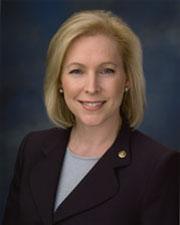
And I will turn first to the Senator from New York, who has been a great fighter for families all the years that she has been in the Senate. I know that because I remember when she got to the Senate. I was only here about 1 year--2 years, I guess, when Senator Gillibrand came to the Senate. And I want to thank her for her leadership and her strong voice for families and for caregiving.
I want to thank my colleague from New York, both for her remarks about paid leave and the compelling case that she made. Just as we were talking about earlier, paid leave is not only a care issue, it is an economic and workforce issue. I want to thank her for her advocacy and the fight she has waged. And, of course, I thank her for the wonderful comments about the majority leader's dad, who just passed away.
I will turn to my colleague from Maine next.
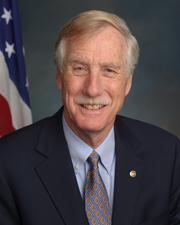
Senator King has been fighting battles on behalf of the people of Maine for a lot of years now, but I am particularly grateful for his most recent advocacy for home- and community-based services. He was one of a small group of Senators and staff that came together week after week after week on Zoom calls to talk strategy and to advance the policy. And I am grateful for Senator King's leadership and advocacy on home- and community-based services, as well as on so many other issues.
Madam President, I thank my colleague from Maine.
I want to turn now to the chairman of the Finance Committee, the Senator from Oregon. Senator Wyden has been with us every step of the way in Build Back Better but, in my case, in working on home- and community-based services. This would not be possible without his leadership.
Madam President, I ask unanimous consent to add 5 more minutes to our time.
Madam President, I want to thank the Senator from Oregon.
The chairman of the Finance Committee had to work, obviously, not simply on the better care and better jobs provisions to the home- and community-based services provisions but so many others as well and also to work on the financing of the bill, so a big job to undertake.
I want to thank him for his continuing leadership and thank all my colleagues today for making the case for Build Back Better and in this case, one of the component parts, but mostly our discussion was about home- and community-based services. But there is so much more to talk about. We don't have time tonight to get to all of it.
I think what you heard from our colleagues--from Senator King, from Senator Gillibrand, from Senator Wyden, and I know the Presiding Officer shares these concerns and has made these issues a priority--we heard it right from the mouths of Americans, whether they live in Oregon or Maine or New York or Pennsylvania, wherever they live, and, I will remind our colleagues, all those folks on the waiting list in those three States I mentioned--Florida, Texas, and Louisiana, where two-thirds of the waiting list is, just three States.
When you hear Brandon talk about a substantial life that Lynn's caregiving
provides him; when you hear Theo Braddy talk about the life that he has because of home- and community-based services; when you heard Senator King talk about the savings--you want to pay $90,000 or $26,000 in terms of what taxpayers will pay over time in the case of 1 year's care, $90,000 versus $26,000. Twenty-six thousand is what they pay for home care.
So when you hear from individual Americans what these services mean; when you hear about the arguments we are making on cost and that this is an investment--this is an investment in America in furtherance of those values that we claim to hold. Senator King spoke so eloquently about life, liberty, and the pursuit of happiness. That says it all. That is what Brandon Kingsmore was talking about, that Lynn, his caregiver, allows him to have a shot at life and liberty and the pursuit of happiness.
So we have a lot of work to do between here and there, between our advocacy and our work on a bill and passage, but we are going to get there because this kind of care can't wait any longer. The American people have been waiting for this for all the years that Senator Wyden has made the case when he was a slightly younger man, making the case with the Gray Panthers all across the State of Oregon. People have been waiting for a long time. It is about time we deliver.
Let's pass Build Back Better, not only because of home- and community-based services but for other reasons as well, which we will get to in the days ahead.
I yield the floor.
I suggest the absence of a quorum.