S. 3006Senate117th Congress (2021-2023)Introduced

A bill to amend the Balanced Budget and Emergency Deficit Control Act of 1985 to extend the discretionary spending limits for fiscal years 2022 through 2031.

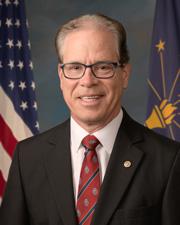
Sponsored by Mike BraunSen. Mike Braun (R-IN)
Introduced October 19, 2021

AI-Generated Summary

Updated February 8, 2026 at 7:23 AM UTC

The bill amends the Balanced Budget and Emergency Deficit Control Act of 1985 to keep the federal discretionary spending caps in place through fiscal year 2031. It sets new annual limits on the amount of budget authority that can be spent in two categories – a revised security category and a revised non‑security category. These limits apply to all federal agencies that receive discretionary funding and guide how much can be appropriated each year.

Key Provisions

  • Extends the discretionary spending limits for FY 2022 through FY 2031.
  • Specifies a separate cap for the revised security category and the revised non‑security category for each year, e.g., FY 2022: $684.93 billion (security) and $639.03 billion (non‑security); FY 2023: $698.63 billion and $651.81 billion; FY 2024: $712.60 billion and $664.85 billion; and so on through FY 2031 with the highest caps of $818.55 billion (security) and $763.70 billion (non‑security).
  • Updates the statutory language by removing an extraneous “and” and inserting the new paragraph (9)‑(18) that contains the yearly limits.

Legislative Activity

Stay on top of the latest movement without scrolling through every action

2 earlier actions
SenateCalendars Latest Action

Read the second time. Placed on Senate Legislative Calendar under General Orders. Calendar No. 147.

October 20, 2021

View full timeline
SenateIntro Referral

Introduced in Senate

October 19, 2021

SenateCalendars

Introduced in the Senate. Read the first time. Placed on Senate Legislative Calendar under Read the First Time.

October 19, 2021

SenateCalendars

Read the second time. Placed on Senate Legislative Calendar under General Orders. Calendar No. 147.

October 20, 2021

Floor Debate

1 member

What members said about S. 3006 on the floor

1 Democrat
Charles E. Schumer
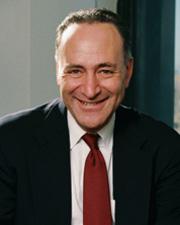
Sen. Charles E. SchumerD-NY · Aug 4, 2022

Mr. President, I ask unanimous consent that the Senate Committee on Veterans' Affairs be discharged from further consideration of S. 3606 and the Senate proceed to its immediate consideration. I ask…

Charles E. Schumer
Sen. Charles E. SchumerD-NY · Oct 19, 2021

Madam President, I understand there are 6 bills at the desk, and I ask for their reading, en bloc. Madam President, I now ask for a second reading and, in order to place the bills on the calendar…

Charles E. Schumer
Sen. Charles E. SchumerD-NY · Oct 20, 2021

Mr. President, I understand that there are six bills at the desk due for a second reading en bloc. In order to place the bills on the calendar under the provisions of rule XIV, I would object to…

Bill Text

Latest available legislative text

Reading Mode
Latest
Placed on Calendar SenateIssued October 20, 2021

II

Calendar No. 147

117th CONGRESS

1st Session

S. 3006

IN THE SENATE OF THE UNITED STATES

October 19, 2021

Mr. Braun introduced the following bill; which was read the first time

October 20, 2021

Read the second time and placed on the calendar

A BILL

To amend the Balanced Budget and Emergency Deficit Control Act of 1985 to extend the discretionary spending limits for fiscal years 2022 through 2031.

1.

Extension of discretionary spending limits

Section 251(c) of the Balanced Budget and Emergency Deficit Control Act of 1985 (2 U.S.C. 901(c)) is amended—

(1)

in paragraph (7)(B), by striking and at the end; and

(2)

by inserting after paragraph (8) the following:

(9)

for fiscal year 2022—

(A)

for the revised security category, $684,930,000,000 in new budget authority; and

(B)

for the revised nonsecurity category, $639,030,000,000 in new budget authority;

(10)

for fiscal year 2023—

(A)

for the revised security category, $698,628,600,000 in new budget authority; and

(B)

for the revised nonsecurity category, $651,810,600,000 in new budget authority;

(11)

for fiscal year 2024—

(A)

for the revised security category, $712,601,172,000 in new budget authority; and

(B)

for the revised nonsecurity category, $664,846,812,000 in new budget authority;

(12)

for fiscal year 2025—

(A)

for the revised security category, $726,853,195,440 in new budget authority; and

(B)

for the revised nonsecurity category, $678,143,748,240 in new budget authority;

(13)

for fiscal year 2026—

(A)

for the revised security category, $741,390,259,349 in new budget authority; and

(B)

for the revised nonsecurity category, $691,706,623,205 in new budget authority;

(14)

for fiscal year 2027—

(A)

for the revised security category, $756,218,064,536 in new budget authority; and

(B)

for the revised nonsecurity category, $705,540,755,669 in new budget authority;

(15)

for fiscal year 2028—

(A)

for the revised security category, $771,342,425,826 in new budget authority; and

(B)

for the revised nonsecurity category, $719,651,570,782 in new budget authority;

(16)

for fiscal year 2029—

(A)

for the revised security category, $786,769,274,343 in new budget authority; and

(B)

for the revised nonsecurity category, $734,044,602,198 in new budget authority;

(17)

for fiscal year 2030—

(A)

for the revised security category, $802,504,659,830 in new budget authority; and

(B)

for the revised nonsecurity category, $748,725,494,242 in new budget authority; and

(18)

for fiscal year 2031—

(A)

for the revised security category, $818,554,753,026 in new budget authority; and

(B)

for the revised nonsecurity category, $763,700,004,127 in new budget authority;

.

October 20, 2021

Read the second time and placed on the calendar