Mr. Speaker, I move to suspend the rules and pass the bill (H.R. 7240) to reauthorize the READ Act, as amended. Mr. Speaker, I ask unanimous consent that all Members may have 5 legislative days in…
Mr. Speaker, I move to suspend the rules and pass the bill (H.R. 7240) to reauthorize the READ Act, as amended.
Mr. Speaker, I ask unanimous consent that all Members may have 5 legislative days in which to revise and extend their remarks and include extraneous material on H.R. 7240, as amended.
Mr. Speaker, I yield myself such time as I may consume.
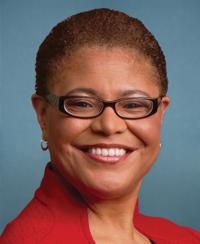
Mr. Speaker, I rise today in support of H.R. 7240, the reauthorization of the Reinforcing Education Accountability in Development, or the READ Act. I would first like to thank my colleagues, Representative Bass and Representative Smith, for their leadership in this legislation. I also want to acknowledge former Appropriations Chairwoman Lowey for championing basic education programs for so many years in the House. The READ Act is just one piece of her great legacy.
The bill we are considering today reauthorizes the READ Act for another 5 years, continuing our country's leadership in expanding access to basic education for kids around the world. As Chairwoman Lowey would say, education is one of the greatest force multipliers in foreign aid. Every dollar we spend on a child's education is an investment in their future and in a more peaceful and prosperous world.
Since the READ Act was signed into law in 2017, we have made significant progress in responding to the needs of our partner countries to improve literacy, strengthen education systems, expand access to safe learning, and promote education as a foundation for sustained economic growth.
Despite this progress, the READ Act and our basic education programs remain critical in the face of profound learning loss everywhere due to the COVID-19 pandemic. Learning poverty has increased by a third in low- and middle-income countries, with an estimated 70 percent of 10- year-olds unable to understand a simple written text, up from 57 percent before the pandemic.
According to the World Bank, this generation of students now risks losing $21 trillion in potential lifetime earnings, or the equivalent of 17 percent of the world's GDP. Millions of kids around the world remain out of school.
Children need a quality education, whether in Bethesda, Nairobi, or Kabul. But investing U.S. taxpayer dollars in this cause is not just charity; it is in our collective interest. Reauthorizing the READ Act is thus a step toward maintaining U.S. leadership in achieving this goal, and I urge my colleagues to support its passage through the House.
Mr. Speaker, I reserve the balance of my time.
Mr. Speaker, I yield myself the balance of my time for the purpose of closing.
Mr. Speaker, H.R. 7240, the reauthorization of the Reinforcing Education Accountability in Development Act, or the READ Act, comes at a critical time.
Despite the progress we have made toward expanding access to education around the world, COVID-19 has set us back, particularly in low- and middle-income countries. The bill demonstrates our continuing commitment to ensuring every child has access to safe, equitable, and quality education, and our confidence that every dollar invested in this cause returns dividends by way of global economic growth and stability.
Once again, I thank the gentlewoman from California (Ms. Bass) for introducing this bill, along with the gentleman from New Jersey (Mr. Smith) for their leadership in advancing this critical reauthorization. Mr. Speaker, I urge my colleagues to join me in supporting it.
Mr. Speaker, I yield back the balance of my time.