Mr. Speaker, I thank the distinguished gentleman for his leadership on a very important topic this evening that brings us all together. I thank Congresswoman Cori Bush for the vibrancy, along with…
Mr. Speaker, I thank the distinguished gentleman for his leadership on a very important topic this evening that brings us all together.
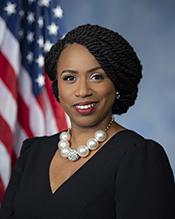
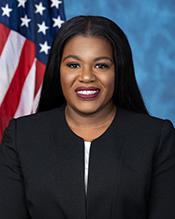
I thank Congresswoman Cori Bush for the vibrancy, along with Congresswoman Ayanna Pressley, in the organizing of the ERA Caucus. It is important that we work together to ensure that the equal rights amendment becomes law.
I am reminded of my entering Congress. I don't know if anyone would realize that there was a statue for suffragette women, women in the early 1900s who were seeking the women's right to vote. Even earlier than that, Sojourner Truth, who we galvanized around, with the National Congress for Black Women, to provide an opportunity for Sojourner Truth to even
have a statue here as an early suffragette and abolitionist.
When I came, the statue honoring women, who fought for women's rights and the right to vote, was in the basement. It was women, Members of the House and the Senate, who had to organize and fight to lift that very awesome sculpture out of the basement, covered by dust, to be able to be put in the rotunda.
We still have work undone, because it was a half-finished sculpture. African-American women argued that they did not have Sojourner Truth in that statue, who was an abolitionist and leader on women's rights.
We did it through legislation, myself and Senator Clinton, we did, in fact, get a statue sculptured by an African-American woman of Sojourner Truth, she now remains in Emancipation Hall, and our task is not yet finished to be able to place her in the rotunda along with the other statues.
I say that to say that this Caucus, this announcement, couldn't be more important, and the reason is because Black women were very instrumental in having the loudest voices; realizing even then that Black women had the lowest hourly wage, Black women were still domestic workers, Black women were not, in fact, equal in many aspects of the law.
Pauli Murray, who I honor; Shirley Chisholm, Flo Kennedy, all of whom I remember and know, and Barbara Jordan, are a few of the prominent Black women who have advocated for the equal rights amendment in the 1970s.
Many Black organizations endorsed the ERA, including the National Black Feminist Organization, the NAACP, and the Coalition of Black Trade Unionists. A 1970s Gallup poll showed that 60 percent of Black women wanted the ERA. This has been a long history.
There is a long history of activism that Black women and women of color in support of women's rights and the ERA, stated by historian and professor of Africana studies, Dr. Mary Phillips.
Today, Black women still play a critical role in pushing for the ERA. In three States, to recently ratify the ERA, Black women were at the forefront. Nevada Senator Pat Spearman led a successful campaign for the ratification of the ERA in her State in 2017, and Representative Juliana Stratton made extensive floor speeches in support of the ERA in Illinois.
As well, Jennifer McClellan led the successful effort to ratify the ERA in Virginia, finally bringing the total ratification of the ERA to 38 States required to become part of the Constitution.
And yet, we did not make our mark. Yet, we have more work to do. Yet, we are struggling to ensure that in 2023 Black women will have equal rights in the court. Black women will have equal rights in healthcare. Black women will have equal rights in education. Black women will have equal rights in the issue of sexual assaults and rape when women are charged with agreeing or consent, which is not true. Equal rights to be heard. Equal rights in work. Equal rights in payments.
Mr. Speaker, I rise today to support my colleagues, and really to acknowledge these brave and historic women. I am so proud that my predecessor, the Honorable Barbara Jordan, was one of those who stood regally tall along with the first African-American woman in the United States Congress, Shirley Chisholm.
Of course, who could forget Flo Kennedy wearing those hats. Who could forget feminist and civil rights advocate Pauli Murray, who testified for the equal rights amendment at a Senate Judiciary Committee hearing in 1970. In her testimony, Murray drew up upon her own experience of race and sex, and these are her words:
``Although my motivation, energy, and effort to meet the highest standards of performance have been operative throughout my life, I have experienced numerous delays in my career, not for the traditional reasons given for the failure of women to develop on par with men in our society (marriage, childbearing, et cetera), but by a combination of individual and institutional racism and sexism--Jim Crow and June Crow.''
As a constitutional lawyer, a woman, and a Black person, I can say with conviction that Black women, as a group, have the most to gain from the adoption of the equal rights amendment. All that has been said about the frustration and deprivations of American women, generally because of discrimination by reason of sex, can be said with special force about the position of Black women.
My concluding remarks--maybe she didn't call herself a fighter for the ERA, but Harriet Tubman was a fighter for justice and took slaves out of the Deep South. Her words were this:
If you hear the dogs coming, keep on moving. If you hear the noise, keep on moving. If you see the lights, keep on moving. Because if you want a taste of freedom, keep on moving.
Tonight we stand here for freedom and the equal rights amendment.
Mr. Speaker, I include in the Record a timeline of the equal rights movement.
1840:
Lucretia Mott and Elizabeth Cady Stanton are barred from
attending the World Anti-Slavery Convention held in London.
They decide to hold a Women's Convention in the U.S.
1850:
Massachusetts, is the site of the first National Women's
Rights Convention. Frederick Douglass, Paulina Wright Davis,
William Lloyd Garrison, Lucy Stone, and Sojourner Truth
attend. A strong alliance is formed with the Abolitionist
Movement.
1851:
At a women's rights convention in Akron, Ohio, Sojourner
Truth, a former slave, delivers her speech, ``Ain't I a
woman?''.
1870:
The Fifteenth Amendment gave Black men the right to vote.
The National Woman's Suffrage Association refused to work for
its ratification. Frederick Douglass broke with Stanton and
Anthony over this position.
1890:
The National Woman Suffrage Association and the American
Woman Suffrage Association, merged to formally expand the
National American Woman Suffrage Association (NAWSA). NAWSA
focused on enfranchisement solely for white women.
1913:
The Alpha Suffrage Club was founded, with Ida B. Wells as
one of the co-founders and leaders, this is believed to be
the first African-American women's suffrage association in
the United States.
1920:
Three quarters of the state legislatures ratify the
Nineteenth Amendment.
1940:
Jim Crow laws such as poll taxes and literacy tests are
enacted, designed to keep Black citizens from voting.
1965:
500 activists march from Selma to Montgomery, AL to demand
voting rights for Black citizens. They are brutally attacked
by law enforcement.
1965:
President Lyndon B. Johnson signs the Voting Rights Act
into law.
2011:
Record numbers of state restrictions are enacted on voting,
including voter ID laws and restrictions to early voting.
2013:
The Supreme Court strikes down the heart of the Voting
Rights Act by a 5-to-4 vote, freeing states to change their
election laws.
The first Equal Rights Amendment was drafted by the National Women's Party in 1921 to enshrine equality for women in the Constitution.
Fifty-one years later, the Equal Rights Amendment won the requisite two-thirds vote in the House of Representatives and passed the Senate.
In 2020, Virginia became the thirty-eighth state to vote in favor of the ERA, but whether the ERA has accordingly been ratified remains politically and legally contested.
Since 2013, Black Lives Matter has been a global social movement advocating against anti-Black racism and state-sanctioned violence, including but not limited to police brutality against Black men and women.
The movement has attracted broad participation by non-Black activists and lawmakers following the police murder of George Floyd.
Suffrage in America: The 15th and 19th Amendments
During the 19th and 20th centuries, Black women played an active role in the struggle for universal suffrage.
Who got the right to vote when?
August 18, 2020 marked 100 years since the ratification of the 19th Amendment to the United States Constitution granting women the right to vote.
However, obstacles like poll taxes, literacy tests and other discriminatory state voting laws would keep Black women (and men) disenfranchised for a further 45 years.
Black Women Had to Fight for the Right to Vote on Two Fronts
They were suffragists combating both racism and sexism long after the 19th Amendment was passed.
Women of color were crucial to women's suffrage--it's time we acknowledge them.
Wagner, who is behind books such as Women's Suffrage Anthology and Sisters in Spirit, has for almost 30 years studied the Haudenosaunee (or the Iroquois) influence on the early feminist movements.
More to the Movement
While Seneca Falls is considered the first American convention to focus exclusively on women's rights, the first convention to consider women's rights as an issue was the May 9, 1837, Anti-Slavery Convention of American Women in New York City.