















I
118th CONGRESS
1st Session
H. R. 1009
IN THE HOUSE OF REPRESENTATIVES
February 14, 2023
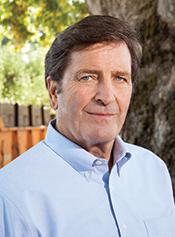
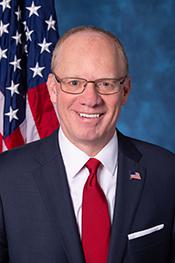
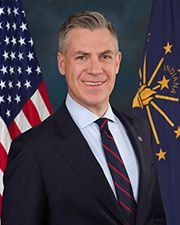
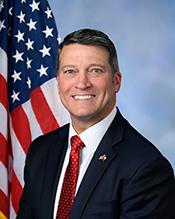
Mr. Donalds (for himself, Mr. Fleischmann, Mr. Feenstra, Mr. Obernolte, and Ms. Mace) introduced the following bill; which was referred to the Committee on Transportation and Infrastructure, and in addition to the Committees on Energy and Commerce, and Armed Services, for a period to be subsequently determined by the Speaker, in each case for consideration of such provisions as fall within the jurisdiction of the committee concerned
A BILL
To require the President develop a national strategy for utilizing microreactors to assist with natural disaster response efforts, and for other purposes.
Short title
This Act may be cited as the National Strategy to Utilize Microreactors for Natural Disaster Response Efforts Act
.
Findings; sense of Congress
Findings
Congress finds that—
natural disasters often cause loss of life, human suffering, loss of income, and property loss and damage;
natural disasters often disrupt the normal functioning of governments and communities and adversely affect individuals and families with great severity; and
special measures, designed to assist with and supplement natural disaster response efforts, such as replacing the wide utilization of diesel generators with microreactors when responding to the impacts of a natural disaster, are necessary and worthwhile for the wellbeing of the United States.
Sense of Congress
It is the sense of Congress that Congress should support the utilization of nuclear energy, with a priority for nuclear energy generated by microreactors, during natural disaster response efforts because of the following considerations:
Nuclear energy generated by a microreactor provides a safe form of consistent and reliable electricity that is generally sought when responding to the impacts of natural disasters.
Nuclear energy that is generated by microreactors—
is the most rapidly deployable source of energy available that can provide uninterrupted power to assist with natural disaster response efforts; and
can be used to augment diesel-generated power during national disaster response efforts.
The generation of electricity from microreactors emits fewer greenhouse gas emissions than the generation of electricity from other sources of electricity.
Microreactors can be easily transported and carried by aircraft, semi-trucks, or shipping vessels to timely provide electricity upon demand to an area that is impacted by a natural disaster.
Microreactors can be operated autonomously, which avoids the need for on-site operators in an area that is impacted by a natural disaster.
Microreactors can be operated for several years without being refueled, which avoids logistical challenges associated with refueling other power sources, including diesel generators, in an area that is impacted by a natural disaster.
With approval by the Nuclear Regulatory Commission, microreactors can be—
mass produced in factories around the United States; and
mass deployed to assist with natural disaster response efforts.
Nuclear energy generated by a microreactor can be used to help restore electrical grids by providing temporary power and spot generation for critical electricity generating facilities while grid repairs take place.
Microreactors can—
power lifesaving and life-sustaining facilities, such as hospitals;
power mass transit systems and water quality treatment plants;
power large pumps that are often used to remove water from an impacted area;
power airport facilities and air traffic control towers;
power communications centers that are vital to dispatching important announcements and correspondence during natural disaster response efforts; and
support the operation of local, State, and Federal facilities in the event that a natural disaster severely impacts such facilities and results in the loss of electricity for such facilities.
After providing electricity to an area that is impacted by a natural disaster, microreactors can be easily transported out of the area to other locations where they are needed or to standby storage locations until deployment to assist with future natural disaster response efforts.
Development of national strategy
In general
The President shall, in consultation with the Administrator of the Federal Emergency Management Agency, the Secretary of Energy, the Chief of the National Guard Bureau, the Chief of Engineers of the Army Corps of Engineers, the Assistant Secretary of the Office of Nuclear Energy of the Department of Energy, the Under Secretary of Defense for Research and Engineering, the Chairman of the Nuclear Regulatory Commission, and the Deputy Assistant Secretary for the Office of Reactor Fleet and Advanced Reactor Deployment of the Department of Energy, develop a national strategy to utilize microreactors to assist with natural disaster response efforts.
Submission to Congress
Not later than 1 year after the date of enactment of this Act, and every 2 years thereafter, the President shall submit to the appropriate congressional committees a comprehensive national strategy developed under subsection (a).
Contents of national strategy
A national strategy developed under subsection (a) shall include the following:
Evaluation of existing diesel deployment efforts
An assessment of the effectiveness of utilizing diesel generators to assist with natural disaster response efforts, which such assessment shall include—
information on the current use of diesel generators to assist with natural disaster response efforts, including—
the prevalence of deploying diesel generators around the United States as the sole power source to assist with natural disaster response efforts;
the average number of diesel generators deployed in natural disaster response efforts based on the type of natural disaster, the severity of the natural disaster, and the location of the natural disaster;
where Federal, State, and local governments store diesel generators;
how diesel generators are transported to areas affected by a natural disaster;
any logistical concerns with refueling diesel generators over an extended period of time;
the potential to utilize accessory equipment that is traditionally connected to diesel generators to help provide electricity to the area in need; and
any other information that is necessary to understand the role of diesel generators used to assist with natural disaster response efforts;
how the effect on the environment of utilizing diesel generators to assist with natural disaster response efforts compares to the estimated effect on the environment of utilizing microreactors to assist with the same natural disaster response efforts; and
the concerns to public safety when deploying diesel generators in natural disaster response efforts.
Goals, objectives, and priorities
A comprehensive, research-based, and long-term discussion of goals, objectives, and priorities for utilizing microreactors instead of diesel generators to assist with natural disaster response efforts.
Department of Defense Analysis
An analysis of—
how the efforts of the Department of Defense to develop microreactor technology for operational uses could be used to inform the development of microreactors to assist with natural disaster response efforts, including any recommendations and additional direction that may be necessary for such expedited deployment;
how the Department of Defense can most effectively translate and implement the lessons learned from its operations in the field to assist with natural disaster response efforts, including how operations in the field related to microreactors can be used to answer broad questions for the nuclear industry and for future issues relating to fuel reliability, energy supply chain issues, reducing diesel convoy causalities, and supporting other global humanitarian needs; and
whether a demonstration program for microreactors is needed prior to deploying microreactors for natural disaster response efforts, based on the analysis provided by subparagraphs (A) and (B).
Recommendations for the Nuclear Regulatory Commission
Recommendations on how the Nuclear Regulatory Commission can work with other Federal agencies to expedite—
the approval of designs for microreactors; and
issuing licenses for the utilization, transportation, and operation of microreactors in rapid deployment scenarios, such as natural disaster response efforts.
Utilizing Feasibility Studies
An analysis of available academic literature and studies, including site feasibility studies, to identify high risk areas that are prone to natural disasters that should be prioritized during emergency planning.
Strategic considerations when deploying microreactors
An assessment of various strategic considerations to improve the efficiency, timeliness, and cost-effectiveness of deploying microreactors to assist with natural disaster response efforts, including—
whether the Department of Defense, the Federal Emergency Management Agency, or any other government entity should build, own, or operate microreactors that are used to assist with natural disaster response efforts, including whether it would be viable to lease microreactors from private industry and whether it would be viable to facilitate public-private partnerships to find cost effective options to utilize microreactors for natural disaster response efforts;
the recommended number of individuals charged with the usage, maintenance, and upkeep of the microreactors, including the recommended qualifications, training requirements, availability requirements, and oversight responsibility of such individuals;
the number of microreactors needed, initially and in the long-term, to effectively respond to a natural disaster based on past natural disaster trends and the specific geographic location of the area;
where microreactors used to assist with natural disaster response efforts would be stored, including information on—
how different microreactor storage locations may affect swift and economically feasible natural disaster response efforts;
the feasibility of utilizing already-built facilities instead of constructing new microreactor storage facilities;
the cost of constructing new microreactor storage facilities;
how to properly store the microreactor when not being utilized for natural disaster response efforts; and
potential storage locations, such as—
the Strategic Alliance for FLEX Emergency Response locations in Memphis, Tennessee and Phoenix, Arizona; and
Department of Defense bases;
how to maintain a microreactor and replace, store, and dispose of fuel used by a microreactor, including whether public-private partnerships may be used to assist with such maintenance, replacement, storage, and disposal;
when a diesel generator will suffice in the event of a natural disaster of limited proportions, in comparison to utilizing microreactors to assist with natural disaster response efforts;
which States and territories and possessions of the United States that are prone to natural disasters, such as hurricanes, should be prioritized when initially selecting locations to deploy microreactors to assist with natural disaster response efforts;
the methods, capabilities, and costs associated with transporting microreactors that were or may be impacted by natural disasters, including considerations about transporting new microreactors, in addition to microreactors that have been put to use, and any regulatory or legal issues that may arise during the transportation;
any other strategic considerations that should be taken into account before deploying microreactors to assist with natural disaster response efforts;
how to integrate microreactors into existing electrical grids in emergency situations, including how grid connection points, microgrid limits, site load limits, existing infrastructure, and the standard process for grid interconnections may impact the integration of microreactors into existing electrical grid;
whether microreactors will be susceptible to cyberattacks, including whether autonomous control will impact the microreactor’s cyberattack susceptibility and what systems or microreactor designs would be ideal for combating such cyberattacks during a natural disaster response effort; and
how the weight of a microreactor, compared to the weight of a diesel generator, affects deploying microreactors and diesel generators to assist with natural disaster response efforts.
Deployment challenges and barriers
An assessment of—
the challenges and barriers to deploying microreactors to assist with natural disaster response efforts; and
solutions to address each such challenge and barrier.
Review of and recommendations for legislation
Review
A review of existing law that can be used to ease the burden of utilizing microreactors to assist with natural disaster response efforts, including the Robert T. Stafford Disaster Relief and Emergency Assistance Act (42 U.S.C. 5121 et seq.), the Energy Policy Act of 2005 (42 U.S.C. 15801 et seq.), the Atomic Energy Act of 1954 (42 U.S.C. 2011 et seq.), the Nuclear Energy Innovation and Modernization Act (42 U.S.C. 2215 note), and any other relevant law.
Recommendations
Recommendations for legislation to—
assist with—
deploying microreactors to assist with natural disaster response efforts;
the maintenance and upkeep of such microreactors; and
the initial and long-term storage of such microreactors; and
pay for the activities described in subclauses (I) through (III) of clause (i).
Partnerships to enhance natural disaster response efforts
An assessment about—
the current status of any collaboration between the National Guard, Federal Emergency Management Agency, and the Army Corps of Engineers during natural disaster response efforts;
the specific roles of each entity specified in subparagraph (A) (disaggregated, in the case of the National Guard, by State and by military department) during a natural disaster response effort, and their respective roles when participating in natural disaster response efforts;
the current emergency responsibilities of the Department of Energy and the Nuclear Regulatory Commission that relate to deploying microreactors during natural disaster response efforts;
the potential opportunity to set up an annual listening group session or consortium to provide all the necessary information needed to deploy microreactors to assist with natural disaster response efforts and to ensure a smooth transition from the use of diesel generators to the use of microreactors to assist with natural disaster response efforts;
how the Emergency Management Assistance Compact, consented to by Congress in the joint resolution entitled Joint resolution granting the consent of Congress to the Emergency Management Assistance Compact
(Public Law 104–321), can be utilized to allow States to allocate their unused microreactors to other States that are in need of microreactors to assist with natural disaster response efforts; and
how to improve the collaboration between Federal, State, and local government entities and private entities when deploying microreactors to assist with natural disaster response efforts.
Utilizing microreactors to charge electric vehicles
Recommendations on how to utilize microreactors as charging stations for electric vehicles in the event of a mass evacuation resulting from a natural disaster, including recommendations on—
how to deploy microreactors to charge electric vehicles before an evacuation;
the primary transportation corridors that would be used for such a mass evacuation;
how many microreactors would be needed to charge electric vehicles during such a mass evacuation, based on the size and population of the State in which the mass evacuation occurs;
the best placement of microreactors throughout the primary transportation corridors to ensure a smooth electric vehicle charging process and subsequent evacuation;
any potential public-private partnerships that would be useful in utilizing microreactors to charge electric vehicles during a mass evacuation, including an estimate of the costs that would be associated with establishing these partnerships;
how to—
transport microreactors to mass evacuation locations along primary transportation corridors for purposes of charging electric vehicles; and
pay for such transportation; and
any other topic related to subparagraphs (A) through (F).
Deploying microreactors to United States territories and possessions
Recommendations on deploying microreactors to territories and possessions of the United States to assist with natural disaster response efforts.
Using military equipment with nuclear capabilities
Recommendations on how to, in the event of a natural disaster and when the deployment of a microreactor is not timely or ideal for the circumstance, deploy military equipment of the United States with nuclear capabilities, such as nuclear aircraft carriers and nuclear submarines, to provide temporary electricity to an area severely impacted by a natural disaster.
Budget priorities
A multiyear budget plan that identifies the necessary resources to successfully carry out the recommendations and implement any lessons learned from the assessments and other analysis under this subsection.
Technology enhancements
An analysis of current and developing ways to leverage existing and innovative technology to improve the effectiveness of efforts to deploy microreactors to assist with natural disaster response efforts.
Using innovative tools to predict natural disasters
A description of how to utilize innovative technology, such as artificial intelligence and predictive meteorological tools, to prepare for the utilization of microreactors before a natural disaster.
Floating nuclear barges
An assessment of how floating nuclear barges compare to using portable microreactors, including—
the advantages and disadvantages of using a portable microreactor compared to a floating nuclear barge; and
an identification of scenarios during which a floating nuclear barge would be preferred over a portable microreactor.
Definitions
In this Act—
Appropriate congressional committees
The term appropriate congressional committees means—
the Committee on Energy and Commerce, the Committee on Armed Services, the Committee on Oversight and Accountability, and the Committee on Science, Space, and Technology of the House of Representatives; and
the Committee on Energy and Natural Resources, the Committee on Armed Services, the Committee on Environment and Public Works, and the Committee on Commerce, Science, and Transportation of the Senate.
Local government
The term local government has the meaning given such term in section 102 of the Robert T. Stafford Disaster Relief and Emergency Assistance Act (42 U.S.C. 5122).
Microreactor
The term microreactor means a nuclear reactor, including a portable nuclear reactor, that has an electricity generating capacity of not more than 20 megawatts of thermal energy.
Natural disaster
The term natural disaster has the meaning given the term Major disaster in section 102 of the Robert T. Stafford Disaster Relief and Emergency Assistance Act (42 U.S.C. 5122), except that the term natural disaster does not include a wildfire.
Natural disaster response effort
The term natural disaster response effort means a circumstance in which a State or local government requests assistance under the Robert T. Stafford Disaster Relief and Emergency Assistance Act (42 U.S.C. 5121 et seq.), including assistance to address the loss of primary electrical capacity as a result of a natural disaster.
State
The term State means a State of the United States and the District of Columbia.