
H.R. 1425House118th Congress (2023-2025)Passed House

No WHO Pandemic Preparedness Treaty Without Senate Approval Act

Introduced March 7, 2023

AI-Generated Summary

Updated January 20, 2026 at 4:28 AM UTC

The bill makes any convention, agreement, or other international instrument on pandemic prevention, preparedness, and response negotiated by the World Health Assembly be treated as a treaty that must be approved by the Senate with a two‑thirds vote. It also bars such an instrument from having any legal effect in the United States until the Senate ratifies it, and it expresses congressional support for Taiwan’s full participation in the WHO.

Key Provisions

  • Requires that any WHO pandemic preparedness convention or similar instrument be considered a treaty subject to Senate advice and consent with a two‑thirds majority.
  • Prohibits any such instrument from having force or effect in U.S. law, or being used in courts, before Senate ratification.
  • Declares U.S. policy supporting Taiwan’s full participation in the World Health Organization.
  • Records Congress’s sense that the public is skeptical of WHO and that any WHO agreement lacking Senate approval should not be implemented by the United States.

Legislative Activity

Stay on top of the latest movement without scrolling through every action

31 earlier actions
SenateIntro Referral Latest Action

Received in the Senate and Read twice and referred to the Committee on Foreign Relations.

September 17, 2024

View full timeline
HouseIntro Referral

Introduced in House

March 7, 2023

HouseIntro Referral

Referred to the House Committee on Foreign Affairs.

March 7, 2023

HouseCommittee

Committee Consideration and Mark-up Session Held

July 10, 2024

HouseCommittee

Committee Consideration and Mark-up Session Held

July 11, 2024

HouseCommittee

Ordered to be Reported by the Yeas and Nays: 24 - 23.

July 11, 2024

HouseCommittee

Reported by the Committee on Foreign Affairs. H. Rept. 118-643.

August 30, 2024

HouseCalendars

Placed on the Union Calendar, Calendar No. 540.

August 30, 2024

HouseFloor

Rules Committee Resolution H. Res. 1430 Reported to House. Rule provides for consideration of H.R. 1398, H.R. 1425, H.R. 1516, H.R. 7980, H.R. 9456 and H.R. 9494. The resolution provides for consideration of H.R. 1398, H.R. 1425, and H.R. 1516 under a structured rule and H.R. 7980, H.R. 9456, and H.R. 9494 under a closed rule. The resolution provides for one hour of general debate and one motion to recommit on each bill.

September 10, 2024 • 10:08 AM

HouseFloor

Considered under the provisions of rule H. Res. 1430. (consideration: CR H5173-5181)

September 11, 2024 • 1:16 PM

HouseFloor

Rule provides for consideration of H.R. 1398, H.R. 1425, H.R. 1516, H.R. 7980, H.R. 9456 and H.R. 9494. The resolution provides for consideration of H.R. 1398, H.R. 1425, and H.R. 1516 under a structured rule and H.R. 7980, H.R. 9456, and H.R. 9494 under a closed rule. The resolution provides for one hour of general debate and one motion to recommit on each bill.

September 11, 2024 • 1:17 PM

HouseFloor

House resolved itself into the Committee of the Whole House on the state of the Union pursuant to H. Res. 1430 and Rule XVIII.

September 11, 2024 • 1:17 PM

HouseFloor

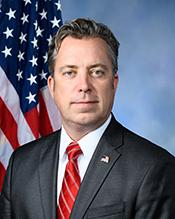
The Speaker designated the Honorable Jefferson Van Drew to act as Chairman of the Committee.

September 11, 2024 • 1:17 PM

HouseFloor

GENERAL DEBATE - The Committee of the Whole proceeded with one hour of general debate on H.R. 1425.

September 11, 2024 • 1:18 PM

HouseFloor

DEBATE - Pursuant to the provisions of H. Res. 1430, the Committee of the Whole proceeded with 10 minutes of debate on the Ogles amendment No. 1.

September 11, 2024 • 2:06 PM

HouseFloor

POSTPONED PROCEEDINGS - At the conclusion of debate on the Ogles amendment No. 1, the Chair put the question on agreeing to the amendment and by voice vote announced that the ayes had prevailed. Mr. Ogles demanded a recorded vote and the Chair postponed further proceedings until a time to be announced.

September 11, 2024 • 2:14 PM

HouseFloor

DEBATE - Pursuant to the provisions of H. Res. 1430, the Committee of the Whole proceeded with 10 minutes of debate on the Foxx amendment No. 2.

September 11, 2024 • 2:15 PM

HouseFloor

DEBATE - Pursuant to the provisions of H. Res. 1430, the Committee of the Whole proceeded with 10 minutes of debate on the Massie amendment No. 3.

September 11, 2024 • 2:23 PM

HouseFloor

Mr. Davidson moved that the committee rise.

September 11, 2024 • 2:29 PM

HouseFloor

On motion that the committee rise Agreed to by voice vote.

September 11, 2024 • 2:30 PM

HouseFloor

Committee of the Whole House on the state of the Union rises leaving H.R. 1425 as unfinished business.

September 11, 2024 • 2:30 PM

HouseFloor

Considered as unfinished business. (consideration: CR H5182-5184)

September 11, 2024 • 4:21 PM

HouseFloor

The House resolved into Committee of the Whole House on the state of the Union for further consideration.

September 11, 2024 • 4:21 PM

HouseFloor

The House rose from the Committee of the Whole House on the state of the Union to report H.R. 1425.

September 11, 2024 • 4:50 PM

HouseFloor

The previous question was ordered pursuant to the rule.

September 11, 2024 • 4:51 PM

HouseFloor

The House adopted the amendment as agreed to by the Committee of the Whole House on the state of the Union.

September 11, 2024 • 4:51 PM

HouseFloor

Ms. Lee (CA) moved to recommit to the Committee on Foreign Affairs. (CR H5183)

September 11, 2024 • 4:52 PM

HouseFloor

The previous question on the motion to recommit was ordered pursuant to clause 2(b) of rule XIX.

September 11, 2024 • 4:52 PM

HouseFloor

On motion to recommit Failed by the Yeas and Nays: 202 - 215 (Roll no. 410).

September 11, 2024 • 5:01 PM

HouseFloor

Passed/agreed to in House: On passage Passed by the Yeas and Nays: 219 - 199 (Roll no. 411).

September 11, 2024 • 5:09 PM

HouseFloor

On passage Passed by the Yeas and Nays: 219 - 199 (Roll no. 411).

September 11, 2024 • 5:09 PM

HouseFloor

Motion to reconsider laid on the table Agreed to without objection.

September 11, 2024 • 5:09 PM

SenateIntro Referral

Received in the Senate and Read twice and referred to the Committee on Foreign Relations.

September 17, 2024

Floor Debate

23 members

What members said about H.R. 1425 on the floor

15 Republicans8 Democrats
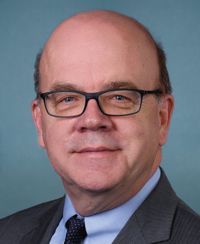
James P. McGovern
Rep. James P. McGovernD-MA-2 · Sep 10, 2024

Mr. Speaker, I thank the gentleman from New York (Mr. Langworthy) for yielding me the customary 30 minutes, and I yield myself such time as I may consume. Mr. Speaker, this entire Republican majority…

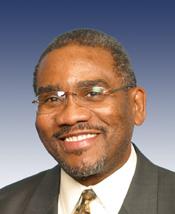
Gregory W. Meeks
Rep. Gregory W. MeeksD-NY-5 · Sep 11, 2024

Mr. Chair, I yield myself such time as I may consume. Mr. Chair, I stand in opposition to H.R. 1425. We can't forget the dark times that COVID-19 brought to our communities across the United States…

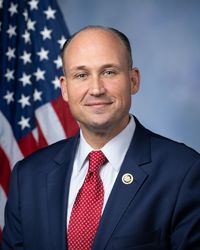
Nicholas A. Langworthy
Rep. Nicholas A. LangworthyR-NY-23 · Sep 10, 2024

Mr. Speaker, by direction of the Committee on Rules, I call up House Resolution 1430 and ask for its immediate consideration. Mr. Speaker, for the purpose of debate only, I yield the customary 30…

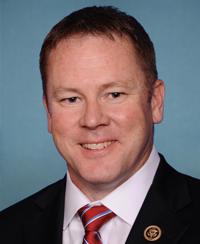
Warren Davidson
Rep. Warren DavidsonR-OH-8 · Sep 11, 2024

Mr. Speaker, I ask unanimous consent that all Members may have 5 legislative days in which to revise and extend their remarks and include extraneous material on H.R. 1425. Mr. Chairman, I yield…

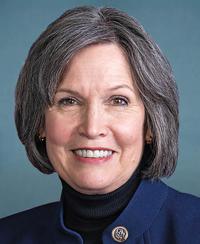
Betty McCollum
Rep. Betty McCollumD-MN-4 · Sep 19, 2024

Mr. Speaker, I rise in opposition to a slate of Republican bills offered this week that will do more harm than good in defending the United States' interests from the Chinese Communist Party.…

Show 8 more
Thomas Massie
Rep. Thomas MassieR-KY-4 · Sep 11, 2024

Mr. Chair, I have an amendment at the desk. Mr. Chairman, I rise in support of my amendment, which simply recognizes that the United States Constitution is the supreme law of the land. Our…

Andrew Ogles
Rep. Andrew OglesR-TN-5 · Sep 11, 2024

Mr. Chair, I have an amendment at the desk. Mr. Chair, this amendment would make it the policy of our Nation to advocate for Taiwan's full participation in the World Health Organization. For far too…

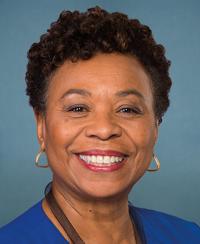
Barbara Lee
Rep. Barbara LeeD-CA-12 · Sep 11, 2024

Mr. Chairman, I thank our ranking member, Mr. Meeks, for his tremendous leadership on so many fronts especially as it relates to global peace and security. I thank him for yielding me time. Mr.…

Christopher H. Smith
Rep. Christopher H. SmithR-NJ-4 · Sep 11, 2024

Mr. Chair, I am a proud cosponsor of Rep. Tiffany's H.R. 1425, No WHO pandemic Treaty Without Senate Approval Act. H.R. 1425 would ensure that any international instrument on pandemic prevention,…

Michael C. Burgess
Rep. Michael C. BurgessR-TX-26 · Sep 10, 2024

Mr. Speaker, I thank the Representative from New York for yielding me the time. Mr. Speaker, I rise in support of the rule. I rise in support of the underlying bills, in particular, H.R. 9494 to…

Virginia Foxx
Rep. Virginia FoxxR-NC-5 · Sep 11, 2024

Mr. Chair, I have an amendment at the desk. Mr. Chairman, I rise in support of my amendment. Mr. Chairman, the United States must never relinquish its sovereignty. Without question, we must work to…

Bob Good
Rep. Bob GoodR-VA-5 · Sep 11, 2024

Mr. Chair, Mr. Meeks talks like there is a final draft of the treaty. We, again, have not seen it. How else would he seem to know or claim to know that it is an executive agreement? We thought it was…

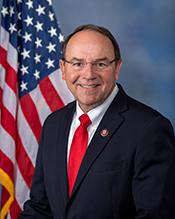
Thomas P. Tiffany
Rep. Thomas P. TiffanyR-WI-7 · Sep 11, 2024

Mr. Chair, I thank the gentleman from Ohio for his leadership. Mr. Chair, who do you want in charge of a pandemic policy in the United States? Do you want the corrupt globalists at the World Health…

Show 11 more
Raul Ruiz
Rep. Raul RuizD-CA-25 · Sep 10, 2024

Mr. Speaker, I rise today in opposition to the Republican- led, 6-month continuing resolution that will devastate veterans and jeopardize their care. In 2022, when I helped lead the passage of the…

Teresa Leger Fernandez
Rep. Teresa Leger FernandezD-NM-3 · Sep 10, 2024

Mr. Speaker, I thank Ranking Member McGovern for pointing out what we heard last night. This is all political theater. That is what we heard last night. That is what we are hearing on the floor…

Keith Self
Rep. Keith SelfR-TX-3 · Sep 11, 2024

Mr. Chair, my constituents in Texas did not elect a single member of the World Health Organization to represent them. This globalist cabal known as the WHO capitalized on the CCP bioweapon which we…

Glenn Grothman
Rep. Glenn GrothmanR-WI-6 · Sep 10, 2024

Mr. Speaker, had I been present, I would have voted YEA on Roll Call No. 403 and YEA on Roll Call No. 404.

Barbara Lee
Rep. Barbara LeeD-CA-12 · Sep 11, 2024

Mr. Speaker, I have a motion to recommit at the desk. Mr. Speaker, on that I demand the yeas and nays.

Young Kim
Rep. Young KimR-CA-40 · Sep 10, 2024

Mr. Speaker, had I been present, I would have voted YEA on Roll Call No. 403. Stated against:

Andy Barr
Rep. Andy BarrR-KY-6 · Sep 10, 2024

Mr. Speaker, had I been present, I would have voted YEA on Roll Call No. 403.

Ronny Jackson
Rep. Ronny JacksonR-TX-13 · Sep 10, 2024

Mr. Speaker, had I been present, I would have voted YEA on Roll Call No. 403.

Paul Tonko
Rep. Paul TonkoD-NY-20 · Sep 10, 2024

Mr. Speaker, had I been present, I would have voted NAY on Roll Call No. 403.

Chrissy Houlahan
Rep. Chrissy HoulahanD-PA-6 · Sep 11, 2024

Mr. Chair, had I been present, I would have voted AYE on Roll Call No. 409.

Ann Wagner
Rep. Ann WagnerR-MO-2 · Sep 11, 2024

Mr. Chair, had I been present, I would have voted AYE on Roll Call No. 409.

Bill Text

4 versions available

Reading Mode
Latest
Referred in SenateIssued September 17, 2024

IIB

118th CONGRESS

2d Session

H. R. 1425

IN THE SENATE OF THE UNITED STATES

September 17, 2024

Received; read twice and referred to the Committee on Foreign Relations

AN ACT

To require any convention, agreement, or other international instrument on pandemic prevention, preparedness, and response reached by the World Health Assembly to be subject to Senate ratification.


1.

Short title

This Act may be cited as the No WHO Pandemic Preparedness Treaty Without Senate Approval Act.

2.

Findings

Congress makes the following findings:

(1)

On May 18, 2020, President Donald Trump sent a letter to World Health Organization (referred to in this Act as WHO) Director-General Tedros Adhanom Ghebreyesus (referred to in this Act as the Director-General), announcing that—

(A)

United States contributions to WHO would be halted due its mismanagement of the COVID–19 outbreak and its lack of independence from the People’s Republic of China; and

(B)

the United States would withdraw from WHO if it did not commit to substantive improvements within 30 days.

(2)

President Trump’s May 18 letter cited numerous instances of WHO mismanagement of the COVID–19 pandemic, including—

(A)

unjustified delays informing member states about a potentially serious disease outbreak in Wuhan, China; and

(B)

repeated grossly inaccurate or misleading claims about the transmissibility of the virus and about the Government of China’s handling of the outbreak.

(3)

On June 30, 2020, Secretary of State Mike Pompeo formally notified the United Nations of the United States decision to withdraw from WHO, which would have taken effect on July 6, 2021, under the terms of a joint resolution adopted by Congress on June 14, 1948 (Public Law 80–643; 62 Stat. 441).

(4)

A Pew Research Center survey conducted in April and May 2020 indicated that 51 percent of Americans felt that WHO had done a poor or fair job in managing the COVID–19 pandemic.

(5)

On January 20, 2021, President Joseph Biden sent United Nations Director-General António Guterres a letter retracting the United States notice of withdrawal from WHO.

(6)

On December 1, 2021, at the second special session of the World Health Assembly (referred to in this Act as the WHA) decided—

(A)

to establish an intergovernmental negotiating body (referred to in this section as the INB) to draft and negotiate a WHO convention (referred to in this section as the Convention), agreement, or other international instrument on pandemic prevention, preparedness, and response, with a view to adoption under Article 19 or any other provision of the WHO Constitution; and

(B)

that the INB shall submit a progress report to the Seventy-sixth WHA and a working draft of the convention for consideration by the Seventy-seventh WHA, which is scheduled to take place beginning on March 18, 2024.

(7)

On February 24, March 14 and 15, and June 6 through 8 and 15 through 17, 2022, the INB held its inaugural meeting at which the Director-General proposed the following 5 themes to guide the INB’s work in drafting the Convention:

(A)

Building national, regional, and global capacities based on a whole-of-government and whole-of-society approach.

(B)

Establishing global access and benefit sharing for all pathogens, and determining a global policy for the equitable production and distribution of countermeasures.

(C)

Establishing robust systems and tools for pandemic preparedness and response.

(D)

Establishing a long-term plan for sustainable financing to ensure support for global health threat management and response systems.

(E)

Empowering WHO to fulfill its mandate as the directing and coordinating authority on international health work, including for pandemic preparedness and response.

(8)

On July 18 through 22, 2022, the INB held its second meeting at which it agreed that the Convention would be adopted under Article 19 of the WHO Constitution and legally binding on the parties.

(9)

On December 5 through 7, 2022, the INB held its third meeting at which it accepted a conceptual zero draft of the Convention and agreed to prepare a zero draft for consideration at the INB’s next meeting.

(10)

In early January 2023, an initial draft of the Convention was sent to WHO member states in advance of its formal introduction at the fourth meeting of the INB, which is scheduled for February 27 through March 3, 2023. The draft includes broad and binding provisions, including rules governing parties’ access to pathogen genomic sequences and how the products or benefits of such access are to be distributed.

(11)

Section 723.3 of title 11 of the Department of State’s Foreign Affairs Manual states that when determining whether any international agreement should be brought into force as a treaty or as an international agreement other than a treaty, the utmost care is to be exercised to avoid any invasion or compromise of the constitutional powers of the President, the Senate, and the Congress as a whole and includes the following criteria to be considered when determining whether an international agreement should take the form of a treaty or an executive agreement:

(A)

The extent to which the agreement involves commitments or risks affecting the nation as a whole.

(B)

Whether the agreement is intended to affect state laws.

(C)

Whether the agreement can be given effect without the enactment of subsequent legislation by the Congress.

(D)

Past U.S. practice as to similar agreements.

(E)

The preference of the Congress as to a particular type of agreement.

(F)

The degree of formality desired for an agreement.

(G)

The proposed duration of the agreement, the need for prompt conclusion of an agreement, and the desirability of concluding a routine or short-term agreement.

(H)

The general international practice as to similar agreements.

(12)

Article II, Section 2 of the United States Constitution provides that the President shall have Power, by and with the Advice and Consent of the Senate, to make Treaties, provided two-thirds of the Senators present concur.

(13)

Alexander Hamilton writes in Federalist Paper #75 regarding the Treaty Making Powers of the Executive that Its objects are CONTRACTS with foreign nations, which have the force of law, but derive it from the obligations of good faith. They are not rules prescribed by the sovereign to the subject, but agreements between sovereign and sovereign. The power in question seems therefore to form a distinct department, and to belong, properly, neither to the legislative nor to the Executive. The qualities elsewhere detailed as indispensable in the management of foreign negotiations, point out the Executive as the most fit agent in those transactions; while the vast importance of the trust, and the operation of treaties as laws, plead strongly for the participation of the whole or a portion of the legislative body in the office of making them.

(14)

If any provisions of a treaty are to have legal bearing on United States citizens those provisions must pass both the United States House of Representatives and the Senate and be presented to the President, as all Federal laws must.

(15)

The United States Constitution establishes a clear framework for making treaties by the Executive and with the advice and consent of the Senate. This process is indispensable for the Founders’ vision of constitutional government.

(16)

The United States House of Representatives does not vote for, ratify, affirm, or consent to treaties.

3.

Statement of policy

It is the policy of the United States to unequivocally support Taiwan’s full participation in the World Health Organization.

4.

Sense of congress

It is the sense of Congress that—

(1)

a significant segment of the American public is deeply skeptical of the World Health Organization, its leadership, and its independence from the pernicious political influence of certain member states, including the People’s Republic of China;

(2)

Congress strongly prefers that any agreement related to pandemic prevention, preparedness, and response adopted by the World Health Assembly pursuant to the work of the INB be considered a treaty requiring the advice and consent of the Senate, with two-thirds of Senators concurring;

(3)

the scope of the agreement which the INB has been tasked with drafting, as outlined by the Director-General, is so broad that any application of the factors referred to in section 2(11) will weigh strongly in favor of it being considered a treaty; and

(4)

given the level of public distrust, any relevant new agreement by the World Health Assembly which cannot garner the two-thirds vote needed for Senate ratification should not be agreed to or implemented by the United States.

5.

Any world health agency convention or agreement or other international instrument resulting from the international negotiating body’s final report deemed to be a treaty subject to advice and consent of the senate

Notwithstanding any other provision of law, any convention, agreement, or other international instrument on pandemic prevention, preparedness, and response reached by the World Health Assembly pursuant to the recommendations, report, or work of the International Negotiating Body established by the second special session of the World Health Assembly is deemed to be a treaty that is subject to the requirements of article II, section 2, clause 2 of the Constitution of the United States, which requires the advice and consent of the Senate, with two-thirds of Senators concurring.

6.

No force or effect to treaty prior to ratification

Notwithstanding any other provision of law, any convention, agreement, or other international instrument on pandemic prevention, preparedness, and response deemed to be a treaty by section 5—

(1)

shall have no force or effect under the laws of the United States before the date on which such treaty is ratified with the advice and consent of the Senate; and

(2)

may not be used, prior to such date, to establish or demonstrate the existence of a violation of United States law or an offense against the law of nations in United States courts, including—

(A)

to establish standing, a cause of action, or damages as a matter of law; or

(B)

to demonstrate whether an action by a Federal agency is arbitrary or capricious, an abuse of discretion, or otherwise not in accordance with law.

Passed the House of Representatives September 11, 2024.

Kevin F. McCumber,

Clerk.