I
118th CONGRESS
1st Session
H. R. 1510
IN THE HOUSE OF REPRESENTATIVES
March 9, 2023
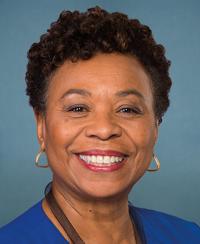
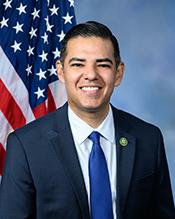
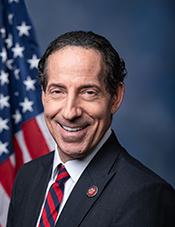
Ms. Lee of California (for herself, Ms. Adams, Ms. DelBene, Mr. DeSaulnier, Mr. Panetta, Ms. Meng, Ms. Titus, Mr. Auchincloss, Mr. Thompson of Mississippi, Ms. Jayapal, Mr. Carter of Louisiana, Mr. Sablan, Ms. Chu, Ms. Scanlon, Mrs. Watson Coleman, Mr. Blumenauer, Mr. Cárdenas, Mr. Carbajal, Ms. Clarke of New York, Ms. Jackson Lee, Mr. Levin, Ms. Jacobs, Mr. Smith of Washington, Mr. Cohen, Ms. Williams of Georgia, Mr. Carson, Ms. Moore of Wisconsin, Ms. Wilson of Florida, Mr. Pallone, Mr. Casar, Mr. Gomez, Mr. Correa, Mr. McGovern, Mrs. Ramirez, Mr. Schiff, Ms. Tokuda, Mr. Espaillat, Mr. García of Illinois, Mr. Krishnamoorthi, Mr. Payne, Mr. Grijalva, and Ms. Bonamici) introduced the following bill; which was referred to the Committee on Agriculture
A BILL
To amend the Food and Nutrition Act of 2008 to repeal the particular work requirement that disqualifies able-bodied adults for eligibility to participate in the supplemental nutrition assistance program.
Short title
This Act may be cited as the Improving Access to Nutrition Act of 2023
.
Findings
The Congress makes the following findings:
35 million people, including over 10 million children, suffered from hunger even before the COVID–19 pandemic.
Analyses show that 50 million people, including 17 million children, could go hungry due to the effects of the COVID–19 pandemic.
As of December 2020, food insecurity among White households with children was 24.2 percent, while 38.6 percent of Latinx and 40.6 percent of African-American households with children suffered from food insecurity.
Black and Hispanic children were twice as likely to live in households without enough to eat as White children, entering this crisis at disproportionate risk of going hungry.
Adults who identify as American Indian, Alaska Native, Native Hawaiian, Pacific Islander, or as multiracial, were twice as likely as White adults to report that their household did not get enough to eat. While official national data for Native American households is lacking, previous research in Washington State showed food insecurity among Native households was 2.5 times higher than in White households.
The COVID–19 pandemic has deepened longstanding racial disparities and food insecurity.
SNAP is the Nation’s first line of defense against hunger and is especially vital for vulnerable populations. More than 85 percent of all SNAP benefits go to households with children, seniors, and persons with disabilities.
SNAP helps restore access to healthy food, improves overall health, and reduces poverty. SNAP participation is also associated with educational advancement of children in poverty and improvements in math and reading scores.
SNAP has a proven record of effectiveness in promoting food security and health as well as in providing economic stimulus. Each $1 in SNAP benefits during a downturn generates between $1.50 and $1.80 in economic activity.
Studies have also demonstrated that work requirements do not reduce poverty.
About 6.1 million individuals are subject to SNAP work requirements and are at risk of losing critical food assistance if they cannot comply.
Some live in households with school-aged children where benefit reductions or terminations could jeopardize children’s health, development, and future success.
Children in poverty also often depend on pooled resources (including SNAP benefits) from extended family members who do not claim them as dependents.
Studies show that health impediments are a primary cause of why many SNAP recipients are unable to meet a work requirement.
Work requirements also cause an increase in the administrative bureaucracy, which some studies have shown, cause a significant reduction in SNAP participation.
Studies show that Black Americans are particularly vulnerable and are most likely to face recent unemployment and work requirements would disproportionately prevent Black people from having access to this important benefit.
Families experiencing homelessness are most likely to leave programs like SNAP when there is a work requirement, thereby increasing their vulnerability.
COVID–19 has made people more vulnerable. A work requirement would serve to only further burden those most at risk during the COVID–19 pandemic.
Amendments
Work requirement
Section 6 of the Food and Nutrition Act of 2008 (7 U.S.C. 2015) is amended—
in subsections (d)(4)(B)(ii)(I)(bb), (d)(4)(N)(iii)(I)(bb), (d)(4)(N)(iv)(II), and (d)(4)(N)(v)(IV) by striking or subsection (o)
, and
by striking subsection (o).
Additional allocations for states that ensure availability of work opportunities
Section 16(h)(1) of the Food and Nutrition Act of 2008 (7 U.S.C. 2025(h)(1)) is amended by striking subparagraph (E).
Technical amendments
Section 7(i)(1) of the Food and Nutrition Act of 2008 (7 U.S.C. 2016(i)(1)) is amended by striking section 6(o)(2) of this Act or
.
Section 16(h) of the Food and Nutrition Act of 2008 (7 U.S.C. 2025(h)) is amended—
in paragraph (1)—
in subparagraph (B)—
by striking that—
and all that follows through (I)
, and
by striking ; and
and all that follows through 6(o)
, and
in subparagraph (F)(ii)(III)(ee)(AA) by striking , individuals subject to the requirements under section 6(o),
, and
in paragraph (5)(C)—
in clause (ii) by inserting and
at the end, and
in clause (iii) by striking ; and
and all that follows through appropriate
.
Conforming amendments
Internal revenue code
Section 51(d)(8)(A)(ii) of the Internal Revenue Code of 1986 (26 U.S.C. 51(d)(8)(A)(ii)) is amended—
by striking family—
and all that follows through (I)
and inserting family
, and
by striking , or
and all that follows through of 2008
.
Workforce innovation and opportunity act
The Workforce Innovation and Opportunity Act (29 U.S.C. 3101 et seq.) is amended—
in section 103(a)(2) by striking subparagraph (D), and
in section 121(b)(2)(B) by striking clause (iv).
Effective date; application of amendments
Effective date
Except as provided in subsection (b), this Act and the amendments made by this Act shall take effect 180 days after the date of enactment of this Act.
Application of amendments
The amendments made by section 2 shall not apply with respect to an allotment issued under the Food and Nutrition Act of 2008 (7 U.S.C. 2011 et seq.) before the effective date of this Act.
The amendments made by section 3(a) shall not apply to individuals hired before the expiration of the 90-day period that begins on the effective date of this Act.