Mr. Speaker, I move to suspend the rules and pass the bill (H.R. 3389) to require the Secretary of Agriculture, acting through the Chief of the Forest Service, and the Secretary of the Interior to…
Mr. Speaker, I move to suspend the rules and pass the bill (H.R. 3389) to require the Secretary of Agriculture, acting through the Chief of the Forest Service, and the Secretary of the Interior to conduct an evaluation with respect to the use of the container aerial firefighting system (CAFFS), and for other purposes, as amended.
Mr. Speaker, I ask unanimous consent that all Members may have 5 legislative days to revise and extend their remarks and to include extraneous material on H.R. 3389, the bill now under consideration.
Mr. Speaker, I yield myself such time as I may consume.
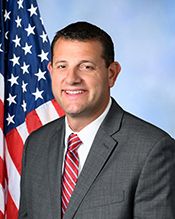
Mr. Speaker, I strongly support Congressman Valadao's bill, the Emergency Wildfire Fighting Technology Act of 2023.
This legislation, rightly named, has the potential to provide another tool in the toolbox for addressing the catastrophic wildfire crisis. Americans have tragically grown accustomed to increasingly severe wildfire years that are lasting longer and producing more destruction than ever before. This summer, devastating wildfires impacted the community of Lahaina on the island of Maui, devastation I saw firsthand along with several of my colleagues on both sides of the aisle.
Unfortunately, the reality is that decades of inadequate forest management have created an unprecedented forest health crisis. Across the U.S., there are now 1 billion acres of at-risk land for wildfire. In the absence of dramatic change, the future outlook remains bleak.
When it comes to fighting these out-of-control infernos, we simply don't have the luxury of ignoring potential new technologies that could improve the cost efficiency or effectiveness of suppressing fires.
It is critical that wildland firefighting agencies have all tools and methods available to them to fight fires and protect lives and property. Aircraft and helicopters provide lifesaving support to ground crews, often by delivering water or fire retardant. In order to drop water or fire retardant from a plane or helicopter, the aircraft must be designed or retrofitted for such purposes, limiting the number of aircraft that are available.
Mr. Valadao has worked with various stakeholders who have developed and improved a container aerial firefighting system to drop water and fire retardant from aircraft via disposable containers. This technology could decrease the response time to wildfires by increasing the number of aircraft available, thus saving more lives and more structures. This technology is not new. However, the system has not been recently studied by the wildland firefighting agencies.
H.R. 3389 would require the U.S. Forest Service and Department of the Interior to conduct an evaluation on the use of container aerial firefighting systems in response to wildfires. The evaluation will focus on effectiveness, cost, ease of delivery, and safety.
Directing our wildfire fighting agencies to study new and emerging technology is a win for the wildland firefighting crews and a win for those who live in fire-prone areas.
I applaud Congressman Valadao for his leadership on this important topic. He is a leader on bipartisan solutions that meaningfully improve forest health and reduce wildfires.
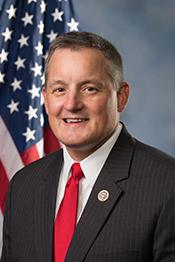
Mr. Speaker, I support this bill, and I reserve the balance of my time.
House of Representatives,
Committee on Agriculture,
Washington, DC, September 5, 2023.
Hon. Bruce Westerman,
Chairman, Committee on Natural Resources,
Washington, DC.
Dear Mr. Chairman: This letter confirms our mutual
understanding regarding H.R. 3389, the ``Emergency Wildfire
Fighting Technology Act of 2023''. Thank you for
collaborating with the Committee on Agriculture on the
matters within our jurisdiction.
The Committee on Agriculture will forego any further
consideration of this bill. However, by foregoing
consideration at this time, we do not waive any jurisdiction
over any subject matter contained in this or similar
legislation. The Committee on Agriculture also reserves the
right to seek appointment of an appropriate number of
conferees should it become necessary and ask that you support
such a request.
We would appreciate a response to this letter confirming
this understanding with respect to H.R. 3389 and request a
copy of our letters on this matter be published in the
Congressional Record during Floor consideration.
Sincerely,
Glenn ``GT'' Thompson,
Chairman.
Mr. Speaker, I yield 3 minutes to the gentleman from California (Mr. Valadao), the lead sponsor of the bill.
Mr. Speaker, I again thank Mr. Valadao for bringing this important piece of legislation. I thank the ranking member and the minority for their support on this bill.
Again, we must provide all necessary tools for the wildland firefighting agencies so that they can combat this wildfire crisis.
Mr. Speaker, I urge adoption of the bill, and I yield back the balance of my time.