Mr. Speaker, I ask unanimous consent that all Members have 5 legislative days to revise and extend their remarks and include any extraneous material on the subject of this Special Order. Mr. Speaker,…
Mr. Speaker, I ask unanimous consent that all Members have 5 legislative days to revise and extend their remarks and include any extraneous material on the subject of this Special Order.
Mr. Speaker, it is my honor and a privilege to share the podium today with my esteemed colleague, Sheila Cherfilus- McCormick, as we embark on this significant CBC Special Order hour, an hour that has come. We are going to dive deep into understanding how terms like colored people have shaped our racial conversation and histories. This isn't just an exploration of the past, it is about how we forge our future. We will be tackling the importance of diversity, equity, and inclusion.
Mr. Speaker, across every field and sector, we are seeing a retreat on this promise, and we are going to stress why it is so vital that our education system is inclusive, recognizing and celebrating our racial diversity, rather than suppressing it. We see a future where understanding our collective past enables us to shape a more equitable society.
Remember, this conversation isn't just about us or Congress. It is a conversation for every single American because together we can make a difference.
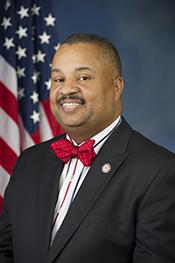
Mr. Speaker, I yield to the distinguished gentleman from the great State of New Jersey (Mr. Payne).
Mr. Speaker, I thank the Honorable Donald Payne, Jr. from the great State of New Jersey for his remarks.
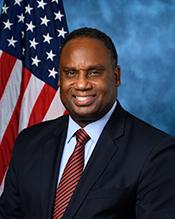
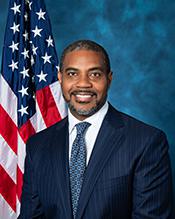
Mr. Speaker, I yield to the gentleman from the great State of Nevada (Mr. Horsford), who is the honorable chairman of the Congressional Black Caucus.
Mr. Speaker, I thank the honorable chairman of the Congressional Black Caucus, Congressman Steven Horsford, from the great State of Nevada.
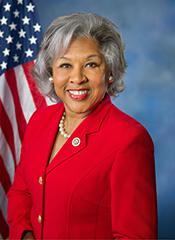
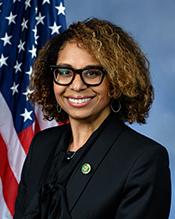
It is now my privilege to yield to the Honorable Congresswoman Joyce Beatty from the great State of Ohio.
Mr. Speaker, I thank the Honorable Congresswoman Joyce Beatty for her remarks.
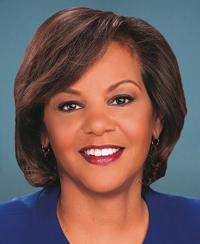
Mr. Speaker, I yield to the gentlewoman from Illinois (Ms. Kelly).
Mr. Speaker, I thank the Honorable Congresswoman Robin Kelly from Illinois for her remarks.
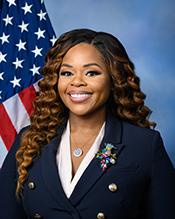
Mr. Speaker, I now yield to the gentlewoman from Florida (Mrs. Cherfilus-McCormick).
Mr. Speaker, I thank the Honorable Sheila Cherfilus-McCormick from the great State of Florida for her remarks.
Mr. Speaker, I yield to the gentlewoman from Texas (Ms. Jackson Lee).
Mr. Speaker, I thank the Honorable Congresswoman Sheila Jackson Lee from the great State of Texas for her comments.
I yield to the gentlewoman from California (Ms. Kamlager-Dove).
Mr. Speaker, I thank the Honorable Congresswoman Sydney Kamlager-Dove from the great State of California for her remarks.
I would like to take a point of privilege and speak to the Record. Mr. Speaker, may I make an inquiry about the time remaining?
Mr. Speaker, I rise today with a heart burdened by the weight of history and a spirit ignited by the promise of the future. We gather here in these hallowed halls of power, where words bear the weight of action, and action shapes the destiny of our Nation.
But the words uttered by our fellow Congressman--and I have waited for a sufficient response for him to apologize to the Honorable Congresswoman Joyce Beatty and to other Members that seek truth and justice--but he has remained silent, and he says he has misspoken.
Misspoken means to also not have been made clear, so if he could clarify his remarks on who is a colored person--as the grandson of two soldiers that fought in U.S. wars, I would like to know what he was speaking about for colored.
When my grandparents could not go on the first-class car after returning from Europe, at the Union Station had to go sit in the second-class car for colored people, behind Nazi POWs that were allowed to go in the first-class car, we are trying to overcome a horrid racial past.
Mr. Speaker, I would like to take this opportunity to share with you a little history. When we hear, as African Americans, our brothers and sisters referred to as colored people in the year of 2023, it doesn't just make us uncomfortable, it transports us back through centuries of struggle, resilience, and a pursuit of justice often denied.
I stand here before you today, not just as a Member of Congress, but a freedom fighter. Our fight as Americans started before the country was even born. It has been over 400 years when the first persons that were imported from Africa had been enslaved.
Nearly two centuries after, in 1787, our Nation held a Constitutional Convention. It was there that the infamous Three-Fifths Compromise was struck. Three out of five Americans that had been enslaved were counted as representation for taxation, not for votes. The humanity of a person was whittled down to a fraction.
Can you imagine the audacity, the horror?
Just 2 years later, in 1789, we stand witness to a profound paradox that happened; the same 1789 that gave birth to this illustrious institution, the United States of House Representatives, founded in 1789.
On the one hand, we celebrate the inauguration of our first President, President George Washington--his picture stands proudly in this Chamber--a milestone in our Nation's narrative.
Yet, let us not overlook the uncomfortable truth that this esteemed leader was himself a holder of Americans enslaved; a chilling reminder that our Nation's foundation was laid with the sweat and blood of those in chains.
In the years that followed, from 1740 to 1834, Southern slave States employed another insidious tool to maintain the oppressive status quo, the anti-literacy laws. I have not been able to find any other nation that had instituted or enacted anti-literacy laws.
Imagine a system so threatened by the enlightenment of its subjugated people that they made it illegal for the enslaved and free people of color to learn to read and write.
In 1850, the Fugitive Slave Act was enacted, transforming ordinary citizens into accomplices for the slavery system. A free territory was no longer a sanctuary. It could transform into a hunting ground for those seeking freedom. Aiding the enslaved, a profound act of humanity was suddenly a criminal act punishable by fine and imprisonment.
This Act didn't just target the enslaved. It cast its nefarious shadow over the entire Nation, implicating all in the perpetration of this abhorrent institution.
In the wake of this Act, 7 years later, in 1857, the Supreme Court reached a decision in the Dred Scott case that shook the very foundation of freedom and human dignity.
The Court ruled that all Black people, regardless of their status as free or enslaved, were not and could never become citizens of the United States. This wasn't just a judicial ruling; it was a heartrending affirmation of the racial prejudice deeply rooted in our society, a prejudice that permeated even our Nation's highest courts.
In the year 1863, we saw a light, the Emancipation Proclamation. Freedom--after 246 years, freedom, it seemed, was finally within our grasp. A bloody Civil War, fought over the right to keep human beings in bondage, ended 2 years later, our Nation's deadliest war, and we dared to dream of a new dawn for our people.
Yet, as the sun of liberation rose, the shadows of oppression heightened. In a bitter twist of irony, freedom unveiled a new face of subjugation. The Black Codes of 1865 were enacted.
Though the iron chains of slavery had been shattered, this new set of manacles were fastened around us, chains woven with legal threads and tightened by the grip of racial bias. They were not as visible as the shackles of old, but they were no less oppressive, no less real.
A century later, in 1963, at the foot of the Lincoln Memorial, the Reverend Martin Luther King, Jr., gave voice to the bitter truth: ``One hundred years later, the colored American is still not free.''
A hundred years after emancipation, the struggle was far from over. We had been unshackled, yet we remained bound by the chains of systemic discrimination, segregation, and marginalization.
The term ``Jim Crow law'' surfaced in 1892. Just 4 years later, there was Plessy v. Ferguson. The verdict cemented the doctrine of ``separate but equal,'' which inherently meant being unequal.
Despite these oppressive circumstances, our ancestors fought with courage and determination. They fought for the Civil Rights Act in 1866, and fought in 1964, 1965, and 1966.
Our ancestors fought for the 13th Amendment to abolish slavery. Our ancestors fought for the 14th Amendment to have equal protection under the law and guaranteeing citizenship. They fought for the 15th Amendment so that we could have the right to vote for African-American men.
These victories did not come easy. They were bought with blood, sweat, and tears of our forebears.
Today, we find ourselves in 2023, but the echoes of our past are loud. Our colleague, Mr. Crane, has evoked the ghost of a very painful past by addressing us in this Chamber as colored people.
We have served in every war, Mr. Crane. It is a term as archaic as the prejudices it represents.
In doing so, he blurs the line between past and present, reminding us of an era we have struggled to move beyond. His words are not just a singular lapse in judgment but a symptom of a much larger disease--a disease that seeped into the highest courts of our land, where the 14th Amendment--the very symbol of our freedom--has been twisted into a weapon against affirmative action.
This very amendment, a cornerstone of liberty and equality, has been misused to dismantle a policy intended to level the playing field that has been historically skewed against African Americans.
Our attention is then drawn to the targets of this regressive decision: Harvard University, founded in 1636, and the University of North Carolina founded in 1789. The Supreme Court in 2023, cited the 14th Amendment, ratified in 1868, in the name of Make America Great Again.
Now, we have our colleague (Mr. Crane) using the words ``colored,'' the words that my mother and father had to see growing up in South Carolina and Florida and Virginia for colored water fountains, colored schools.
Can we please move forward? Can we please demand an apology to this great body of distinguished men and women from Mr. Crane?
I ask: Is it truly a coincidence that these specific institutions have been targeted as the battlegrounds for the dismantling of affirmative action, or is it an insidious reminder of our painful history, a pointed jab at the very heart of our struggle for equality and access in opportunity?
The African American community has been in bondage longer than we have ever been free. Our exclusion has lasted longer than our inclusion. Even half a century after the Civil Rights Act of 1965, we ask ourselves: Are we truly free to meritocratically grow?
This timeline, this history is a testament to our resilience. It is a reminder of our past, a measure of our progress, and a marker of the journey ahead. We stand on the shoulders of those who have come before us, those who have struggled, and those who have sacrificed. We owe it to them and to ourselves to keep the flame of justice burning bright.
This journey has been long, and it is not over, but we will not falter, we will not tire, we will not rest until we can unequivocally say that we are free--until justice is not just a word in our Pledge of Allegiance but a reality in our lives.
Mr. Speaker, may I inquire as to the time remaining.
Mr. Speaker, I yield back the balance of my time.