Mr. Speaker, I yield myself such time as I may consume. Mr. Speaker, we are on the brink of yet another government shutdown brought to you by MAGA Republicans. I have lost track of how many times…
Mr. Speaker, I yield myself such time as I may consume.
Mr. Speaker, we are on the brink of yet another government shutdown brought to you by MAGA Republicans. I have lost track of how many times this has happened in this Congress. Frankly, I and the rest of America are just tired. We are exhausted.
There are real consequences when the government shuts down. It harms our national security. It harms our economy. It harms servicemembers, veterans, retirees, and vulnerable communities.
Instead of working to prevent a shutdown, we are debating a bill that seeks to divide America with fake culture wars that are really about denying the real dangers posed by climate change and denying the fact that our country's rich diversity is one of our greatest resources.
This bill, H.R. 4790, which I am calling the promoting MAGA priorities over economic growth act, is straight out of the Republicans Project 2025 playbook. It would restrict voting rights for investors, ban information that MAGA Republicans don't agree with, and block the government agency responsible for protecting our capital markets, the Securities and Exchange Commission, from directing public companies to report critical information that impacts their bottom line, including climate risk, company diversity, and employee welfare.
This bill flies in the face of the 80 percent of investors who want companies to disclose these metrics, known as environmental, social, and governance, or ESG, policies. Companies that prioritize these metrics perform better financially than their peers that do not.
Many studies have shown that companies that embrace the diversity of the United States outperform those that do not. Indeed, companies with the highest percentages of women board directors outperformed those the least by 53 percent when it comes to shareholder returns.
If we think about it, this is just common sense. When a company includes the views and perspectives that reflect the diversity of America, all of America is likely to see the value of that company.
When I was chairwoman of the committee, I created the first of its kind Subcommittee on Diversity and Inclusion. We received countless hours of testimony from researchers who confirmed that embracing diversity and inclusion is not just the right thing to do but is also good for the bottom line. It is good management.
Let me go through in more detail what this bill does.
First, H.R. 4790 strips American investors of their legal right to vote on and offer proposals that can influence the direction of the companies they own, particularly those related to ESG policies. The bill does this by giving management, rather than the SEC, the final say on whether a proposal gets included on the ballot at a company's annual shareholder meeting.
The effect of this bill would deprive investors of what is today, right now, a legal right to have proposals of any kind included.
There is a long history of shareholders pushing America's corporations to adopt practices that most of us take for granted today. This includes majority-independent boards, say-on-pay executive compensation, and annual director elections.
Today, investors are pushing companies to report ESG metrics, board diversity, and how workers are treated. Being able to offer, and then vote on these proposals, is a legal right of investors under current law. That is right. Shareholders are the legal owners of the companies they invest in and corporate executives work at their pleasure.
Mr. Speaker, it seems that my colleagues on the other side of the aisle, who are so concerned about socialism, might need a refresher about how capitalism really works.
Second, H.R. 4790 undermines another critical component of our equity markets. The bill limits independent analysis and research by impeding key providers that investors use known as proxy advisers.
Proxy advisers are neutral third parties that provide shareholders and their representatives with independent analysis about items that are up for a vote on the corporate ballot. Proxy advisers also solve an important problem by doing the research on thousands of corporate votes that investors would otherwise have to do themselves. Management simply does not want ordinary investors to have this information as it may not align with their recommendations.
To be clear, investors pay for these services and do so because they don't just want to take management's word, and they shouldn't. By restricting what analysis and research ordinary investors can purchase and use, H.R. 4790 is effectively another MAGA book ban.
Third, H.R. 4790 severely limits the SEC's authority to direct companies to report data about their climate risks, diversity hiring, and employee welfare.
Instead of allowing the SEC to determine what information investors should see, as is currently settled law, under this bill, companies themselves would make this determination.
It shouldn't surprise anyone that a company's management is not inclined to share more than it has to, and if it gets too close, one can imagine that companies wouldn't share much of anything.
Congress authorized the SEC to be the arbiter of what is disclosed because our markets only work when investors--investors--have sufficient information to make informed investment decisions.
Finally, H.R. 4790 undermines the government's ability to coordinate with international partners and take commonsense steps to address financial risks like those posed by climate change. In fact, if the Federal Reserve hears from a European counterpart that requiring companies to guard against wildfire risk is important, the Fed would have to jump through several new hurdles before it could implement it, even in an emergency.
This extreme measure would even make it harder for our bank regulators to encourage banks to expand small business lending, an issue I tried to fix through an amendment but was blocked.
To be clear, this bill doesn't just have one or two poison pills in it. When each bill was separately considered in committee, not a single Democratic member voted for them.
H.R. 4790 strips the right of investors to vote and offer their own proposals to strengthen the companies they own, strips their access to independent research and analysis about the companies they own, and strips the government regulator of its authority to compel those companies to provide the market with critical information.
Is this America?
Mr. Speaker, I reserve the balance of my time.
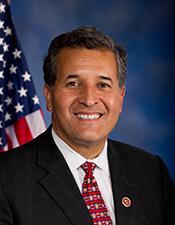
Mr. Speaker, I yield 3 minutes to the gentleman from California (Mr. Vargas), who is a member of the Committee on Financial Services and the co-chair of the Congressional Sustainable Investment Caucus.
Mr. Chairman, I yield 3 minutes to the gentleman from California (Mr. Sherman), who is also the ranking member of the Subcommittee on Capital Markets.
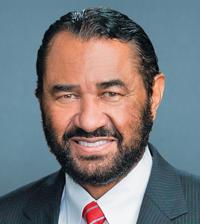
Mr. Speaker, I yield 2 minutes to the gentleman from Texas (Mr. Green), who is the ranking member of the Subcommittee on Oversight and Investigations.
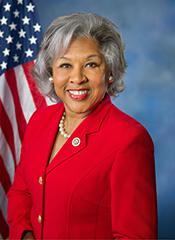
Mr. Speaker, I yield 1 minute to the gentlewoman from Ohio (Mrs. Beatty), who is also the ranking member of the Subcommittee on National Security, Illicit Finance, and International Financial Institutions.
Mr. Speaker, I yield an additional 30 seconds to the gentlewoman from Ohio.
Mr. Speaker, I yield 2 minutes to the gentleman from Illinois (Mr. Casten), who is a member of the Financial Services Committee and the co-chair of the Congressional Sustainable Investment Caucus.
Mr. Speaker, I yield 1 minute to the gentlewoman from Texas (Ms. Garcia), who is also the vice ranking member of the Committee on Financial Services.
Mr. Speaker, I yield an additional 30 seconds to the gentlewoman from Texas.
Mr. Speaker, I yield 1 minute to the gentlewoman from Michigan (Ms. Tlaib), who is also the vice ranking member of the Subcommittee on Housing and Insurance.
Mr. Speaker, I yield an additional 30 seconds to the gentlewoman from Michigan.
Mr. Speaker, I yield 1 minute to the gentleman from Illinois (Mr. Casten), a member of the Financial Services Committee and the co-chair of the Congressional Sustainable Investment Caucus.
Mr. Speaker, I yield myself such time as I may consume.
Mr. Speaker, let me be clear. We all want our investments to grow. Investors want to be able to compare ESG metrics across companies because there is substantial research showing that companies that are actively managing their climate risk and promoting diversity, equity, and inclusion are more profitable, not less.
Consistent and transparent disclosure on these metrics are critical for investors who are looking to maximize their investment growth, not just for
investors who are looking to put their money toward good causes.
This is not just about doing the right thing for the Earth or for employees. It is about doing the right thing for a company's bottom line, the right thing for the growth of our investments, and the right thing for investor choice.
My colleague has claimed that nothing in this bill would prevent an individual from investing in companies with ESG policies, but let's take a look at the facts.
This bill would make it harder for investors to access clear and consistent disclosures from companies on ESG metrics.
How can an investor make informed decisions without that information? They cannot, and that is why this bill is so harmful.
It is taking away investor rights and investor choice in order to force MAGA policies on all of us at the expense of investors. It is unacceptable.
Mr. Speaker, I reserve the balance of my time.
Mr. Speaker, I yield myself such time as I may consume.
Mr. Speaker, this bill has been opposed by the Biden-Harris administration. In fact, this Statement of Administration Policy states that this bill ``would severely limit the ability of Federal financial regulators to protect consumers and investors.''
It also ``would disempower stakeholders and investors. . . .''
I include the Statement of Administration Policy in the Record.
Statement of Administration Policy
h.r. 4790--prioritizing economic growth over woke policies act
The Administration opposes H.R. 4790, which would severely
limit the ability of Federal financial regulators to protect
consumers and investors.
Since 1934, the Securities and Exchange Commission (SEC)
has worked to protect investors, safeguard markets, and
enhance access to capital. Central to these efforts are the
SEC's disclosure rules, which require companies that offer
securities to the public to provide investors the information
they need to make informed decisions. The changes proposed in
H.R. 4790 would fundamentally limit the SEC's ability to
fulfill its mission by prohibiting the agency from requiring
companies to provide certain disclosures of information
material to investment decisions, and instead allowing the
regulated companies themselves the discretion to determine
what must be disclosed.
The SEC also exists to ensure that companies are responsive
to shareholder and investor concerns. However, H.R. 4790
would disempower stakeholders and investors, including by
preventing the SEC from compelling companies to notify
investors of other shareholders' proposals and by limiting
the types of proposals that shareholders can introduce.
Finally, the bill also limits some independent agencies,
including the Federal Reserve, from working to influence
standards proposed by specified international organizations
that work to improve the financial system, curtailing the
Nation's ability to coordinate with international
counterparts in the face of threats to the global economy.
Mr. Speaker, I also point out that this bill is opposed by over 40 organizations and investor advocates. I include in the Record the letter these groups signed indicating their opposition to
Mr. Speaker, I yield myself the balance of my time.
Mr. Speaker, we have talked a lot during this debate about investors, and I want to be clear that when I say ``investor,'' I am talking about people saving for retirement, their children's education, and to purchase a home. I am talking about Americans who have saved a few dollars in a mutual fund or purchased a few stocks.
These are the investors, and it is their rights that this bill tramples on. It tramples on their right to vote on and to offer proposals to strengthen companies they own, their right to information to evaluate their investment, and it undermines the regulator who works to protect investor rights.
This is taking us back. This is undoing the traditional investor rights that we have enjoyed for so long that are now being stripped while there is an attempt to undo what we are trying to do with climate change.
Well, I know that they don't believe in the science and what is happening with climate change, but this is going way beyond what I thought any of my colleagues on the opposite side of the aisle would do.
I understand that large public corporations want this bill because it would allow them to take investors' money but ignore them in every respect.
Shareholders are the legal owners of these companies, not the executives. Mr. Speaker, I think the executives simply forgot who they work for.
The shareholders are the ones who invest their hard-earned dollars in the company and deserve the right to participate in this small way.
This bill is a blatant denial of climate change and insulting to communities all across this country that have been burned by historical wildfires, flattened by monster hurricanes, and parched by record heat waves and droughts.
This bill is an attempt to make us see our neighbor as a threat rather than as a friend. It suggests wanting companies to reflect the diversity of America is itself un-American.
I know that there are those who don't like to see people like me in the boardrooms, who don't like to see people of color in the boardrooms, who don't like to see LGBT in the boardrooms.
We are not going back, Mr. Speaker. We are going to continue to fight this fight, and we are going to fight for the investors.
With that type of thinking, it leads the politicians to share fearmongering lies, like people eating pets rather than seeing that our diversity of people, ideas, backgrounds, and religions is our greatest strength and what sets America apart from the rest of the world.
Mr. Speaker, I yield back the balance of my time.