Reserved for the Speaker.
Legislative Activity
Stay on top of the latest movement without scrolling through every action
Introduced in House
January 6, 2023
View full timeline
Introduced in House
January 3, 2023
Introduced in House
January 6, 2023
Floor Debate
10 membersWhat members said about H.R. 9 on the floor
 SJL
SJL JLJ
JLJ SH
SH SC
SC DMP+5
DMP+5
Floor Debate
10 membersWhat members said about H.R. 9 on the floor
Mr. Speaker, let me thank the gentlewoman from Florida and the gentleman from Illinois for their distinguished leadership of the CBC Special Order and to acknowledge our chairman, Steve Horsford, and…
Mr. Speaker, let me thank the gentlewoman from Florida and the gentleman from Illinois for their distinguished leadership of the CBC Special Order and to acknowledge our chairman, Steve Horsford, and the leadership to be able to acknowledge a very important moment.
Mr. Speaker, this is a time that draws memories, it draws emotions, and it draws a lot of tears.
I am very privileged and honored to have worked for the Southern Christian Leadership Conference as a college student in a program called SCOPE. How fortunate I was in the aftermath of the assassination of Dr. Martin Luther King to meet his foot soldiers, which included James Orange, Hosea Williams, Andy Young, Reverend Dr. Ralph Abernathy, and a young man by the name of Jesse Louis Jackson, who we are privileged and honored to be able to not only know but to have his wisdom and his brilliance in leadership even with us today.
Amongst those great leaders was a young man as well by the name of John Lewis, who continued, in his admiration for Dr. King, his own journey and fight. He was in the Freedom Riders, beaten at that time, as fellow riders, who did not look like him, were beaten bloody and even lost their life. Many Americans don't recall that history. Some call it the second civil war and the aftermath the second reconstruction.
There were many people who were willing to sacrifice their lives because of the right to vote--the right to vote, which was denied. The amazing aspect of their fight was that it was nonviolent.
They trained extensively to suffer at lunch counters. They were spit upon, beaten, hit in the head, pulled off the stools. There were multiple movements that could contribute to this question of civil rights and voting rights.
Many people were reminded of the ``I Am a Man'' campaign to try to bring dignity to garbage workers and sanitation workers that Dr. King fought for in Memphis, Tennessee, where he saw his untimely and brutal death.
This weekend was a commemoration of Bloody Sunday. Bloody Sunday actually happened on March 7, 1965.
Mr. Speaker, we are here on this day, the actual March 7, 1965. It was a group of nonviolent churchgoers, one might say, that walked across the Edmund Pettus Bridge to be able to make a move from Selma, Alabama, to Montgomery to show the State of Alabama and then-Governor Wallace, a raging segregationist, who later was reformed and reborn--to be able to say that they needed the right to vote or to show our President, our southern President, Lyndon Baines Johnson, that they needed the right to vote.
It was that march that was bloody. John Lewis was beaten near death, and others were beaten. Preceding that, Jimmie Lee Jackson was shot dead.
A little girl named Sheyann, who was 8 years old, was there this weekend. She was there, as we were all there, in memory of John Lewis, Martin King, Hosea Williams, many other foot soldiers, and the women that were involved as well from Alabama and the surrounding South.
We gathered together, Members of Congress, the Congressional Black Caucus, Cabinet officers, and the President of the United States, to say that Congress has not done its job.
The demise of the Voting Rights Act started with the Shelby case in 2013 in Alabama. It was simply a case of a city council person trying to get and make sure that he had fairness with every person having a right to vote. Unfortunately, the case went up to the United States Supreme Court, and the arguments were shocking to most of us.
It was: Why do we need this? We have thousands of African-American elected officials. Yes, they had been gained by the 1965 Voting Rights Act, but it was clear that if you are able to get rid of polio because we have the polio vaccine, as one Justice said--as I recall, it was Justice Ginsburg--then why would you get rid of the polio vaccine just because you have been able to get rid of polio because of the vaccine? Why would you get rid of the Voting Rights Act, particularly section 5, just because you have found some progress?
Mr. Speaker, I can tell you that as we have seen the loss of the Voting Rights Act in 2013, we have not been able to reauthorize a simple bill that was four or five pages long that simply says that you have the right to vote unfettered. It doesn't have color in it. It indicates no person can be discriminated against.
Yet, we have seen a mountain of discriminatory laws, voter suppression; purging; gerrymandering; not getting a drink of water; cutting out hours, if you will, with respect to voting, making sure that people who work night shifts can't vote, people who work hourly wages can't vote; no same-day registration. Here we are in 2023.
Mr. Speaker, I would offer to say that we are long overdue with the Voting Rights Act. It is really crafted in the Constitution because the 15th Amendment said we have the right to vote unfettered without discrimination; the 14th Amendment, equal protection of the law; and, of course, the 13th Amendment, so personal to many of us of African descent and those who are the descendants of enslaved Africans. It was the 13th Amendment where
the United States said for once that slavery was over.
Voting rights capture the very essence of who we are as a democracy.
To Selma, I thank you for being another cradle of democracy. For those marches of those individuals and children, Mr. Speaker, were utilized--it was a children's march that was utilized in order to ensure that we could vote.
As a Member of the United States Congress and the Judiciary Committee, I have been part of a bipartisan reauthorization of the Voting Rights Act. It was in 2006, and it extended the Voting Rights Act for 25 years. We passed the P.L. 109-246, H.R. 9.
It is well known that large numbers of Members of the House-- bipartisan--voted for the Voting Rights Act, and 98 Members of the Senate. This is the reauthorization. We also renamed it the Fannie Lou Hamer, Rosa Parks, and Coretta Scott King Voting Rights Act Reauthorization. Ultimately, at a later time, we added the Honorable Barbara Jordan and a number of other Texans who were engaged in voting empowerment, and we did it in a bipartisan manner.
It troubles me that we cannot come together and pass a voting rights bill that does nothing but allow Americans to vote. The Shelby case has dismantled the infrastructure of safe voting, constitutional privileges of equal protection of the law, and of course, the fear of voting-- people being arrested just for activating the right to vote, not being cautioned that they may not have had their registration right but put in jail--outright intimidation.
It is important for us to be on the floor today to be able to reinforce and to extend a hand of friendship and partnership. Why can't we reauthorize this bill? Why can't the Senate accept the John Robert Lewis Voting Enhancement Act with a new formula dealing with section 4 that deals with the formula under section 5? I am pleading with our colleagues to do so.
It is important, as I conclude my remarks, to recognize that voting is unfettered, and it is a choice of the American people. In this democracy--a two-party system most often, though there are other parties--we are either elected or unelected. That is the greatness of America.
Over the years, we have accepted the peaceful transfer of power until that day, January 6, 2021. I hope we will never see that day again.
That is no excuse for not passing the Voting Rights Act. It is no excuse for not recognizing that the importance of the Voting Rights Act is wrapped up in the history of African Americans, even though voting is for everyone. It is wrapped up in our basic history of not being counted as a whole person in the Constitution. As slaves, we were never able to even muster that sacred right to vote.
Landed people voted; unlanded did not. White women didn't have the right to vote, and unlanded people did not have the right to vote, if I might use that term.
Over the years, things changed. A brief moment of reconstruction that was just like a blink of an eye--barely even saw it. Then we went into the darkness of Jim Crowism and the viciousness of the Klan, which lasted into the 20th century.
I would think with that kind of history, America, which is the greatest country in the world and has overcome so much, would want to be that bright and shining city on the hill, to be able to show the world what democracy really is and what voting really is, that you can oppress people at one point and lift them up at another point. You can oppress the descendants of enslaved Africans. You can oppress slaves. You can do it into the 1800s and into the 1900s. Yet, you can do better.
Mr. Speaker, I would also say that we must not be afraid of the kind of words that make us a great country. Let us not be afraid of diversity, equity, and inclusiveness. When has that ever hurt anyone?
It only says that all of us, whether you are a person of faith or otherwise--I say all of God's children, but if you are not, it says all Americans, patriots, have every right to be in this country with all the benefits of the Constitution.
I do believe in the Declaration of Independence, that we all are created equal with certain inalienable rights of life, liberty, and the pursuit of happiness.
Let me also say to you, as we look at this idea of voting, African Americans and others, Americans, have fought in every war. We have been in every war from the Revolutionary War. We have shed blood in every single war and conflict alongside our brothers who don't look like us.
Mr. Speaker, in my final words, we have not been able to study slavery the way we should have. We did have Juneteenth. I hope that we will have the whole Nation celebrating Juneteenth, a Federal holiday that acknowledges the time of slavery and late time of release out of Texas 2 years later.
What we have not done is we have not passed H.R. 40, a simple bill, just a commission to study slavery and develop reparation proposals. What would that be? Just an analysis of the economic, social, psychological, health, and educational impact of slavery in this Nation and why the trajectory shows that the indicia of how African Americans are today in America is related to the connection of slavery.
Every discipline will show that our numbers are down. We should not be judged by--wealthy this person and wealthy that person. You need to look at the respective communities, rural and urban, and you will find Black people without healthcare, large numbers; without wealth, large numbers; without psychological, scientific, and sociological analysis. We can do something and bring this country together.
Mr. Speaker, I believe that reparations and the legislation of H.R. 40, an executive order that the President could do tomorrow, would be a healing, restoring, and repairing time in our life.
Mr. Speaker, I conclude my remarks by citing Harriet Tubman, one of the greatest generals we ever had, who freed many slaves, risked her life to go back to get those who were not free. She was part of the Underground Railroad, and it keeps me going.
Just like the words of John Lewis: Never give up, never give in, never give out.
In the framework of freeing the slaves, if you hear the dogs, keep on going. If you see the lights, keep on going. If you hear the noise, keep on going.
Mr. Speaker, if you want a taste of freedom, we need to keep on going. That is America. I hope tonight that my colleagues and those who are viewing us will keep on going, for freedom is before us, and we need to keep on going.
Mr. Speaker, I have said it once and I will continue to say it until it gets done: we have to pass the Voting Rights Act, which corrects the damage done in recent years to the Voting Rights Act of 1965 and commits the national government to protecting the right of all Americans to vote free from discrimination and without injustices that previously prevented them from exercising this most fundamental right of citizenship.
We cannot have free and fair elections without this essential legislation.
In the 58 years since its passage on this day in 1965, the Voting Rights Act has safeguarded the right of Americans to vote and stood as an obstacle to many of the more egregious attempts by certain states and local jurisdictions to game the system by passing discriminatory changes to their election laws and administrative policies.
Mr. Speaker, for most of the past 56 years, support for the Voting Rights Act and protecting, preserving, and expanding the right to vote of all Americans has been an issue that Americans have supported in overwhelming numbers across the nation.
On July 9, 1965, the House passed the Voting Rights Act by a 333-85 vote, with Democrats voting 221-61 and Republicans 112-24. The House later approved the VRA conference report on August 3 by a 328-74 vote (Democrats 217-54, Republicans 111-20).
The Senate passed the VRA on August 4 by a 79-18 vote, with Democrats voting 49-17 and Republicans 30-1 and this landmark legislation, P.L. 89-10, was signed into law by President Lyndon Johnson as on August 6, 1965.
Five years later, on June 22, 1970, the VRA was renewed for five years as Public Law 91-285, passing the House by a vote of 272-132 and the Senate by a vote of 64-12.
Five years after that, on June 4, 1975, Congress extended the VRA for seven years, enacting Public Law 94-73, with majorities of 341-70 in the House and 77-12 in the Senate, and on June 29, 1982, a Republican- controlled Senate joined with a Democratic House
to pass Public Law 97-205, extending the VRA for 10 years, with the vote in the Senate of 85-8 and the vote in the House of 389-24.
Ten years later, the bipartisan Voting Rights Language Assistance Act was passed as Public Law 102-344 on August 26, 1992. And on July 27, 2006, the Voting Rights Act was extended for 25 years when the Congress passed Public Law 109-246 (H.R. 9), the Fannie Lou Hamer, Rosa Parks, and Coretta Scott King Voting Rights Act Reauthorization and Amendments Act of 2006. The vote for H.R. 9 was 390-33 in the House and 98-0 in the Senate.
Every extension of the Voting Rights Act was signed into law by a Republican President, from Richard Nixon to Gerald Ford to Ronald Reagan to George H.W. Bush, and George W. Bush.
This chain of bipartisan support for voting rights stood solid and unbreakable until the Supreme Court's horrendous decision in Shelby County v. Holder, 570 U.S. 529 (2013).
Between 1982 and June 25, 2013, Section 5 of the VRA stopped more than 1,000 discriminatory voting changes in their tracks, including 107 discriminatory changes in Texas.
Mr. Speaker, I was a member of this Committee in 2006 when, led by Republican Chairman James Sensenbrenner, it compiled a 15,000 page record documenting the continuing need for the Voting Rights Act, and especially its Section 5 preclearance provisions, and reported favorably H.R. 9, the legislation reauthorizing the Voting Rights Act for 25 years, which in turned passed the House by an overwhelming 390- 33 vote and passed the Senate by a unanimous 98-0 vote.
I was never prouder to be an American and a Member of Congress than I was the day I attended White House signing ceremony where President George W. Bush signed the bill into law.
So, it really should not have been necessary and urgent for us to be here, as the Voting Rights Act was authorized until 2031.
But on June 25, 2013, the Supreme Court decided Shelby County v. Holder, 570 U.S. 193 (2013), which invalidated Section 4(b) of the VRA, and paralyzed the application of the VRA's Section 5 preclearance requirements, which protect minority voting rights where voter discrimination has historically been the worst.
The current conservative Supreme Court majority has simply never understood, or refuses to accept, the fundamental importance of the right to vote, free of discriminatory hurdles and obstacles.
It was predicted at the time by me and other defenders of the precious right to vote that the Supreme Court's misguided and naive decision would usher in a wave of state and local initiatives intended to suppress and nullify the rights of black Americans, persons of color, young adults, and marginalized communities to exercise the most basic act in the political process: voting.
As we have seen in recent elections, this prediction has tragically come to pass.
To increase transparency and to ensure there is time for effective remedial action, the Voting Rights Act should be strengthened by adding a new section that requires each State and subdivision to identify all new laws, regulations, or policies that include voting qualifications or prerequisites to voting covered by the Act and ensure that no covered practice is implemented unless it has been precleared.
It is useful, Mr. Speaker, to recount how we arrived at this day.
The reason it is important to review this history is so that we always remember the true and fundamental purpose of the Voting Rights Act, and that was to protect and empower black Americans, who had for two centuries been exploited, victimized, persecuted, scapegoated, cheated, and treated with both benign and malignant neglect all because they were excluded from participating in the political process and the making of decisions that affected their lives.
It is interesting to note the absence of the current frantic efforts to disenfranchise black voters and other person of color had no antecedent in 1994, when unexpectedly Republicans won the House majority for the first time in 40 years and majorities in several state legislatures across the country.
Nor did it happen in the after of the 2010 elections when Republicans recaptured the House majority after holding the White House for two consecutive terms.
What accounts for the lack of vote suppression action then and the desperate actions we see now?
I believe the answer is clear and simple: 29 years ago in 1994, and as recent as 13 years ago in 2010, conservative Republicans still believed they could compete for democratic political power fair and square and that ideas and principles could attract majority support.
With the demographic changes and generational replacement taking place in America, the maturation and coming of age of the beneficiaries of the Great Society, and the rise of what social and political scientist call the ``Obama Coalition,'' they no longer believe that.
They now hold it as an article of faith that they cannot win if they do not cheat; instead of taking their ideas and arguments to the voters, they have opted to change the rules so they can handpick the voters.
They have disenfranchised voters, but voters have continuously overcome those efforts.
Black voters in Georgia, Pennsylvania, Michigan, and Wisconsin braved a deadly pandemic to exercise their right to vote in an act of political self-defense against the most corrupt, incompetent, indifferent, and racist administration since the end of the Civil War.
In so doing, they vindicated and made prophetic the words of President Lyndon B. Johnson, the greatest legislative strategist and tactician of our lifetime, who saw clearly the need and power for good of the Voting Rights Act:
``The vote is the most powerful instrument ever devised by man for breaking down injustice and destroying the terrible walls which imprison men because they are different from other men.''
Fifty-eight years ago today, in Selma, Alabama, hundreds of heroic souls risked their lives for freedom and to secure the right to vote for all Americans by their participation in marches for voting rights on ``Bloody Sunday,'' ``Turnaround Tuesday,'' or the final, completed march from Selma to Montgomery.
Those ``foot soldiers'' of Selma, brave and determined men and women, boys and girls, persons of all races and creeds, loved their country so much that they were willing to risk their lives to make it better, to bring it even closer to its founding ideals.
The foot soldiers marched because they believed that all persons have dignity and the right to equal treatment under the law, and in the making of the laws, which is the fundamental essence of the right to vote.
On that day, Sunday, March 7, 1965, more than 600 civil rights demonstrators, including our beloved former colleague, the late Congressman John Lewis of Georgia, were brutally attacked by state and local police at the Edmund Pettus Bridge as they marched from Selma to Montgomery in support of the right to vote.
``Bloody Sunday'' was a defining moment in American history because it crystallized for the nation the necessity of enacting a strong and effective federal law to protect the right to vote of every American.
No one who witnessed the violence and brutally suffered by the foot soldiers for justice who gathered at the Edmund Pettus Bridge will ever forget it; the images are deeply seared in the American memory and experience.
The Voting Rights Act of 1965 was critical to preventing brazen voter discrimination violations that historically left millions of African Americans disenfranchised.
In 1940, for example, there were less than 30,000 African Americans registered to vote in Texas and only about 3% of African Americans living in the South were registered to vote.
Poll taxes, literacy tests, and threats of violence were the major causes of these racially discriminatory results.
After passage of the Voting Rights Act in 1965, which prohibited these discriminatory practices, registration and electoral participation steadily increased to the point that by 2012, more than 1.2 million African Americans living in Texas were registered to vote.
In 1964, the year before the Voting Rights Act became law, of there were approximately 300 African Americans in public office, including just three in Congress.
Few, if any, African Americans held elective office anywhere in the South.
Because of the Voting Rights Act, in 2007 there were more than 9,100 black elected officials, including 46 members of Congress, the largest number ever.
Mr. Speaker, the Voting Rights Act opened the political process for many of the approximately 6,000 Hispanic public officials that have been elected and appointed nationwide, including more than 275 at the state or federal level, 32 of whom serve in Congress.
Native Americans, Asians and others who have historically encountered harsh barriers to full political participation also have benefited greatly.
We must all do our part to preserve this most important legislation because it was earned with the sacrifices and the lives of our ancestors.
The right to vote is a ``powerful instrument that can break down the walls of injustice'' and must be protected against attack from all enemies, foreign and domestic, using all the legal tools at our disposal.
I look forward to the discussion of these matters with our witnesses.
Mr. Speaker, I thank the gentlewoman from the State of Florida, the Honorable Sheila Cherfilus-McCormick. There are too many people who believe that what happened in Selma is about the past, when…
Mr. Speaker, I thank the gentlewoman from the State of Florida, the Honorable Sheila Cherfilus-McCormick.
There are too many people who believe that what happened in Selma is about the past, when really it is about the future. That city, this movement, and perhaps most of all, this dedication to freedom, to equity, and equality, is not, nor has it ever been merely a moment in time.
Let us be very clear: We do not go to Selma every year to remember. There is nothing wrong with remembering. In fact, America would be a better place if she was willing to get over her historical amnesia.
There is a place in the body politic of this Nation for the act of remembering; no doubt about it. But what happened in Selma on this date, it is not some fossilized moment in American history.
What happened there was that ordinary people decided that they wanted their country to be a better place. They decided to dig again the wells of democracy which had been severely tampered with by racism, sexism, poverty, anti-Blackness, anti-Semitism, and everything else that made America woeful in the eyes of the marginalized and the oppressed.
The Founding Fathers had their role and their place, but everyone could not drink from their wells. Those were privileged wells. The wells that they dug had pretty stones, but the water was muddy.
What happened in Selma is that an entire generation decided to clean up the well. They decided to dig deeper wells. The people who marched there were of the opinion that everybody has a right to drink from the great springs of democracy.
They fundamentally believed that if you are a citizen of this country, then no one has the right to tell you that you don't have access to the constitutional ideals that make democracy worth the trouble of being democratic.
Amelia Boynton and Jimmy Lee Jackson took democracy in America in their own hands and saved America from Americanism.
My father is famous for saying that hands that used to pick cotton are now picking Presidents, and he is absolutely right. But today we need to understand that those same hands are the only reason that democracy survives in this country.
Do you think the insurrection of January 6 was the first time democracy was in trouble in this country?
As the Bible says, be not deceived.
When women are not safe, and Black people cannot vote, and Jewish people are put upon, and poor people are denied dignity and resources, the fact of the matter is this: Democracy in this country was already on life support, and has been so for a long a time.
But in 1965, ordinary people pumped life back into this democracy. Reverend Martin Luther King worked on the heart. Reverend Howard Thurman and Reverend Benjamin Mays worked on the minds. Ella Baker, Fannie Lou Hamer, and Diane Nash worked on its bones.
Everyday people, before those names, some of which you don't know, breathed life back into the American experience and, in a manner of speaking, told Lazarus to rise up from that grave.
The Selma movement took an emaciated commitment to its constitution and anemic political system and dared to put meat on the bone.
In 2023, the fight for democracy is not over. As of January 25, at least 150 proposed restrictive voting bills have been introduced in 32 States, threatening to disenfranchise millions of voters.
In Texas, five election interference bills have already been introduced this year alone, and in North Carolina, the Supreme Court of the U.S. has heard disturbing arguments in the Moore v. Harper case. This case seeks to establish the ``independent state legislature'' theory, which would prohibit State supreme courts from interpreting whether laws passed by the State legislature are constitutional under their constitutions.
These efforts to limit access to the ballot box and undermine the will of the people underscore the commitment, the importance of continuing the fight for democracy and upholding the values that we were defending in Selma.
When we go to Selma, we go not simply to show up to remember, we go every year to renew our commitment to the America that was created by freedom fighters.
The America created not in the purity of a hall in Philadelphia, but on a bridge in Alabama dripping with blood.
We show up every year to let it be known that we are not going back.
We are going annually to leave no room for doubt.
This is our country. We were born here, and until all of us are free, none of us can make a claim for freedom.
We go to Selma every year so that the bigots and the racists, and the sexists, and the supremacists will know that we will not be moved.
We don't show up in Selma every year for Reverend Martin Luther King. We come for our children, and our grandchildren, and our great- grandchildren, and generations yet unborn.
We go to Selma to make it clear that as long as we have anything to say about it, a government of the people, by the people, and for the people, and for all the people, shall not perish from the Earth.
Mr. Speaker, on this day, March 7, I would like to also share reflections that I have had with the House regarding Mrs. Mamie Till, the mother of Emmett Till, a resident of the First Congressional District of Illinois.
Mr. Speaker, I had the privilege, better than 3 weeks ago, to attend the screening of the ``Till'' movie in the White House under the Presidency of Joseph R. Biden.
My remarks are as follows: Mr. Speaker, I rise today to give special recognition to Mr. Andy Jassy, chief executive officer of Amazon, for his inspiring contribution to the making of the major motion picture ``Till,'' a movie about the life and martyrdom of Emmett Till.
Mr. Jassy's participation is of special importance to me, not only as an African American but as a Representative of the First Congressional District of Illinois.
Emmett Till lived and is now buried in the First Congressional District. Were he alive today, I very well could be his constituent in the First District or he could have been mine.
Sadly, we live in a world where the prospects of Black life continue to diminish. Emmett Till never got to live out his days in peace. He never got to pursue the best of what he had to offer the world.
It is important that we remember that Emmett Till was actually a human being.
Emmett Till was not, first and foremost, a victim, nor was he merely a symbol of racial antipathy in America. Emmett Till was a young man of tremendous compassion--a compassion not just for his family, but for his community as well.
Emmett dreamed of becoming a motorcycle policeman. It is said by those who knew him well, that Emmett had a joy for life, an infectious personality, and a remarkable sense of humor. In the eyes of those who loved him, Emmett was a boy who knew no limitations. He was what we should be and what we should value in all children in America, namely limitless.
There is nothing more tragic than such a bright light should be needlessly extinguished, that such a treasure should be buried in the ground, and that such a crime against humanity should have taken place.
I remember having been with Mrs. Rosa Parks, and my father Reverend Jackson asked her: Why did she not get up off of that bus in 1955?
She said that it was because she saw Emmett's picture and could not go back.
That indeed laid a foundation of a resurgence of a civil rights era.
I should also mention that the First Congressional District is not only where Emmett lived his life, but it is also the place where his mother kept sleepless sentinel over the memory and body of her son in a way most reminiscent of Antigone.
Mamie Till courageously fought for accountability and justice not just for her child alone. After the murder of her son, Mamie Till lived her life dedicated to the proposition that all children have a right to be safe and protected.
Without title or position, the mother of Emmett Till committed herself to the eradication of hatred in America, the kind of hatred that killed her son and the kind of hatred that continues to limit the horizons of millions of Blacks because of the color of their skin.
Mamie Till not only was a resident of the First Congressional District, she was the conscience of the community. Having already taken a moral stand, Mrs. Till was the quintessential American mother: Fearless and tenacious and yet somehow endowed with a generosity of spirit that not even the most sullen of hearts could resist her light. To meet her was to meet someone so singularly dedicated to equality that one could not be in her presence without being fundamentally transformed.
I am particularly proud to say that Mamie Till was a close friend of my family, and I have known her all of my life. Both my mother and father loved and admired her, and she must never be forgotten.
This is why the contribution of Mr. Jesse Williams is so significant. The murder and martyrdom of Emmett Till was not only tragic in its own right, but it points the way to a larger and fundamental truth of the American experience. From the years 1882 until 1968, approximately 4,742 people were lynched in America. Most of them were African Americans. The overwhelming majority were innocent, murdered without provocation, and perhaps, most importantly, all of them American citizens trying to secure for themselves the benefits of America.
But because we live in a nation dangerously preoccupied with the impediments of race, over 4,000 of its citizens--Emmett Till being one of them--lost their lives in the unintelligent and uncompromising shadows of hatred. This is why the film sponsored by Mr. Jesse and Amazon is of such critical importance in this era.
Given the fact that we are living in a time when government institutions are trying to erase uncomfortable and inconvenient aspects of American history, cultural artifacts must be rendered beyond reach of state sanctions and curriculum.
Mr. Faulkner said long ago that the center must hold, the truth must be preserved, and everything else is a lie. Nations that build their tomorrows on a cacophony of falsehoods are not worthy of the future they presume. But when we tell the truth, when we tell our story, then we are in the moment a better nation.
This is why what Mr. Jesse has done. This is what all of the makers of the movie ``Till'' have collaborated to create. They, much like the best of the Nation's creative forces, have given us something to consider, something to think about, and something to make us remember lest we fall victim to the most egregious historical infraction: the very act of forgetting.
While it is true that no company is without spot or blemish and since there are no immaculate corporations, it is no less the case, however, that Mr. Jesse's commitment to the making of this important cultural artifact is a watershed moment not only because of the movie's artistic content, but also because it raises the bar on how we might judge the value of corporate citizenship.
Fifty years ago, Rev. Martin Luther King, Jr., reminded us that in some situations, cowardice will ask: Is it safe?
Expedience will ask: Is it popular?
But conscience must ask: Is it right?
Prayerfully, I long for the day when we might look back upon the significant corporate and cultural collaboration and the emergence of a new American corporate consciousness. I think it is not a stretch to suggest that more American companies need to publicly align themselves with the truth of American history.
Mr. Jesse has certainly done that. He has reminded us that despite the inherent value of selling, we must put aside selling items sometimes to make a profit in order to do what is right for our Nation and the world.
Mr. Speaker, yesterday, we honored and commemorated the memory of Emmett Till. I had the pleasure of attending the White House screening of the movie `Till.' Emmett Till was only 14 years old when he was brutally beaten, shot, and dumped into the Tallahatchie River. It was horrific tragedy that sent shockwaves across the Nation, exposing the deep-seated racism and hatred that existed in the South during that time.
But it was also a pivotal moment that helped to galvanize a generation of civil rights activists, including my father and countless others, who were determined to fight for equality and justice for all.
I find it significant to mention that Emmett Till was born the same year as my father. As a son of the civil rights movement, I know that Till's murder touched the hearts of many and inspired them to take action. One of those people was Rosa Parks, who attended a rally in Alabama in 1955, where she heard Mississippi activist Dr. T.R.M. Howard speak about Till. Years later, my father asked Rosa Parks why she refused to move to the back of the bus, and she replied, ``I thought of Emmett Till and I couldn't go back.''
Thank you, President Biden for hosting this screening of `Till' at the White House. Your decision to share this important story with the country demonstrates your commitment to the fight for racial justice and your understanding of the importance of educating the public on the history of our Nation. Additionally, I want to thank Congress and the President for signing the Emmett Till Anti-Lynching Act into law, which makes lynching a federal crime. This historic legislation sends a clear message that the United States will no longer tolerate the senseless and brutal acts of racial violence that have scarred our Nation for too long.
Emmett Till's story is a painful reminder of the injustices and violence that Black people have endured for centuries in this country. But it is also a testament to the courage a resilience of those who fought for justice, and a call to action for all of us to continue that fight.
Mr. Speaker, I thank my colleagues in the Congressional Black Caucus and Representative Sheila Cherfilus-McCormick and Representative Jonathan Jackson for organizing this Special Hour order and…
Mr. Speaker, I thank my colleagues in the Congressional Black Caucus and Representative Sheila Cherfilus-McCormick and Representative Jonathan Jackson for organizing this Special Hour order and leading as coanchors this evening.
As chairman of the Congressional Black Caucus, I rise today to join my colleagues in this hour focused on the push for voting rights.
Today, March 7, is the 58th anniversary of Bloody Sunday, which occurred in Selma, Alabama, at the Edmund Pettus Bridge. That day, people gathered to march to the capital of Alabama, but they only made it a few miles before State troopers beat the protesters and shed blood on the bridge and streets of Selma.
Among the marchers was a 25-year-old young man named John Lewis. Years before he would come to join us here in the Halls of Congress, he was a civil rights leader and activist.
Some today might call him woke by their standards, and he was, in fact, woke: woke to disenfranchisement of Black men and women in the South, and woke to the fact that in Dallas County, Alabama, where he marched and where the police beat him, Black folks made up more than half of the population but somehow only made up 2 percent of the registered voters.
When the late Dr. Martin Luther King, Jr., was arrested in Selma a few months earlier, he wrote in The New York Times: ``This is Selma, Alabama. There are more Negroes in jail with me than there are on the voting rolls.''
In the nearby town of Marion, tensions hit a fever pitch when, on February 18, 1965, State troopers clubbed protesters and fatally shot 26-year-old Jimmie Lee Jackson, an African-American demonstrator trying to protect his mother, who was being struck by police.
Civil rights leaders planned to take their cause directly to Alabama Governor George Wallace on a 54-mile march from Selma to the State capital of Montgomery.
Although Wallace ordered state troopers ``to use whatever means are necessary to prevent a march,'' approximately 600 voting rights advocates set out from the Brown Chapel AME Church on Sunday, March 7.
I was honored to join my colleague, Representative Terri Sewell, and other Members, at Brown Chapel AME Church just this Sunday.
The demonstrators marched peacefully through downtown Selma. As they began to cross the bridge spanning the Alabama River, the marchers who gazed up could see the name of a Confederate general and grand dragon of the Alabama Ku Klux Klan, Edmund Pettus, staring right back at them in big block letters emblazoned across that bridge.
Soon after, the melee began and the police took out their batons and tear gas to attack the peaceful marchers. John Lewis later testified in court that he was knocked to the ground and was hit in the head with a nightstick by a state trooper.
What was different from this march, and this fight, was the many television cameras that captured the brutal moments on film and aired them across the country. It was a turning point in the fight for civil rights and for voting rights, just months after the Civil Rights Act of 1964 had been signed into law.
I had the opportunity, as I said, to join some of my colleagues in Selma, in Birmingham, and in Montgomery this weekend which, I may add, is now represented by our colleague in the Congressional Black Caucus, Congresswoman Terri Sewell. I was pleased that President Biden was there with us recognizing the need for our renewed action on voting rights for all.
The John R. Lewis Voting Rights Advancement Act would ensure every American can exercise their vote. As the conscience of the Congress, the Congressional Black Caucus has always held voting rights at the forefront of our efforts in Congress.
Let me just say this: This is the first time in nearly 40 years that reauthorization of sections of the Voting Rights Act have not been passed in a bipartisan way, in nearly 40 years.
There have been previous Congresses where this was never controversial; the idea of reauthorizing one of our most fundamental rights as American citizens, the right to vote.
So my question to my colleagues on the other side is: Why won't you join with us, as your colleagues in previous Congresses have done, to reauthorize the John R. Lewis Voting Rights Advancement Act?
We are calling on you today to join with us to protect and restore the sacred right to vote. We understand that this legislation must be passed. This is not a Republican, a Democrat, or an Independent issue. This is not a Black, Brown or White issue. This is a fundamental issue around voting rights.
Mr. Speaker, I thank you for the time for the Congressional Black Caucus today and, again, thank all of my colleagues who have joined us on the floor this evening, and to our great co-chairs, Representative Cherfilus-McCormick and Representative Jackson for leading this Special Order hour.
Let's pass the John R. Lewis Voting Rights Advancement Act this Congress.
Mr. Speaker, I ask unanimous consent that all Members may have 5 legislative days in which to revise and extend their remarks and include extraneous material on the subject of today's Special Order,…
Mr. Speaker, I ask unanimous consent that all Members may have 5 legislative days in which to revise and extend their remarks and include extraneous material on the subject of today's Special Order, which is voting rights.
Mr. Speaker, it is with great honor that I rise today to coanchor the CBC Special Order hour along with my distinguished co-lead, Representative Jackson.
For the next 60 minutes, members of the CBC will have an opportunity to speak directly to the American people on voting rights, an issue of great importance to the Congressional Black Caucus, Congress, constituents we represent, and all Americans.
In 2018, Florida voters overwhelmingly approved Amendment 4, with more than 64 percent of the voters. This historic constitutional amendment automatically restored voting rights to most Floridians with past convictions who had completed the terms of their sentence.
Before this vote, Florida was one of only four States that enacted permanent felony disenfranchisement, which affected about 1.7 million felons.
However, in June 2019, Governor Ron DeSantis signed a misguided law that prohibited returning citizens from voting unless they pay off certain legal financial obligations imposed by a court pursuant to a felony conviction.
This abhorrent, undemocratic law has created a pay-to-vote system in the State of Florida and overwhelmingly targets Black and Brown communities.
Florida has no centralized system to tell what a person might owe, so it is often impossible for people with past convictions and election officials to know who is eligible to vote.
Last year, the DeSantis administration started prosecuting people with past convictions for making honest mistakes about their eligibility, intimidating potential voters, and further undermining the rights that Amendment 4 gave to millions of Floridians.
Many of the people arrested were told by local election officials that they were eligible to vote. Due to the confusing law that Tallahassee Republicans put into law, these officials mistakenly misled these individuals by telling them that they were eligible to vote.
Armed with the new election police unit, the DeSantis administration arrested 20 people who were among the 11 million Floridians who voted in the 2020 election.
The Republicans in Tallahassee and Washington are using fear and misinformation to disenfranchise millions of voters because they know their policies are not popular.
It is time that Governor DeSantis and the Florida Legislature honor the will of our constituents and implement Amendment 4 as it is written.
It is now my privilege to yield to the gentlewoman from Alabama (Ms. Sewell).
Mr. Speaker, I yield to the gentleman from Nevada (Mr. Horsford), the chair of the Congressional Black Caucus.
Mr. Speaker, I thank Chairman Horsford for spearheading our Special Order today.
I now have the privilege of yielding to the gentleman from Illinois (Mr. Jackson), my co-anchor.
Mr. Speaker, it is now my privilege to yield to the gentleman from New Jersey, the Honorable Donald Payne, Jr.
Mr. Speaker, I yield to the gentleman from Louisiana (Mr. Carter).
Mr. Speaker, I thank so much Representative Troy Carter for his words.
Mr. Speaker, I yield to the gentleman from Texas (Mr. Veasey).
Mr. Speaker, I yield to the gentlewoman from Ohio (Mrs. Sykes).
Mr. Speaker, I thank Representative Emilia Sykes.
Mr. Speaker, I yield to the gentlewoman from Pennsylvania (Ms. Lee).
Mr. Speaker, I thank Representative Lee for her words.
Mr. Speaker, I yield to the gentlewoman from Texas (Ms. Jackson Lee).
Mr. Speaker, I would inquire as to how much time is remaining.
Mr. Speaker, I yield to the gentleman from Illinois (Mr. Jackson).
Mr. Speaker, I thank Representative Jackson for his remarks.
I ask, Mr. Speaker, that we secure voting rights for all Americans. We must honor the legacy of civil rights advocates like John Lewis and those who came before by standing strong in the face of adversity. Every American deserves to be able to vote freely without the fear of reprisal.
Mr. Speaker, I yield back the balance of my time.
Mr. Speaker, I thank the gentlewoman from Florida for the opportunity to speak here tonight. As I knew before, I have just learned again, you should not follow any speaker with the last name Jackson.…
Mr. Speaker, I thank the gentlewoman from Florida for the opportunity to speak here tonight.
As I knew before, I have just learned again, you should not follow any speaker with the last name Jackson.
Mr. Speaker, I rise today to commemorate the 58th anniversary of the march from Selma to Montgomery, and support the need to pass critical legislation to protect the right to vote for all Americans.
In 1964, our Nation passed the Civil Rights Act. It established clearly that the rights described in the U.S. Constitution applied to all Americans, regardless of color.
The question I have, though, and I will raise in the future is: Why do we have to continually ask for that right every 25 years?
That right should have been given in 1964 and been a permanent right.
So as we get through this piece of legislation, I will start to raise that question: Why is it we have to come every 25 years and ask for a right that we deserve?
But there were still political structures in place that denied African Americans the right to vote. So African Americans mobilized and promoted voter registration throughout the country, especially in the southern U.S. States.
Few places in the country were as segregated as the State of Alabama. In some Alabama counties, African Americans represented half of the population, but they only represented 2 percent of registered voters.
At the time, activists engaged in peaceful protests to attack the Jim Crow laws that kept African Americans off the voter rolls. They were arrested and beaten for their efforts.
When famed civil rights leader Dr. Martin Luther King, Jr. was arrested during one of these protests, he said that there were more African Americans in jail than on the local voter rolls.
Finally, 600 brave Americans, led by 25-year-old hero, John Lewis, planned to march from Selma, Alabama, to Montgomery. They wanted to discuss voter segregation with the Alabama Governor and renowned racist, George Wallace.
They marched across the now famous Edmund Pettus Bridge in Selma, in the hopes that they could find justice. Instead, they were beaten by White state troopers and sheriff's deputies in a day known as ``Bloody Sunday.''
We have come a long way in this country from the evils of that era, but there are some people that are looking to set the clock back. The forces of racism and prejudice have found new voices these days, and they are trying to undo the work that we have done to create an equal society.
In 2022, there were 11 laws passed in 8 States to restrict voting rights, and another 408 bills to restrict voting rights were considered in 39 States.
In Georgia, you are not even allowed to provide water to hot and tired voters waiting in line.
Right now, there is a battle to secure voting rights for every citizen in our country. There are still people who think all Americans do not deserve the right to vote, and they target our African-American communities directly.
It makes me furious that we have to go through this cycle every 15 to 20
years, as I stated, to keep our right to vote. That is why we must pass the John R. Lewis Voting Rights Advancement Act.
This bill puts people over politics to protect their voting rights. It establishes Election Day as a national holiday. It allows voting to be more accessible for all Americans, and it ends partisan gerrymandering of congressional districts.
Even more important, States with a history of voter discrimination and suppression would need Federal approval before they could change their voting laws.
There has never been a more important time to pass this bill than right now.
I am fighting to secure the right to vote for all Americans, especially African Americans. That is why I helped pass the Freedom to Vote: John R. Lewis bill in the previous Congress and why I am here helping support this bill's passage in this Congress.
Mr. Speaker, let us put people over politics and pass this bill now.
Show 5 more
Mr. Speaker, I thank the gentlewoman from Florida and the gentleman from Illinois for putting together this Special Order hour to talk about something that is very important, and that is voting…
Mr. Speaker, I thank the gentlewoman from Florida and the gentleman from Illinois for putting together this Special Order hour to talk about something that is very important, and that is voting rights in this country.
On the anniversary of Bloody Sunday, that happened in Selma, Alabama, 58 years ago, a group of courageous civil rights activists were brutally attacked on the Edmund Pettus Bridge in that city as they marched against legalized segregation, legalized apartheid in America, and voter suppression. One of these activists who was beaten within an inch of his life was our friend and late colleague John Lewis.
Now, nearly six decades later, I am very sad to report to you that a lot of these attacks are starting to take place again, but in a different type of a way, because people are clever. You heard Lee Atwater, on his deathbed, say that if you say it that way, people will stop listening to you, so you have got to say it this way. So people have become very clever about how they unveil these attacks on people's voting rights.
I want to start in my home State of Texas. You know, something interesting, after the Voting Rights Act was passed, for decades, we were probably the leaders when it came to expanding voting rights for citizens in the State of Texas. We had a very generous early vote period; a very generous vote-by-mail period; easy to be able to register to vote; felons could vote after they were no longer, as they say, on paper; and it was a place that enfranchised lots of people.
But now, the right to vote in Texas is under attack. There are six bills in the State of Texas that are moving through the legislature. One is trying to make it illegal for people to vote on college campuses, where election officials can't hold elections on college campuses. That is how crazy and desperate this has gotten. I will talk about that cleverness and how people try to say things a little bit differently because they know if they just blurt it outright that they will just get completely taken to task on that.
So in my home county of Tarrant County, where Fort Worth is located, our county judge and district attorney had a press conference a few weeks ago and said that they were going to use taxpayer dollars to create a voter integrity employee, to presumably try to find someone Black or Hispanic that they could hold up and showcase as committing voter fraud. That is how crazy it has gotten, that people would actually be so desperate that they want to try to find somebody that they can hold up as a political ploy to try and further advance their careers. It is crazy, it is unjust, and we can't let this happen.
Sadly, Republican-led States across our Nation are following Texas' dangerous lead.
That is the reason why I founded the Congressional Voting Rights Caucus. As a Member of the Congressional Black Caucus, I urge us to do everything we can to pass the John Lewis Voting Rights Advancement Act and get it signed into law. Because I have got to tell you, this cleverness that is happening right now, it is just going to continue to increase and increase and increase. People are going to say: No, no, no, that doesn't mean that; you can't compare it to then. But like Lee Atwater said, you have to change the wording, because if you don't, people will stop listening to you. That is what is happening now.
We have got to do everything we can to make sure that all Americans, not just people that are going to support us, because that is what we are fighting right now in Europe is that sort of crazy thought. We need everybody, people that are going to be for us and against us, to have the right to vote in this country, because that is what our Constitution is all about.
If you really believe in that, then you will uphold the right of all Americans to be able to exercise their suffrage in this country.
Mr. Speaker, today, I rise to join with my CBC colleagues in commemorating the 58th anniversary of Bloody Sunday and to call on my colleagues to take action to protect our most valuable and sacred…
Mr. Speaker, today, I rise to join with my CBC colleagues in commemorating the 58th anniversary of Bloody Sunday and to call on my colleagues to take action to protect our most valuable and sacred right to vote.
As the daughter of Selma, Alabama, it was in my hometown of Selma, exactly 58 years ago, where John Lewis and the foot soldiers shed blood on the Edmund Pettus Bridge for the equal right of all Americans to vote.
It was in Selma where ordinary Americans peacefully protested so that every American could enjoy the full promise of our democracy.
It was in Selma where these brave foot soldiers were met with tear gas and unspeakable violence, but we know that their sacrifice was not in vain.
Indeed, it was the courage and tenacity of those brave foot soldiers that brought us the Voting Rights Act of 1965 and provided Federal oversight to ensure that no State could restrict the right to vote based on the color of a person's skin.
This past weekend, I was proud to welcome President Biden and a bipartisan delegation of congressional colleagues to Alabama to commemorate the anniversary of Bloody Sunday.
I applaud the President for his appearance at the Edmund Pettus Bridge and his dedication and recommitment to ensuring that our history is never forgotten. Coming to lay eyes on the faces and places of the movement is, indeed, a brave and powerful thing to do.
I also acknowledge that this year was different. It was different not only because the President came to visit us but also because, on January 12, my hometown of Selma suffered a major disaster with a tornado that destroyed thousands of properties in Selma.
So, the President's visit was twofold. It was both an acknowledgment of the importance of voting rights but also an acknowledgment that he and the Federal Government will be there to help my hometown rebuild. After all, Selma is a custodian of America's history. We are merely the custodians of that history.
I honor and applaud my colleagues of the CBC for doing this Special Order hour on voting rights, and I want to say that it is very important that we not only talk about voting rights but that we do something about voting rights.
We passed the John Robert Lewis Voting Rights Advancement Act, which I am so proud to sponsor and be the author of, twice out of the House of Representatives. Both times, it languished over in the Senate because of an archaic procedural rule called the filibuster.
We need to not give up and be tireless in our efforts to ensure that every American has the right to vote. After all, we in the CBC understand all too well that we would not be here if it weren't for the sacrifices of those who came before us, who laid their lives on the line so that this country could live up to its highest ideals of democracy and equality for all.
Again, I commend the CBC and my colleagues tonight. I am honored to join you in making sure that we keep this alive.
It was John Lewis who said that the vote is the most precious, fundamental right in our society. He also reminded us that our struggle is not a struggle for 1 day, 1 week, or 1 year. Our struggle, the struggle for voting rights, is a struggle of a lifetime.
We in the CBC are committed to making sure that we pass the John Robert Lewis Voting Rights Advancement Act named after our beloved John Lewis.
I thank you for allowing me to begin this Special Order hour, and I again commend my colleagues for joining us in the fight to make sure that all Americans have access to the ballot box.
Mr. Speaker, I thank our convenors for the opportunity today to talk about this important issue of protecting our voting rights. I am one of the new wave of younger Black legislators who never had…
Mr. Speaker, I thank our convenors for the opportunity today to talk about this important issue of protecting our voting rights.
I am one of the new wave of younger Black legislators who never had the opportunity to meet or serve with Representative John Lewis but who are now tasked with finishing what he started.
It is disappointing that we still have a need to explain the urgency of voting rights. But during a time when Black history is under attack, I will still give a brief course, as some of my colleagues here have done.
Today, on March 7, but in 1965, 58 years ago and over two decades before I was born, John Lewis and his comrades risked their lives to demand more of our democracy on what is now known as Bloody Sunday.
You see, months before Bloody Sunday, civil rights organizers celebrated the passage of the landmark Civil Rights Act of 1964, but they demanded more: the right to vote.
So 58 years ago, John Lewis joined over 600 others, marched across the Edmund Pettus Bridge, where they were brutalized by police simply for demanding access to the right to vote, the right to be a full citizen in our democracy just like everyone else, a right that is under attack once again today.
Just saying the right to vote is incomplete. There are still multiple impediments today toward what is really at risk: access to our democracy.
We must fight to modernize voting; we must fight against unduly burdensome voter ID laws; we must fight against gerrymandering; and we must fight to get money out of politics, which locks us out of our fully representative democracy.
Voting rights is a question of economic justice, of racial justice, of LGBTQ rights and women's rights. All our rights are at stake when we vote and, indeed, when we are denied the right to vote.
It is often said that my ancestors died for the right to vote, but I believe that that doesn't paint the entire picture. They died for our right to participate fully in American society and citizenship, to not only vote but to self-determine, to run, to serve, to lead.
I regret that I was never able to call Representative John Lewis a colleague, but I feel a sense of urgency to finish what he started. I strongly urge my colleagues across the aisle to support the John Lewis Voting Rights Act, and I similarly urge them to wake up or move out of the way.
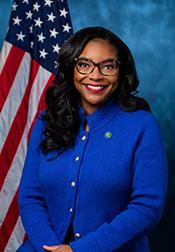
Mr. Speaker, let me first start by acknowledging my colleagues from the great States of Illinois and Florida for organizing this Special Order hour to discuss protecting the Voting Rights Act. Mr.…
Mr. Speaker, let me first start by acknowledging my colleagues from the great States of Illinois and Florida for organizing this Special Order hour to discuss protecting the Voting Rights Act.
Mr. Speaker, I rise today to emphasize the most sacred right we have as Americans, a cornerstone of our democracy, the freedom to vote.
Mr. Speaker, you may know that on January 6, 2023, exactly 2 years after the antidemocratic insurrection on this Nation's Capitol, my home State, the State of Ohio, enacted one of the strictest, most restrictive antivoter laws in the entire country. This law works to silence the voice of Ohioans, including my constituents in Ohio's 13th Congressional District, by creating deliberate barriers to voting, including reducing the number of early voting hours and enacting unnecessarily strict photo ID requirements, one of the most stringent in the country.
Just a few weeks ago, the largest county in Ohio's 13th Congressional District had the fourth highest amount of names purged from the voter rolls, over 5,000 of the 125,000 statewide.
But this blatant attack on freedom to vote is not just a phenomenon in my home State of Ohio. No, Mr. Speaker, since the 2022 election, 19 states have enacted laws that make it harder for Americans to cast their ballot.
Mr. Speaker, remember it was the Voting Rights Act of 1965, a bipartisan piece of legislation, that ensured that States who are plenty happy to disenfranchise Black and Brown voters had to take additional steps to ensure and allow people to vote.
It is our duty as Representatives elected by the people of these United States to put people over politics and do everything within our power to strengthen our democracy and protect the sacred right to vote in free, fair, and secure elections.
We must restore the protections of the Voting Rights Act and take the
necessary steps to ensure access to the ballot box by passing the John Lewis Voting Rights Advancement Act and the Freedom to Vote Act.
Mr. Speaker, I urge my colleagues on both sides of the aisle to rise to the urgency of this moment by using every tool at our disposal to protect the right to vote. Our democracy simply cannot wait. Equal access to the ballot for every American must be our focus.
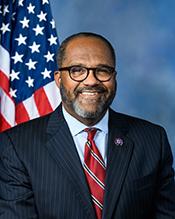
Mr. Speaker, I thank the distinguished gentleman from Illinois and the distinguished gentlewoman from Florida for the opportunity to speak. The late Congressman John Lewis once said: ``Your vote is…
Mr. Speaker, I thank the distinguished gentleman from Illinois and the distinguished gentlewoman from Florida for the opportunity to speak.
The late Congressman John Lewis once said: ``Your vote is precious, almost sacred. It is the most powerful nonviolent tool we have to create a more perfect union.'' Few truer words have been spoken.
Over the weekend, I had the privilege of joining President Biden and my colleagues in Alabama to commemorate the 58th anniversary of Bloody Sunday. We traced the steps of incredible brave soldiers. What a blessing to feel their heartbeats in the wind.
I will make my thoughts on this trip concise. We must protect the right to vote. Fair representation is a cornerstone of our democracy. A war was fought to give every American of every race one vote. For voters today, voters tomorrow, and all of those who sacrificed for the sacred right to vote, we must pass the John R. Lewis Voting Rights Advancement Act to restore the vote for all.
In every fashion, in every avenue, we will continue to battle to protect this sacred right and strengthen the very foundation of our democracy.
Bill Text
Legislative text isn't available for this bill yet.