Mr. Speaker, pursuant to House Resolution 1173, I call up the bill (H.R. 615) to prohibit the Secretary of the Interior and the Secretary of Agriculture from prohibiting the use of lead ammunition or…
Mr. Speaker, pursuant to House Resolution 1173, I call up the bill (H.R. 615) to prohibit the Secretary of the Interior and the Secretary of Agriculture from prohibiting the use of lead ammunition or tackle on certain Federal land or water under the jurisdiction of the Secretary of the Interior and the Secretary of Agriculture, and for other purposes, and ask for its immediate consideration in the House.
Mr. Speaker, I ask unanimous consent that all Members may have 5 legislative days in which to revise and extend their remarks and include extraneous material on H.R. 615.
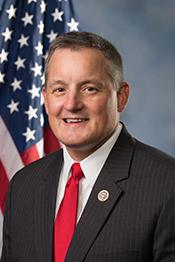
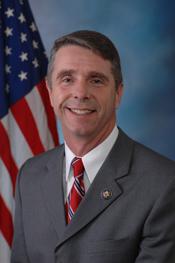
Mr. Speaker, I rise in support of H.R. 615, sponsored by my colleague, Congressman Wittman of Virginia.
This commonsense bill protects hunters' and anglers' ability to continue using cost-effective lead ammunition and fishing equipment in our National Wildlife Refuge System. At the same time, this legislation gives the U.S. Fish and Wildlife Service the flexibility to make targeted decisions on lead use in refuges based on sound, site-specific science and in coordination with State fish and wildlife agencies.
In the United States, sportsmen's and -women's participation is crucial to the success of wildlife conservation. The North American model of wildlife conservation operates on seven interdependent principles. Embedded in these principles are sound science, active management, and access to hunting and fishing. This model is a success story that is best characterized by the millions of dollars paid by hunters and anglers for wildlife conservation each year through excise taxes on the equipment that they use.
In fiscal year 2024, the Service apportioned nearly $1 billion in receipts from excise taxes on firearms manufacturers. Of that, about $800 million was targeted to wildlife restoration. Similarly, $381 million was generated from excise taxes on fishing equipment for fish conservation.
Last year, after significant pushback from stakeholders and Members of Congress, the Fish and Wildlife Service denied a petition from far- left environmental groups to ban the use of lead ammunition and tackle throughout the system. However, the Fish and Wildlife Service is still pressing ahead with refuge-specific lead bans.
In its 2023-2024 hunting and sports fishing regulations for the system, the Service is banning the use of lead ammunition and tackle in eight refuges. It tries to lessen the blow by expanding access to hunting and fishing in three other refuges, but this expansion also includes a lead ban.
Why does any of this matter? It is about access and how the Service's actions are limiting access.
In 2021, the National Shooting Sports Foundation concluded that lead- free hunting ammunition is, on average, almost 25 percent more expensive than lead. Not only are alternative materials such as copper more expensive, but this administration also continues to push policies that prohibit mining such resources here in America.
Their lead bans will result in decreased hunting and fishing participation for all but the wealthy and a reduction in wildlife conservation and restoration funding.
Instead of regulating hunters and anglers off of our Federal lands, the Service should be working with State managers, conservation organizations, and sportsmen and -women. Where lead is shown to cause harm to wildlife populations, it should be addressed accordingly, but a systemwide ban or refuge-by-refuge bans where no scientific link can be made is the wrong approach and ultimately undermines wildlife conservation.
Mr. Speaker, I urge my colleagues to support this bill, and I reserve the balance of my time.
House of Representatives,
Committee on Agriculture,
Washington, DC, September 15, 2023.
Hon. Bruce Westerman,
Chairman, Committee on Natural Resources, Longworth House
Office Building, Washington, DC.
Dear Mr. Chairman: This letter confirms our mutual
understanding regarding H.R. 615, the ``Protecting Access for
Hunters and Anglers Act of 2023''. Thank you for
collaborating with the Committee on Agriculture on the
matters within our jurisdiction.
The Committee on Agriculture will forego any further
consideration of this bill. However, by foregoing
consideration at this time, we do not waive any jurisdiction
over any subject matter contained in this or similar
legislation. The Committee on Agriculture also reserves the
right to seek appointment of an appropriate number of
conferees should it become necessary and ask that you support
such a request.
We would appreciate a response to this letter confirming
this understanding with respect to H.R. 615 and request a
copy of our letters on this matter be published in the
Congressional Record during Floor consideration.
Sincerely,
Glenn ``GT'' Thompson,
Chairman.
Mr. Speaker, I yield myself such time as I may consume.
Mr. Speaker, let's be clear. The rule this administration put out has absolutely nothing to do with protecting wildlife, wildlife conservation, or protecting human health. As the gentleman alluded to, I believe this bill probably is more aimed at restricting the sale of ammunition and any kind of attack Democrats can take on our Second Amendment rights.
This bill will hurt conservation. It is senseless. It is based on no facts. The Fish and Wildlife Service can't produce a document to show why they should ban lead ammunition or lead fishing tackle. It is simply another move by an administration that wants to write the law instead of letting Congress write the laws and them enforce the laws.
Mr. Speaker, I yield 3 minutes to the gentleman from Virginia (Mr. Wittman), the sponsor of the legislation.
Mr. Speaker, I yield an additional 30 seconds to the gentleman from Virginia (Mr. Wittman).
Mr. Speaker, I serve as the co-chair of the Congressional Sportsmen's Caucus, and I would like to point out that not only does the Congressional Sportsmen's Foundation endorse this legislation, but so do organizations such as the Mule Deer Foundation, the American Sportfishing Association, Ducks Unlimited, and Delta Waterfowl. The who's who of sportsmen and -women organizations support this legislation.
Mr. Speaker, I include in the Record this list of endorsements.
October 27, 2022.
Cosponsor Request: Protecting Access for Hunters and Anglers Act
Dear Congressional Sportsmen's Caucus Member: The
undersigned organizations, representing millions of hunters,
anglers, wildlife professionals, and outdoor enthusiasts are
writing to express our support for the Protecting Access for
Hunters and Anglers Act (S. 4940/H.R. 9088). Introduced by
Senator Steve Daines with a companion bill from
Representatives Rob Wittman and Bruce Westerman, this
legislation would prohibit the Secretaries of Agriculture and
the Interior from prohibiting the use of lead ammunition or
tackle on certain Federal lands and waters absent field data
delineating a science-based nexus to a wildlife species
population decline. Overly broad and arbitrary ammunition and
tackle bans have severe and unnecessary detrimental impacts
on the economy while also serving as a hinderance to fish and
wildlife conservation programs and projects. To that end, we
are united in respectfully requesting that you join as a
cosponsor of this important legislation.
At the outset, it is important to note that with few
exceptions, fish and wildlife are successfully managed at the
population level. Additionally, with the exception of Federal
Trust Species and certain other species, fish and wildlife
management decisions are primarily driven by state fish and
wildlife agencies. With those considerations in mind, in the
very rare occurrences that science-based field-data clearly
delineates a causational nexus between traditional ammunition
or tackle and changes in fish or wildlife population health,
state fish and wildlife agencies already have the ability to
regulate the use of those to both achieve conservation
objectives and minimize impacts to anglers and hunters.
That said, we do not believe wildlife management decisions
should be driven or decided by political motivations,
litigation, at the ballot box or by anyone other than the
applicable fish and wildlife department of the State in which
the specific Federal land or water is located. Furthermore,
we maintain that any restrictions on the use of lead
ammunition and tackle on federal lands and waters by a
federal agency must have the support of the respective state
fish and wildlife agency, which is required by the Protecting
Access for Hunters and Anglers Act. Simply put, this
legislation reaffirms state fish and wildlife management
authority.
In many cases, alternatives to lead ammunition and tackle
that deliver similar performance at a comparable cost simply
do not exist. Therefore, overly broad and arbitrary bans on
traditional ammunition and tackle serve as a disincentive to
the recruitment, retention and reactivation of hunters and
anglers and, as a result, have significant negative economic
consequences for sportsmen and women and local and regional
economies. In addition, these bans result in decreases to the
excise taxes that hunters and anglers voluntarily imposed on
ammunition and fishing tackle as part of the Pittman-
Robertson and Dingell-Johnson Acts, both of which provide the
lion's share of funding for state fish and wildlife
conservation, research, public access to natural resources
and other important programs that promote hunting and fishing
and sustainable populations of fish and wildlife species.
Recently, the United States Fish and Wildlife Service
(USFWS) published a final rule that, while expanding access
to hunting and fishing opportunities at certain wildlife
refuges, also seeks to phase out the use of traditional lead
ammunition and fishing tackle. We are disappointed to see the
lack of a science-based justification for the arbitrary
limitation on the use of lead ammunition and tackle. This
rule does not recognize state fish and wildlife as the
primary managers of our nation's fish and wildlife.
Concurrently, litigation initiated by animal rights interests
is pending against a similar, previous rule to expand hunting
and fishing access on national wildlife refuges alleging that
the additional use of lead ammunition and tackle will harm
wildlife species at those refuges. However, those allegations
are not substantiated by science.
The litigation not only lacks scientific justification, but
it is entirely without legal merit. In light of the timing of
this litigation, we are concerned the USFWS has engaged in
settlement negotiations with the litigants. Despite strong
opposition from many of the undersigned, we believe the USFWS
continues conversations with the plaintiff. Furthermore, we
are concerned that an overly broad, onerous and unnecessary
ban on the use of traditional ammunition and tackle in the
National Wildlife Refuge System could be forthcoming.
For these reasons, we strongly support the Protecting
Access for Hunters and Anglers Act (S. 4940/H.R. 9088) and
encourage you to serve as a cosponsor of this vital
legislation.
Thank you for your leadership and continued service on
behalf of America's outdoor heritage.
Sincerely,
American Catnshing Association, American Sportfishing
Association, Bass Anglers Sportsman Society (B.A.S.S),
BoatU.S., Boone and Crockett Club, California Waterfowl
Association, Coastal Conservation Association, Congressional
Sportsmen's Foundation, Council to Advance Hunting and the
Shooting Sports, Delta Waterfowl, Ducks Unlimited,
International Game Fish Association, Major League Fishing,
Marine Retailers Association of the Americas, Mule Deer
Foundation, National Professional Anglers Association,
National Rifle Association, National Shooting Sports
Foundation, Northwest Sportfishing Industry Association, Pope
& Young Club, Rocky Mountain Elk Foundation, Safari Club
International, The Bass Federation, Inc., The Walleye
Federation, LLC, Whitetails Unlimited, Wildlife Mississippi.
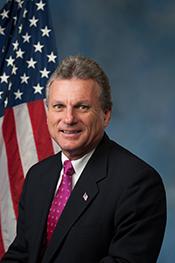
Mr. Speaker, I yield 2 minutes to the gentleman from Georgia (Mr. Carter).
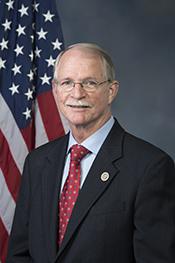
Mr. Speaker, I yield 4 minutes to the gentleman from Florida (Mr. Rutherford).
Mr. Speaker, I yield myself such time as I may consume.
I appreciate the gentleman pointing out some important facts about how this rule came to be from this administration that is anything but transparent. It is an administration that rejects any kind of oversight. I couldn't even start to tell you how much information they are behind on sending to the committee that we have requested just so we can do oversight, but I can imagine how this meeting probably went down.
The radical environmental groups go over to the administration to have a meeting and the administration says, well, there are no facts, no science, nothing that supports what you are wanting to do. However, wink, wink, if you were to sue us and we went to court, then we could settle that and maybe we will give you a half dozen to a dozen refuges that we will ban lead on and that will make their friends happy. I think that is exactly what happened, and that is why we are here today with a bill in Congress to say you can't do that.
Enough is enough. Manage these lands for the public, not for your special interest radical environmental groups. I think Congress has to take the lead on this.
Mr. Speaker, I reserve the balance of my time.
Mr. Speaker, I am prepared to close, and I reserve the balance of my time.
Mr. Speaker, I yield myself the balance of my time.
Mr. Speaker, hunters and anglers are the backbone of American wildlife conservation efforts and are invested in the long-term health of wildlife.
It is important that Congress comes to their defense against ideologically driven and unscientific decisions that limit access to our public lands.
Now, Mr. Speaker, if the big bad government was really basing their actions on science, why did they randomly pick seven wildlife refuges? Why didn't they propose this across the Nation?
Again, this is a classic sue and settle. They got sued by their friends in the radical environmental groups, and they decided to settle and give them a little consolation prize of a few wildlife refuges, thinking we might just turn our backs and say it was just a few refuges. They are just giving a little gift to their friends in the radical environmental movement. Let's go on and work on something else, but you have to stop these actions where they start.
To be clear, this bill doesn't prevent the Federal Government from banning the use of lead ammunition and tackle, but it does say that any ban must be supported by site-specific science showing that the use of lead is harming wildlife in that refuge.
It also requires that States be properly consulted when the Federal Government proposes to ban the use of lead. If some of my colleagues have an issue with that, they must ask themselves if they consider States to be partners in conserving wildlife or stakeholders who they can ignore.
I believe that a true partnership between States and Federal Government and wildlife conservation is the best path forward, and this bill is a step in that direction.
Mr. Speaker, I thank Congressman Wittman for his leadership on this legislation. I urge my colleagues to join me in supporting this bill, and I yield back the balance of my time.