II
118th CONGRESS
1st Session
S. 2072
IN THE SENATE OF THE UNITED STATES
June 21, 2023
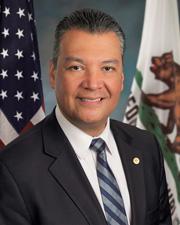
Mr. Padilla introduced the following bill; which was read twice and referred to the Committee on Armed Services
A BILL
To establish a pilot program to provide mental health check-ups for students at schools operated by the Department of Defense Education Activity, and for other purposes.
Short title
This Act may be cited as the Supporting Mental Health for Military Children Act
.
Pilot program for routine mental health check-ups in schools operated by the Department of Defense Education Activity
In general
Beginning not later than one year after the date of the enactment of this Act, the Secretary of Defense shall establish and implement a pilot program to provide routine metal health check-ups for students in covered DODEA schools.
Program activities
Under the pilot program established under subsection (a), the Secretary shall—
subject to subsection (d), ensure that students at covered DODEA schools receive routine mental health check-ups, conducted by military medical treatment facility behavioral health providers assigned to such schools, and which may include the use of mental health screening tools, such as the Patient Health Questionnaire-2 or the Patient Health Questionnaire-9;
ensure that such mental health check-ups—
consist of biannual or semesterly mental and behavioral health screenings for disorders common in children aged 3 to 17, including—
an initial virtual screening test for all students; and
a follow-up screening carried out by a school psychologist or school nurse for students with specific needs identified through the initial screening; and
include questions about a student’s mood, emotional state, habits, and behaviors to help diagnose conditions such as—
depression;
suicidal ideation;
anxiety;
attention-deficit/hyperactivity disorder (ADHD);
eating disorders;
substance abuse; and
dual diagnosis conditions;
train licensed mental and behavioral health professionals to conduct mental health check-ups, including training in—
recognizing the signs and symptoms of mental illnesses; and
safely de-escalating crises involving individuals with a mental illness;
establish a streamlined diagnosis-to-treatment process, including a comprehensive process through which a student with needs identified through a mental health check-up—
may be referred to a certified community behavioral health clinic in the community in which the school is located; and
may receive additional care or treatment through comprehensive school-based services;
mobilize school nurses and counselors to facilitate screening in collaboration with administrators and teachers;
conduct awareness-building educational efforts in conjunction with the screening process;
implement a robust school-based and telehealth support system (including options for individual or group therapy) for students seeking support after diagnosis; and
make resources available to the communities surrounding schools for individuals with a mental illness through a coordinated referral process with local community-based health clinics and school-based mental health clinics if such school-based mental health clinics are available and have the capacity and expertise to handle complex mental health situations.
Selection of schools
Initial selection
For the one-year period beginning on the date on which the pilot program established under subsection (a) commences, the Secretary shall select 10 covered DODEA schools at which to carry out the pilot program.
Subsequent years
For the one-year period beginning after the end of the one-year period described in paragraph (1), and each one-year period thereafter until the termination of the pilot program under subsection (h), the Secretary shall select an additional 10 covered DODEA schools at which to carry out the pilot program relative to the number of schools at which the pilot program is carried out in the preceding one-year period.
Selection of schools overseas
In selecting covered DODEA schools under paragraph (1) or (2) for any one-year period, the Secretary shall select not fewer than 2 such schools located outside the United States.
Referral process requirements
Agreements with behavioral health clinics
For purposes of the comprehensive referral process described in subsection (b)(4), the Secretary of Defense shall seek to enter into memoranda of understanding or other agreements with federally funded community behavioral health clinics in communities in which covered DODEA schools are located pursuant to which a school may refer students to such a clinic and make appointments for students at the clinic. The requirement to establish such a referral process may not be satisfied solely by providing a list of nearby community behavioral health clinics to parents of students at covered DODEA schools.
Exception
In a case in which the Secretary of Defense is unable to meet the requirements of paragraph (1) because there is no federally funded community behavioral health clinic in a community in which a covered DODEA school is located, the Secretary of Defense shall develop and make available a comprehensive guide to the mental health resources that are available to students and parents in that community.
Student privacy protections
In carrying out the pilot program established under subsection (a), the Secretary shall ensure that a parent or guardian of a student at a covered DODEA school—
is provided with—
notice that a student may receive a mental health check-up under the pilot program; and
an opportunity to opt the student out of any such mental health check-up before it is administered; and
gives informed consent before—
the referral of a student to a community-based health clinic as described in subsection (b)(4)(A); or
the disclosure of any information concerning such student to such a clinic.
Evaluations
Not later than 180 days after commencing the pilot program under subsection (a), and not less frequently than every 180 days thereafter, the Secretary of Defense shall conduct an evaluation of the pilot program, which shall include evaluation of—
processes under the pilot program; and
student outcomes under the pilot program.
Report
Not later than one year before the pilot program terminates under subsection (h), the Secretary of Defense shall submit to the Committees on Armed Services of the Senate and the House of Representatives a report on the progress of the pilot program. The report shall include—
the results of the evaluations conducted under subsection (f);
an assessment of whether the pilot program should be continued;
a strategy for expanding the pilot program to all DODEA schools; and
such other information as the Secretary determines appropriate.
Termination
The pilot program established under subsection (a) shall terminate on the date that is 4 years after the commencement of the pilot program.
Authorization of appropriations
There are authorized to be appropriated to carry out this Act such sums as may be necessary for fiscal years 2024 through 2029.
Definitions
In this section:
Certified community behavioral health clinic
The term certified community behavioral health clinic means a certified community behavioral health clinic as such term is used in section 223 of the Protecting Access to Medicare Act of 2014 (42 U.S.C. 1396a note).
Covered DODEA school
The term covered DODEA school means an elementary school or secondary school—
operated by the Department of Defense Education Activity within or outside the United States; and
that the Secretary determines has adequate mental health infrastructure in place to provide mental health check-ups under the pilot program established under subsection (a).
Elementary school; secondary school
The terms elementary school and secondary school have the meanings given those terms in section 8101 of the Elementary and Secondary Education Act of 1965 (20 U.S.C. 7801).
Military medical treatment facility
The term military medical treatment facility means a facility described in subsection (b), (c), or (d) of section 1073d of title 10, United States Code.