Mr. Speaker, I rise in opposition to H.J. Res. 45, and I yield myself such time as I may consume. Mr. Speaker, 43 million Americans are eligible for President Biden's student loan relief. That is…
Mr. Speaker, I rise in opposition to H.J. Res. 45, and I yield myself such time as I may consume.
Mr. Speaker, 43 million Americans are eligible for President Biden's student loan relief. That is about 100,000 people, on average, in each of our districts.
Nearly 26 million borrowers in congressional districts all over the country have already applied for relief, including 16 million who had already been approved for relief prior to litigation stopping the process. H.J. Res. 45 seeks to deny these borrowers the relief that they were promised.
To be clear, the people who would be impacted are not the wealthy and well-connected. Mr. Speaker, 90 percent of the relief would go to borrowers earning less than $75,000 a year, and you are not even eligible if you are making more than $125,000. That is in stark contrast to the Trump tax scam where 80 percent of the benefits went to the
top 1 percent and corporations. For the top 1 percent, that is about half a million dollars.
Moreover, my Republican colleagues refuse to acknowledge the serious questions that have been raised about how the resolution would actually be implemented, because under a Congressional Review Act resolution, you don't pick and choose which parts of the rule you are overturning, you have to overturn the whole rule, including the pause in student payments and the deferral of interest.
Now, how do you unpause a payment that you were supposed to make many months ago? What is going to happen to all those interest payments that now have to be added back to those loans?
What happens to the credits that participants in the Public Service Loan Forgiveness program were promised during those months?
Are the firefighters and teachers and police officers and other public servants who may have already had their loans forgiven based on those credits, now back on the hook for additional payments?
The reality is that H.J. Res. 45 would trigger a wave of delinquencies and defaults for most of our vulnerable borrowers. Intentionally or not, this resolution would create chaos for borrowers and their families, as well as loan servicers. The Congressional Research Service has confirmed that this chaos would be triggered by the retroactive application of this rule.
Mr. Speaker, anyone in this country who wants to take advantage of the benefits of a college education should be able to do so, not just the wealthy few. That is the way it used to be.
Just several decades ago, the Pell grant covered 80 percent of the cost of attending a State college. Now it is less than 30 percent, and States are paying a much lower portion of the costs of State colleges than they used to.
This proposal does nothing to help students, so I strongly urge my colleagues to oppose the resolution.
Mr. Speaker, I reserve the balance of my time.
Mr. Speaker, I include in the Record a letter from approximately 200 different organizations in opposition to this resolution.
May 8, 2023.
Hon. Chuck Schumer,
Majority Leader, U.S. Senate,
Washington, DC.
Hon. Kevin McCarthy,
Speaker, House of Representatives,
Washington, DC.
Hon. Mitch McConnell,
Minority Leader, U.S. Senate,
Washington, DC.
Hon. Hakeem Jeffries,
Democratic Leader, U.S. House of Representatives,
Washington, DC.
Leader Schumer, Minority Leader McConnell, Speaker
McCarthy, and Minority Leader Jeffries: The undersigned 261
organizations representing millions of students, workers,
people of color, veterans, people with disabilities,
consumers, and people of faith write in strong opposition to
bicameral efforts to use the Congressional Review Act (CRA)
to overturn President Biden's actions to pause student loan
payments and provide student debt relief for low-income and
working-class Americans continuing to recover from the deadly
COVID-19 pandemic and its devastating economic fallout.
In March, policymakers in the House and Senate unveiled a
CRA resolution to retroactively overturn the pause of federal
student loan payments and interest accrual, and President
Biden's debt relief plan. If successful, these CRA efforts
would immediately force tens of millions of borrowers into
abrupt and unplanned repayment with devastating effects,
including adding thousands of dollars of payments and
interest onto their loan balances. It will also force the
Department of Education to unwind loans forgiven under Public
Service Loan Forgiveness for first responders, nurses,
educators, servicemembers, and hundreds of thousands of other
public service workers across the country. These actions are
a clear attack on millions of the most vulnerable workers and
families who are still reeling from the devastating impact of
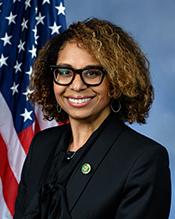
Mr. Speaker, I yield 2 minutes to the gentlewoman from Florida (Ms. Wilson), the ranking member of the Subcommittee on Higher Education and Workforce Development.
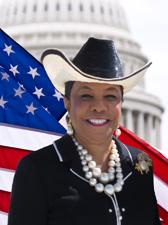
Mr. Speaker, I yield 2 minutes to the gentlewoman from Texas (Ms. Jackson Lee).
Mr. Speaker, I yield an additional 1 minute to the gentlewoman from Texas.
Mr. Speaker, I yield myself the balance of my time.
First, I include in the Record letters from the American Federation of Teachers, another letter from multiple unions including the National Education Association, the AFL-CIO and AFSCME, a letter from Minority Vets, a letter from UnidosUS and the National Urban League, a letter from Third Way, a letter from the National Council of Nonprofits, and a letter from 23 various medical organizations, all in opposition to the legislation.
American Federation of Teachers,
May 22, 2023.
House of Representatives,
Washington, DC.
Dear Representative: On behalf of the 1.7 million members
of the American Federation of Teachers, I strongly urge you
to reject H.J. Res. 45/S.J. Res. 22, a joint resolution
providing for congressional disapproval of the Biden
administration actions to support student loan borrowers that
were announced in August of last year.
This resolution would immediately force tens of millions of
borrowers into abrupt and unplanned repayment with
devastating effects, including adding thousands of dollars of
interest onto their loan balances. Proponents of the
resolution want you to believe that it is simply a method to
stop President Joe Biden's student debt cancellation of up to
$20,000 that would benefit 43 million borrowers, but the
implications are more severe. Passage of this resolution
would be particularly destructive for teachers, nurses,
servicemembers and firefighters eligible for Public Service
Loan Forgiveness.
This resolution would force the U.S. Department of
Education to unwind loans forgiven under Public Service Loan
Forgiveness for nurses, educators, servicemembers and
hundreds of thousands of other public service workers across
the country. Retroactively repealing months of the payment
pause initially authorized by the Trump administration would
have far greater implications than thwarting Biden's
cancellation plan. It would force teachers, veterans and
nurses who finally received Public Service Loan Forgiveness
to write a check back to the Department of Education. This
resolution would reinstate the debt of more than 150,000
public service workers. On the heels of the pandemic, forcing
a nurse to pay back debt that was legally forgiven under a
bipartisan law is cruel.
And the harm wouldn't stop there: More than 400,000
borrowers have received PSLF-qualifying payments under the
last payment pause of 2022, but this resolution would claw
back those benefits, setting back firefighters and educators'
eligibility for PSLF for many months.
The COVID-19 pandemic had a devastating impact on American
workers, many of whom were already struggling to make ends
meet.
Those workers' precarity and risk of delinquency on their
debt has severely worsened during the pandemic. Given the
long-term economic impacts of the pandemic, which continue to
drive workers out of public service, a permanent solution,
rather than a temporary deferment, is necessary.
And the law is clear: Student debt cancellation falls
squarely within the statutory authority Congress granted the
secretaIy in the HEROES Act. Cancellation will help ensure
that millions of people are not left in a ``worse position''
as to their loan payments due to the devastating COVID-19
pandemic.
Tens of millions of families are struggling under the yoke
of $1.7 trillion in student debt. They eagerly await the
breathing room that student debt relief would bring, and
those struggling to get by will benefit the most. The extra
consideration in debt cancellation for Pell recipients
focuses like a laser on people in need. Taking away relief
that has already been granted to borrowers--the moratorium on
payments and interest--while the legal challenge wends its
way through the courts, and retroactively making them pay
what they cannot afford, is cruel. These borrowers are
teachers, firefighters, nurses and so many other dedicated
workers. Their current student debt is a far greater burden
than the debt carried by those of us who went to college long
ago. This means they have little or no wealth to start a
family, buy a car or a house, or make other major life
decisions, and it undermines plans they responsibly made
based on the situation at the time.
Congress should be building on the Biden administration
actions, not undermining those actions. Throwing tens of
millions of student loan borrowers into chaos by
retroactively adding interest and missed payments to their
loan balances, while extending their student debt sentence,
would upend lives. That's the wrong decision. Congress must
oppose H.J. Res. 45/S.J. Res. 22.
Sincerely,
Randi Weingarten,
President, American Federation of Teachers.
Mr. Speaker, there are many challenges we have in higher education that demand our attention: the rising cost of college, student debt crisis, the eroded value of the Pell grant, student mental health issues, and the list goes on.
Instead, we are addressing this resolution which will hurt millions of student borrowers and their families; an average of about 100,000 in each of our districts.
Many of our colleagues on the other side have justified the resolution by arguing that we cannot afford the plan, yet ignoring that we were willing to charge taxpayers $1.9 trillion for a tax package a few years ago that overwhelmingly benefited the top 1 percent and corporations. Now they are unwilling to spend much less than that to help students pay for their education.
We should be passing proposals that meaningfully support borrowers and make college more affordable for current and future students. The bottom line is that we have a responsibility to strengthen support for those seeking college degrees. Those who want a degree should be able to access that opportunity.
Mr. Speaker, I urge my colleagues to oppose the proposal, and I yield back the balance of my time.