Mr. Speaker, I yield myself such time as I may consume. Mr. Speaker, I rise in opposition to H.J. Res. 30, a Congressional Review Act joint resolution of disapproval to nullify a popular and sensible…
Mr. Speaker, I yield myself such time as I may consume.
Mr. Speaker, I rise in opposition to H.J. Res. 30, a Congressional Review Act joint resolution of disapproval to nullify a popular and sensible rule issued by the Biden-Harris administration last year.
Workers should be able to invest their retirement savings in a way that reflects their values, such as combating climate change, without sacrificing investment returns.
That is why the Biden-Harris administration issued a rule to clarify that retirement plan fiduciaries may consider the economic effects of climate change and other environmental, social, and governance factors, or ESG factors, when they make investment decisions for participants in retirement plans.
Now, to be clear, this rule is not an ESG mandate.
Additionally, the rule does not change the fiduciary standard to which professionals who make investment decisions for retirement plans are bound. They must still prioritize the interests of retirement plan participants and cannot sacrifice investment returns to pursue ESG goals.
Let's be clear. Consideration of ESG factors is not at odds with making a profit. In fact, workers' profit is still central, but if a company has negative externalities, such as carbon-intensive business practices, vulnerability to sea level rise, high liability risks, or a record of mistreating workers who may go on strike, its stock could suffer in the long term.
Workers often contribute to their retirement for decades before drawing down on their savings, so it makes sense that retirement plan beneficiaries must consider the long-term time horizon when making investment decisions.
Finally, there is widespread support for the Biden-Harris administration's rule. Of the comment letters submitted on the proposed rule, 83 percent of the letters submitted by institutions like corporations, financial firms, and labor organizations supported the rule.
Over 97 percent of the letters submitted by individuals supported the rule. Simply put, the Biden-Harris rule reflects the best interests of the American people and our economy.
We should not get rid of this popular and reasonable rule by this resolution. The rule just simply allows retirement plan fiduciaries to appropriately consider ESG factors.
Retirement fiduciaries, not House Republicans, are best positioned and bound by law to make prudent investment decisions on behalf of retirement savers.
Mr. Speaker, I reserve the balance of my time.
Mr. Speaker, I yield 2 minutes to the gentleman from Illinois (Mr. Casten), the co-chair of the Congressional Sustainable Investment Caucus.
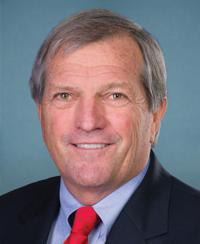
Mr. Speaker, I yield 2 minutes to the gentleman from California (Mr. DeSaulnier), the distinguished ranking member of the Subcommittee on Health, Employment, Labor, and Pensions.
Mr. Speaker, I yield 2 minutes to the gentlewoman from Minnesota (Ms. Omar), a distinguished member of the Committee on Education and the Workforce.
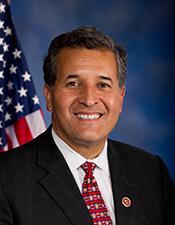
Mr. Speaker, I yield 2 minutes to the gentleman from California (Mr. Vargas), a co-chair of the Congressional Sustainable Investment Caucus.
Mr. Speaker, I yield 2 minutes to the gentleman from Rhode Island (Mr. Magaziner).
Mr. Speaker, I yield an additional 1 minute to the gentleman from Rhode Island.
Mr. Speaker, I am prepared to close, and I reserve the balance of my time.
Mr. Speaker, I yield myself the balance of my time for closing.
Mr. Speaker, during this debate, we have heard a lot about ESG investing. It is clear there is a difference of opinion on it, but whether Members of Congress see things the same way is not the point.
What matters is that the Biden-Harris rule puts the decisionmaking when it comes to considering ESG factors where it belongs, in the hands of retirement plan fiduciaries who are best positioned and bound by law, which has not changed, to act prudently on behalf of plan participants. That is where the decisionmaking should stay.
They, not Members of Congress, know what is in the best interests of their plan participants, and they are bound by their fiduciary responsibilities to do the right thing.
Now, when supporters say that a fiduciary should not consider nonpecuniary factors, they ignore the fact that ESG factors can, in fact, be pecuniary, because often ESG factors, such as sea level rise, can have a profound effect on the value of the investment. Those who recognize this should be able to make reasonable investments based on that knowledge.
Mr. Speaker, I include in the Record several letters from organizations opposed to H.J. Res. 30. Eighty-three percent of institutions that submitted comments were in favor of the underlying rule. These organizations, who are opposed to H.J. Res. 30, include the AFL-CIO, Americans for Financial Reform, Public Citizen, SEIU, Environmental Defense Fund, League of Conservation Voters, Sierra Club, Natural Resources Defense Council, Union of Concerned Scientists, and others.
Mr. Speaker, these organizations have diverse missions, but they all agree that H.J. Res. 30 should be rejected.
Mr. Speaker, I include in the Record two letters from financial services firms who submitted supportive comments on the underlying rule. These firms are BNY Melon Investment Management and Lazard Asset Management, who have trillions of dollars in assets under management.
BNY Mellon,
December 13, 2021.
Office of Regulations and Interpretations,
Employee Benefits Security Administration,
U.S. Department of Labor, Washington, DC.
On behalf of BNY Mellon Investment Management, thank you
for the opportunity to submit comments on the notice of
proposed rulemaking entitled ``Prudence and Loyalty in
Selecting Plan Investments and Exercising Shareholder
Rights'' (the ``Proposal'') published by the U.S. Department
of Labor (the ``Department''). We strongly support the
Department's efforts to clarify the regulatory treatment of
environmental, social, and governance (``ESG'') factors under
Title I of the Employee Retirement Income Security Act of
1974, as amended (``ERISA'') following the publication of
``Financial Factors in Selecting Plan Investments'' and
``Fiduciary Duties Regarding Proxy Voting and Shareholder
Rights'' (together, the ``Current Rules''). To continue the
Department's efforts to add clarity to the use of ESG factors
by fiduciaries we suggest the Department add clarification in
the rule or preamble that a fiduciary can use a screen to
consider ESG factors based on the fiduciary's determination
that a particular ESG factor will impact investment value
consistent with Section 2550.404a-1(c)(2) of the Proposal.
BNY Mellon Investment Management is a division of BNY
Mellon, one of the world's largest financial services groups.
With a presence in 35 countries, BNY Mellon looks to connect
investors with opportunities across every major asset class.
BNY Mellon Investment Management encompasses BNY Mellon's
affiliated investment firms and global distribution
companies, constituting over $2.3 trillion in AUM (as of
September 30, 2021).
BNY Mellon Investment Management follows a multi-boutique
investment management model that weds the specialist
expertise from its investment firms offering solutions across
every major asset class, backed by the strength, stewardship,
and global presence of BNY Mellon. Each investment firm has
its own unique culture, investment philosophy, and
proprietary investment processes, and provides a global
perspective. Our seven majority owned investment firms, are
as follows (all AUM figures as of September 30, 2021):
Alcentra ($41.0B), ARX ($7.0B), Dreyfus Cash Investment
Strategies ($342.7B), Insight Investment ($1,100.0B), Mellon
($448.6B), Newton Investment Management ($139.1B), and Walter
Scott ($99.9B).
At BNY Mellon Investment Management our Responsible
Investment (RI) approach varies across our investment firms,
but the effective stewardship of our clients' assets is
common to all and core to our own purpose. Many products or
solutions offered by BNY Mellon Investment Management examine
ESG factors in their investment processes and decision-making
to better manage risk and generate sustainable long-term
returns. Six of our investment firms--Alcentra, ARX, Insight,
Mellon, Newton, and Walter Scott--are signatories of the
Principles for Responsible Investment (``PRI'').
As we have noted in a previous comment letter, over the
past decades, fiduciaries and investment managers have come
to appreciate the materiality that ESG factors can have on
investment value. We welcome the Department's clarifications
to the Current Rules regarding the use of ESG factors and the
exercise of shareholder rights. The acknowledgement by the
Department that climate risks and other ESG factors can be
and often are material to investment risk and returns will
better allow fiduciaries to mitigate risk and enhance returns
based on evaluating ESG factors.
Within the last decade, a deep body of research has been
produced that demonstrates the material influence of ESG
factors on the profitability of an enterprise and the
performance of its securities. For example, weak control of
environmental activities such as pollution, over-consumption
of raw materials or lack of recycling of waste materials
readily leads to volatile or lower achieved margins or
financial penalties that reduce investor returns. Similarly
with social issues: high staff turnover, high strike rates or
absenteeism or death or injury rates have all been linked to
lower productivity and poor quality control. Regarding
governance, we know from years of empirical observation that
poorly managed issuers can seriously damage investor returns.
To ignore the entire category of information and analysis
that comprise ESG factors, therefore, could be deemed an
abrogation of a fiduciary's responsibility to consider all
material information when assessing the risk and return of
any investment opportunity.
The Proposal appropriately balances the materiality that
ESG factors can have on investment value with the
Department's longstanding principles that a fiduciary's
duties of prudence and loyalty require the fiduciary to
consider factors that are material to investment value. In
particular, a fiduciary should not subordinate the interests
of plan participants and beneficiaries to other objectives,
nor sacrifice investment return or take on additional
investment risk to promote goals unrelated to the plan and
its participants and beneficiaries. We specifically believe
that the proposed removal of the definition of ``pecuniary
factors'' and the revision to the Current Rules providing
that a fiduciary's evaluation of an investment or investment
course of action should be based on factors that ``are
material to investment value'' both clarifies the rule and
ensures that the rule reflects the analysis performed by
fiduciaries when making investment decisions.
We also support the removal of the special rule prohibiting
certain investment alternatives from being considered
qualified default investment alternatives (QDIA) because the
investment references ESG factors. The QDIA restrictions in
the Current Rules add uncertainty and would be difficult to
apply. We agree with the Department that there is not a
reason to prohibit fiduciaries from prudently selecting a
fund that meets the QDIA requirements and includes the
consideration of ESG factors.
We support the Department's efforts to reduce the
uncertainty in the market caused by the Current Rules and we
suggest additional clarification regarding the use of
screens. We believe this clarification could further reduce
uncertainty that might otherwise prevent fiduciaries from
considering ESG factors which are expected to enhance
investment value and performance or improve investment
portfolio resilience against the potential financial risks.
As noted above, we support the removal of ``pecuniary
factors'' and that a fiduciary's evaluation of an investment
or investment course of action should be based on factors
that ``are material to investment value''. We think that the
Department could add additional clarity to the rule or
preamble by clarifying that the proposed rule does not per se
prohibit a fiduciary from using a screen on investments based
in whole or in part on ESG factors.
A common method used by investment managers to incorporate
ESG factors into the assessment of investment risks and
returns is the use of screens. As described in the Proposal,
``negative screening refers to the exclusion of certain
sectors, companies, or practices from a fund or portfolio
based on ESG criteria.'' The Proposal's discussion of the
benefits that can occur from the use of ESG factors in the
assessment of investment risks and returns relies on sources
that studied the impact of investment managers using screens
based on ESG factors. However, the Current Rules and some
past guidance regarding the use of ESG factors could be read
to preclude the use of screens based on ESG factors.
We suggest that the Department clarify in the final rule or
its preamble that the investment prudence duties and the
investment loyalty duties under Sections 2550.404a-1(b) and
2550.404a-1(c), respectively, do not per se prohibit the use
of screens. For example, it should be permissible for a plan
fiduciary to select investment managers and funds that use
screens to the extent that doing so would otherwise be
consistent with its duties. It should similarly be
permissible for any such investment manager to select an
``investment course of action'' that uses a screen to the
extent that the resulting investment strategy would otherwise
be consistent with its duties. Such a clarification would
provide certainty to fiduciaries seeking to use ESG factors
in the assessment of investment risks and returns in
accordance with their prudence and loyalty duties. It would
further ensure that plan participants realize the full
benefits of fiduciaries using ESG factors as described in the
Proposal.
We strongly support the Department's efforts to bring
clarity to the use of ESG factors and the exercise of
shareholder rights by plan fiduciaries. We believe the
Proposal and the changes suggested here will promote
retirement income security and further retirement savings by
allowing fiduciaries to better manage risks and improve
investment returns.
Sincerely,
Hanneke Smits,
Chief Executive Officer,
BNY Mellon Investment Management.
Mr. Speaker, this is just a small sample of the financial industry's support for the underlying rule. We should not overturn the rule with this resolution.
Mr. Speaker, for these reasons, I oppose H.J. Res. 30, I encourage all Members to do the same, and I yield back the balance of my time.
Mr. Speaker, on that I demand the yeas and nays.