
III
118th CONGRESS
1st Session
S. RES. 167
IN THE SENATE OF THE UNITED STATES
April 20, 2023
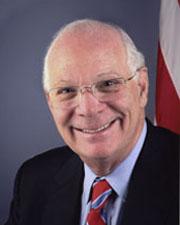
Mr. Cardin (for himself, Mr. Rubio, Ms. Rosen, and Mr. Scott of South Carolina) submitted the following resolution; which was considered and agreed to
RESOLUTION
Recognizing the 30th anniversary of the United States Holocaust Memorial Museum.
Whereas, on April 26, 1993, the United States Holocaust Memorial Museum (referred to in this preamble as the Museum
) opened to the public as a permanent living memorial museum to the victims of the Holocaust, following dedication ceremonies days earlier with the President of the United States, the President of the State of Israel, the Chairman of the Holocaust Memorial Council Harvey Meyerhoff, and 1986 Nobel Peace Prize winner and Holocaust survivor Elie Wiesel;
Whereas, for 3 decades, the Museum has been teaching both the history of the Holocaust and the lessons learned from the Holocaust, including lessons about the fragility of democracy, the power of propaganda, and the dangers of hatred, antisemitism, and inaction, to members of the public, especially youth, from all walks of life, including members of underserved communities;
Whereas the aim of the Museum's educational work is to promote self-reflection and critical thinking about the roles and responsibilities of individuals in the world today and catalyze actions to confront hatred, prevent genocide, and promote human dignity;
Whereas, during its first 30 years, the Museum has welcomed over 47,000,000 visitors, including millions of schoolchildren and more than 100 heads of state;
Whereas the Museum has enabled hundreds of Holocaust survivors to share their experiences with tens of thousands of students and the public at the Museum, online, and across the country;
Whereas the Museum has conducted its educational outreach in multiple ways, having—
built the world’s most comprehensive collection of Holocaust documentation and a state-of-the-art facility to preserve that collection and make it digitally accessible;
launched the world’s leading online authority on the Holocaust, the 20-language Holocaust Encyclopedia, which served 25,000,000 visitors in 2022;
built a robust social media presence that has raised awareness of the Holocaust and related antisemitism and that in 2022 had 2,300,000 followers, 306,000,000 views, and over 56,000,000 engagements;
created Experiencing History, the primary resource on the Holocaust for college and university instructors and their students across multiple disciplines on campuses nationwide;
created foundational guidelines for teaching about the Holocaust and served thousands of teachers nationwide with professional development trainings and classroom resources that emphasize the pivotal role of antisemitism in creating the environment that led to the Holocaust;
traveled exhibitions throughout the country on topics such as the 1936 Berlin Olympics
, Nazi racial science
, Nazi propaganda
, and Americans and the Holocaust
;
sponsored programs for thousands of law enforcement agents, military personnel, and members of the judiciary to examine the roles of their counterparts during the Holocaust and reflect on their own roles today in preserving democracy;
supported development of the vital field of Holocaust studies, including the research and teachings of hundreds of scholars in the United States and abroad, and foundational publications like the The Encyclopedia of Camps and Ghettos, 1933–1945
; and
opened the International Tracing Service Archives, which enables the Museum to provide thousands of survivors and their families with historic documentation pertaining to their individual wartime experiences;
Whereas the Museum has become a well-respected international resource, having—
worked with European Union officials and European governments in Eastern and Western Europe to advance policies and institutions devoted to preserving the memory and relevance of the Holocaust in perpetuity;
raised awareness of the Holocaust in parts of the Middle East and held the first Holocaust remembrance ceremonies in the United Arab Emirates and Egypt; and
helped establish the field of genocide prevention, becoming a resource for policymakers and raising public awareness of populations currently threatened by genocide and mass atrocities, such as the Uyghurs, Rohingya, and Yezidis;
Whereas, more than 75 years after the Holocaust, antisemitism continues to be expressed publicly around the world through the proliferation of hate speech, disinformation, and conspiracy theories that lead to hate crimes and violence, both in the United States and abroad;
Whereas, in 2022, the United Nations General Assembly adopted, by consensus, a resolution that condemns Holocaust denial and encourages the development of programs meant to educate future generations on the horrors of the Holocaust and antisemitism;
Whereas, on June 14, 2021, the Senate unanimously adopted a resolution unequivocally condemning the recent rise in antisemitic violence and harassment targeting Jewish individuals in the United States and standing in solidarity with those affected by antisemitism; and
Whereas the Museum aims to be a global leader in bringing awareness of the Holocaust to audiences worldwide, promoting the relevance of the Holocaust for new generations, building the field of Holocaust education in the United States, and protecting the truth of the Holocaust: Now, therefore, be it
That the Senate—
congratulates all those who were responsible for the creation of the United States Holocaust Memorial Museum and all those who have turned that vision into a living and growing memorial and educational resource accessible to the people of the United States and the world;
condemns antisemitism as a particularly pernicious form of hate and racial and religious bigotry and calls on the United States Holocaust Memorial Museum to continue its critical work, in-person and online, educating the public about the dangers of antisemitism and the origins of the Holocaust;
encourages leaders and all individuals in the United States and around the world to utilize the resources available from the United States Holocaust Memorial Museum and speak out against manifestations of antisemitism, bigotry, and hatred against Jewish individuals and communities, including growing online antisemitic harassment, abuse, Holocaust denial, and conspiracy theories;
supports and encourages educational and community-based programs that counter antisemitism and hate, as well as those that advance educational programs about the Holocaust and provide support for Holocaust survivors;
commits to continue to raise awareness and act to eradicate the continuing scourge of antisemitism in the United States and abroad;
designates April 26, 2023, as United States Holocaust Memorial Museum Day
; and
respectfully requests that the Secretary of the Senate transmit an enrolled copy of this resolution to the chair of the United States Holocaust Museum Memorial Council and a copy to the director of the United States Holocaust Memorial Museum.