Mr. Speaker, by direction of the Committee on Rules, I call up House Resolution 672 and ask for its immediate consideration. Mr. Speaker, for the purposes of debate only, I yield the customary 30…
Mr. Speaker, by direction of the Committee on Rules, I call up House Resolution 672 and ask for its immediate consideration.
Mr. Speaker, for the purposes of debate only, I yield the customary 30 minutes to the gentleman from Massachusetts (Mr. McGovern), pending which I yield myself such time as I may consume.
During consideration of this resolution, all time yielded is for the purpose of debate only.
General Leave
Mr. Speaker, I ask unanimous consent that all Members may have 5 legislative days in which to revise and extend their remarks.
Mr. Speaker, I yield myself such time as I may consume.
Mr. Speaker, the Rules Committee met last night and reported out a rule providing for consideration of four measures.
Those measures are H.R. 4553, the Energy and Water Development and Related Agencies Appropriations Act; H.J. Res. 104, providing for congressional disapproval under chapter 8 of title 5, United States Code, of the rule submitted by the Bureau of Land Management related to ``Miles City Field Office Record of Decision and Approved Resource Management Plan Amendment''; H.J. Res. 105, providing for congressional disapproval under chapter 8 of title 5, United States Code, of the rule submitted by the Bureau of Land Management relating to ``North Dakota Field Office Record of Decision and Approved Resource Management Plan''; and H.J. Res. 106, providing for congressional disapproval under chapter 8 of title 5, United States Code, of the rule submitted by the Bureau of Land Management relating to ``Central Yukon Record of Decision and Approved Resource Management Plan.''
House Resolution 672 provides for consideration of H.R. 4553, the Energy and Water Development and Related Agencies Appropriations Act under a structured rule, making in order 36 amendments.
The rule provides for 1 hour of general debate equally divided and controlled by the chair and ranking minority member of the Committee on Appropriations or their respective designees and provides for one motion to recommit.
The rule further provides for consideration of H.J. Res. 104, H.J. Res. 105, and H.J. Res. 106, all under closed rules, with 1 hour of general debate each equally divided and controlled by the chair and ranking minority member of the Committee on Natural Resources and provides each one motion to recommit.
Finally, the rule provides that H. Res. 668 and H. Res. 605 are hereby adopted and House Res. 598 is laid on the table.
Today's rule, House Resolution 672, allows for debate on several measures including H.R. 4553, the Energy and Water Development and Related Agencies Appropriations Act for fiscal year 2026.
This appropriations bill funds many programs at the center of helping to assert our country's energy dominance. The bill cuts $766.4 million, when compared to last year's funding bill, by focusing our efforts on energy innovation and water infrastructure.
This appropriations bill provides funding to numerous scientific energy endeavors from nuclear fusion research, small modular reactors, nuclear fuel production, electric transmission system enhancements, energy storage, and traditional fossil fuel research.
At a time when energy demand from data centers and new manufacturing is increasing, these research efforts will greatly contribute to meeting the new normal. Our example is the increase of funding for nuclear energy projects, which will make more advanced nuclear fuel available and accelerate small modular and advanced reactor testing. The Department is also essential to our national security.
This appropriations bill has over $20 billion in funds for the management of our nuclear weapons stockpile and over $2 billion for our nuclear Navy.
This bill also funds numerous Army Corps of Engineers and Bureau of Reclamation projects to provide dredging to maintain navigable ports and rivers and water storage projects to increase the water supply in drought-ridden sections of our country, as well as helping to forestall flooding in areas from coastal regions to mountainous valley regions such as the area I represent.
The rule also provides for debate on H.J. Res. 104, H.J. Res. 105, and H.J. Res. 106, all of which are Congressional Review Act Resolutions of Disapproval.
These resolutions overturn the Biden administration's Bureau of Land Management plans that were aimed at restricting gold mining and oil and gas drilling on Federal lands.
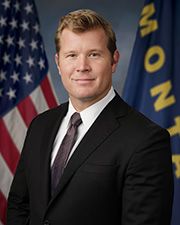
H.J. Res. 104, sponsored by Congressman Downing of Montana, overturns the Montana Resource Management Plan, which would prohibit new coal mining on about 2.75 million acres of Federal land in Montana. This Bureau of Land Management rule would stop an estimated 30 percent of our country's coal reserves from being mined, even as electricity demand is increasing in the United States for the first time in over 10 years.
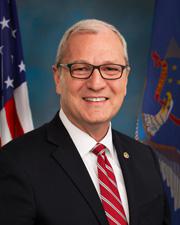
H.J. Res. 105, sponsored by my Energy and Commerce colleague, Congresswoman Fedorchak, would overturn a similar Bureau of Land Management Resource Management Plan for North Dakota. Under this Biden- Harris administration rule, 4 million acres of Federal land in North Dakota would not be available for coal mining or oil and gas extraction.
Additionally, the rule allows for debate on H.J. Res. 106, sponsored by Congressman Nick Begich of Alaska, which would nullify the Central Yukon Resource Management Plan. Under this rule, which affects 13.3 million acres of Federal land in Alaska, millions of acres would be barred from energy development.
Disallowing energy development on these lands will also hamstring efforts to get more American liquid natural gas onto the international market and improve our country's standing as the leading energy producer in the world.
We will also be considering a resolution that would direct the House Oversight Committee to continue their investigation into the Jeffrey Epstein and Ghislaine Maxwell files.
The Committee has already undertaken important steps in their investigation into Jeffrey Epstein. Just this week, the committee met with the victims of Jeffrey Epstein. They have already issued subpoenas to the Department of Justice related to the Epstein records.
Further, they have already received over 33,000 documents from the Department of Justice with more on the way. Those 33,000 documents, Mr. Speaker, were released last night to the public.
The committee already has transcribed interviews scheduled and have other subpoenas out, as well. They are also doing this work in a bipartisan manner, and we must give them all the tools necessary to continue this important investigation.
This resolution will bring transparency into all the documents and records related to Jeffrey Epstein, Ghislaine Maxwell, flight logs, any individuals referenced in connection to Epstein, any entities with ties to Epstein, any agency internal documents, documents related to Epstein's detention and death, and other areas.
Mr. Speaker, there are strings attached to this resolution, as well, to ensure that we have full transparency, such as requiring written justification requirements for certain documents that are redacted, unless they fall under certain sensitive categories.
This is a critical step forward in providing transparency into the Epstein files and will give the public all the necessary information.
This vote will show the American people we are committed to full transparency and cooperation when it comes to Jeffrey Epstein and the investigation thereof.
Lastly, this rule is standing up a new select committee to continue investigation of the events surrounding January 6. They will bring more transparency and continue to investigate
what happened that day so the American public is aware of the facts involved.
I believe this new subcommittee is another critical step forward to bringing more transparency to everyone about the events and details surrounding that day. I hope Members of this House support the passage of the rule and the underlying bills and resolutions.
Mr. Speaker, I reserve the balance of my time.
Mr. Speaker, I believe that would apply to Members of Congress being called names, would it not. Mr. Speaker, I yield myself such time as I may consume.
Mr. Speaker, it is so fascinating how facts don't seem to matter sometimes on the floor. The only administration that has ever released anything on the Epstein files is the Trump administration. Last night, the House Oversight and Reform Committee released over 33,000 files. Now they say that 97 percent of it had already been released, 33,000 files. That is a lot of files.
Let's take that 97 percent and say that it is accurate for argument and for argument only.
That means that of 33,000 files, 3 percent of that is new. In fact, Mr. Speaker, I will tell you, as I was going through clips this morning, I noticed one conservative news source that said: Eureka, the missing minute surrounding Epstein's death is in the material that has been released.
There has been a lot of controversy about that. A lot of people want to know about it, and there it is.
More and more information is coming out, and it is coming out because of the Trump administration and because of the House Oversight and Reform Committee.
However, somehow if we don't adhere to the exact demands of my colleagues on the other side of the aisle, then we are not doing it right. I submit to you,
Mr. Speaker, that the House Oversight and Reform Committee is doing it right. They are going through it.
As I pointed out in my opening, Mr. Speaker, if they decide to use one of the limited areas that they could do a redaction, then they have to explain why. If the administration doesn't turn over some information, if they redact information before sending it to the House, then they have to explain why.
Of course, some of the information that you want to protect, Mr. Speaker, is information related to victims that has not yet been in the press.
Why would we want to take young women who were victims of Epstein and his colleagues and who don't want to have their name in the press, why would we suddenly expose them to that?
Of course, we don't want to do that, so there has to be some limited areas where redactions have to occur, but all of that has to be explained.
Then they bring up the President's comments this morning about a hoax. They are trying to mislead, in my opinion, some are trying to mislead the American people into thinking that the President said that Epstein and the investigation was a hoax. It is not what he said.
Mr. Speaker, if you look at what he said, it was the controversy over the Epstein files that was a hoax because they have been releasing more data than any other administration.
I say that because the Biden administration had all this information, and they didn't release it. They had 4 years. They could have released it all. They didn't choose to do it, and now my colleagues on the other side of the aisle somehow want to claim that it is a conspiracy by Trump to hide information that was in the hands of their party's President and their party's Department of Justice. It was in their hands, and they didn't release it, but somehow it is our fault. Mr. Speaker, it is the Republicans' fault that the Biden administration didn't do what they now claim that the Trump administration should be doing.
It is hard to understand that logic, but somehow we are at fault, Mr. Speaker, for them not doing the job that they think we should have made their President do.
It is fascinating. It is absolutely fascinating.
Then, of course, we get to all the consternation about this January 6th Committee. This is an outgrowth of an investigation that started as a part of the House Administration Committee.
I served on the subcommittee that was doing that investigation. It is really interesting. That group, and I was a part of it, found that there was more than one terabyte of missing data. Based on the inventory of the digest and statements from Chairman Thompson, there should have been four terabytes turned over, and there were only three. That is equivalent to 6.5 million document pages as PDFs or office files, 500 hours of high-definition video, or 250,000 photos. The depositions were not filed properly or they weren't filed at all and archived as they are supposed to be, and as the rule that set up the prior committee said, they were supposed to be there.
I can assure you, Mr. Speaker, that as a former member of this preceding group, we are just trying to get the data that is missing. We are trying to make sure we put all the information on the table. We want the files released that were out there. We want to find that missing terabyte of information. Some of it has been recovered, but not all of it, and that work needs to be continued.
Further, the House Administration subcommittee didn't have the power to subpoena records. I would submit that it is necessary just to get all the information out.
As I said last night to my colleagues, as a person who loves history and has a history degree, I need to get all the documents on the table, the good, the bad, and the ugly, and let history determine what occurred on that day.
There is no point in trying to hide it. I don't understand why my colleagues on the other side want to hide a terabyte. A fourth of what the prior committee did was never properly turned over to the House. That information belongs to the House and to the people of the United States. It does not belong hidden somewhere in a drawer or destroyed.
Unfortunately, because of that lack of turning over the records in a proper manner to the House, we have to continue the work that was not done by the previous Democrat-controlled--I know they had two Republicans on it, but they weren't the Members picked by the House Republicans, and it wasn't in the numbers usually allocated or originally called for, for a select committee.
We are going to do it right, and we are going to put the information on the table. We are going to let the American people make a judgment now, and let the historians argue over what happened on that day as time moves forward.
Mr. Speaker, I reserve the balance of my time.
Mr. Speaker, I yield myself such time as I may consume.
Let me state up front that I make no apology for being pro-U.S. energy. I make no apology for saying that the United States needs more electric power. I make no apology for saying we can get that electric power with things like these bills that are in this rule today. It works on small modular reactors. It works on nuclear. It works on fusion. It works on coal. It works on making sure that we have the ability to mine the coal in the United States. It makes sure we have the ability to extract our oil and our natural gas resources.
If we want to compete with the Chinese, Mr. Speaker, we are going to have to up our game on producing electric power. It is fascinating to me that when we hear these debates, my colleagues on the other side of the aisle will often point out--in fact, they did it last night--that the Chinese are doing so much more with wind and solar. They never mention that the Chinese are building dozens of new power plants, as we speak, powered by coal.
If we are going to use the Chinese as the model that we are supposed to follow in generating electricity, we should, therefore, not be closing down all of our coal power plants.
Mr. Speaker, as you know, the coal in the United States and the way that we burn it is much cleaner than the way the Chinese burn it in their plants. We need to be working on making sure that we have new energy development, which the energy and water bill does, and ways that we can burn that coal and our natural gas even cleaner than we are doing today, even though we produce electricity cleaner with our fossil fuels than any other country in the world.
Guess what we can do, Mr. Speaker. If we can continue to move forward and build new plants and show how this new technology can be used, we can then be the ones who are exporting it to sub-Saharan Africa and India instead of having the Chinese exporting facilities and the technologies that are from the 1960s and 1970s, instead of the technologies that are available today.
When you talk about the air on the planet Earth, Mr. Speaker, I have to tell you that the air is shared by all of us. In fact, there is a NASA study that I often cite that says it takes air 10 days to get from the middle of the Gobi Desert to the eastern shore of Virginia. That is why a majority of the mercury in California comes from Asia and not from the plants in California. It comes from overseas.
Mr. Speaker, the more that we can do with our fossil fuel plants and our technologies to make our processes cleaner and then export it to the rest of the world, the more we can do to clean up the air in the world as a whole because the air is not something that uniquely belongs to the United States. It doesn't sit over one town very long. Sometimes we get a little inversion in the Roanoke area and it sits there for a few days, but it doesn't sit there for weeks and months and years. We need to be looking at the worldwide issue in regard to that.
Mr. Speaker, I make no apology for supporting bills that will take care of making sure that we can, in this Nation, as a nation, all of us, profit and have the AI needed and have the electricity needed for data centers instead of giving it and ceding it to the Chinese because we don't want to work on oil, natural gas, and coal because somehow my colleagues on the other side of the aisle have decided that those resources are not appropriate to be used in the United States.
If we want to be a second-rate country, have at it, but that is not what I stand for, Mr. Speaker. I stand for us being the leading energy producer in the world and making sure that we do it as clean as possible so that we can export our clean coal technology, our clean natural gas facilities, new fusion if we can get there, new modular reactors, and export that technology to the world and be the leader in the world when it comes to energy production; but, number one, making sure that we take care of our needs in the United States as we are looking at not having enough electricity going forward to keep our economy as the number one economy in the world.
Mr. Speaker, I often tell people back home that this is important not just for today but for the generations to come because when you look at the powers in the economic sphere in the past, some very small nations have reached into the future and benefited their children, grandchildren, and great-grandchildren.
In fact, I often talk about Royal Dutch Shell Group, Shell Oil, which was a derivative. Mr. Speaker, you can attack how they got the money because it was all part of colonialism, and I get that. Yet, because they were the number one economic nation in the world from roughly 1650 to 1700, there are still people and families in the Netherlands who are benefiting. Notwithstanding the fact that they moved their headquarters to London, they are benefiting from the fact that, at one time, their nation was the number one economic nation in the world.
I want that for the United States. I want us to be the number one economic nation as long as possible so that children and grandchildren and great-grandchildren and great-great-grandchildren out 10 generations will benefit.
Mr. Speaker, I make no apologies for supporting these bills that we have in this rule today and supporting the fact that American energy is predominant and should remain a major force in the world instead of ceding everything to the Chinese.
Mr. Speaker, I reserve the balance of my time.
Mr. Speaker, this Epstein situation is very serious, and I take it as such. We have victims whose lives can never be made whole, and this debate has taken on a life of its own. In many ways, it is illogical.
On the one hand, we have the resolution included in the rule that has subpoena power and has broader authority than the Massie-Khanna piece of legislation that my colleagues on the other side want. It gives us the ability to subpoena banking records, estate files, and depositions, none of which are required in the Massie bill.
Further, I find it interesting, because ours is a resolution that gives the endorsement of the House, gives more power in the oomph behind the Oversight and Government Reform Committee's hard work.
The opposing piece of legislation, Mr. Speaker, should it pass the House, goes over to the Senate. Should it pass the Senate, it requires the signature of the very President who they say wants to block it.
I submit to you, Mr. Speaker, and to the American people, it would only be logical to go with the one that can get voted on in the House and have action going forward and have action taking place that deals with these serious issues and brings to light every piece of information that we can put on the table with the rare exceptions of a few redactions, which have to be explained and some of which are necessary to protect some of the victims themselves because they don't want to have their names out there in the public.
Mr. Speaker, I don't understand it. If what we want is the information, we should pass this rule and move forward, and not have to rely on passage in the Senate and signature by the President.
Mr. Speaker, I reserve the balance of my time.
Mr. Speaker, I yield myself such time as I may consume.
Mr. Speaker, in regard to energy, I can tell you that I represent a region of the country where when we were using our coal resources, which God has blessed us with abundantly, we had the third or fourth lowest electric rates in the country.
Then suddenly fossil fuels became a bad idea. Even natural gas, oh, my gosh, we can't use it, and the electric rates keep going up and up and up. My district is not a wealthy district, and the people in my district are complaining because their electricity rates are going up.
One of the major drivers are prior Democratic policies, Mr. Speaker, that said we are not going to be doing any more coal-fired power plants. We are not going to encourage natural gas to be used to create electricity, and we stranded the assets.
Now, as you know, Mr. Speaker, what that means is that they are paying for the electricity generated by wind and solar, and they are paying for the electricity that was there for plants that were opened which have not met their full expectation or life cycle.
For example, there is a facility in my district that I went to the ribbon cutting on in 2012 that Democrats in the Commonwealth of Virginia, including some of my esteemed colleagues on the other side from that great Commonwealth, thought it was appropriate to say: Let's close that down early.
It opened in 2012 with a 50-to-60 year life expectancy, and they wanted to close it down somewhere around 2035 or 2040, well before its life expectancy is up. What that does is that pushes the power companies to have to find different and more expensive ways, as it turns out, to create that electricity.
What this bill does is, it pushes us on nuclear, which if you don't want to use fossil, that is the only way you can get the baseload power to supply us and make us competitive with the Chinese in the field of AI. Yet, somehow, once again my colleagues on the other side of the aisle cannot realize that it is the policies of their prior Congresses and their prior administrations which, in large measure--not exclusively, but in large measure have caused the spike--not a general increase, not inflation level, but a spike over and above your general inflation--on the cost of energy in this country.
If we get back to the basics, if we pass this rule--we have three CRAs and the Energy and Water Development and Related Agencies Appropriation Act, all of which help make the United States of America more viable when it comes to energy and makes those electric prices that my colleagues said was one of the bigger concerns that she heard when touring around the Commonwealth--the cost of those energy prices will go down if we pass this rule and pass the underlying bills. I reserve the balance of my time.
Mr. Speaker, I am.
Mr. Speaker, this rule covers a number of topics, and we have been over them--energy, water. We didn't get much into the full funding of the Army Corps so they can help take care of flooding problems in my district and other districts, take care of water problems, et cetera.
We have argued for over an hour, most of it being the same repetitive things. This rule gives that extra oomph. It shows the support for the work that the Oversight Committee is doing regarding the Epstein files. It moves us forward on energy and water. It moves us forward on energy production in the United States. It moves us forward on nuclear power and making sure that we are using it in a responsible but effective way so that we can continue to be the world's leader when it comes to energy production, instead of handcuffing our capabilities.
We have gone over a lot of serious issues. The American people who are paying attention to this have already heard all of those arguments.
Mr. Speaker, I will simply say that I hope that all the Members of this House will support the passage of this rule. It is important for a number of reasons, and I hope they will pass the underlying bills and resolutions when those come up.
Mr. Speaker, I yield back the balance of my time, and I move the previous question on the resolution.