H.R. 1166House119th Congress (2025-2027)Passed House

Decoupling from Foreign Adversarial Battery Dependence Act

Introduced February 10, 2025

AI-Generated Summary

Updated November 24, 2025 at 2:49 AM UTC

The Decoupling from Foreign Adversarial Battery Dependence Act bars the Department of Homeland Security from spending money on batteries produced by certain foreign companies, mainly Chinese manufacturers and entities linked to forced‑labor or military concerns. The prohibition takes effect on October 1, 2027, but the DHS Secretary may grant waivers for security‑safe batteries or for research purposes, with required notifications and reporting. The bill aims to reduce reliance on potentially hostile foreign battery supplies and to assess the impact on DHS operations.

Key Provisions

  • Starting October 1, 2027, DHS may not use any appropriated funds to buy batteries made by a list of specified foreign companies, primarily Chinese battery manufacturers and any entities tied to forced‑labor or Chinese military lists.
  • The list includes CATL, BYD, Envision Energy, EVE Energy, Gotion High‑Tech, Hithium Energy, plus any subsidiaries, successors, or entities on related forced‑labor or defense‑blacklist regulations.
  • A battery is considered to be from a prohibited entity if that entity assembles the final product or supplies most of its components.
  • The DHS Secretary can waive the ban if the batteries pose no national‑security risk and no comparable non‑prohibited alternative exists, or if the batteries are needed solely for research, testing, or training.
  • Any waiver must be reported to the House and Senate Homeland Security committees within 15 days.
  • Within 180 days of the law’s enactment, the DHS Secretary must submit a report on how the ban will affect DHS missions and costs across all its components (e.g., Customs and Border Protection, ICE, TSA, Coast Guard, FEMA, etc.).

Legislative Activity

Stay on top of the latest movement without scrolling through every action

9 earlier actions
SenateIntro Referral Latest Action

Received in the Senate and Read twice and referred to the Committee on Homeland Security and Governmental Affairs.

March 11, 2025

View full timeline
HouseIntro Referral

Introduced in House

February 10, 2025

HouseIntro Referral

Referred to the House Committee on Homeland Security.

February 10, 2025

HouseCommittee

Referred to the Subcommittee on Counterterrorism and Intelligence.

February 10, 2025

HouseFloor

Mr. Green (TN) moved to suspend the rules and pass the bill.

March 10, 2025 • 4:46 PM

HouseFloor

Considered under suspension of the rules. (consideration: CR H1053-1054)

March 10, 2025 • 4:46 PM

HouseFloor

DEBATE - The House proceeded with forty minutes of debate on H.R. 1166.

March 10, 2025 • 4:46 PM

HouseFloor

Passed/agreed to in House: On motion to suspend the rules and pass the bill Agreed to by voice vote. (text: CR H1053-1054)

March 10, 2025 • 4:51 PM

HouseFloor

On motion to suspend the rules and pass the bill Agreed to by voice vote. (text: CR H1053-1054)

March 10, 2025 • 4:51 PM

HouseFloor

Motion to reconsider laid on the table Agreed to without objection.

March 10, 2025 • 4:51 PM

SenateIntro Referral

Received in the Senate and Read twice and referred to the Committee on Homeland Security and Governmental Affairs.

March 11, 2025

Floor Debate

3 members

What members said about H.R. 1166 on the floor

2 Republicans1 Democrat
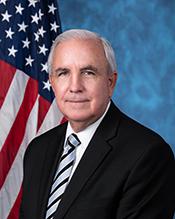
Carlos A. Gimenez
Rep. Carlos A. GimenezR-FL-28 · Mar 10, 2025

Mr. Speaker, I rise today in support of H.R. 1166, the Decoupling from Foreign Adversarial Battery Dependence Act. As Communist China seeks to gain influence in critical industries around the world,…

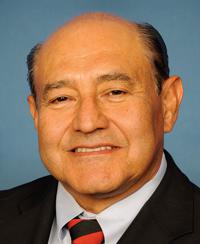
J. Luis Correa
Rep. J. Luis CorreaD-CA-46 · Mar 10, 2025

Mr. Speaker, I yield myself such time as I may consume. My fellow Democrats and I strongly support the intent of this bill, which is to confront our global adversaries and build up an industrial…

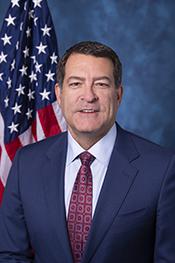
Mark E. Green
Rep. Mark E. GreenR-TN-7 · Mar 10, 2025

Mr. Speaker, I move to suspend the rules and pass the bill (H.R. 1166) to prohibit the Secretary of Homeland Security from procuring certain foreign-made batteries, and for other purposes. Mr.…

Bill Text

3 versions available

Reading Mode
Latest
Referred in SenateIssued March 11, 2025

IIB

119th CONGRESS

1st Session

H. R. 1166

IN THE SENATE OF THE UNITED STATES

March 11 (legislative day, March 10), 2025

Received; read twice and referred to the Committee on Homeland Security and Governmental Affairs

AN ACT

To prohibit the Secretary of Homeland Security from procuring certain foreign-made batteries, and for other purposes.


1.

Short title

This Act may be cited as the Decoupling from Foreign Adversarial Battery Dependence Act.

2.

Prohibition on availability of funds for procurement of certain batteries

(a)

In general

Beginning on October 1, 2027, none of the funds authorized to be appropriated or otherwise made available for the Department of Homeland Security may be obligated to procure a battery produced by an entity specified in subsection (b).

(b)

Entities specified

The entities specified in this subsection are the following:

(1)

Contemporary Amperex Technology Company, Limited (also known as CATL).

(2)

BYD Company, Limited.

(3)

Envision Energy, Limited.

(4)

EVE Energy Company, Limited.

(5)

Gotion High tech Company, Limited.

(6)

Hithium Energy Storage Technology company, Limited.

(7)

Any entity on any list required under clauses (i), (ii), (iv), or (v) of section 2(d)(2)(B) of Public Law 117–78 (commonly referred to as the Uyghur Forced Labor Prevention Act).

(8)

Any entity identified by the Secretary of Defense as a Chinese military company pursuant to section 1260H of the William M. (Mac) Thornberry National Defense Authorization Act for Fiscal Year 2021 (10 U.S.C. 113 note).

(9)

Any entity included in Supplement No. 4 to part 744 of title 15, Code of Federal Regulations, or any successor regulation.

(10)

Any subsidiary or successor to an entity specified in paragraphs (1) through (9).

(c)

Treatment of production

For purposes of this section, a battery shall be treated as produced by an entity specified in subsection (b) if such entity—

(1)

assembles or manufactures the final product that uses such battery; or

(2)

creates or otherwise provides a majority of the components used in such battery.

(d)

Waivers

(1)

Relating to assessment

The Secretary of Homeland Security may waive the prohibition under subsection (a) if the Secretary assesses in the affirmative all of the following:

(A)

The batteries to be procured do not pose a national security, data, or infrastructure risk to the United States.

(B)

There is no available alternative to procure batteries that are—

(i)

of similar or better cost and quality; and

(ii)

produced by an entity not specified in subsection (b).

(2)

Relating to research

The Secretary of Homeland Security may waive the prohibition under subsection (a) if the Secretary determines that the batteries to be procured are for the sole purpose of research, evaluation, training, testing, or analysis.

(3)

Congressional notification

Not later than 15 days after granting a waiver under this subsection, the Secretary of Homeland Security shall submit to the Committee on Homeland Security of the House of Representatives and the Committee on Homeland Security and Governmental Affairs of the Senate a notification relating thereto.

(e)

Report

Not later than 180 days after the date of the enactment of this Act, the Secretary of Homeland Security shall submit to the Committee on Homeland Security of the House of Representatives and the Committee on Homeland Security and Governmental Affairs of the Senate a report on the anticipated impacts on mission and costs on the Department of Homeland Security associated with carrying out this section, including with respect to following components of the Department:

(1)

U.S. Customs and Border Protection, including the U.S. Border Patrol.

(2)

U.S. Immigration and Customs Enforcement, including Homeland Security Investigations.

(3)

The United States Secret Service.

(4)

The Transportation Security Administration.

(5)

The United States Coast Guard.

(6)

The Federal Protective Service.

(7)

The Federal Emergency Management Agency.

(8)

The Federal Law Enforcement Training Centers.

(9)

The Cybersecurity and Infrastructure Security Agency.

Passed the House of Representatives March 10, 2025.

Kevin F. McCumber,

Clerk.