

H.R. 2004House119th Congress (2025-2027)Passed House

Tyler’s Law

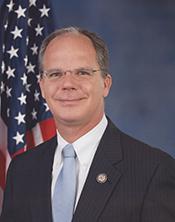
Sponsored by Ted LieuRep. Ted Lieu (D-CA)
Introduced March 10, 2025

AI-Generated Summary

Updated September 18, 2026 at 5:23 AM UTC

Tyler’s Law requires the U.S. Department of Health and Human Services to study how often emergency rooms test overdose patients for fentanyl, the costs, benefits, and privacy impacts of such testing. Within six months after the study, HHS must issue guidance on whether fentanyl testing should become routine, how hospitals should inform clinicians about the substances being screened, and how testing might affect future overdose risk and health outcomes. The bill mainly affects hospital emergency departments, overdose patients, and medical staff.

Key Provisions

  • Within one year of enactment, HHS must complete a study on the frequency, cost, benefits, risks, and privacy implications of fentanyl testing in emergency departments for overdose patients.
  • Within six months after the study, HHS must issue guidance recommending whether fentanyl testing should be routine in emergency departments.
  • The guidance must also explain how hospitals can inform clinicians about which substances are included in routine drug tests and assess how fentanyl testing may influence future overdose risk and overall health outcomes.

Legislative Activity

Stay on top of the latest movement without scrolling through every action

16 earlier actions
SenateCalendars Latest Action

Received in the Senate. Read twice. Placed on Senate Legislative Calendar under General Orders. Calendar No. 625.

September 16, 2026

View full timeline
HouseIntro Referral

Introduced in House

March 10, 2025

HouseCommittee

Referred to the Subcommittee on Health.

March 10, 2025

HouseIntro Referral

Referred to the House Committee on Energy and Commerce.

March 10, 2025

HouseCommittee

Subcommittee Consideration and Mark-up Session Held

June 25, 2026

HouseCommittee

Forwarded by Subcommittee to Full Committee by Voice Vote.

June 25, 2026

HouseCommittee

Committee Consideration and Mark-up Session Held

July 20, 2026

HouseCommittee

Committee Consideration and Mark-up Session Held

July 21, 2026

HouseCommittee

Ordered to be Reported by the Yeas and Nays: 46 - 0.

July 21, 2026

HouseCommittee

Reported by the Committee on Energy and Commerce. H. Rept. 119-817.

September 14, 2026

HouseCalendars

Placed on the Union Calendar, Calendar No. 716.

September 14, 2026

HouseFloor

Mr. Guthrie moved to suspend the rules and pass the bill.

September 15, 2026 • 7:24 PM

HouseFloor

Considered under suspension of the rules. (consideration: CR H5673-5674)

September 15, 2026 • 7:24 PM

HouseFloor

DEBATE - The House proceeded with forty minutes of debate on H.R. 2004.

September 15, 2026 • 7:24 PM

HouseFloor

Passed/agreed to in House: On motion to suspend the rules and pass the bill Agreed to by voice vote.

September 15, 2026 • 7:31 PM

HouseFloor

On motion to suspend the rules and pass the bill Agreed to by voice vote. (text: CR H5673)

September 15, 2026 • 7:31 PM

HouseFloor

Motion to reconsider laid on the table Agreed to without objection.

September 15, 2026 • 7:31 PM

SenateCalendars

Received in the Senate. Read twice. Placed on Senate Legislative Calendar under General Orders. Calendar No. 625.

September 16, 2026

Floor Debate

3 members

What members said about H.R. 2004 on the floor

1 Republican2 Democrats
Brett Guthrie
Rep. Brett GuthrieR-KY-2 · Sep 15, 2026

Mr. Speaker, I move to suspend the rules and pass the bill (H.R. 2004) to direct the Secretary of Health and Human Services to issue guidance on whether hospital emergency departments should…

Ted Lieu
Rep. Ted LieuD-CA-36 · Sep 15, 2026

Mr. Speaker, I rise in support of H.R. 2004, Tyler's Law. This bill requires the Department of Health and Human Services to conduct a study and then to issue guidance to hospitals to test for…

Lizzie Fletcher
Rep. Lizzie FletcherD-TX-7 · Sep 15, 2026

Mr. Speaker, I yield myself such time as I may consume. Mr. Speaker, I rise to speak in support of H.R. 2004, Tyler's Law. This legislation directs the Secretary of Health and Human Services to study…

Bill Text

4 versions available

Reading Mode
Latest
Placed on Calendar SenateIssued September 16, 2026

II

Calendar No. 625

119th CONGRESS

2d Session

H. R. 2004

IN THE SENATE OF THE UNITED STATES

September 16, 2026

Received; read twice and placed on the calendar

AN ACT

To direct the Secretary of Health and Human Services to issue guidance on whether hospital emergency departments should implement fentanyl testing as a routine procedure for patients experiencing an overdose, and for other purposes.

1.

Short title

This Act may be cited as Tyler’s Law.

2.

Testing for fentanyl in hospital emergency departments

(a)

Study

Not later than 1 year after the date of enactment of this Act, the Secretary of Health and Human Services shall complete a study to determine—

(1)

how frequently hospital emergency departments test for fentanyl (in addition to testing for other substances such as amphetamines, phencyclidine, cocaine, opiates, and marijuana) when a patient is experiencing an overdose;

(2)

the costs associated with such testing for fentanyl;

(3)

the potential benefits and risks for patients receiving such testing for fentanyl; and

(4)

how fentanyl testing in hospital emergency departments may impact the experience of the patient, including—

(A)

protections for the confidentiality and privacy of the patient’s personal health information; and

(B)

the patient-physician relationship.

(b)

Guidance

Not later than 6 months after completion of the study under subsection (a), based on the results of such study, the Secretary of Health and Human Services shall issue guidance on the following:

(1)

Whether hospital emergency departments should implement fentanyl testing as a routine procedure for patients experiencing an overdose.

(2)

How hospitals can ensure that clinicians in their hospital emergency departments are aware of which substances are being tested for in their routinely-administered drug tests, regardless of whether those tests screen for fentanyl.

(3)

How the administration of fentanyl testing in hospital emergency departments may affect the future risk of overdose and general health outcomes.

(c)

Definition

In this section, the term hospital emergency department means a hospital emergency department as such term is used in section 1867(a) of the Social Security Act (42 U.S.C. 1395dd(a)).

Passed the House of Representatives September 15, 2026.

Kevin F. McCumber,

Clerk.

September 16, 2026

Received; read twice and placed on the calendar