H.R. 207House119th Congress (2025-2027)Passed House

SHARKED Act of 2025

Introduced January 3, 2025

AI-Generated Summary

Updated November 24, 2025 at 9:42 PM UTC

The SHARKED Act of 2025 directs the Commerce Secretary to form a task force focused on shark depredation—when sharks take fish from fishing gear. The task force brings together fishery managers, state agencies, and shark experts to coordinate research, set priorities, and develop strategies that protect both fisheries and sharks. It also adds a requirement to the Magnuson‑Stevens Act for research projects aimed at understanding and mitigating shark depredation, with reporting to Congress every two years and a seven‑year sunset for the task force.

Key Provisions

  • The Secretary of Commerce must create a Shark Depredation Task Force that includes representatives from each Regional Fishery Management Council, state fish and wildlife agencies, the National Marine Fisheries Service, and experts in shark management, behavior, ecology, and highly migratory species.
  • The task force will improve coordination between fisheries managers and shark researchers, set research priorities (e.g., identifying shark species involved, stock assessments, shark habituation to humans, angler behavior, non‑lethal deterrents, ecosystem role, and climate impacts), and recommend management strategies to reduce shark depredation.
  • It must produce a report for Congress every two years, and the task force will automatically end no later than seven years after it is created.
  • Section 318(c) of the Magnuson‑Stevens Act is amended to require projects that better understand shark depredation, including its causes and how to address it.

Legislative Activity

Stay on top of the latest movement without scrolling through every action

8 earlier actions
SenateIntro Referral Latest Action

Received in the Senate and Read twice and referred to the Committee on Commerce, Science, and Transportation.

January 22, 2025

View full timeline
HouseIntro Referral

Introduced in House

January 3, 2025

HouseIntro Referral

Referred to the House Committee on Natural Resources.

January 3, 2025

HouseFloor

Mr. Westerman moved to suspend the rules and pass the bill.

January 21, 2025 • 2:28 PM

HouseFloor

Considered under suspension of the rules. (consideration: CR H240-242)

January 21, 2025 • 2:28 PM

HouseFloor

DEBATE - The House proceeded with forty minutes of debate on H.R. 207.

January 21, 2025 • 2:28 PM

HouseFloor

Passed/agreed to in House: On motion to suspend the rules and pass the bill Agreed to by voice vote. (text: CR H240-241)

January 21, 2025 • 2:40 PM

HouseFloor

On motion to suspend the rules and pass the bill Agreed to by voice vote. (text: CR H240-241)

January 21, 2025 • 2:40 PM

HouseFloor

Motion to reconsider laid on the table Agreed to without objection.

January 21, 2025 • 2:40 PM

SenateIntro Referral

Received in the Senate and Read twice and referred to the Committee on Commerce, Science, and Transportation.

January 22, 2025

Floor Debate

3 members

What members said about H.R. 207 on the floor

2 Republicans1 Democrat
Jared Huffman
Rep. Jared HuffmanD-CA-2 · Jan 21, 2025

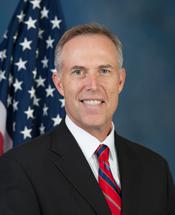
Madam Speaker, I yield myself such time as I may consume. Madam Speaker, this bill would establish a new task force led by the National Marine Fisheries Service to identify shark conservation needs…

Bruce Westerman
Rep. Bruce WestermanR-AR-4 · Jan 21, 2025

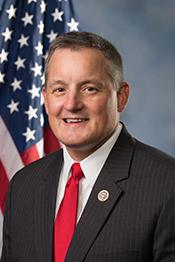
Madam Speaker, I move to suspend the rules and pass the bill (H.R. 207) to direct the Secretary of Commerce to establish a task force regarding shark depredation, and for other purposes. Madam…

Robert J. Wittman
Rep. Robert J. WittmanR-VA-1 · Jan 21, 2025

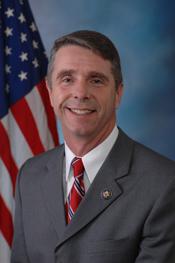
Madam Speaker, I rise today to urge support for my bill, H.R. 207, the Supporting the Health of Aquatic systems through Research Knowledge and Enhanced Dialogue Act, also known as the SHARKED Act. As…

Bill Text

3 versions available

Reading Mode
Latest
Referred in SenateIssued January 22, 2025

IIB

119th CONGRESS

1st Session

H. R. 207

IN THE SENATE OF THE UNITED STATES

January 22, 2025

Received; read twice and referred to the Committee on Commerce, Science, and Transportation

AN ACT

To direct the Secretary of Commerce to establish a task force regarding shark depredation, and for other purposes.


1.

Short title

This Act may be cited as the Supporting the Health of Aquatic systems through Research Knowledge and Enhanced Dialogue Act of 2025 or the SHARKED Act of 2025.

2.

Shark depredation task force and research projects

(a)

Shark depredation task force

(1)

In general

The Secretary of Commerce shall establish a task force (referred to in this subsection as the task force) to identify and address critical needs with respect to shark depredation.

(2)

Membership

The Secretary of Commerce shall appoint individuals to the task force, including—

(A)

1 representative from—

(i)

each Regional Fishery Management Council established under section 302(a)(1) of the Magnuson-Stevens Fishery Conservation and Management Act (16 U.S.C. 1852(a)(1));

(ii)

each Marine Fisheries Commission, as such term is defined in section 3 of the Magnuson-Stevens Fishery Conservation and Management Act (16 U.S.C. 1802);

(iii)

the fish and wildlife agency of a coastal State from each Regional Fishery Management Council established under section 302(a)(1) of the Magnuson-Stevens Fishery Conservation and Management Act (16 U.S.C. 1852(a)(1)); and

(iv)

the National Marine Fisheries Service;

(B)

an individual with expertise in the management of highly migratory species;

(C)

a researcher with expertise in shark management and behavior; and

(D)

a researcher with expertise in shark ecology.

(3)

Responsibilities

The task force shall—

(A)

develop ways to improve coordination and communication across the fisheries management community and shark research community to address shark depredation;

(B)

identify research priorities and funding opportunities for such priorities, including—

(i)

identifying shark species involved in interactions;

(ii)

shark stock assessments;

(iii)

how sharks become habituated to humans and thus lead to more interactions between sharks and humans;

(iv)

how angler behavior and fishery regulatory frameworks may influence shark interactions;

(v)

techniques and strategies to reduce harmful interactions between sharks and humans, including the development and use of non-lethal deterrents;

(vi)

the role of healthy shark populations in the ocean food web; and

(vii)

climate change impacts on shifting shark populations, prey, and shark behavior;

(C)

develop recommended management strategies to address shark depredation; and

(D)

coordinate the development and distribution of educational materials to help the fishing community minimize shark interactions including through changed angler behavior and expectations.

(4)

Report

Not later than 2 years after the date of the enactment of this section, and every 2 years thereafter until the termination of the task force in accordance with paragraph (5), the task force shall submit to Congress a report regarding the findings of the task force.

(5)

Sunset

The task force shall terminate not later than 7 years after the date on which the Secretary of Commerce establishes the task force.

(6)

Coastal state defined

In this subsection, the term coastal State

(A)

means a State of the United States in, or bordering on, the Atlantic Ocean, Pacific Ocean, Arctic Ocean, Gulf of Mexico, or Long Island Sound; and

(B)

includes Puerto Rico, the Virgin Islands of the United States, Guam, the Commonwealth of the Northern Mariana Islands, and American Samoa.

(b)

Shark depredation research projects

Section 318(c) of the Magnuson-Stevens Fishery Conservation and Management Act (16 U.S.C. 1867(c)) is amended by adding at the end the following:

(6)

Projects to better understand shark depredation, including identifying what causes increases in shark depredation and determining how to best address shark depredation.

.

(c)

Effect

Nothing in this section shall be construed to affect the authority and responsibility of the Secretary of Commerce in carrying out the Endangered Species Act of 1973 (16 U.S.C. 1351 et seq.) or the Magnuson-Stevens Fishery Conservation and Management Act (16 U.S.C. 1801 et seq.).

Passed the House of Representatives January 21, 2025.

Kevin F. McCumber,

Clerk.