



H.R. 3106House119th Congress (2025-2027)Passed House

Weatherizing Infrastructure in the North and Terrorism Emergency Readiness Act of 2025

To require the Secretary of Homeland Security to conduct a collective response to a terrorism exercise that includes the management of cascading effects on critical infrastructure during times of extreme cold weather, and for other purposes.

Introduced April 30, 2025

AI-Generated Summary

Updated November 24, 2025 at 12:53 AM UTC

The Weatherizing Infrastructure in the North and Terrorism Emergency Readiness Act of 2025 directs the Department of Homeland Security to conduct a comprehensive terrorism‑response exercise that includes managing the ripple effects on critical infrastructure during extreme cold‑weather events. The bill aims to improve preparedness, coordination, and community resilience when a terrorist attack coincides with severe winter conditions. It also requires DHS to report the exercise results and recommendations to Congress.

Key Provisions

  • The Secretary of Homeland Security must design and run a joint terrorism‑response exercise that specifically includes an extreme cold‑weather scenario (such as a polar vortex) and looks at how attacks on critical infrastructure could cause cascading problems.
  • The exercise must examine how emergency managers, state officials, private‑sector partners, and community groups would mitigate the effects of a terrorist attack on critical infrastructure during such cold weather, and how to strengthen community resilience.
  • It must involve coordination among federal agencies, as well as state, local, tribal, and territorial governments, and relevant private‑sector and community stakeholders.
  • Within 60 days after the exercise, DHS must submit an after‑action report to the House and Senate Homeland Security committees, summarizing findings, short‑ and long‑term plans to apply lessons learned, and any suggested legislative changes.

Legislative Activity

Stay on top of the latest movement without scrolling through every action

17 earlier actions
SenateIntro Referral Latest Action

Received in the Senate and Read twice and referred to the Committee on Homeland Security and Governmental Affairs.

July 14, 2026

View full timeline
HouseIntro Referral

Introduced in House

April 30, 2025

HouseIntro Referral

Referred to the House Committee on Homeland Security.

April 30, 2025

HouseCommittee

Referred to the Subcommittee on Counterterrorism and Intelligence.

May 1, 2025

HouseCommittee

Referred to the Subcommittee on Emergency Management and Technology.

May 1, 2025

HouseCommittee

Subcommittee on Emergency Management and Technology Discharged

June 24, 2026

HouseCommittee

Subcommittee on Counterterrorism and Intelligence Discharged

June 24, 2026

HouseCommittee

Committee Consideration and Mark-up Session Held

June 24, 2026

HouseCommittee

Ordered to be Reported by the Yeas and Nays: 30 - 0.

June 24, 2026

HouseCommittee

Reported by the Committee on Homeland Security. H. Rept. 119-744.

July 13, 2026

HouseCalendars

Placed on the Union Calendar, Calendar No. 648.

July 13, 2026

HouseFloor

Mr. Garbarino moved to suspend the rules and pass the bill.

July 13, 2026 • 4:32 PM

HouseFloor

Considered under suspension of the rules. (consideration: CR H4394-4395)

July 13, 2026 • 4:33 PM

HouseFloor

DEBATE - The House proceeded with forty minutes of debate on H.R. 3106.

July 13, 2026 • 4:33 PM

HouseFloor

At the conclusion of debate, the Yeas and Nays were demanded and ordered. Pursuant to the provisions of clause 8, rule XX, the Chair announced that further proceedings on the motion would be postponed.

July 13, 2026 • 4:39 PM

HouseFloor

Considered as unfinished business. (consideration: CR H4403)

July 13, 2026 • 6:30 PM

HouseFloor

On motion to suspend the rules and pass the bill Agreed to by the Yeas and Nays: (2/3 required): 400 - 7 (Roll no. 234). (text: CR H4394-4395)

July 13, 2026 • 6:56 PM

HouseFloor

Motion to reconsider laid on the table Agreed to without objection.

July 13, 2026 • 6:56 PM

SenateIntro Referral

Received in the Senate and Read twice and referred to the Committee on Homeland Security and Governmental Affairs.

July 14, 2026

Floor Debate

5 members

What members said about H.R. 3106 on the floor

1 Republican4 Democrats
Timothy M. Kennedy
Rep. Timothy M. KennedyD-NY-26 · Jul 13, 2026

I thank Representative Walkinshaw for yielding me time. Mr. Speaker, I rise in support of my bill, H.R. 3106, the Weatherizing Infrastructure in the North and Terrorism Emergency Readiness Act, also…

Andrew R. Garbarino
Rep. Andrew R. GarbarinoR-NY-2 · Jul 13, 2026

Mr. Speaker, I move to suspend the rules and pass the bill (H.R. 3106) to require the Secretary of Homeland Security to conduct a collective response to a terrorism exercise that includes the…

James R. Walkinshaw
Rep. James R. WalkinshawD-VA-11 · Jul 13, 2026

Mr. Speaker, I yield such time as he may consume to the gentleman from New York (Mr. Kennedy), the sponsor of this bill. Mr. Speaker, I yield myself the balance of my time. Mr. Speaker, I applaud…

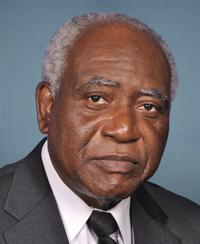
Danny K. Davis
Rep. Danny K. DavisD-IL-7 · Jul 14, 2026

Mr. Speaker, I was unable to cast votes on July 13, 2026. Had I been present for Roll Call votes, I would have voted: Aye on Roll Call No. 234, H.R. 3106, and Aye on Roll Call No. 235, H.R. 8897.

Yassamin Ansari
Rep. Yassamin AnsariD-AZ-3 · Jul 13, 2026

Mr. Speaker, had I been present, I would have voted YEA on Roll Call No. 234.

Bill Text

4 versions available

Reading Mode
Latest
Referred in SenateIssued July 14, 2026

IIB

119th CONGRESS

2d Session

H. R. 3106

IN THE SENATE OF THE UNITED STATES

July 14, 2026

Received; read twice and referred to the Committee on Homeland Security and Governmental Affairs

AN ACT

To require the Secretary of Homeland Security to conduct a collective response to a terrorism exercise that includes the management of cascading effects on critical infrastructure during times of extreme cold weather, and for other purposes.

1.

Short title

This Act may be cited as the Weatherizing Infrastructure in the North and Terrorism Emergency Readiness Act of 2025.

2.

Exercise on terrorist attack during extreme cold

(a)

In general

In addition to, or as part of exercise programs currently carried out by the Department of Homeland Security, to enhance domestic preparedness for terrorism, promote the dissemination of homeland security information, and test the homeland security posture of the United States, the Secretary of Homeland Security, acting through appropriate offices and components of the Department, shall develop and conduct a collective response to terrorism exercise that includes management of cascading effects on critical infrastructure (as such term is defined in section 1016(e) of Public Law 107–56 (42 U.S.C. 5195c(e))) in accordance with the requirements relating to a scenario specified in subsection (b).

(b)

Exercise requirements

The requirements relating to a scenario specified in this subsection are the following:

(1)

An extreme cold weather event, such as an event caused by a polar vortex, with respect to access to critical services.

(2)

Any cascading effects on critical infrastructure.

(3)

How the effects of a successful terrorist attack against critical infrastructure could be mitigated by emergency managers, State officials, and appropriate private sector and community stakeholders.

(4)

How the resilience of communities that could be impacted by such an attack could be bolstered.

(5)

Coordination with appropriate Federal departments and agencies, and State, local, Tribal, and territorial agencies.

(6)

Coordination with appropriate private sector and community stakeholders.

(c)

Report

Not later than 60 days after the completion of the exercise required under subsection (a), the Secretary of Homeland Security shall, consistent with the protection of classified information, submit to the Committee on Homeland Security of the House of Representatives and the Committee on Homeland Security and Governmental Affairs of the Senate an after-action report presenting the initial findings of such exercise, any immediate and longer-term plans for incorporating lessons learned into future operations of the Department of Homeland Security, and any proposed legislative changes informed by such exercise.

Passed the House of Representatives July 13, 2026.

Kevin F. McCumber,

Clerk.