


I
119th CONGRESS
1st Session
H. R. 434
IN THE HOUSE OF REPRESENTATIVES
January 15, 2025
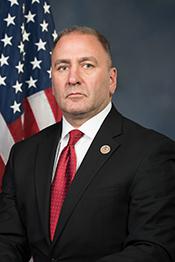
Mr. Higgins of Louisiana introduced the following bill; which was referred to the Committee on Homeland Security
A BILL
To amend the Homeland Security Act of 2002 to improve U.S. Customs and Border Protection (CBP) identification of staffing needs, and for other purposes.
Short title
This Act may be cited as the CBP Workload Staffing Model Act
.
Establishment of workload staffing models for U.S. Border Patrol and Air and Marine Operations of U.S. Customs and Border Protection
In general
The Commissioner of U.S. Customs and Border Protection shall, in coordination with the Under Secretary for Management, Chief Human Capital Officer, and Chief Financial Officer of the Department of Homeland Security, develop and implement, by not later than one year after the date of the enactment of this Act, a workload staffing model for each of the following:
The U.S. Border Patrol.
Air and Marine Operations.
Responsibilities of the Commissioner of CBP
Subsection (c) of section 411 of the Homeland Security Act of 2002 (6 U.S.C. 211) is amended—
by redesignating paragraphs (18) and (19) as paragraphs (20) and (21), respectively; and
by inserting after paragraph (17) the following new paragraphs:
implement a staffing model that includes consideration for essential frontline operator activities and functions, variations in operating environments, present and planned infrastructure, present and planned technology, and required operations support levels for the U.S. Border Patrol, Air and Marine Operations, and the Office of Field Operations, to manage and assign personnel of such entities to ensure field and support posts possess adequate resources to carry out duties specified in this section;
develop standard operating procedures for a workforce tracking system within the U.S. Border Patrol, Air and Marine Operations, and the Office of Field Operations, train the workforce of each of such entities on the use, capabilities, and purpose of such system, and implement internal controls to ensure timely and accurate scheduling and reporting of actual completed work hours and activities;
.
Report
Not later than one year after the date of the enactment of this Act with respect to subsection (a) and paragraphs (18) and (19) of section 411(c) of the Homeland Security Act of 2002 (as amended by subsection (b)), and annually thereafter with respect to such paragraphs (18) and (19), the Secretary of Homeland Security shall submit to the Committee on Homeland Security of the House of Representatives and the Committee on Homeland Security and Governmental Affairs of the Senate a status update on the implementation of this Act and such paragraphs (18) and (19), and annual status updates regarding such paragraphs (18) and (19), as well as all relevant workload staffing models. Such status updates shall include information on data sources and methodology used to generate such staffing models.
Inspector General review
Not later than 120 days after the Commissioner of U.S. Customs and Border Protection develops a workload staffing model pursuant to subsection (a), the Inspector General of the Department of Homeland Security shall review such model and provide feedback to the Secretary of Homeland Security and the Committee on Homeland Security of the House of Representatives and the Committee on Homeland Security and Governmental Affairs of the Senate regarding the degree to which such model is responsive to Inspector General recommendations, including recommendations from the Inspector General’s February 2019 audit, and as appropriate, any further recommendations to improve such model.