H.R. 7388House119th Congress (2025-2027)Passed House

Smart Space Act of 2026

To direct the Administrator of General Services to convene consultation meetings to identify alternative financing solutions for the construction of new public buildings that will reduce costs to the Federal Government, and for other purposes.

Introduced February 5, 2026

AI-Generated Summary

Updated March 27, 2026 at 3:01 AM UTC

The Smart Space Act of 2026 directs the General Services Administration (GSA) to hold consultation meetings to explore alternative financing, such as public‑private partnerships, for building new federal facilities, renovating existing ones, or preparing buildings for disposal. The goal is to lower the federal government's building costs and improve space utilization. The GSA must report its financing recommendations and a list of suitable projects to the President, Congress, and the public.

Key Provisions

  • Within 90 days of enactment, the GSA Administrator must convene meetings with private commercial‑real‑estate experts, federal real‑estate experts, and, if available, state and D.C. experts.
  • By 120 days after enactment, the Administrator must submit a report to the President recommending financing methods and a list of federal building projects that should use those methods.
  • Projects recommended must support core federal missions, enable consolidation or relocation from costly, under‑used space, and achieve at least 60% building utilization.
  • The report is to be sent to the House Transportation and Infrastructure Committee and the Senate Environment and Public Works Committee, posted publicly on the GSA website, and meetings must be open to the public.
  • Defines "alternative financing" and "public‑private partnership" to include design‑build‑finance‑operate‑maintain agreements or ground‑lease‑lease‑back arrangements.

Legislative Activity

Stay on top of the latest movement without scrolling through every action

13 earlier actions
SenateIntro Referral Latest Action

Received in the Senate and Read twice and referred to the Committee on Environment and Public Works.

March 25, 2026

View full timeline
HouseIntro Referral

Introduced in House

February 5, 2026

HouseIntro Referral

Referred to the House Committee on Transportation and Infrastructure.

February 5, 2026

HouseCommittee

Referred to the Subcommittee on Economic Development, Public Buildings, and Emergency Management.

February 5, 2026

HouseCommittee

Subcommittee on Economic Development, Public Buildings, and Emergency Management Discharged

February 11, 2026

HouseCommittee

Committee Consideration and Mark-up Session Held

February 11, 2026

HouseCommittee

Ordered to be Reported (Amended) by Voice Vote.

February 11, 2026

HouseCommittee

Reported (Amended) by the Committee on Transportation and Infrastructure. H. Rept. 119-562.

March 20, 2026

HouseCalendars

Placed on the Union Calendar, Calendar No. 483.

March 20, 2026

HouseFloor

Mr. Taylor moved to suspend the rules and pass the bill, as amended.

March 24, 2026 • 3:47 PM

HouseFloor

Considered under suspension of the rules. (consideration: CR H2650-2651)

March 24, 2026 • 3:47 PM

HouseFloor

DEBATE - The House proceeded with forty minutes of debate on H.R. 7388.

March 24, 2026 • 3:47 PM

HouseFloor

On motion to suspend the rules and pass the bill, as amended Agreed to by voice vote. (text: CR H2650)

March 24, 2026 • 3:55 PM

HouseFloor

Motion to reconsider laid on the table Agreed to without objection.

March 24, 2026 • 3:55 PM

SenateIntro Referral

Received in the Senate and Read twice and referred to the Committee on Environment and Public Works.

March 25, 2026

Floor Debate

3 members

What members said about H.R. 7388 on the floor

2 Republicans1 Democrat
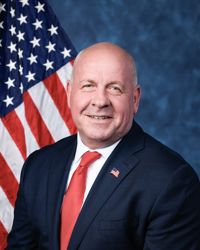
David J. Taylor
Rep. David J. TaylorR-OH-2 · Mar 24, 2026

Mr. Speaker, I move to suspend the rules and pass the bill (H.R. 7388) to direct the Administrator of General Services to convene consultation meetings to identify alternative financing solutions for…

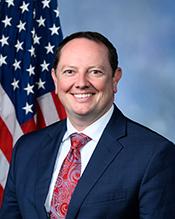
Eric Burlison
Rep. Eric BurlisonR-MO-7 · Mar 24, 2026

Mr. Speaker, I thank the gentleman for yielding. Mr. Speaker, I rise today to support my bill, the Smart Space Act of 2026, legislation that modernizes how the Federal Government manages its real…

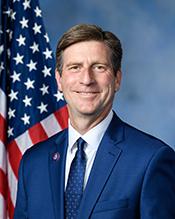
Greg Stanton
Rep. Greg StantonD-AZ-4 · Mar 24, 2026

I yield myself such time as I may consume. Mr. Speaker, I rise in support of H.R. 7388, the Smart Space Act, as amended. The General Services Administration's portfolio of owned buildings are now, on…

Bill Text

4 versions available

Reading Mode
Latest
Referred in SenateIssued March 25, 2026

IIB

119th CONGRESS

2d Session

H. R. 7388

IN THE SENATE OF THE UNITED STATES

March 25, 2026

Received; read twice and referred to the Committee on Environment and Public Works

AN ACT

To direct the Administrator of General Services to convene consultation meetings to identify alternative financing solutions for the construction of new public buildings that will reduce costs to the Federal Government, and for other purposes.

1.

Short title

This Act may be cited as the Smart Space Act of 2026.

2.

Project recommendations

(a)

Meetings and consultations

Not later than 90 days after the date of enactment of this Act, the Administrator of General Services shall convene consultation meetings to identify alternative financing solutions for the construction or renovation of public buildings, or necessary work to prepare such buildings for disposal that will reduce costs to the Federal Government.

(b)

Meetings

In convening consultation meetings under subsection (a), the Administrator shall include—

(1)

experts related to private commercial real estate;

(2)

experts related to Federal real estate; and

(3)

if available, State, including the District of Columbia, real estate experts experienced with leveraging private financing for public buildings and facilities.

(c)

Report and recommendations

Not later than 120 days after the date of enactment of this Act, the Administrator shall submit to the President—

(1)

recommendations on types of public-private partnerships and alternative financing methods best suited for meeting the public building needs of the Federal Government; and

(2)

a list of recommended projects related to public buildings for which such methods should be used with details on which methods and types of public-private partnerships are recommended for each project.

(d)

Recommended project list

In submitting a list of recommended projects under subsection (c)(2), the Administrator shall submit projects that the Administrator determines—

(1)

serve core missions of the Federal Government for which maintaining the functions in federally owned space over the long-term is critical;

(2)

will result in either consolidations or relocations of Federal departments or agencies out of costly, inefficient, and underutilized space that the Administrator intends to sell or dispose of once vacated; and

(3)

with respect to standard office space, will result in meeting a minimum building utilization of 60 percent or greater as defined in section 2302 of the Thomas R. Carper Water Resources Development Act of 2024 (40 U.S.C. 584 note).

(e)

Transparency

(1)

Report

The Administrator shall submit the report under subsection (c) to the Committee on Transportation and Infrastructure in the House and the Committee on Environment and Public Works in the Senate and make such report publicly available on the website of the General Services Administration.

(2)

Timeline

The Administrator of General Services shall maintain on the website of the General Services Administration information on the process under this Act, including any timelines and milestones.

(3)

Delays

The Administrator shall report directly to the President and Congress any delays with respect to the timing and milestones described in paragraph (2).

(4)

Meetings

Meetings pursuant to subsection (a) shall be noticed and open to the public and shall not be subject to chapter 10 of title 5, United States Code.

(f)

Definitions

In this Act:

(1)

Alternative financing; public-private partnership

The terms alternative financing and public-private partnership may include—

(A)

agreements that reflect an obligation by a non-Federal entity to design, build, finance, operate, and maintain an asset, or a combination thereof; and

(B)

a ground-lease to a non-Federal party with a subsequent lease back of the improvements.

(2)

Public building

The term public building has the meaning given such term in section 3301 of title 40, United States Code.

Passed the House of Representatives March 24, 2026.

Kevin F. McCumber,

Clerk.