Mr. Speaker, I move to suspend the rules and pass the bill (H.R. 965) to amend section 3(b)(4) of the United States Housing Act of 1937 to exclude certain disability benefits from income for the…
Mr. Speaker, I move to suspend the rules and pass the bill (H.R. 965) to amend section 3(b)(4) of the United States Housing Act of 1937 to exclude certain disability benefits from income for the purposes of determining eligibility for the supported housing program under section 8(o)(19), and for other purposes.
Mr. Speaker, I ask unanimous consent that all Members may have 5 legislative days in which to revise and extend their remarks and include extraneous material on this bill.
Mr. Speaker, I yield myself such time as I may consume.
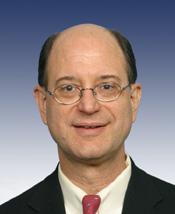
Mr. Speaker, I rise today in strong support of H.R. 965, the Housing Unhoused Disabled Veterans Act introduced by my colleague on the Financial Services Committee, Congressman Brad Sherman of California.
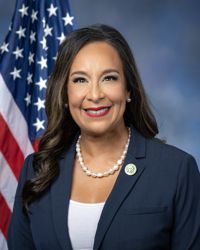
Much like the bill that we just considered a few minutes ago from our friend from Texas (Ms. De La Cruz), I want to start out by commending our colleague from California for his work on this related issue that once again speaks to the fairness in HUD programs on behalf of our Nation's veterans.
The Housing and Urban Development-Veterans Affairs Supportive Housing, or HUD-VASH, program was created back in 1992. The purpose was to assist homeless veterans with psychiatric and substance abuse disorders.
The VASH program is an important Federal tool that provides housing assistance and supportive services for low-income veterans experiencing homelessness. Of course, it might seem redundant to some that a program to help homeless veterans would be geared towards those who are low- income, but sometimes with HUD nothing is ever simple.
Much like how HUD treats service-connected disability compensation of veterans as income in its CDBG program, HUD treats any disability benefits a veteran receives under chapter 11 or chapter 15 of title 38 of the U.S. Code as income under HUD-VASH.
A predictable result is some disabled homeless veterans are blocked from using a program to help all homeless veterans because HUD has decided that those low-income veterans that are disabled are too wealthy to qualify. Sound familiar? This is exactly the debate we had a few minutes ago.
Mr. Speaker, someone always has to explain these government bureaucratic messes to me because they never make any common sense.
The reform we are talking about today offered by Mr. Sherman fixes this problem. It reforms the HUD income calculation used in the HUD- VASH program to ensure that the disability payments of a low-income veteran do not exclude them from accessing this housing support.
The bill goes on to say that HUD needs to adopt the same income calculation standard for any future veteran housing program it might create using HUD-owned property. I applaud my colleague for calling attention to this problem and for his bipartisan work to find a solution.
While this may seem like an easy fix, this is Washington. There are no easy fixes, and HUD has consistently placed bureaucratic obstacles in the way of program efficiency time and time again.
In fact, when Representative Sherman brought this up last year to the Secretary of HUD, he got the same answer that Representative De La Cruz got on her veterans CDBG income question: Hey, that is Congress' job to fix it, not HUD's.
Fix it, indeed we will. The approach the gentleman has taken in crafting this bill is a good one. It is one that will make a big difference in the HUD-VASH program, as well as: How about making a difference for the veterans who are eligible to use it? That is why we are on this House floor.
Mr. Speaker, I thank Representative Sherman for his hard work to honor the promises that we have made to our veterans. I urge bipartisan support of this bill, and I reserve the balance of my time.
Mr. Speaker, I yield 2 minutes to the gentlewoman from Texas (Ms. De La Cruz), who has done so much to advance these reforms in HUD and our committee. We are grateful for her leadership.
Mr. Speaker, I yield myself the balance of my time.
I thank Mr. Sherman for his good work on this and his partnership with Ms. De La Cruz of Texas.
Mr. Speaker, I also express my deep empathy and support of Representative Sherman, Representative Chu, Representative Kim, and others in the L.A. basin who are coping with the horrendous results and tragedy connected with the fires at Pacific Palisades and elsewhere where some 45,000 California homes were destroyed in just the blink of an eye and lives lost.
I thank Mr. Sherman for his focus on housing the least fortunate, our veterans, but also I know that he is concerned about what is going to happen in the months ahead as southern California recovers.
In this regard, Mr. Speaker, we will have a bipartisan roundtable tomorrow in the House Financial Services Committee where Members on both sides of the aisle will talk with experts about how best to improve resilience and think through recovery for southern California.
I thank my colleagues for their bipartisan work on H.R. 965. I urge a ``yes'' vote on both sides of the aisle, and I yield back the balance of my time.