Mr. Speaker, pursuant to House Resolution 211, I call up the bill (H.R. 1156) to amend the CARES Act to extend the statute of limitations for fraud under certain unemployment programs, and for other…
Mr. Speaker, pursuant to House Resolution 211, I call up the bill (H.R. 1156) to amend the CARES Act to extend the statute of limitations for fraud under certain unemployment programs, and for other purposes, and ask for its immediate consideration in the House.
Mr. Speaker, I ask unanimous consent that all Members may have 5 legislative days in which to revise and extend their remarks and include extraneous material on the bill under consideration.
Mr. Speaker, I yield myself such time as I may consume.
Mr. Speaker, the American people supported President Trump in November because he pledged to eliminate waste and fraud in government.
There is no better example of what President Trump is talking about than the rampant fraud the Ways and Means Committee has uncovered in the COVID-era unemployment insurance program.
This money was supposed to help workers and their families through a crisis. Instead, it was stolen. It was stolen by fraudsters and criminals. According to government estimates, between $100 billion and $135 billion of UI benefits were stolen during the pandemic.
Outside estimates range as high as $400 billion. That is higher than the economy of my home State of Missouri and about 20 other States. It is the greatest theft of tax dollars in U.S. history. So far, the government has only recovered about $5 billion. As we stand here, there are over 157,000 open UI fraud hotline complaints and more than 1,600 ongoing fraud investigations.
This is a must-pass bill. The statute of limitations for these investigations starts to run out in 16 days on March 27. If we don't extend it, the criminals who stole money from the pockets of taxpayers, and continue to do so to this day, will get away.
The Pandemic Unemployment Fraud Enforcement Act is simple. It doubles the statute of limitations from 5 to 10 years so we can prosecute and recover hundreds of billions of stolen tax dollars. We did this in the 117th Congress when Republicans and Democrats voted unanimously to extend the statute of limitations for fighting fraud and other COVID- era programs plagued by criminal theft. This legislation deserves the same strong bipartisan support. Yet during our markup, not a single Ways and Means Democrat voted for this bill. Let me preview some of the fear-mongering you are going to hear today on this floor.
First, committee Democrats will argue that giving law enforcement more time to prosecute fraud will lead to surprise bills or targeting of innocent Americans who accidentally received an overpayment. This is completely false.
DOJ is focused on prosecuting sophisticated criminals who maliciously defrauded the government, including international crime rings, online scammers, and gangs that are using tax dollars to illegally purchase firearms and commit crimes.
This is not about going after grandma who made a mistake on her form. Anyone making that claim is simply not telling the truth. That isn't happening today, and it won't happen tomorrow. All this bill does is simply extend the investigations ongoing today.
Second, Democrats claim that rescinding $5 million to offset the cost of this bill is a bridge too far. This is unused money sitting over at the Department of Labor. With over 1,600 open investigations, Democrats should be more concerned about what their constituents and American taxpayers have to lose if this doesn't get done.
Third, Mr. Speaker, you will hear complaints about items unrelated to this bill like DOGE or the streamlining of the Federal Government to make it work better for the American taxpayer.
I understand that my colleagues on the other side may want to use their floor time to discuss those issues, but that is not what the bill in front of us is all about. It is simply about continuing ongoing efforts to recoup tens of billions of dollars criminally taken from the American taxpayer.
A ``no'' vote is a vote to allow these criminals to keep the money they stole from taxpayers. It is a vote to surrender to fraudsters. It is a vote that says to Americans we don't care about their hard-earned taxpayer dollars.
Mr. Speaker, I urge all of my colleagues to support this legislation, and I reserve the balance of my time.
Mr. Speaker, I yield such time as he may consume to the gentleman from Illinois (Mr. LaHood), the chairman of the Work and Welfare Subcommittee.
Mr. Speaker, I yield myself such time as I may consume.
Yesterday, my colleagues introduced an amendment that would limit prosecution of fraud cases with at least $100,000 in stolen funds.
Apparently, Mr. Speaker, Democrats want to give some criminals a get- out-of-jail-free card.
Let me give you an example of what that looks like. A woman from Rockford, Iowa, was sentenced to more than a year in prison for receiving $45,000 in unemployment benefits from eight different States using stolen identities and laundering the proceedings through cryptocurrency.
Mr. Speaker, I include in the Record a September 20, 2022, release from the United States Attorney's Office Northern District of Iowa titled: ``Iowa Woman Sentenced to Federal Prison for COVID-19 Related Benefit Fraud and Money Laundering.''
Tuesday, September 20, 2022.
Iowa Woman Sentenced to Federal Prison for COVID-19 Related Benefit
Fraud and Money Laundering
mendenhall received over $45,000 in fraudulently obtained benefits and
laundered most of the funds by purchasing cryptocurrency
A Rockford, Iowa woman who received unemployment benefits
in other people's names, and laundered most of those funds
through cryptocurrency transactions, was sentenced September
20, 2022, to more than a year in federal prison.
Stephanie Mendenhall, age 53, from Rockford, Iowa, received
the prison term after a March 24, 2022, guilty plea to four
counts of theft of government funds and one count of money
laundering conspiracy. At the plea hearing, Mendenhall
admitted to facilitating false claims for unemployment
insurance benefits, which were intended for those in need due
to the COVID-19 pandemic, in the names of other people and
allowing those funds to be deposited into bank accounts she
owned or controlled. Mendenhall received fraudulent
unemployment benefits paid through the states of Maine,
Michigan, Washington, Arizona, Colorado, Texas, Kansas, and
Illinois, including benefits related to COVID-19 relief
funds, to which she was not entitled. Mendenhall received at
least $35,985 in false unemployment benefits. Mendenhall
spent some of the money on herself, but laundered the
majority of it by purchasing cryptocurrency and sending it to
a co-conspirator. After being indicted in this case, while on
pretrial release, Mendenhall attempted to deposit counterfeit
checks into other bank accounts she owned.
Mendenhall was sentenced in Sioux City by United States
District Court Chief Judge Leonard T. Strand. Mendenhall was
sentenced to 15 months' imprisonment. She was also ordered to
make $46,378.31 in restitution to the states of Maine,
Michigan, Washington, Arizona, Colorado, Texas, Kansas, and
Illinois. She must also serve a 2-year term of supervised
release after the prison term. There is no parole in the
federal system.
On May 17, 2021, the Attorney General established the
COVID-19 Fraud Enforcement Task Force to marshal the
resources of the Department of Justice in partnership with
agencies across government to enhance efforts to combat and
prevent pandemic-related fraud. The Task Force bolsters
efforts to investigate and prosecute the most culpable
domestic and international criminal actors and assists
agencies tasked with administering relief programs to prevent
fraud by, among other methods, augmenting and incorporating
existing coordination mechanisms, identifying resources and
techniques to uncover fraudulent actors and their schemes,
and sharing and harnessing information and insights gained
from prior enforcement efforts. For more information on the
Department's response to the pandemic, please visit https:// www.justice.gov/coronavirus.
Anyone with information about allegations of attempted
fraud involving COVID-19 can report it by calling the
Department of Justice's National Center for Disaster Fraud
(NCDF) Hotline at 866-720-5721 or via the NCDF Web Complaint
Form at: https://www.justice.gov/disaster-fraud/ncdf/ disaster-complaint-form.
Mendenhall is to surrender to the Bureau of Prisons on a
date yet to be set.
The case was prosecuted by Assistant United States
Attorneys Ron Timmons and Tim Vavricek and was investigated
by the Federal Bureau of Investigation and the Department of
Labor's Office of Inspector General.
Court file information at https://ecf.iand.uscourts.gov/ cgi-bin/login.pl.
The case file number is 21-3028.
A criminal, Mr. Speaker, is a criminal no matter how much they steal from the American taxpayers. H.R. 1156 is a must-pass bill for anyone interested in enforcing the rule of law.
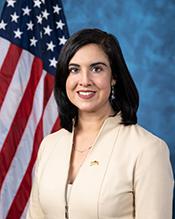
I yield such time as she may consume to the gentlewoman from New York (Ms. Malliotakis).
Mr. Speaker, I yield such time as he may consume to the gentleman from Kansas (Mr. Estes).
Mr. Speaker, I yield such time as he may consume to the gentleman from Indiana (Mr. Yakym).
Mr. Speaker, I yield such time as he may consume to the gentleman from Florida (Mr. Bean).
Mr. Speaker, I yield such time as he may consume to the gentleman from Texas (Mr. Moran).
Mr. Speaker, I yield such time as he may consume to the gentleman from North Carolina (Mr. Edwards).
Mr. Speaker, I yield such time as he may consume to the gentleman from California (Mr. Kiley).
Mr. Speaker, I yield such time as he may consume to the gentleman from Kansas (Mr. Schmidt).
Mr. Speaker, I yield myself the balance of my time.
Mr. Speaker, the folks on the other side of the aisle were referring to President Trump firing the Department of Labor inspector general earlier. President Trump campaigned on changing Washington. He is well within his power to remove members of the executive branch at will, and it is understandable, Mr. Speaker, that he wants people in his administration who reflect his views.
The Labor Department's inspector general plays an important role in identifying fraud but does not charge cases or decide which ones to prosecute. The Department of Justice and the U.S. Attorney's Offices handle prosecution of Federal crimes. This bill extends the statute of limitations to ensure the Department of Justice has the time they need to go after criminals who committed acts of malice and intentional fraud against American taxpayers.
The criminal activity in the COVID-era unemployment insurance program represents the largest theft of tax dollars in U.S. history. This money was supposed to help American families through a once-in-a-lifetime crisis. Instead, thousands of criminals, including foreign crime rings, made off with hundreds of billions of dollars.
We know that some of these same groups are continuing to perpetrate UI fraud targeting disaster victims. Fraudsters are filing claims on behalf of individuals impacted by fires in your State, Mr. Speaker, and the North Carolina floods, and then using the money for criminal activity.
The statute of limitations to prosecute these crimes is set to expire this month with just 4 percent of the stolen funds having, so far, been recovered. Criminals are going to get away scot-free unless we pass this legislation.
Over the past few weeks, Democrats have sued and stonewalled President Trump, Elon Musk, and DOGE over the broader investigation into how our tax dollars are being spent.
The American people are tired of words. It is time for action. The Pandemic Unemployment Fraud Enforcement Act will buy prosecutors and law enforcement more time to go after criminals and recoup the money taxpayers are rightfully owed. It is no wonder this legislation is widely supported by Federal law enforcement agencies and States.
The American people deserve justice, and now it is up to Congress to deliver it.
Mr. Speaker, I yield back the balance of my time.