Mr. Speaker, I rise today to address one of the most serious issues of our time, the risk of conflict with nuclear weapons. It is a threat that challenges our conscience. It is a threat not just for…
Mr. Speaker, I rise today to address one of the most serious issues of our time, the risk of conflict with nuclear weapons. It is a threat that challenges our conscience. It is a threat not just for Americans but for all humanity. It is a threat not just to humans, but to all species of life on our planet.
We raise this issue in the context of a series of important anniversaries. One week ago, July 16 marked the 80th anniversary of the Trinity test, the first detonation of a nuclear weapon in New Mexico. We still live with the legacy of above-ground nuclear tests.
Two years ago, the Defense Department awarded the Atomic Veterans Commemorative Service Medal to the still-surviving veterans of that era and their family members.
We must also honor the downwinders, civilians whose health and land suffered from the effects of radiation from these tests. Many were in the State of Nevada. In addition, we cannot forget the Pacific Islanders who have not been able to return to their home islands or the Uyghurs and others whose homeland in Xinjiang was the location of China's nuclear tests. They, too, have suffered long-term health consequences.
In 2 weeks, we will commemorate the first use of a nuclear weapon in a conflict--and that was the atomic bombing of Hiroshima on August 6, 1945--and the second, the bombing of Nagasaki, on August 9. Let us pray that Nagasaki will be the last. Let us work to make sure that it is.
Sadly, the threat from nuclear weapons is only increasing. There are estimated to be 13,400 nuclear weapons in the world today. Some 90 percent of these are in the arsenals of the United States and Russia. The rest belong to the U.K., France, China, Israel, India, Pakistan, and North Korea.
Russia has threatened to use nuclear weapons against Ukraine and even against NATO nations. North Korea uses its nuclear weapons program to intimidate the United States, Japan, and Korea. China continues to build up its nuclear arsenal. It has some 600 warheads today and is expected to pass 1,000 by 2030, according to the Pentagon.
The question of Iran's nuclear program has been at the top of our concerns. The military strikes by Israel and the United States were, as stated, designed to degrade or eliminate Iran's nuclear development capabilities. However, as The Washington Post reported last week, U.S. intelligence agencies assess that only one of Iran's three principal nuclear facilities was destroyed by the U.S. attacks. This tells us that military action is not a reliable way to counter nuclear threats. In 80 years of the nuclear era, the only proven, demonstrated way to reduce the risk of nuclear conflict and to lessen the scale of its destruction is through diplomacy and negotiations.
If not for past arms control agreements, Mr. Speaker, today's arsenals would be larger and more dangerous. If not for limitation on above-ground and atmospheric testing, many more people would suffer from radiation and contamination.
However, our challenge is made harder by the fact that there is only one arms control agreement remaining in force between the United States and Russia. The New START Treaty limits the number of deployed strategic nuclear warheads for each party to 1,550. The treaty expires in February 2026. There are scant signs that either government is interested in extending it.
President Donald Trump can and should take forward steps on nuclear arms control. He can follow in the footsteps of other Republican Presidents. President Eisenhower, in his ``Atoms for Peace'' speech, expressed the moral imperative to warn Americans and the
world of the destructiveness of atomic weapons.
President Reagan in his second term negotiated the INF Treaty with the Soviets. He spoke privately with Gorbachev about the elimination of all nuclear weapons.
Earlier this year, President Trump said from the Oval Office: ``There is no reason for us to be building brand-new nuclear weapons, we already have so many. You could destroy the world 50 times over, 100 times over. And here we are building new nuclear weapons, and they're building nuclear weapons.''
He added: ``We're all spending a lot of money that we could be spending on other things that are actually, hopefully much more productive.''
On this point, Mr. Speaker, President Trump is right. President Trump has the opportunity to make nuclear threat reduction a part of his legacy.
As a smart first step, he and Putin can strike a deal to respect New START's central limits and set the stage for a more comprehensive nuclear arms control framework agreement.
Next, President Trump can put nuclear weapons on the agenda when he meets with Xi Jinping. He expressed a willingness to do this in his Oval Office comments.
Even talking about negotiations in itself can help reduce tensions. A deal requires a first step, and I encourage the President to take it and to take it soon.
We, in Congress, can use our voice. Along with our colleague, the gentlewoman from Hawaii (Ms. Tokuda), I am the proud sponsor of H. Res. 317, a resolution that calls on the U.S. Government to return to the negotiating table on nuclear disarmament and to lead a global effort to reduce and eliminate nuclear weapons. It reaffirms our country's moral and strategic obligation to prevent nuclear war and pursue a world free of nuclear weapons as a national security imperative.
This call is in the spirit of Presidents Eisenhower and Reagan and Presidents Carter and Obama, and we hope President Trump. I am pleased to report that Senators Markey, Merkley, Sanders, Welch, and Van Hollen have all introduced a version of our resolution. I urge the foreign policy committees of both bodies to consider these resolutions promptly.
Unfortunately, Mr. Speaker, activity in House committees is taking us in the wrong direction. Last week, the Appropriations Committee approved an energy and water bill that cuts the National Nuclear Security Administration's Defense Nuclear Nonproliferation account by $412 million. That is 17 percent. These activities help the U.S. stop the spread of nuclear weapons, detect hidden nuclear activities, and support arms control efforts. Why would anybody think it is a good idea to cut that account?
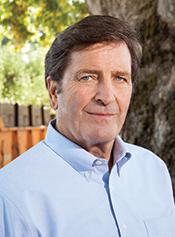
Also last week, the Armed Services Committee approved the National Defense Authorization Act. It authorizes $62 billion for the nuclear enterprise, which represents a 26 percent increase over President Biden's request last year. Unfortunately, the Committee rejected an amendment by the gentleman from California (Mr. Garamendi) to restrict funding to create a new land-based nuclear delivery system, the Sentinel missile, a $180 billion boondoggle he has called an endless money pit.
The threat of nuclear war is an existential one. We have a moral imperative to address it and address it urgently. Debates over the utility and morality of nuclear weapons are as old as the nuclear age. Notably, many of the people who helped make atomic weapons turned out to be some of the most powerful voices against their use and for the reduction in their arsenals.
Mr. Speaker, 2 years ago this week, the film ``Oppenheimer'' premiered. It told the story of J. Robert Oppenheimer, the theoretical physicist who helped create the atomic bomb but then pushed against the development of more powerful weapons. For that position of moral courage, he paid a political price.
Mr. Speaker, 2 months ago, Dr. Richard Garwin passed away at the age of 97. He is best known as the author of the first hydrogen bomb. Less widely known is that he spent decades working tirelessly in arms control and disarmament, as well as scientific panels, conferences, and government boards.
In a 2018 interview, Dr. Garwin said: ``There is a myth, and you saw it operate many times in the past, that if there is a perceived security problem, well, no difficulty, we will just buy more nuclear weapons. But that doesn't improve our security. What we want is less nuclear weapons and less cause for using them on the other side.''
When I was a staffer for the late Congressman Joe Moakley in the 1980s, I recall going to hear Dr. Garwin and Dr. Carl Sagan give a talk on nuclear weapons and the Strategic Defense Initiative. Dr. Sagan, of course, is the physicist who helped us understand the idea of a nuclear winter, which is the hemisphere-wide Dark Age caused by the radioactive ash sent into the atmosphere following multiple nuclear detonations. It would wipe out food supplies and cause untold deaths from starvation, even beyond the millions killed by the blasts.
For us today, the dynamic Dr. Garwin identifies isn't in the past. It is in the present. Our inboxes are full of policymakers expressing fears about the growth of China's nuclear arsenal or Vladimir Putin's intentions or Iran's plans.
Too often, policymakers have a reflexive response. They are building more. Then we should build more. Mr. Speaker, this is so shortsighted. It is a dangerous reaction. It is very, very dangerous. We know firsthand the harm that such devastating weapons can have.
On the 80th anniversaries, people of many generations will gather at Hiroshima and Nagasaki. Very few survivors of those atomic bombings remain with us, but their stories endure. The disturbing photos of the burns and the radiation sickness endure.
In those cities, those gathered will recommit to preserving the memory of the destruction, and to plead with current and future generations to work to ensure that such horrors never ever, ever happen again.
Mr. Speaker, I regret I cannot be with them in Hiroshima and Nagasaki. That is why I have organized this Special Order on the House floor today so that Members can share their message from the floor of the House.
To our colleagues, to the President, and to the American people, this is a crucial moment in world history. We have a moral responsibility to speak out and to do more.
When we return to Washington after the anniversaries and after the August break, let us commit to raising more awareness. Let us commit to more congressional hearings and more debate on the floor. Let us commit to more encouragement for scientists, civil society, and regular citizens to raise their voices. Let us commit to legislation to contain the growth of nuclear weapons. Let us commit ourselves to the elimination of nuclear weapons.
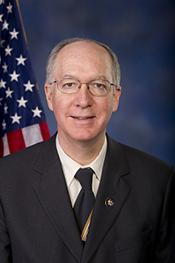
Mr. Speaker, I yield to the gentleman from Illinois (Mr. Foster).
Mr. Speaker, I thank the gentleman from Illinois (Mr. Foster) for his thoughtful remarks.
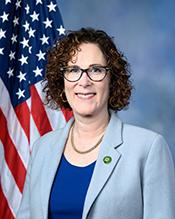
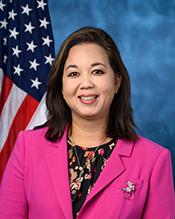
Mr. Speaker, I yield to the gentlewoman from Hawaii (Ms. Tokuda).
Mr. Speaker, I thank the gentlewoman for her remarks.
Mr. Speaker, I yield to the gentlewoman from Minnesota (Ms. Omar).
Mr. Speaker, I thank the gentlewoman for her remarks. We are living in a time when there is great polarization in our politics, but the issue that we are talking about here today is how to bring Democrats and Republicans together, because as Democrats and Republicans and liberals and conservatives we do have a mutual interest in survival. If nuclear weapons are ever used in this current day, then nobody wins.
What we are talking about is the salvation or the destruction of our civilization from nuclear death. The stakes could not be higher, and yet what is shocking to many of us is the lack of urgency and the lack of attention to this subject.
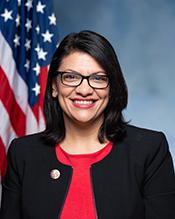
Mr. Speaker, I yield to the gentlewoman from Michigan (Ms. Tlaib).
Mr. Speaker, I thank Congresswoman Tlaib and all of my colleagues who have been here today because this is the most important issue, quite frankly, facing our planet.
Mr. Speaker, we can never ignore the fact that behind the conference room discussions about the utility of nuclear weapons, behind the corporate lobbying for nuclear modernization spending, this is a story of human suffering.
The Nobel Committee awarded the 2024 Nobel Peace Prize to the organization Nihon Hidankyo for its efforts to achieve a world free of nuclear weapons and for demonstrating through witness testimony that nuclear weapons must never be used again.
Nihon Hidankyo is a grassroots movement of atomic bomb survivors form Hiroshima and Nagasaki. In 2 weeks, members of this organization along with activists and citizens from Japan and around the world will gather in Hiroshima and Nagasaki on the 80th anniversary of the atomic bombings. They will amplify this clear and existential message: that nuclear weapons must never ever be used again.
This organization keeps alive the testimony of the ``survivors''; ``Hibakusha'' of Hiroshima and Nagasaki. They are the witnesses to the indescribable, the unthinkable, the incomprehensible pain and suffering caused by nuclear weapons.
Nihon Hidankyo highlights the nuclear taboo, the concept that nuclear weapons should never be used, an idea that is under threat from the growth in nuclear arsenals around the world.
Among the organization's aims is an international treaty for nuclear disarmament. The Treaty on the Prohibition of Nuclear Weapons, or TPNW, was adopted on July 7, 2017, and entered into force on January 22, 2021. It is the first legally binding international agreement to comprehensively prohibit nuclear weapons with the ultimate goal being their total elimination. Mr. Speaker, 73 nations are party to the treaty. The United States is not. Neither are the other eight nuclear powers.
We won't get there overnight, but we should not abandon the goal. My resolution, coauthored with the gentlewoman from Hawaii (Ms. Tokuda), H. Res. 317, calls for good faith negotiations with the other eight nuclear arms states to halt any further buildup of nuclear arsenals and to aggressively pursue a verifiable and irreversible agreement or agreements to verifiably reduce and eliminate their nuclear arsenals according to a negotiated timetable. I encourage my colleagues to support this resolution and join us in our efforts.
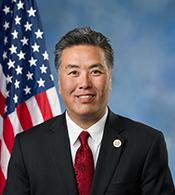
Mr. Speaker, I yield to the gentleman from California (Mr. Takano).
Mr. Speaker, I thank the gentleman for his eloquent remarks. There is so much more that needs to be said, yet our time is coming to a close.
Let me end by saying that when I was in college in the late 1970s, I interned for Senator George McGovern, no relation, but a leader on arms control issues. I was able to accompany him to a debate with William F. Buckley at Yale University titled ``Resolved: That the SALT Talks Are in the Interests of U.S. National Security.'' Of course, the SALT talks were the Strategic Arms Limitation Talks.
George McGovern closed the debate--and I remember this like it was yesterday--I thought very powerfully. He said that he recalls that when he was a young Senator in 1963, they were debating the Limited Nuclear Test Ban Treaty, and Senator Everett Dirksen, who was the Republican Senate minority leader at the time, ``took to the floor to close the debate. He said that he had just reread John Hersey's `Hiroshima,' the description of what happened to that great city, the morning after--the scene of one family sitting charred around the breakfast table; out in the yard, bits and pieces of children's clothing; the broken arm of a doll; toys and debris scattered over the landscape. And he said: `I thought about that scene, and I said that someday Everett Dirksen will be buried in Illinois, and when that happens, I don't want them to put on my gravestone: `He knew about this, and he didn't care.' ''
Mr. Speaker, we all know the realities of nuclear weapons and their devastation, and the fact that if they were ever used, it would result in the total annihilation of our planet.
The question for all of us is: Are we going to do anything about it?
I said earlier that one of the most troubling factors in this whole topic is the lack of urgency here in Congress. We don't talk about this. We are not pushing for arms control. We are not setting goals for the total abolition of nuclear weapons. Instead, we are, just out of habit, voting in favor of military budgets that contribute to the problem.
I think, at this moment, as we approach the 80th anniversaries of these horrible events, this is a time for us to step up and to do something before it is too late.
Mr. Speaker, I urge my colleagues to commemorate and have moments of silence to remind their constituencies of the anniversaries of the bombing of Hiroshima and Nagasaki. I urge them to join with us in a bipartisan way in doing something about it.
George McGovern ended his debate with William Buckley at Yale by saying this: ``Many years ago, in ancient wisdom, it was said: I have set before thee two choices, life or death. Therefore, choose life that thee and thy seed may live.''
Mr. Speaker, that is the choice I want the United States to make at this moment. I hope that we are up to the task, and I hope that we don't just continue to ignore the perils of nuclear warfare.
Mr. Speaker, I yield back the balance of my time.