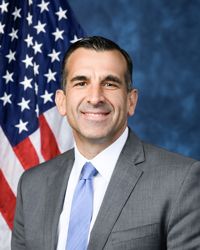
Mr. Speaker, by direction of the Committee on Rules, I call up House Resolution 354 and ask for its immediate consideration. Mr. Speaker, for the purpose of debate only, I yield the customary 30…
Mr. Speaker, by direction of the Committee on Rules, I call up House Resolution 354 and ask for its immediate consideration.
Mr. Speaker, for the purpose of debate only, I yield the customary 30 minutes to the gentlewoman from New Mexico (Ms. Leger Fernandez), pending which I yield myself such time as I may consume. During consideration of this resolution, all time yielded is for the purpose of debate only.
General Leave
Mr. Speaker, I ask unanimous consent that all Members may have 5 legislative days in which to revise and extend their remarks.
Mr. Speaker, I rise in support of this rule and in support of the underlying legislation.
Last night, the Committee on Rules met and produced a rule providing for consideration of five pieces of legislation.
H.J. Res. 60 and H.J. Res. 78 are both considered under a closed rule, each with 1 hour of debate, equally divided and controlled by the chair and ranking member of the Committee on Natural Resources or their respective designees and provides each a motion to recommit.
Additionally, H.J. Res. 87, H.J. Res. 88, and H.J. Res. 89 are all considered under a closed rule, each with 1 hour of debate, equally divided and controlled by the chair and ranking member of the Committee on Energy and Commerce or their respective designees and provides each a motion to recommit.
Finally, the rule tolls the date counts regarding resolution of inquiry until September 30, 2025.
Mr. Speaker, before I get into the substance of this, I will start by saying on the Committee on Rules we tend to get to know each other pretty well in significant late-night engagement in debate. The ranking member of the Committee on Rules, Mr. McGovern from Massachusetts, has had an unfortunate loss that words cannot possibly convey as a dad what he and his wife are going through with the loss of his daughter, Molly.
I say from this side of the aisle, I know speaking for the entire Committee on Rules irrespective of party affiliation, how much Jim, his wife, and his son are in our prayers after losing their daughter and sister, Molly, to cancer.
As a cancer survivor, I have seen firsthand the horrors of the disease. I told my Committee on Rules colleagues last night in committee, in my time in treatment at MD Anderson, going through chemo seemed trivial to me compared to watching the parents at MD Anderson who were watching their children go through treatment.
Molly went to Heaven last week while visiting a friend in Italy, and I think I speak for everybody in this body when we offer our deepest condolences to Jim and to his entire family and to our colleagues who were so close with and knew Molly, who, by the way, from memory I believe worked for Jamie Raskin as an intern, and had her own engagements in public service.
When I heard of her passing, I did a little googling about her life, her love for sports and Boston sports, her love of her dad, and how proud she was of her dad.
While, just on occasion, Jim and I might have disagreed here on the House floor--it has been known to happen--we are all united in offering our condolences and prayers for Jim's family, and God bless Molly and his entire family.
Mr. Speaker, on the legislation that is before us, I know that my colleagues on the other side of the aisle are, no doubt, about to launch into how we have had an ineffective first 100 days and Congress is not doing anything.
Let me put in perspective for the American people what we are focusing on.
We are focusing on undoing the damage of the last 4 years of the Biden administration. The President is doing that on a daily basis in the White House today, and then we in Congress are using the powers that we have before us in an obvious narrow majority and in a narrow majority in the Senate, where you have to get things through the Senate with 60 votes. We
are using the tools in front of us to try to limit and minimize the damage caused by the previous administration and, frankly, our colleagues on the other side of the aisle today.
Notably, we are talking about in this situation what we have done so far. We have passed legislation to secure our elections through H.R. 22, the SAVE Act, to guarantee that only American citizens vote in American elections; to hold rogue judges accountable for issuing nationwide injunctions and trying to change the process.
Mr. Speaker, that is not partisan. Justice Elena Kagan talked about the need for injunction relief. The Democratic Solicitor General under the previous administration talked about the need for injunction reform. We offered legislation that would change and reform injunctions. We passed that before Easter so that a single judge won't be legislating and making national policy by granting temporary restraining orders and injunctions.
We made changes on border policy with the Laken Riley Act, which is extremely important; and legislation to combat the flow of fentanyl.
Importantly, what we have been trying to do is undo the damage on the border.
Mr. Speaker, keep in mind what has happened now under the first 100 days. In just 100 days, southwest border apprehensions have decreased by 94 percent year over year.
Mr. Speaker, consider that for a second. They decreased by 94 percent. What changed? Have we passed a massive law? Have we enacted the law that my colleagues on the other side of the aisle said last year was necessary, this bipartisan bill which, by the way, would have codified all the bad policies under the Biden administration?
No. The only thing that changed was a White House willing to enforce the law. That is literally it, and now there is a 94 percent reduction in apprehensions at the border.
Keep in mind that we are now at apprehension levels of somewhere around 100 to 200 a day, 3,000 to 6,000 a month. We had 6,000, 8,000, 10,000 apprehensions per day under the Biden administration.
The President has restored common sense by ending DEI in the military and working to keep men from competing in women's sports, affirming that there are two genders. These are common sense. I wouldn't think we would have to spend time on the floor of the House of Representatives doing those things or having the President do it by executive order, but here we are.
The President has unlocked America's energy potential, or at least taken a giant step to doing so, by reopening 625 million acres for drilling, withdrawing from the disastrous Paris climate agreement, and approving new LNG projects.
Mr. Speaker, here before us today, we have what we call CRAs, under the Congressional Review Act. The purpose of these is to undo burdensome Biden regulations. This is our ability and our prerogative to hold the Biden administration accountable, and that doesn't stop just because the Democrats lost an election and we have a Republican in the White House. We have a duty to undo some of that damage.
Under these bills, we would repeal California's advanced clean trucks waiver, which currently would allow the State to mandate the sale of zero-emission trucks. It would allow the State to mandate the sale of zero-emission trucks.
These bills would repeal the California advanced clean cars waiver allowing the State to ban the sale of gas-powered vehicles by 2035; put an end to California's implementation of its most recent nitrogen oxide engine emission standards, which create burdensome and unworkable standards for heavy-duty, on-road engines; nullify a rule by the National Park Service that would infringe on the employment of a recreational area, contravening the agency's own mandate when it was created; and, finally, one that would end an Endangered Species Act designation by the Fish and Wildlife Service that would threaten water resources and other conservation efforts.
Mr. Speaker, these things matter to the average American. My colleagues are going to say that this is small ball, and it doesn't matter.
Every one of these regulations add up to interference with the enjoyment of life by the American people, drive up the price of the goods and services for the average hardworking American family, make vehicles more expensive, make our lives more costly. Then people wonder why they are suffering from inflation and suffering from the inability to afford to live in the modern world.
This Congress is taking steps to undo that damage, working with the White House to restore the ability of the average American family to live and afford the basic necessities of life, including vehicles and the right to be able to choose the vehicle of their choice in an open market.
Mr. Speaker, I know my colleagues are going to say that we are infringing on California. Let's remember that California gets treated specially and uniquely and that that then has a domino effect through the rest of the country. That is unique to California based on past precedent involving Los Angeles smog and other things where that is causing a direct impact on other States across the country.
Mr. Speaker, I reserve the balance of my time.
Mr. Speaker, I miss getting that admonition. It was a pretty regular occurrence in my various floor speeches.
With respect to the resolutions of inquiry, let me put out there that it is my strong preference, as I have said multiple times on the floor of the House, that we come up with a system that allows the body to work its will and that we allow individuals to be able to move forward in good faith to get information and ask questions of the executive branch, no matter who is in power.
I introduced the ARTICLE ONE Act to try to restrict Presidential power under the Trump administration the first time and had trouble getting it moved during the Biden administration. I am not really even pointing fingers. I am acknowledging the politics. I had some Democratic colleagues and friends of mine that would say: I like that idea, but I don't know if right now is the time. Okay, but let's have the conversation.
Let's take ROIs, what we call resolutions of inquiry, a tool in which we can specifically go ask for specific information. We have engaged in that effort. I certainly have. For over 600 days in the 116th and 117th Congresses, ROIs, these resolutions of inquiry, were blocked from coming to the floor by the Democratic majority. That is, of course, the ``you did it, so we will do it'' argument--not particularly satisfying if you want to have an open body.
I think the question would be: What do my colleagues on the other side of the aisle want to have? What should the rule be? If we want resolutions of inquiry to just be allowed in perpetuity, then maybe we need to come up with a way to try to guarantee that and do that, but that is not what happens. We have turned them off. Both sides have turned them off.
I would also add, for example, for the filibuster rule in the Senate, are we going to abide by the 60-vote threshold in the Senate as a Congress? My colleagues on the other side of the aisle tried to change the filibuster rule for judges and succeeded, and now, we have a 51- vote threshold for judges.
My colleagues on the other side of the aisle tried to change the rule for legislation, and but for Kyrsten Sinema and but for Joe Manchin, they would have done so. Then, the Senate would have been operating by a 51-vote threshold for legislation.
Maybe that is good or bad, but maybe we should decide the rules we want to operate under and then apply them to both sides. Right now, we are operating under a 60-vote threshold in the Senate.
I think that is something maybe we ought to put to a vote right here in this body, in the House, and say: Do we believe that the United States Senate should operate under a 60-vote threshold? Because if you go watch the Twitter feed of Kyrsten Sinema, she is pretty explicit about what she is watching and the hypocrisy of my colleagues on the other side of the aisle in the Senate who now suddenly have newfound love and respect for the 60-vote threshold.
My point being, if we are going to change the body institutionally, then let's have a real conversation about changing the body institutionally.
Closed rules, I get it. In the majority, we are sitting here, and we have more closed rules. Do we want open rules? Then what will happen when the Democrats are in charge? Do you want resolutions of inquiry? What do we do to bind the hands of a future House on those points if not us agreeing to respect each other's ability to do that?
Mr. Speaker, I yield 3 minutes to the gentlewoman from Illinois (Mrs. Miller), my friend.
Mr. Speaker, I yield myself such time as I may consume.
Mr. Speaker, a couple quick points on the resolutions of inquiry. I won't waste a whole lot more time on it.
The fact is, one, we have extended this through September 30 only at our request to limit it because we want to be able to get through reconciliation.
Two, my colleagues want to blame COVID. Committees were still in full operation. The fact of the matter is my colleagues didn't want to answer questions that we were asking about the border because they were unanswerable. The border was wide open. Americans were getting killed. Americans like Jocelyn Nungaray, Americans like Laken Riley, Americans like Rachel Morin, and Americans like Kayla Hamilton. I can keep going down the list of dead Americans at the hands of the foolish, incompetent, and dangerous policies of the Biden administration that my colleagues on the other side of the aisle did not want to answer. That is the simple truth. When we wanted to get data about the border, they didn't want to answer it. It wasn't because of COVID.
Mr. Speaker, I note with respect to California that California's mandates effectively take away America's ability to buy new gas cars. As I mentioned earlier, California gets some special treatment. It is the only State allowed to seek waivers for its own vehicle policies due to a provision in the Clean Air Act crafted to allow California to address Los Angeles area smog, and so they have an outside impact on our ability to get affordable vehicles, including, by the way, hybrid vehicles which would be unnecessarily impacted by where California wants to go and which we want to try to solve.
Mr. Speaker, I also note that California, as KTLA reported in a January 30 article, continues to lose more people than come into other States because of the tragic and unfortunate policies of the State of California.
Mr. Speaker, I reserve the balance of my time.
Mr. Speaker, I yield myself such time as I may consume.
Mr. Speaker, I will note that neither the GAO nor the Senate Parliamentarian get a vote. It is sort of a shocking news revelation I recognize, but they don't get a vote. We do. The Senate does. We can decide what we think ought to apply.
Number two, if my colleagues want to talk about the high price of vehicles, how about the extent to which the average EV costs $14,000 more than the average nonluxury vehicle.
According to the latest data from Kelley Blue Book, the average transaction price for electric vehicles is $55,273, 3.7 percent higher than last year. For context, the median household income for the gentlewoman's district is $62,000.
The fact of the matter is, EVs are expensive. EVs are driving up the price of vehicles. The mandate is taking the power out of the hands of the American people to decide, including, by the way, hybrid vehicles which allow individuals to have more efficient vehicles while being able to travel long distances, as I know the gentlewoman has constituents who need to do so in New Mexico as we need to do in west Texas and throughout the State of Texas.
Additionally, the trucks that are required under California's unrealistic mandates cost two to three times more than a new, safer, and more reliable diesel truck. The fact is, we are driving up the price of goods and services. We are making it more expensive for the American people to live. We are making it almost impossible for people to fix their vehicles and be able to afford their vehicles with every new thing we add to it to make it more complex in the name of safety or the environment.
The fact is, we can't be blind to those realities. That is exactly what is happening. That is why the American people are suffering from the inability to afford to live in this country.
Mr. Speaker, I reserve the balance of my time.
Mr. Speaker, I yield myself such time as I may consume.
I am always amazed when my colleagues on the other side of the aisle ignore the fact that these EVs require power. Somehow they get charged from the magic fairy dust of the magic energy tree? I mean, what are we talking about here?
How do you power up an electric vehicle? It is done by burning coal, burning gas, or the nuclear plants that we are not actually permitting or building in the United States, while China builds two coal-fired plants virtually every week. We are building none. Well, good for us.
The vast majority of the world is producing power with coal and natural gas, and it is growing exponentially. Meanwhile, we are crushing our grid, the reliability of American power, making it more expensive for the average American and doing really nothing about worldwide CO2 production. That is the truth. China and India are pumping it out.
Meanwhile, my colleagues love to ignore the slave labor in China to produce the batteries that they drive around in their EVs while they pat themselves on the back and go to cocktail parties talking about how fantastic it is that they drive their EVs and how enlightened they are.
Mr. Speaker, I ask unanimous consent to include in the Record three articles: `` `Like slave and master': DRC miners toil for 30p an hour to fuel electric cars'' in the Guardian; ``EV makers' use of Chinese suppliers raises concerns about forced labor''; ``U.S. says Chinese lithium-ion batteries are made with child labour as trade war spills into EVs.''
Mr. Speaker, the fact of the matter is, my colleagues on the other side of the aisle want to parade around EV mandates like they are somehow going to magically create power out of thin air, ignoring the fact we are empowering China, ignoring the fact we are empowering Chinese child laborers while we destroy the cost of living for the average American family, take away choice, take away the ability of an American citizen to be able to go out into the market and buy a hybrid vehicle or another vehicle that they can use to travel long distances, do their job, whether they are a plumber, an electrician, or carrying goods and services in a truck, and then they wonder why the cost of goods and services go up. Then they want to blame tariffs when we are 90 days in, and we had massive and rampant inflation under the Biden administration as a direct consequence of the regulatory policies and the failed policies of the previous administration.
Mr. Speaker, I reserve the balance of my time.
Mr. Speaker, I yield myself such time as I may consume.
Mr. Speaker, I would note that with respect to wind energy, yes, Texas is one of the leaders in wind energy. I worked for Governor Perry when the Governor was embracing wind power, and the fact of the matter is, as it has become a larger percentage of the grid, the reliability of Texas' grid has suffered, and now the consequences of having embraced wind as a significant portion of the grid are now coming to roost.
We are now having to deal with what happens when these need to be shelved. Where do they go? They fill landfills. How much oil and gas goes into the production of said windmills? How do you get the power from the wind farms in west Texas to the various facilities where we are making power? How reliable is it during ice storms or during the heat of the summer? When you have a cloudy, windless day, how are you getting power? Who is making the parts for the solar panels? What happens to the solar panels in the environment when you are finished with the solar farm?
All of these questions get brushed aside in a quest to say that we can have magical ``green, clean energy,'' when we have clean-burning natural gas in Texas and throughout this country that is producing a significant amount of economic benefit and power for our country and has done more to drive down CO2 production and for clean air than virtually any other innovation we have had over the last century.
Yet, we are impeding the ability to have more reliable power by virtue of mandates. That is the whole point of the problem with the Inflation Reduction Act. That is the whole point of the problem with the rules and the rulemaking done by the Biden administration that we are trying to reverse under these CRAs, so that we can make things more affordable for the American people. That is it. We are trying to help the average Texan, the average New Mexican, the average American be able to afford to live, trying to be able to figure out how to get power, get a vehicle that they can afford to be able to carry out their job. That is it.
On the issue of healthcare, the issue was raised, as is often the case by my colleagues on the other side of the aisle, to try to scare the American people that somehow raising questions about the inefficiency, the ineffectiveness, the waste, the fraud of a government healthcare solution, that somehow that is taking away benefits.
When you have a trillion dollars of improper payments, when you have the State of California openly and publicly stating that they are gaming the Medicaid system and the provider tax and the Federal match rate to provide funds to illegal aliens and for their general budget to game the system at what best can be called money laundering, as was editorialized in The Wall Street Journal last week. When that is what is happening, when you have people on Medicaid who are getting a higher subsidy than people on Medicare, who have paid into it their entire lives, into the tax on Medicare; when you have people who are able- bodied who are getting a higher subsidy than the vulnerable population for whom Medicaid was originally created, then someone explain to me why we don't have a duty to fix that.
That is what we are putting forward, to try to deliver healthcare that would actually have a doctor and a patient relationship rather than a corporate overlord or government bureaucrat telling you what your healthcare is. That is the system that has been created. That is the system that we are living with now under expanded ObamaCare. That is what that is, expanded ObamaCare. My colleagues on the other side of the aisle don't want to talk about that. They want to talk about the expansion of that population into the able-bodied who could be and should be working at a higher rate of return by the Federal Government than is going to the vulnerable population, while California games the system to give money to illegal aliens. That is expressly and openly being acknowledged by California leadership.
They don't want to have those conversations. They don't want to talk about how you manage that problem, how you get more people to be able to have affordable care instead of what they currently have, which is a broken system that insurance companies run, forcing individuals onto an exchange so they can get like my constituent who passed away last year from cancer, who wanted to go to M.D. Anderson and could not go because she was on an
ObamaCare plan and couldn't go to the best cancer hospital in the world because she was covered under ObamaCare.
The failure of our healthcare system cannot be overstated. Both parties need to step to the table to get government out of the way and to allow doctors and patients to be able to go get healthcare from a provider of their choice--not some insurance bureaucrat or government bureaucrat--in order to deliver outcomes that the American people want us to deliver.
Mr. Speaker, I reserve the balance of my time.
Mr. Speaker, may I inquire as to how much time is remaining.
Mr. Speaker, I yield myself the balance of my time.
Mr. Speaker, number one, Congress has an important role to play in repealing the Biden-Harris administration's EV mandates and other rules that are damaging the lives of the American people.
When the administration transmits an action to the House and the Senate for review under the CRA, then it is Members of Congress, not the GAO and not the Parliamentarian, who decide whether and how we proceed under the CRA.
The fact here is California mandates, which is what we are dealing with here in several of these Congressional Review Act actions, effectively take away Americans' ability to buy new gas cars, a hybrid vehicle, or the vehicle of their choice. It raises their vehicle and transportation costs.
The gentlewoman from California (Ms. Pelosi), the former Speaker of the House, came down and described that somehow we are not factoring in the price of clean air. With the vehicles that we are producing today, the fact is we have the cleanest air we have ever had.
There is no problem with having EVs. It is the mandates that are the problem. It is mandating the American people must convert that is the problem. In fact, worldwide, the extent to which coal-fired plants in China, coal-fired plants in India, and other countries around the world are producing CO2 and other particulate matter that is bad for the air is rising.
Why would we undermine our own economic well-being to pursue a negligible impact on the overall global emissions, while driving up the price of goods and services for the average American family? They have to live for today. They have to pay their bills today.
All the subsidies in the world aren't making those things economically viable for them. Whether you are talking about wind farms or EVs without the mandates, what is clear is the American people aren't buying these things because they are still not able to function and carry out their livelihoods effectively under the mandates.
Higher costs and fewer choices for consumers hit low-income and disadvantaged communities the hardest. There is a reason why, when I drive around Austin, Texas, I see it is the rich folk driving around in their Teslas. It is the rich folk who are getting their EV tax credits. I see it. They are not in east Austin. They are out in the rich parts of Austin.
Mr. Speaker, do you think that is an accident? Do you think the hardworking plumber I represent in San Marcos, Texas, in New Braunfels, Texas, or any other part of Texas is going to go out and get a battery- powered truck to drive across 10 counties to carry out his job or his livelihood? As I said before, the average EV costs $14,000 more than the average nonluxury vehicle.
Mandates disrupt the free market. We have talked about the impact these mandates can have on the reliability of our power grid.
Is the Nation's grid even up to the mandates we talk about? No, it is not because then there will be more mandates on what the grid has to look like. Suddenly, we are Spain. Suddenly, we are wondering why the grids are failing.
Importantly, California's move empowers China, which dominates the EV market and uses slave labor and coal-powered plants to produce EV batteries. That is just the truth.
Mr. Speaker, 77 percent of the world's electric vehicle batteries are manufactured in China. China owns 80 percent of the industrial cobalt mines in the Congo and controls 15 of 19 of the primary cobalt mines in the Congo. These mines are operated by trafficked child slaves. Since when do we not care about that?
The idea that California can do this unilaterally is preposterous. They are the only State allowed to seek waivers under a unique policy. They should not be able to determine policy for the State of Texas or any other place.
Mr. Speaker, I support this rule, and I urge my colleagues to support this rule.
The material previously referred to by Ms. Leger Fernandez is as follows:
An Amendmentto H. Res. 354 Offered by Ms. Leger Fernandez of New Mexico
At the end of the resolution, add the following:
Sec. 6. Immediately upon adoption of this resolution, the
House shall proceed to the consideration in the House of the
bill (H.R. 2753) to amend the Congressional Budget Act of
1974 to provide for a point of order against reconciliation
measures that cut benefits for Medicaid or the Supplemental
Nutrition Assistance Program, and for other purposes. All
points of order against consideration of the bill are waived.
The bill shall be considered as read. All points of order
against provisions in the bill are waived. The previous
question shall be considered as ordered on the bill and on
any amendment thereto, to final passage without intervening
motion except: (1) one hour of debate equally divided and
controlled by the chair and ranking minority member of the
Committee on Rules or their respective designees; and (2) one
motion to recommit.
Sec. 7. Clause 1(c) of rule XIX shall not apply to the
consideration of H.R. 2753.
Mr. Speaker, I yield back the balance of my time, and I move the previous question on the resolution.