
S. 1206Senate119th Congress (2025-2027)In Committee

Judicial Relief Clarification Act of 2025

Introduced March 31, 2025

AI-Generated Summary

Updated November 24, 2025 at 1:30 AM UTC

The Judicial Relief Clarification Act of 2025 changes federal law to stop courts from issuing nationwide injunctions or other orders that affect people who are not parties to the lawsuit, unless those people are represented by a party in the case. It also tightens the rules for temporary restraining orders, adjusts wording in declaratory‑judgment and administrative‑law sections, and clarifies that the new restrictions do not expand any other court powers.

Key Provisions

  • Adds a new § 2285 that bars any federal court (including territorial district courts) from issuing injunctions, stays, vacatur, temporary restraining orders, declaratory or equitable relief against a non‑party unless that non‑party is represented by a party acting in a representative capacity.
  • Amends the rule for temporary restraining orders (28 U.S.C. § 1292(a)(4)) to allow such orders only when they target the United States, a state, an agency, or an official acting in an official capacity.
  • Changes the language of the declaratory‑judgment provision (28 U.S.C. § 2201(a)) to insert the words “before the court” after “party.”
  • Modifies sections of the Administrative Procedure Act (5 U.S.C. § 705 and § 706) to limit certain judicial‑review language to “a person, as defined in § 551, before the court,” and removes the phrase “and set aside” from one subsection.
  • Includes a rule‑of‑construction clause stating that nothing in the Act should be read to give courts any authority to grant relief that the Act itself prohibits.

Legislative Activity

Stay on top of the latest movement without scrolling through every action

1 earlier action
SenateIntro Referral Latest Action

Read twice and referred to the Committee on the Judiciary. (Sponsor introductory remarks on measure: CR S1925-1926)

March 31, 2025

View full timeline
SenateIntro Referral

Introduced in Senate

March 31, 2025

SenateIntro Referral

Read twice and referred to the Committee on the Judiciary. (Sponsor introductory remarks on measure: CR S1925-1926)

March 31, 2025

Floor Debate

4 members

What members said about S. 1206 on the floor

2 Republicans2 Democrats
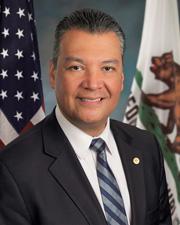
Alex Padilla
Sen. Alex PadillaD-CA · Mar 31, 2025

Mr. President, I rise today to reintroduce the Cesar E. Chavez and the Farmworker Movement National Historical Park Act. This bill would establish the Cesar E. Chavez and the Farmworker Movement…

Chuck Grassley
Sen. Chuck GrassleyR-IA · Mar 31, 2025

Mr. President, today, 20 of my colleagues and I will introduce legislation to stop the abuse of universal injunctions that we are seeing all across the country--all of this to stop the Trump agenda.…

Chuck Grassley
Sen. Chuck GrassleyR-IA · Mar 31, 2025

Mr. President, today, 20 of my colleagues and I will introduce legislation to stop the abuse of universal injunctions that we are seeing all across the country--all of this to stop the Trump agenda.…

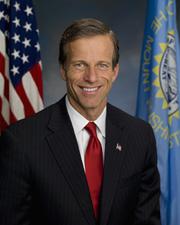
John Thune
Sen. John ThuneR-SD · Mar 31, 2025

Mr. President, I ask unanimous consent that the text of the bill be printed in the Record.

Richard J. Durbin
Sen. Richard J. DurbinD-IL · Mar 31, 2025

Mr. President, I ask unanimous consent that the text of the bill be printed in the Record.

Show 1 more
Chuck Grassley
Sen. Chuck GrassleyR-IA · Mar 31, 2025

I yield the floor.

Bill Text

Latest available legislative text

Reading Mode
Latest
Introduced in SenateIssued March 31, 2025

II

119th CONGRESS

1st Session

S. 1206

IN THE SENATE OF THE UNITED STATES

March 31, 2025

Mr. Grassley (for himself, Mr. Barrasso, Mrs. Blackburn, Mrs. Britt, Mr. Budd, Mr. Cornyn, Mr. Cramer, Mr. Cruz, Mr. Daines, Mr. Graham, Mr. Hagerty, Mr. Justice, Mr. Kennedy, Ms. Lummis, Mr. Marshall, Mrs. Moody, Mr. Moreno, Mr. Schmitt, Mr. Tillis, Mr. Tuberville, Mr. Cassidy, and Mr. Lee) introduced the following bill; which was read twice and referred to the Committee on the Judiciary

A BILL

To amend title 28, United States Code, to prohibit the issuance of national injunctions, and for other purposes.

1.

Short title

This Act may be cited as the Judicial Relief Clarification Act of 2025.

2.

Non-party relief

(a)

In general

Chapter 155 of title 28, United States Code, is amended by adding at the end the following:

2285.

Non-party relief

No court of the United States (and no district court of the Virgin Islands, Guam, or the Northern Mariana Islands) shall issue any order, including an injunction, vacatur, stay, temporary restraining order, declaratory relief, or equitable relief, that purports to restrain the enforcement against a non-party or compel action in favor of a non-party with respect to any statute, regulation, order, executive action, or similar authority, unless the court determines the non-party is represented by a party acting in a representative capacity pursuant to the Federal Rules of Civil Procedure.

.

(b)

Clerical amendment

The table of sections for chapter 155 of title 28, United States Code is amended by inserting after the item relating to section 2285 the following:

2285. Non-party relief.

.

3.

Temporary restraining orders

Section 1292(a) of title 28, United States Code, is amended by adding at the end the following:

(4)

Temporary restraining orders issued pursuant to the Federal Rules of Civil Procedure or any other authority that purports to restrain the enforcement of, or compel action with respect to, any statute, regulation, order, executive action, or similar authority, by the United States or one of the several States within the meaning of section 1332, an agency thereof, or an officer or employee thereof acting in an official capacity.

.

4.

Declaratory judgments

Section 2201(a) of title 28, United States Code, is amended, in the first sentence, by inserting before the court after party.

5.

Judicial review

Chapter 7 of title 5, United States Code, is amended—

(1)

in section 705, in the second sentence, by inserting limited to a person, as defined in section 551, before the court after process; and

(2)

in section 706—

(A)

in the second sentence of the matter preceding paragraph (1), by inserting , limited to a person, as defined in section 551, before the court after shall; and

(B)

in paragraph (2), in the matter preceding subparagraph (A), by striking and set aside.

6.

Rule of construction

Nothing in this Act, or an amendment made by this Act, shall be construed to imply that Federal courts otherwise possess the authority to grant relief that is prohibited by this Act and the amendments made by this Act.