Special Olympics Sport and Empowerment Act of 2004
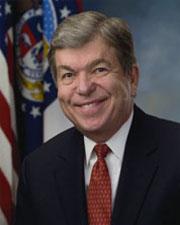 Rep. Roy Blunt (R-MO)
Legislative Activity
Stay on top of the latest movement without scrolling through every action
Became Public Law No: 108-406.
October 30, 2004
View full timeline
Introduced in House
September 23, 2004
Referred to the Committee on Education and the Workforce, and in addition to the Committees on International Relations, and Energy and Commerce, for a period to be subsequently determined by the Speaker, in each case for consideration of such provisions as fall within the jurisdiction of the committee concerned.
September 23, 2004
Referred to the Subcommittee on Health, for a period to be subsequently determined by the Chairman.
October 5, 2004
Mr. McKeon moved to suspend the rules and pass the bill.
October 6, 2004 • 10:36 PM
Considered under suspension of the rules. (consideration: CR 10/7/2004 H8311-8314)
October 6, 2004 • 10:36 PM
DEBATE - The House proceeded with forty minutes of debate on H.R. 5131.
October 6, 2004 • 10:36 PM
Passed/agreed to in House: On motion to suspend the rules and pass the bill Agreed to by voice vote.(text: CR 10/7/2004 H8311-8312)
October 6, 2004 • 10:57 PM
On motion to suspend the rules and pass the bill Agreed to by voice vote. (text: CR 10/7/2004 H8311-8312)
October 6, 2004 • 10:57 PM
Motion to reconsider laid on the table Agreed to without objection.
October 6, 2004 • 10:57 PM
Received in the Senate, read twice.
October 7, 2004
Passed Senate without amendment by Unanimous Consent. (consideration: CR S11019)
October 10, 2004
Message on Senate action sent to the House.
October 12, 2004
Presented to President.
October 19, 2004
Signed by President.
October 30, 2004
Became Public Law No: 108-406.
October 30, 2004
Floor Debate
7 membersWhat members said about H.R. 5131 on the floor
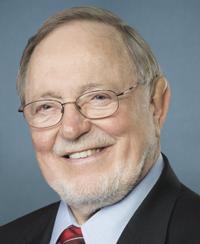


 +2
+2
Floor Debate
7 membersWhat members said about H.R. 5131 on the floor
Mr. Speaker, I rise today to recognize a most distinguished public servant, Mr. David E. Schaffer, Senior Counsel on the Transportation Committee's Aviation Subcommittee. Mr. Schaffer is retiring…
Mr. Speaker, I yield myself such time as I may consume. First, Mr. Speaker, let me say how pleased I am to have had the opportunity to work with the majority whip on this legislation. I want to say…
Mr. Speaker, I yield myself such time as I may consume. Mr. Speaker, I certainly am grateful to my friend, the gentleman from California (Mr. McKeon), and his committee for sending this bill directly…
Mr. Speaker, I want to thank my good friend and colleague, the minority whip, the gentleman from Maryland (Mr. Hoyer) for his leadership and thank him for his friendship to my Aunt Eunice and my…
Mr. Speaker, I thank the majority whip for yielding me this time and congratulate him for bringing this bill forward. I also thank the minority whip, the gentleman from Maryland, for his work on this…
Show 2 more
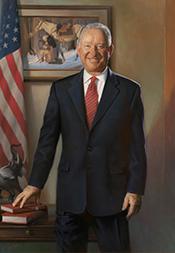
Mr. Speaker, I move to suspend the rules and pass the bill (H.R. 5131) to provide assistance to Special Olympics to support expansion of Special Olympics and development of education programs and a…
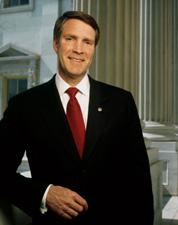
I ask unanimous consent that the Senate now proceed to the immediate consideration of H.R. 5131, which is at the desk. I ask unanimous consent that the bill be read a third time and passed; the…
Bill Text
5 versions available
        [Congressional Bills 108th Congress]
[From the U.S. Government Publishing Office]
[H.R. 5131 Enrolled Bill (ENR)]

H.R.5131

One Hundred Eighth Congress

of the

United States of America

AT THE SECOND SESSION

Begun and held at the City of Washington on Tuesday,
the twentieth day of January, two thousand and four

An Act

To provide assistance to Special Olympics to support expansion of
Special Olympics and development of education programs and a Healthy
Athletes Program, and for other purposes.

Be it enacted by the Senate and House of Representatives of the
United States of America in Congress assembled,

SECTION 1. SHORT TITLE.

This Act may be cited as the ``Special Olympics Sport and
Empowerment Act of 2004''.

SEC. 2. FINDINGS AND PURPOSE.

(a) Findings.--Congress finds the following:
(1) Special Olympics celebrates the possibilities of a world
where everybody matters, everybody counts, every person has value,
and every person has worth.
(2) The Government and the people of the United States
recognize the dignity and value the giftedness of children and
adults with an intellectual disability.
(3) The Government and the people of the United States are
determined to end the isolation and stigmatization of people with
an intellectual disability.
(4) For more than 36 years, Special Olympics has encouraged
skill, sharing, courage, and joy through year-round sports training
and athletic competition for children and adults with intellectual
disabilities.
(5) Special Olympics provides year-round sports training and
competitive opportunities to 1,500,000 athletes with intellectual
disabilities in 26 sports and plans to expand the joy of
participation through sport to hundreds of thousands of people with
intellectual disabilities within the United States and worldwide
over the next 5 years.
(6) Special Olympics has demonstrated its ability to provide a
major positive effect on the quality of life of people with
intellectual disabilities, improving their health and physical
well-being, building their confidence and self-esteem, and giving
them a voice to become active and productive members of their
communities.
(7) In society as a whole, Special Olympics has become a
vehicle and platform for breaking down artificial barriers,
improving public health, changing negative attitudes in education,
and helping athletes overcome the prejudice that people with
intellectual disabilities face in too many places.
(8) The Government of the United States enthusiastically
supports Special Olympics, recognizes its importance in improving
the lives of people with intellectual disabilities, and recognizes
Special Olympics as a valued and important component of the global
community.
(b) Purpose.--The purposes of this Act are to--
(1) provide support to Special Olympics to increase athlete
participation in and public awareness about the Special Olympics
movement;
(2) dispel negative stereotypes about people with intellectual
disabilities;
(3) build athletic and family involvement through sport; and
(4) promote the extraordinary gifts of people with intellectual
disabilities.

SEC. 3. ASSISTANCE FOR SPECIAL OLYMPICS.

(a) Education Activities.--The Secretary of Education may award
grants to, or enter into contracts or cooperative agreements with,
Special Olympics to carry out the following:
(1) Activities to promote the expansion of Special Olympics,
including activities to increase the participation of individuals
with intellectual disabilities within the United States.
(2) The design and implementation of Special Olympics education
programs, including character education and volunteer programs that
support the purposes of this Act, that can be integrated into
classroom instruction and are consistent with academic content
standards.
(b) International Activities.--The Secretary of State may award
grants to, or enter into contracts or cooperative agreements with,
Special Olympics to carry out the following:
(1) Activities to increase the participation of individuals
with intellectual disabilities in Special Olympics outside of the
United States.
(2) Activities to improve the awareness outside of the United
States of the abilities and unique contributions that individuals
with intellectual disabilities can make to society.
(c) Healthy Athletes.--
(1) In general.--The Secretary of Health and Human Services may
award grants to, or enter into contracts or cooperative agreements
with, Special Olympics for the implementation of on-site health
assessments, screening for health problems, health education, data
collection, and referrals to direct health care services.
(2) Coordination.--Activities under paragraph (1) shall be
coordinated with private health providers, existing authorized
programs of State and local jurisdictions, or the Department of
Health and Human Services, as applicable.
(d) Limitation.--Amounts appropriated to carry out this section
shall not be used for direct treatment of diseases, medical conditions,
or mental health conditions. Nothing in the preceding sentence shall be
construed to limit the use of non-Federal funds by Special Olympics.

SEC. 4. APPLICATION AND ANNUAL REPORT.

(a) Application.--
(1) In general.--To be eligible for a grant, contract, or
cooperative agreement under subsection (a), (b), or (c) of section
3, Special Olympics shall submit an application at such time, in
such manner, and containing such information as the Secretary of
Education, Secretary of State, or Secretary of Health and Human
Services, as applicable, may require.
(2) Content.--At a minimum, an application under this
subsection shall contain the following:
(A) Activities.--A description of activities to be carried
out with the grant, contract, or cooperative agreement.
(B) Measurable goals.--Information on specific measurable
goals and objectives to be achieved through activities carried
out with the grant, contract, or cooperative agreement.
(b) Annual Report.--
(1) In general.--As a condition on receipt of any funds under
subsection (a), (b), or (c) of section 3, Special Olympics shall
agree to submit an annual report at such time, in such manner, and
containing such information as the Secretary of Education,
Secretary of State, or Secretary of Health and Human Services, as
applicable, may require.
(2) Content.--At a minimum, each annual report under this
subsection shall describe the degree to which progress has been
made toward meeting the goals and objectives described in the
applications submitted under subsection (a).

SEC. 5. AUTHORIZATION OF APPROPRIATIONS.

There are authorized to be appropriated--
(1) for grants, contracts, or cooperative agreements under
section 3(a), $5,500,000 for fiscal year 2005, and such sums as may
be necessary for each of the 4 succeeding fiscal years;
(2) for grants, contracts, or cooperative agreements under
section 3(b), $3,500,000 for fiscal year 2005, and such sums as may
be necessary for each of the 4 succeeding fiscal years; and
(3) for grants, contracts, or cooperative agreements under
section 3(c), $6,000,000 for each of fiscal years 2005 through
2009.

Speaker of the House of Representatives.

Vice President of the United States and
President of the Senate.