United States-Mexico Transboundary Aquifer Assessment Act
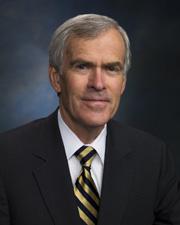 Sen. Jeff Bingaman (D-NM)
Legislative Activity
Stay on top of the latest movement without scrolling through every action
Became Public Law No: 109-448.
December 22, 2006
View full timeline
Introduced in Senate
January 31, 2005
Sponsor introductory remarks on measure. (CR S3280)
January 31, 2005
Read twice and referred to the Committee on Energy and Natural Resources. (text of measure as introduced: CR S659-660)
January 31, 2005
Committee on Energy and Natural Resources. Ordered to be reported without amendment favorably.
February 9, 2005
Committee on Energy and Natural Resources. Reported by Senator Domenici without amendment. With written report No. 109-17.
March 7, 2005
Placed on Senate Legislative Calendar under General Orders. Calendar No. 28.
March 7, 2005
Measure laid before Senate by unanimous consent.
July 26, 2005
Passed Senate with an amendment by Unanimous Consent. (consideration: CR S9018-9052; text as passed Senate: CR S9024-9026)
July 26, 2005
Received in the House.
July 27, 2005 • 10:35 AM
Message on Senate action sent to the House.
July 27, 2005
Referred to the House Committee on Resources.
July 27, 2005
Referred to the Subcommittee on Water and Power.
August 1, 2005
Mrs. Drake moved to suspend the rules and pass the bill, as amended.
December 6, 2006 • 6:10 PM
Considered under suspension of the rules. (consideration: CR 12/7/2006 H8853-8855)
December 6, 2006 • 6:11 PM
DEBATE - The House proceeded with forty minutes of debate on S. 214.
December 6, 2006 • 6:11 PM
Passed/agreed to in House: On motion to suspend the rules and pass the bill, as amended Agreed to by voice vote.(text: CR 12/7/2006 H8853-8854)
December 6, 2006 • 6:14 PM
On motion to suspend the rules and pass the bill, as amended Agreed to by voice vote. (text: CR 12/7/2006 H8853-8854)
December 6, 2006 • 6:14 PM
Motion to reconsider laid on the table Agreed to without objection.
December 6, 2006 • 6:14 PM
Message on House action received in Senate and at desk: House amendment to Senate bill.
December 6, 2006
Resolving differences -- Senate actions: Senate agreed to House amendment by Unanimous Consent.(consideration: CR 12/8/2006 S11830-11831; text as Senate agreed to House amendment: CR 12/8/2006 S11830-11831)
December 9, 2006
Senate agreed to House amendment by Unanimous Consent. (consideration: CR 12/8/2006 S11830-11831; text as Senate agreed to House amendment: CR 12/8/2006 S11830-11831)
December 9, 2006
Presented to President.
December 20, 2006
Signed by President.
December 22, 2006
Became Public Law No: 109-448.
December 22, 2006
Floor Debate
19 membersWhat members said about S. 214 on the floor

 +14
+14
Floor Debate
19 membersWhat members said about S. 214 on the floor
Mr. President, today I rise, along with Senator Vitter, to introduce a bill to establish the Atchafalaya National Heritage Area in Louisiana. This legislation has particularly special meaning to…
Mr. President, I rise today to introduce a bill to reauthorize the Native Hawaiian Health Care Improvement Act. Senator Akaka joins me in sponsoring this measure. The Native Hawaiian Health Care…
Mr. President, I rise today on behalf of myself and Senator Domenici to introduce legislation to allow a transfer of land to Rio Arriba County, NM from the Bureau of Land Management. The land is…
Mr. President, I am re-introducing today a bill that was on the legislative calendar of the 108th Congress when it adjourned in December. The Stabilization and Reconstruction Civilian Management Act…
Mr. President, I am here to introduce legislation and to talk about an issue that my colleagues have heard me speak about on numerous occasions during the course of the past two years, frequently at…
Show 8 more
Mr. President, I ask unanimous consent that the Committee on Energy and Natural Resources be authorized to meet during the session of the Senate, on Wednesday, February 9 at 11:30 a.m. to consider…

Mr. President, I rise today to introduce the calling for a 2-1-1 Act with my colleague Senator Elizabeth Dole. This bill will make an invaluable difference for the citizens of New York and the…

Mr. President, I am pleased to join my good friend Senator Grassley, the Chairman of the Senate Finance Committee, in introducing the National Employee Savings and Trust Equity Guarantee Act. Senator…
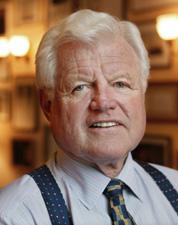
Mr. President, I commend Senator Harkin for introducing the Overtime Rights Protection Act to restore overtime protections for the more than 6 million Americans denied overtime pay and denied the…

Mr. President, I rise today along with my colleague, Senator Baucus, the Ranking Member of the Finance Committee, to re- introduce the National Employee Savings and Trust Equity Guarantee Act--or the…
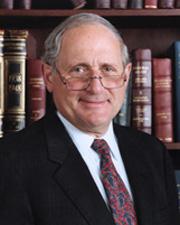
Mr. President, my colleagues Senators DeWine and Voinovich of Ohio, Senator Stabenow of Michigan, and I are pleased to introduce the Great Lakes Water Quality Indicators and Monitoring Act. The bill…
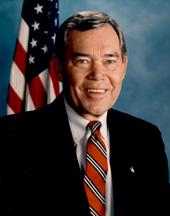
Mr. President, I rise today to introduce the ``Soda Ash Royalty Reduction Act of 2005,'' a bill to limit the Federal royalty on soda ash. This legislation, if passed, will put people back to work in…
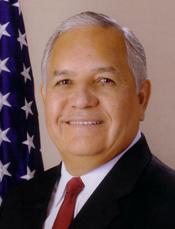
Mr. Speaker, I rise today in support of S. 214, the United States-Mexico Transboundary Aquifer Assessment Act of 2005. The U.S.-Mexico border region presents us with one of our Nation's most…
Show 6 more

Mr. President, today I am introducing the ``Keep the Promise of Medicare Act'' of 2005, and am pleased to be joined by my colleagues Senators Kennedy, Boxer, Lautenberg, Rockefeller, Dayton, and…
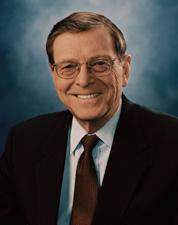
Mr. President, in 2000 Congress established the Valles Caldera National Preserve, which is composed of approximately 89,000 acres of spectacular land in northern New Mexico. The Preserve was created…
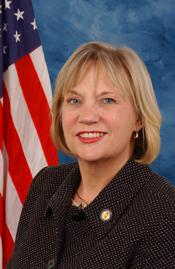
Mr. Speaker, I move to suspend the rules and pass the Senate bill (S. 214) to authorize the Secretary of the Interior to cooperate with the States on the border with Mexico and other appropriate…

Mr. President, today I am introducing the ``Ice Age Floods National Geologic Trail Designation Act of 2005''. I am thankful that Senator Larry Craig of Idaho will again be the lead Republican…
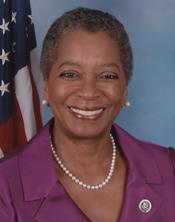
Mr. Speaker I yield myself such time as I may consume. Mr. Speaker, the majority has already explained this bill. I would simply note that we share more than a long border with our neighbors in…
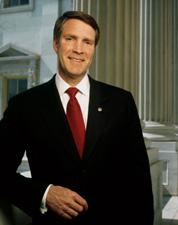
Mr. President, I ask unanimous consent that the Chair lay before the Senate a message from the House of Representatives to accompany S. 214 to authorize the Secretary of the Interior to cooperate…
Bill Text
7 versions available
        [Congressional Bills 109th Congress]
[From the U.S. Government Publishing Office]
[S. 214 Enrolled Bill (ENR)]

S.214

One Hundred Ninth Congress

of the

United States of America

AT THE SECOND SESSION

Begun and held at the City of Washington on Tuesday,
the third day of January, two thousand and six

An Act

To authorize the Secretary of the Interior to cooperate with the States
on the border with Mexico and other appropriate entities in conducting a
hydrogeologic characterization, mapping, and modeling program for
priority transboundary aquifers, and for other purposes.

Be it enacted by the Senate and House of Representatives of the
United States of America in Congress assembled,

SECTION 1. SHORT TITLE.

This Act may be cited as the ``United States-Mexico Transboundary
Aquifer Assessment Act''.

SEC. 2. PURPOSE.

The purpose of this Act is to direct the Secretary of the Interior
to establish a United States-Mexico transboundary aquifer assessment
program to systematically assess priority transboundary aquifers.

SEC. 3. DEFINITIONS.

In this Act:
(1) Aquifer.--The term ``aquifer'' means a subsurface water-
bearing geologic formation from which significant quantities of
water may be extracted.
(2) IBWC.--The term ``IBWC'' means the International Boundary
and Water Commission, an agency of the Department of State.
(3) Indian tribe.--The term ``Indian tribe'' means an Indian
tribe, band, nation, or other organized group or community--
(A) that is recognized as eligible for the special programs
and services provided by the United States to Indians because
of their status as Indians; and
(B) the reservation of which includes a transboundary
aquifer within the exterior boundaries of the reservation.
(4) Participating state.--The term ``Participating State''
means each of the States of Arizona, New Mexico, and Texas.
(5) Priority transboundary aquifer.--The term ``priority
transboundary aquifer'' means a transboundary aquifer that has been
designated for study and analysis under the program.
(6) Program.--The term ``program'' means the United States-
Mexico transboundary aquifer assessment program established under
section 4(a).
(7) Reservation.--The term ``reservation'' means land that has
been set aside or that has been acknowledged as having been set
aside by the United States for the use of an Indian tribe, the
exterior boundaries of which are more particularly defined in a
final tribal treaty, agreement, executive order, Federal statute,
secretarial order, or judicial determination.
(8) Secretary.--The term ``Secretary'' means the Secretary of
the Interior, acting through the Director of the United States
Geological Survey.
(9) Transboundary aquifer.--The term ``transboundary aquifer''
means an aquifer that underlies the boundary between a
Participating State and Mexico.
(10) Tri-regional planning group.--The term ``Tri-Regional
Planning Group'' means the binational planning group comprised of--
(A) the Junta Municipal de Agua y Saneamiento de Ciudad
Juarez;
(B) the El Paso Water Utilities Public Service Board; and
(C) the Lower Rio Grande Water Users Organization.
(11) Water resources research institutes.--The term ``water
resources research institutes'' means the institutes within the
Participating States established under section 104 of the Water
Resources Research Act of 1984 (42 U.S.C. 10303).

SEC. 4. ESTABLISHMENT OF PROGRAM.

(a) In General.--The Secretary, in consultation and cooperation
with the Participating States, the water resources research institutes,
Sandia National Laboratories, and other appropriate entities in the
United States and Mexico, and the IBWC, as appropriate, shall carry out
the United States-Mexico transboundary aquifer assessment program to
characterize, map, and model priority transboundary aquifers along the
United States-Mexico border at a level of detail determined to be
appropriate for the particular aquifer.
(b) Objectives.--The objectives of the program are to--
(1) develop and implement an integrated scientific approach to
identify and assess priority transboundary aquifers, including--
(A) for purposes of subsection (c)(2), specifying priority
transboundary aquifers for further analysis by assessing--
(i) the proximity of a proposed priority transboundary
aquifer to areas of high population density;
(ii) the extent to which a proposed priority
transboundary aquifer would be used;
(iii) the susceptibility of a proposed priority
transboundary aquifer to contamination; and
(iv) any other relevant criteria;
(B) evaluating all available data and publications as part
of the development of study plans for each priority
transboundary aquifer;
(C) creating a new, or enhancing an existing, geographic
information system database to characterize the spatial and
temporal aspects of each priority transboundary aquifer; and
(D) using field studies, including support for and
expansion of ongoing monitoring and metering efforts, to
develop--
(i) the additional data necessary to adequately define
aquifer characteristics; and
(ii) scientifically sound groundwater flow models to
assist with State and local water management and
administration, including modeling of relevant groundwater
and surface water interactions;
(2) consider the expansion or modification of existing
agreements, as appropriate, between the United States Geological
Survey, the Participating States, the water resources research
institutes, and appropriate authorities in the United States and
Mexico, to--
(A) conduct joint scientific investigations;
(B) archive and share relevant data; and
(C) carry out any other activities consistent with the
program; and
(3) produce scientific products for each priority transboundary
aquifer that--
(A) are capable of being broadly distributed; and
(B) provide the scientific information needed by water
managers and natural resource agencies on both sides of the
United States-Mexico border to effectively accomplish the
missions of the managers and agencies.
(c) Designation of Priority Transboundary Aquifers.--
(1) In general.--For purposes of the program, the Secretary
shall designate as priority transboundary aquifers--
(A) the Hueco Bolson and Mesilla aquifers underlying parts
of Texas, New Mexico, and Mexico;
(B) the Santa Cruz River Valley aquifers underlying Arizona
and Sonora, Mexico; and
(C) the San Pedro aquifers underlying Arizona and Sonora,
Mexico.
(2) Additional aquifers.--The Secretary may, using the criteria
under subsection (b)(1)(A), evaluate and designate additional
priority transboundary aquifers which underlie New Mexico or Texas.
(d) Cooperation With Mexico.--To ensure a comprehensive assessment
of priority transboundary aquifers, the Secretary shall, to the maximum
extent practicable, work with appropriate Federal agencies and other
organizations to develop partnerships with, and receive input from,
relevant organizations in Mexico to carry out the program.
(e) Grants and Cooperative Agreements.--The Secretary may provide
grants or enter into cooperative agreements and other agreements with
the water resources research institutes and other Participating State
entities to carry out the program.

SEC. 5. IMPLEMENTATION OF PROGRAM.

(a) Coordination With States, Tribes, and Other Entities.--The
Secretary shall coordinate the activities carried out under the program
with--
(1) the appropriate water resource agencies in the
Participating States;
(2) any affected Indian tribes;
(3) any other appropriate entities that are conducting
monitoring and metering activity with respect to a priority
transboundary aquifer; and
(4) the IBWC, as appropriate.
(b) New Activity.--After the date of enactment of this Act, the
Secretary shall not initiate any new field studies or analyses under
the program before consulting with, and coordinating the activity with,
any Participating State water resource agencies that have jurisdiction
over the aquifer.
(c) Study Plans; Cost Estimates.--
(1) In general.--The Secretary shall work closely with
appropriate Participating State water resource agencies, water
resources research institutes, and other relevant entities to
develop a study plan, timeline, and cost estimate for each priority
transboundary aquifer to be studied under the program.
(2) Requirements.--A study plan developed under paragraph (1)
shall, to the maximum extent practicable--
(A) integrate existing data collection and analyses
conducted with respect to the priority transboundary aquifer;
(B) if applicable, improve and strengthen existing
groundwater flow models developed for the priority
transboundary aquifer; and
(C) be consistent with appropriate State guidelines and
goals.

SEC. 6. EFFECT.

(a) In General.--Nothing in this Act affects--
(1) the jurisdiction or responsibility of a Participating State
with respect to managing surface or groundwater resources in the
Participating State;
(2) the water rights of any person or entity using water from a
transboundary aquifer; or
(3) State water law, or an interstate compact or international
treaty governing water.
(b) Treaty.--Nothing in this Act shall delay or alter the
implementation or operation of any works constructed, modified,
acquired, or used within the territorial limits of the United States
relating to the waters governed by the Treaty Between the United States
and Mexico Regarding Utilization of Waters of the Colorado and Tijuana
Rivers and of the Rio Grande, Treaty Series 994 (59 Stat. 1219).

SEC. 7. REPORTS.

Not later than 5 years after the date of enactment of this Act, and
on completion of the program in fiscal year 2016, the Secretary shall
submit to the appropriate water resource agency in the Participating
States, an interim and final report, respectively, that describes--
(1) any activities carried out under the program;
(2) any conclusions of the Secretary relating to the status of
priority transboundary aquifers; and
(3) the level of participation in the program of entities in
Mexico.

SEC. 8. AUTHORIZATION OF APPROPRIATIONS.

(a) In General.--There are authorized to be appropriated to carry
out this Act $50,000,000 for the period of fiscal years 2007 through
2016.
(b) Distribution of Funds.--Of the amounts made available under
subsection (a), 50 percent shall be made available to the water
resources research institutes to provide funding to appropriate
entities in the Participating States (including Sandia National
Laboratories, State agencies, universities, the Tri-Regional Planning
Group, and other relevant organizations) and to implement cooperative
agreements entered into with appropriate entities in Mexico to conduct
specific authorized activities in furtherance of the program, including
the binational collection and exchange of scientific data.
(c) Criteria.--Funding provided to an appropriate entity in Mexico
pursuant to subsection (b) shall be contingent on that entity providing
50 percent of the necessary resources (including in-kind services) to
further assist in carrying out the authorized activity.

SEC. 9. SUNSET OF AUTHORITY.

The authority of the Secretary to carry out any provisions of this
Act shall terminate 10 years after the date of enactment of this Act.

Speaker of the House of Representatives.

Vice President of the United States and
President of the Senate.