Dietary Supplement and Nonprescription Drug Consumer Protection Act

Legislative Activity
Stay on top of the latest movement without scrolling through every action
Became Public Law No: 109-462.
December 22, 2006
View full timeline
Introduced in Senate
June 21, 2006
Sponsor introductory remarks on measure. (CR S6285-6287)
June 21, 2006
Read twice and referred to the Committee on Health, Education, Labor, and Pensions.
June 21, 2006
Committee on Health, Education, Labor, and Pensions. Ordered to be reported with an amendment in the nature of a substitute favorably.
June 28, 2006
Committee on Health, Education, Labor, and Pensions. Reported by Senator Enzi with an amendment in the nature of a substitute. With written report No. 109-324.
September 5, 2006
Placed on Senate Legislative Calendar under General Orders. Calendar No. 586.
September 5, 2006
Passed Senate with an amendment by Unanimous Consent. (consideration: CR S11376-11381; text as passed Senate: CR S11377-11378)
December 6, 2006
Message on Senate action sent to the House.
December 7, 2006
Received in the House.
December 7, 2006 • 10:19 AM
Held at the desk.
December 7, 2006 • 10:52 PM
Mr. Barton (TX) moved to suspend the rules and pass the bill.
December 9, 2006 • 1:32 AM
Considered under suspension of the rules. (consideration: CR 12/8/2006 H9243-9246)
December 9, 2006 • 1:33 AM
DEBATE - The House proceeded with forty minutes of debate on S. 3546.
December 9, 2006 • 1:33 AM
At the conclusion of debate, the Yeas and Nays were demanded and ordered. Pursuant to the provisions of clause 8, rule XX, the Chair announced that further proceedings on the motion would be postponed.
December 9, 2006 • 1:42 AM
Considered as unfinished business. (consideration: CR 12/8/2006 H9303-9304)
December 9, 2006 • 2:53 AM
Passed/agreed to in House: On motion to suspend the rules and pass the bill Agreed to by the Yeas and Nays: (2/3 required): 203 - 98 (Roll no. 543).(text: CR 12/8/2006 H9243-9245)
December 9, 2006 • 3:06 AM
On motion to suspend the rules and pass the bill Agreed to by the Yeas and Nays: (2/3 required): 203 - 98 (Roll no. 543). (text: CR 12/8/2006 H9243-9245)
December 9, 2006 • 3:06 AM
Motion to reconsider laid on the table Agreed to without objection.
December 9, 2006 • 3:06 AM
Presented to President.
December 20, 2006
Signed by President.
December 22, 2006
Became Public Law No: 109-462.
December 22, 2006
Voting History
1 vote recorded • Roll call available
Floor Debate
19 membersWhat members said about S. 3546 on the floor
 MBE
MBE RJD
RJD RSOGH
RSOGH LA+14
LA+14
Floor Debate
19 membersWhat members said about S. 3546 on the floor
Mr. President, I ask unanimous consent that the order for the quorum call be rescinded. Mr. President, in a moment I will request unanimous consent that the Senate pass S. 2823, the Ryan White…
Mr. President, I ask unanimous consent that the order for the quorum call be rescinded.
Mr. President, in a moment I will request unanimous consent that the Senate pass S. 2823, the Ryan White HIV/AIDS Treatment Modernization Act.
Just last week, we made a unanimous consent request to pass this bipartisan, bicameral legislation. That means Members from both sides of the aisle and both ends of the building have agreed to the language in this reauthorization. It passed out of the House Committee on Energy and Commerce last week. However, Senators from three States are blocking the vote that would speed reauthorization programs that provide life-sparing treatment to individuals suffering from HIV and
I am sorry to hear we have an objection. We need to find a way to work through this objection. I have been working desperately across the aisle with Senator Kennedy, who has been joining me in this effort to help get it out of committee. We have been trying to find a way that the formula would work. One of the ways was to include in the bill 3 years of hold harmless for them to finish updating their system to the point where if they truly have the HIV numbers, they will truly get the money. If they don't have the HIV numbers, yes, they will lose the money.
Now, I don't know if the Senator from Minnesota is aware that our Ryan White reauthorization bill increases the funding for Minneapolis by $2 million and $2.5 million for the whole State. It is a net benefactor. There have been increases in HIV and AIDS cases in Minnesota, and this would move money to where the cases are. That is where the numbers show that his city and State would be significant beneficiaries.
I have a lot of statistics I can go through, but I wonder if the Senator is also aware that these increases are due to the inclusion of HIV/AIDS in the funding formula and that Minnesota has more HIV cases.
Mr. President, I appreciate that clarification.
I will ask the Senator for his help. He said he would vote for the bill. Anything we can do to move this forward. We have put a 3-year hold harmless in there for everyone.
On September 30, the world falls apart for a number of people. California, for one, will lose $18.5 million of their funding. There are a number of big losers. There are no big losers if we pass the bill, provided the numbers back up what they have.
I yield the floor.
Mr. President, I thank the Senator for his words. The increase in knowledge that I am sure he has created across the country--and also the
comments of the Senator from Oklahoma--both of them have made an excellent case for why we need to do this. We need to do it immediately. We need to do it for people who have HIV/AIDS. I would note that the person who raised the objection to us adopting the bill is not from one of the three States that have a hold on the bill. I would hope those people would take a look at the situation in their State, and take a look at the fact they are getting more than the average number of funds being expended on patients across the rest of the country, and see that the surpluses their States are running at the end of the year greatly exceed the rather minute loss they would have, and that they would agree for us to move forward on this bill and get it in place before that September 30 deadline that is going to be devastating to 13 States that will lose money for having done the right thing.
Now, having said that, I know there will be people who will say the Republicans cannot get anything done. Well, that particular issue, and many others are not Republican issues. They are issues of the United States. And that is one on which we worked across the aisle and had a great deal of agreement on. And I have to thank Senator Kennedy, the ranking member on my committee, for the extreme work he did to help us find, among the thousands of formulas we looked at, the one that was the most fair so it would follow the patients. I do appreciate the work he has helped us do in the committee during the year.
Accomplishments of the Help Committee
Mr. President, I want to take just a few minutes to talk about what the Health, Education, Labor, and Pensions Committee has done this year. This Ryan White reauthorization is extremely important, but it is not the only bill we have been working on. Because of the way we have done our work, some people may not be aware of what has been done. In fact, I know that to be the case.
This is a committee that has worked across the aisle. When you work across the aisle, a lot of times you can work out many of the difficulties, and when you work out the difficulties, there is not a big floor debate. And when there is not a big floor debate, there is nothing for the media to write up about the blood; consequently, it does not get coverage. So I want to correct that here today, and I would like to discuss the Senate Health, Education, Labor, and Pensions Committee's accomplishments for the 109th Congress.
We have heard some claims that this is a do-nothing Congress. Well, I am here to assure American workers, retirees, students, and parents that the Health, Education, Labor, and Pensions Committee has done a great deal to help you live more secure, productive, and healthy lives. Of course, we have more to do, but I am proud that during a time of intense partisanship on Capitol Hill, the HELP Committee has produced a lengthy list of legislative accomplishments.
Looking back over the past 2 years, most of these victories materialized when Senators were willing to work across party lines and across the Capitol to put finding a solution in front of exploiting an issue.
Mr. President, I ask unanimous consent that a list of bills and reports filed by the HELP Committee in the 109th Congress be printed in the Record
Mr. President, I joined the HELP Committee when I was first elected to the Senate in 1997. It was natural for me because of my small business background as an owner of family shoe stores. I had firsthand experience with burdensome government regulations, inadequate health care coverage for my workers, and adversarial workplace safety laws. I was energized about finding common sense solutions rather than more Washington bureaucracy.
Now, another reason I joined the HELP Committee is because its broad jurisdiction touches nearly every American.
Now, there were a lot of vacancies on the committee when I signed up. I asked why there were so many vacancies, and I was told, well, that is a contentious committee. I thought I knew what contentious committees were because I served on the labor committee in Wyoming. I found out that there is another level of contentious. I wanted to work with my colleagues to find smart solutions that would address some of the most important challenges faced by my constituents in Wyoming and, of course, other people across the country. I came from Wyoming as a firm believer in my 80-20 rule. The way that rule works is that we can usually find agreement on 80 percent of any issue. We agree across the aisle on about 80 percent the issues that comes up. Now, we are probably never going to reach agreement on the remaining 20 percent.
Unfortunately, for America, what they get to watch on any bill is the debate on the 20 percent we don't agree on, and probably will never compromise on. That is what makes this body seem so contentious--the 20 percent that we don't agree on, even though 80 percent can get done. The committee process will enable us to find that 80 percent, and that has been a principle that has guided my chairmanship.
I was honored and humbled when my colleagues selected me to chair the HELP Committee nearly 2 years ago. Since my chairmanship began, the vision for both the full committee and the subcommittees is to craft legislation that provides lifelong opportunities for people to be healthier, more competitive, and to be more secure at school, work, and in retirement.
Because we have such a broad jurisdiction, the HELP Committee has had an aggressive legislative schedule in the 109th Congress. Over the past 2 years, together with the subcommittees, we have held 57 hearings and reported 36 bills out of committee; 21 of these proposals were approved by the Senate and 12 were signed by the President and became public law. We also reviewed and approved 352 nominations that require Senate confirmation. I thank my colleagues, including their staffs, for doing the work needed to maintain this aggressive pace.
In this Congress, the HELP Committee has been privileged to have in its ranks active subcommittee chairmen and engaged members. This is largely the reason the committee has had legislative success. I thank them for their dedication, and I applaud them for the joint success as a committee. Our ranking member, Senator Kennedy, and I may disagree on a number of issues, but we have worked hard to find common ground and we share a commitment to improving the health, education, work, and retirement security of Americans.
The number of bills acted upon by the HELP Committee is certainly impressive. However, the numbers alone don't begin to tell the story of how the committee's activity will improve the lives of Americans now and in the years to come. One of the committee's most significant accomplishments came on August 17 of this year when President Bush signed into law the Pension Protection Act. That act marks the most comprehensive change to pension law since 1974. The Pension Protection Act is a real victory for working Americans who spend a lifetime working hard and saving for retirement. It dramatically strengthens pension funding rules and helps curb record pension failures. In doing so, the act better protects the retirement dreams of 45 million Americans. Not only were single employer fund rules significantly overhauled, but the rules regarding hybrid pension plans were finally clarified, and multi-employer funding rules were changed as well. The proposal strengthens current law and will better help Americans prepare and plan for retirement. It provides workers the security of knowing that moneys earned for retirement will be there when they are ready to retire.
It also secures the Pension Benefit Guaranty Corporation and secures that corporation without picking the pockets of taxpayers to keep the agency solvent. This legislation was no small undertaking. It took a year and a half of hearings, 5 months of deliberations in conference, and countless hours of negotiations on each provision of the bill.
Fortunately, pension issues are almost always handled in tag team fashion, involving both the HELP Committee and the Senate Finance Committee, which has jurisdiction over the Internal Revenue Code. While this tag team approach is a great asset and helped us get the bill through the Senate, it meant a complicated and extraordinarily large conference involving four committees in the House and Senate and 27 conferees.
Together with my ranking member, Senator Kennedy, Finance Committee Chairman Grassley, ranking member Senator Baucus, as well as HELP's Retirement Security and Aging Subcommittee Chairman DeWine, and Ranking Member Mikulski, our committees collaborated with House counterparts to make this sweeping reform happen. Because of this teamwork, the law passed the Senate 93 to 5. The result was a policy and a process that was truly bipartisan. Total floor time for the bill--Senate debate and conference report debate--totaled about one hour and fifteen minutes equally divided.
Some may think the conference took a long time to conclude, but history proves that it was ended in record time. The last big pension conference occurred in 1994. The conference was appointed in March of that year, but did not conclude until December. Prior to that, the most recent conference took place in 1987 and operated in the context of budget reconciliation. Again, that conference commenced in March but didn't end until December.
This year, our conference began in March and ended in July--just 5 months compared to a 10-month conference for earlier bills. Comparatively speaking, the Pension Protection Act conference finished quickly, but the impact will be felt for generations.
Another major accomplishment of the HELP Committee was the enactment of the Mine Improvement and New Emergency Response Act, MINER. From the tragic loss of life in the coal mines of West Virginia and Kentucky came the first reforms of mine safety laws in 28 years. These tragedies brought together leaders from the mining industry, from government, and from the labor unions, and helped to forge a commitment to improve mine safety. I traveled to the Sago mine with Senators Kennedy, Rockefeller, and Isakson. We met with the families of the miners who lost their lives. We met with other miners who worked there, and we met with people in the union. I felt a commitment to those families and miners in this country to try to ensure that this would never happen again.
The committee approved the MINER Act on May 17, and the President signed the bill in June. That has to be one of the fastest, most comprehensive changes to any safety law. I can't emphasize enough the cooperation of unions and company executives, and Republicans and Democrats.
Protecting the health and safety of those who work in the mining industry need not be a partisan issue. Mining, and coal mining in particular, is vital to our national and local economies, and to national energy security. Ensuring the safety of our miners is essential to protecting and preserving the industry and protecting the workers. I especially thank Senators Kennedy, Isakson, Byrd, Rockefeller, and McConnell for the tireless effort they extended. Their efforts contributed in large part to this proposal becoming law.
I should mention that the debate on the Senate floor was 1 hour equally divided with two votes. So nobody saw that. Nobody saw that debate, but it makes a significant difference for all the people in the country--the mining bill. You never saw any debate on the floor. It passed unanimously without debate. It passed in the House under suspension with limited debate--the same bill.
Sometimes the things that get done by unanimous consent that everybody agrees on nobody ever finds out about, except the people it does benefit; they know. That is why it is worth doing it that way. For a bill that has objections around here, there are ways to overcome it if you get 60 votes for it. But that is usually about a 3-week process. A unanimous consent doesn't use up much time, but it gets things done.
The committee has also made tremendous strides related to education and job training. This session the
HELP Committee initiated a comprehensive effort to authorize legislation that enhances knowledge and skills and helps American workers become leaders in the global economy. Some estimates suggest that 60 percent of the jobs created in the next decade will require skills that only 20 percent of the workers today currently possess, and 80 percent of the jobs will require education or training beyond high school. Eighty percent of the jobs will require education or training beyond high school. That is where the world is going. It is changing fast.
One important component of this effort is the reauthorization of the Carl Perkins Career and Technical Education Act. It was signed by the President in August, and it will help close the gap that threatens America's long-term competitiveness. The act addresses the needs of the Nation's changing workforce and prepares Americans for highly technical, higher-paying jobs. The reauthorization also made changes that will increase accountability at the State and local levels and will establish stronger links with businesses to build partnerships with high schools and colleges so they can better meet the needs of the changing workforce.
For many people, participation in these programs can mean the difference between a job with no possibility of advancement and a successful career. Passage of this legislation was a significant accomplishment. Again, limited floor debate, no debate on the conference report; unanimous consent across the aisle.
Another piece of this comprehensive effort is the reauthorization of the Higher Education Act. As my colleagues know, the mandatory portions of the higher education law were reauthorized in February under the Deficit Reduction Act of 2006. Before I elaborate, I want to stress that it is critical to reauthorize the remaining discretionary programs under the act, which I intend to make a top priority for 2007. We have the bill out of committee but haven't had the floor time to do the debate on it. I am making that a top priority for 2007 because postsecondary education is the key to the future success of our students, our communities, and our economy.
As I stated earlier, we reauthorized the mandatory components of the Higher Education Act through the budget reconciliation process. We found over $20 billion in savings by eliminating corporate subsidies for lenders and reworking the interest rate structure for many borrowers, among other revisions. A portion of the savings was used to pay for over $9 billion in enhanced students benefits. The law makes higher education more affordable for students who finance part of their education through loans by reducing borrow origination fees and increasing loan limits.
Another benefit is a $4 billion grant program for postsecondary students who major in science, math, and certain national-security- related foreign languages. These funds are dubbed ``SMART grants'' and are an important part of making higher education more affordable for low- and middle-income families. We invested resources where we need them the most, which will help ensure we have a workforce that can compete globally.
I was in India earlier this year and saw firsthand what Thomas Friedman discusses in his book, ``The World Is Flat.'' It doesn't take long to figure out that by sheer numbers alone, India has only to educate 25 percent of its population to have more literate and educated people than the total population of the United States.
By using the reconciliation process for these higher education reforms, the HELP Committee was able to produce meaningful deficit reduction. In fact, I am proud the HELP Committee led the entire Congress in deficit reduction and produced $15.5 billion in savings over five years. That is 40 percent of the entire Deficit Reduction Act of 2006. It is not right to overspend now and pass the bill on to our children and grandchildren to pay later.
I thank Chairman Gregg for his leadership on the Budget Committee and for his contribution on the authorizing committee that helped make the meaningful deficit reduction a reality.
Enactment of the Perkins reauthorization and the mandatory revisions of the Higher Education Act were critical components of a comprehensive effort to strengthen knowledge and skills. However, this effort also includes the reauthorization of the Workforce Investment Act. The reauthorization is essential because it will help train American workers to fill the good jobs being created so we can continue to be leaders in the global economy.
The reauthorization of the Workforce Investment Act has been a priority of mine since I chaired the Subcommittee on Employment and Workplace Safety in the previous Congress. Last Congress, I worked tirelessly to report the legislation from the committee, only to be held up on the Senate floor when it came time to appoint conferees. Now, that means the bill made it out of committee and cleared the Senate floor. The House passed a different version, so we need a conference committee to resolve the differences. However, we weren't allowed to appoint a conference committee. That was 2 years ago. Mr. President, 900,000 new jobs could be trained under that program. This year, once again, I have been procedurally hamstrung in my efforts to move to conference. The bill must be completed. It made it out of the committee unanimously. It made it through the floor of the Senate, again unanimously. That means everybody agreed with what is in the bill. Now the only problem left is we have to reconcile that with what the House passed.
America is facing an economic challenge that threatens our ability as a nation to compete on the world stage. This bill sends a clear message that we are serious about helping our workers and our employers remain competitive and about closing the skills gap that is putting America's long-term competitiveness in jeopardy.
Our commitment to lifelong learning never ends. It begins with giving our children the proper tools for a start down the pathway that leads to their education. The committee approved improvements to Head Start this last year, and the completion of this process is one of my top priorities.
On the health front, eight committee bills were signed into law by President Bush. One of the most significant new health care laws is the Patient Safety and Quality Improvement Act. The new law is a culmination of 6 years of work in response to the Institute of Medicine's 1999 report that found that nearly 100,000 Americans die needlessly every year due to medical errors.
The Patient Safety and Quality Improvement Act creates a protected legal environment in which patient safety organizations can analyze why medical errors happen and develop strategies to stop those errors from happening again. The law provides critical legal protection for doctors, nurses, and other health care workers who might fear coming forward with information about mistakes because the information could be used in a lawsuit against them.
This new law is the first important step toward creating a new culture of safety and continuous quality improvement in health care.
This new law is one of just several important pieces of legislation the HELP Committee produced in this Congress. I would mention again that this too took zero debate time on the floor. Another one is the Patient Navigator Outreach and Chronic Disease Prevention Act of 2005, which will help patients with chronic diseases team up with health care experts who can help them find their way through the maze to the best treatment offered in this often complex health care system. Again, no floor debate time.
The Stem Cell Therapeutic and Research Act of 2005 supports the creation and maintenance of cord blood stem cells. Stem cells obtained from umbilical cord blood have already shown great promise in treating cancers, leukemia, and other diseases, and this law will accelerate our work in those areas. I have already had people who have reported back to me that their life may have been saved by that particular act already. I think we had 5 minutes of debate time on that bill.
The National All Schedules Prescription Electronic Reporting Act of 2005 enables physicians and other prescribers to find out whether patients are abusing and diverting narcotics and other dangerous drugs. Instead of enabling these patients and their self-destructive habits, physicians will now be able to identify them and treat them.
The State High Risk Pool Funding Extension Act of 2005 renewed a key law that funds State high-risk health insurance pools. These pools create access to health insurance for otherwise medically uninsurable individuals and are an important part of our strategy to make health insurance available to more Americans. The President also signed a bill to amend the Public Health Service Act and strengthen the National Foundation for the Centers for Disease Control and Prevention.
Finally, we passed two key laws to preserve access to medical technology. The Medical Device User Fee Stabilization Act of 2005 prevented the FDA's medical device user fee program from expiring. Without this law, patients' access to the latest medical innovations would have been compromised. Congress also acted to protect children from dangerous, unregulated cosmetic lenses, often used as part of costumes, by providing for the regulation of these lenses as medical devices.
The HELP Committee members worked together with our House counterparts in a bipartisan, bicameral way to complete action on these laws. I personally thank all of the committee members on both ends of the building for their active participation in this process.
We also scored a victory on the Senate floor this summer related to health insurance. Together with Senators Nelson and Burns, I introduced legislation that would allow business and trade associations to band their members together in small business health plans and offer group health coverage on a national or statewide basis. It would give small businesses the capability to group together across State lines to effectively negotiate against big insurance companies. It would bring down insurance rate significantly, particularly in the area of administrative costs.
This legislation, the Health Insurance Marketplace and Modernization and Affordability Act, is a direct response to the runaway costs that are driving Americans and businesses away from the health insurance marketplace. In May, this legislation received 55 votes on the Senate floor--a clear majority. Unfortunately, obstructionists used arcane Senate rules requiring 60 votes for passage to defeat consideration of the bill. I count this as a victory for the HELP Committee because the policy is supported by the majority of the Senate. This will not be a victory for Americans until it is signed by the President.
Enacting the Health Insurance Marketplace Modernization and Affordability Act will be a top priority for the HELP Committee and me personally in the 110th Congress. I intend to act on this legislation early next year and continue to work across party lines to find the solution that produces 60 votes in the Senate. The HELP Committee has a role to play in making employer-sponsored health care more accessible and affordable. Employer-provided health insurance is voluntary, and it is in critical condition. Sixty percent of the country's employers offer insurance today. That is down 9 percent from just 5 years ago. And the cost of health insurance for companies has nearly doubled in that same period, with employers expected to pay an average of $8,167 per employee family versus $4,248 5 years ago. My proposal would provide health care coverage to over 1 million small businesses and their working families.
This fall, I am also hopeful the committee can add two more victories to our list of accomplishments. That would be the Health Information Technology conference agreement and the reauthorization of the Ryan White Care Act.
Right now, my staff is working aggressively with the House to complete action on the Wired For Health Care Quality Act conference agreement. This legislation will enhance the adoption of a nationwide interoperable health information technology system, improve the quality of health care, and contain costs. Primarily, it will allow each individual to own their own health care record and to carry it around with them easily. They will have the permanent record to carry with them and release, to the degree they want to, to any health care provider. This will contain costs: just between Medicare, Medicaid and Veterans, this is expected to save $160 billion a year. The cost to implement: $40 billion, one time. A good investment anywhere.
The committee has also been working in a bipartisan, bicameral fashion to complete the reauthorization of the Ryan White Care Act. The measure was approved by the HELP Committee in May, and I am hopeful that we can swiftly clear compromise legislation through both Chambers by December--I was hoping we could pass it today, but I see it has been stopped. It is absolutely essential that this clear by September 30.
The reauthorization of the Older Americans Act will also have a significant impact on the everyday lives of Americans. The HELP Committee approved this legislation in June, and I am hopeful we can complete action on it this year as well. This reauthorization is important because it ensures that our Nation's older Americans, including 78 million aging baby boomers, are healthy, fed, housed, able to get where they need to go, and safe from abuse and scams. We have been in bicameral, bipartisan deliberations for several months. Again, there is a little hangup on the funding formula. Money has to follow the people in all of these programs.
The committee also conducted various investigations and held several oversight hearings that exposed waste, fraud, and abuse in Federal programs and used the findings to craft legislation to increase accountability. Our first oversight hearing last year focused on how an asset management company, Capital Consultants, defrauded workers out of approximately $500 million in retirement assets. The findings from this oversight effort were addressed in the new pension law.
The committee also held the first oversight hearing in almost 70 years on the Randolph Sheppard Act and the Javits Wagner O'Day Act. Both programs are supposed to find employment opportunities for people with disabilities. The committee's investigation and hearing established that some executives were using the programs for their own enrichment--making millions while exploiting people with disabilities. Following the hearing, Federal law enforcement took action against the worst actors, and we have collaborated across party lines to systematically overhaul both programs. My goal is to address these programs with legislation next year.
I thank my ranking member, Senator Kennedy, and his staff for their hard work these past 2 years. His assistance and cooperation are the main reasons we have been able to accomplish many of these priorities. We didn't always agree, but we were able to identify common ground to advance our mutual priorities.
I also thank each of our committee members. As I stated earlier, we have kept a full schedule. Many of the legislative victories were initiatives brought to my attention by our subcommittee chairs or individual committee members. Senators were also especially diligent about attending the committee hearings and particularly patient when we sometimes waited for a quorum during executive session. For the remainder of the year, I will be reaching out to each of our members to seek feedback on the 2007 agenda, which will serve as the blueprint for the year.
Finally, in closing, I would like to recognize two departing members of the committee: Majority Leader Frist and Senator Jeffords. We are fortunate they chose to serve, and we are grateful for their contributions. Senator Jeffords is a past chairman of the committee, and, of course, Majority Leade Frist has been the doctor on the committee and provided a perspective no one else could. I am proud of the work we have done here on the committee these past 2 years. By working together, we have established a track record of success.
I also wish to compliment the subcommittee chairmen for their extremely hard work. We gave them a lot of independence, and they didn't disappoint me. They took hold of programs. The competitiveness program is one of them that has reached a point where it can now be debated and pursued. The Senator from Tennessee, Mr. Alexander, did a tremendous job of working that bill, along with Senator Ensign, collaborating with three different committees on one piece of farsighted legislation.
Senators DeWine and Mikulski have done a marvelous job with the Elder Fall Act and Older Americans Act and have worked well together for a number of years across the aisle to make sure older Americans are taken care of.
I could go on and mention all of the subcommittees and the work they have done. Senator Burr has done some fantastic work on bioterrorism. He has put together a fantastic bill that contains new concepts which will allow better preparation for any of the possible terrorism acts that could happen on our own soil. Senator Isakson, of course, has been extremely active in handling labor issues. As I mentioned, he was a key player in the miner safety bill.
It has been an interesting year. I look forward to another interesting year. I am looking for suggestions from my colleagues on what needs to be done, and looking for that 80 percent that can be accomplished.
Our record of accomplishment is proof that we are a can-do Congress. Far from being a do-nothing Congress, we have shown our colleagues and our constituents that Congress can and is working hard to improve the lives of Americans.
One of the reasons America doesn't know more about this is because of the cooperation that has taken place. We didn't have to debate the 20 percent we didn't agree on here on the floor of the Senate, and consequently there was not a lot of coverage. But just the pensions bill and the miner safety bill, either of those, would be a major accomplishment for any committee during a 2-year period.
I am proud of the 12 bills the President signed and the 21 bills we got through this body. I think that is a record of accomplishment, and I thank all those who participated.
I yield the floor and suggest the absence of a quorum.
I thank the chair. Mental Health Parity Act Mr. President, in just a few weeks while we are in recess, we will mark the fourth anniversary of the untimely death of our former colleague from…
I thank the chair.
Mental Health Parity Act
Mr. President, in just a few weeks while we are in recess, we will mark the fourth anniversary of the untimely death of our former colleague from Minnesota, Paul Wellstone. Paul Wellstone died at the age of 58 in an airplane crash about 4 years ago. Paul and his wife Sheila and daughter Marcia were on their way to a campaign event in Eveleth, MN on October 25, 2002 when their plane crashed in a wooded field 2 miles short of the airport. We mourn for the surviving children Mark and David and for the families of the campaign staffers, Will McLaughlin, Tom Lapic, and Mary McEvoy, and for the families of the pilots flying that fated aircraft.
Paul's tragic and premature death silenced one of the leading voices in America on the issue of mental illness. Paul Wellstone understood the devastation that mental illness can bring: the stigma, the alienation, the broken families and, sadly, even broken lives.
In 1992, together with Senator Pete Domenici of New Mexico, Paul introduced legislation to require insurance companies to offer the same coverage for treating mental illness as for physical illness. The Mental Health Parity Act was passed and signed into law in 1996. The final version of the bill sadly was watered down and fell short of Paul's earliest goals.
A new bill to eliminate these disparities in insurance coverage was introduced in the last Congress. The Paul Wellstone Treatment Act attracted widespread bipartisan support: 69 Members of this Chamber and 245 Members of the House--a clear majority supporting Paul Wellstone's legacy. But unfortunately, during the past 2 years, this bill was not called for passage and did not pass.
Today I am honored to be joined by Senator Norm Coleman of Minnesota, Senator Ted Kennedy, Senator Tom Harkin, and Senator Mark Dayton of Minnesota in submitting a sense-of-the-Senate resolution, first to remember Paul Wellstone and honor his legacy, but also to publicly commit to finishing his work on mental health equity legislation.
Mental health disorders are the leading cause of disability. Without treatment, the consequences of mental illness for the individual and for all of us are staggering: disability, unemployment, substance abuse, homelessness, inappropriate incarceration, suicide, and wasted lives. The economic costs of untreated mental illness is more than $100 billion each year in the United States. In my home State of Illinois, close to 4 million people, or 30 percent of the population, are affected by some form of mental illness each year, including depression. Suicide is the third leading cause of death among young people 15 to 24. Seventy-seven percent of adults with severe mental illness are unemployed.
Now, the good news is this: Mental illness is treatable but only for the people who have access to sound diagnosis and care. We have a good start, thanks to the Mental Health Parity law that Senators Wellstone and Domenici led to enactment in 1996. Our next challenge is to build on the work Paul Wellstone left behind.
Current law requires insurers offer mental health care and offer comparable benefit caps for mental health and physical health, but it does not require group health plans and their health insurance issuers to include mental health coverage in their benefits package. It doesn't prevent insurers from setting higher deductibles, higher copays, and fewer services covered for mental health illness. I commend Senators Kennedy and Domenici for their work in this Congress on working toward a consensus for reaching mental health parity for Americans.
I called Senator Domenici last week to tell him I was submitting this resolution and to cheer him on so that during the next session of Congress we can give the right tribute to Paul Wellstone and, more importantly, as Paul would see it and I see it as well, hope to millions of Americans.
This resolution honors Paul Wellstone. It commits us to continuing his work to ensure equity for people with mental illness. Paul fought against discrimination in any form. His life work was dedicated to creating a world in which everyone, regardless of race, religion, economic status, or health or mental health status, would be treated fairly and equally. I urge my colleagues to support this resolution and renew our commitment to ensuring mental health parity.
Paul Wellstone was often quoted as saying:
I don't think politics has anything to do with left, right,
or center. It has to do with trying to do right by the
people.
That was what Paul Wellstone said. And now we will have our chance in the next session of Congress to honor that commitment.
Mr. President, I yield the floor.
Mr. President, I at the outset thank my colleague from Minnesota who was quick to join with his colleague Senator Dayton as a cosponsor of this resolution.
Many times politics divides us, but when it comes to an issue such as mental illness, we are all in this together. I know my colleague from Minnesota has probably had the same experience I had, of raising this issue at a town meeting or a public meeting, and then I almost guarantee you that before you leave that hall, someone will come up to you and ask if they can speak to you privately to tell you the story of a child or a spouse who has bipolar disorder or schizophrenia or who has committed suicide. It touches so many of us. What Paul Wellstone was trying to remind us of is that mental illness is not a curse, it is an illness, and an illness that can be treated. Why shouldn't we include it in our health insurance for Americans so that every family can be spared the suffering that comes with mental illness today.
I thank my colleague from Minnesota for joining me on this resolution.
Mr. President, if the Senator will yield for a question, I would like to say by way of question through the Chair that I thank my colleague from Minnesota. I can recall when he first came to the Senate serving with our mutual friend, Paul Wellstone. It must have been tough to be that close to a dynamo. The man had boundless energy and committed to so many good causes.
The Senator from Minnesota has carried on the fine tradition for your State. I thank the Senator for joining us in this resolution.
Hope springs eternal, and maybe during the lame duck session Senator Kennedy and Senator Domenici will be able to give us some good news that will make us proud on this important issue.
I thank the Senator for his words today.
Mr. President, this morning one of my Republican colleagues came to the floor to talk about what appears to be the favorite topic of most Republican Senators: the estate tax. No matter what we are talking about on the floor, whether it is immigration reform, making America safe from terrorism, dealing with issues involving the funding for our troops, port security, without fail, you can count on one of my colleagues on the other side of the aisle trying to wedge in to this queue with what many of them consider to be at least equally important: the issue of the estate tax.
So my colleague came to the floor and mentioned my name over and over again as if I were his opponent. I would say to my colleague there are many Senators who disagree with his position, but I will be happy to address it for a moment or two.
The simple fact is this: If an American and a spouse have assets valued at less than $2 million at the time of their death, they will never pay one penny in estate taxes--not one. So if you ask who benefits from this repeal of the estate tax, well, sadly it turns out to be some of the wealthiest people in America. If you took 1 percent-- that is 1 out of 100--estates in America, people who die each year, only one-fourth of those will ever pay any estate tax. It is a very small number of people who have done very well in their lives in America who may end up paying estate tax.
I want my position to be clear. There is an exemption under the estate tax, an exempt amount that you can leave to your heirs, that will not be taxed. I think we need to increase that and regularly increase it to reflect reality. It is true, the real estate we own has gone up in value while we have lived there, businesses have increased in value, farms have increased in value, and I think the exemption should be increased as well.
Where I have a problem is where we have people who are very well off--multimillionaires--who end up owing the Government--in fact, owing their country--something for their success, and they will be left in a position with the proposal from the other side of the aisle where they may have no estate tax liability whatsoever.
The majority leader of the Senate, Senator Frist, has said he is for total repeal of the estate tax--total repeal so that Mr. Bill Gates of Microsoft, who has done so well and made so much money, would pay nothing back to America by way of estate tax when he passes away. Well, Mr. Gates is not asking for that. Many people who are well off are not asking for that. They understand this country has been very good to them, and they are also prepared to pay back so that future generations have a chance to succeed as well.
My colleague came to the floor and talked about farmers and is concerned about farmers. I am from downstate Illinois. A few years ago, after hearing all of the debate about estate taxes, I wrote to the Illinois Farm Bureau, the Illinois Farmers Union, and asked them: Tell me of any farm that you know of where the farmer's survivors had to sell the farm because of paying Federal estate tax. There was not one single instance in my State. They couldn't find one. Now, I understand some of those farmers may have to sell off a portion of their land or some of their acreage to pay their taxes at the time that the spouse finally passes away. But as far as losing farms, that is something that is said over and over again, but neither the Illinois Farm Bureau, the Farmers Union and, in fact, the American Farm Bureau could find a single example of a family being forced to sell its farm because of estate tax liability.
According to the Congressional Budget Office, only 123 family-owned farms and 135 family-owned businesses would pay any estate tax at all with a $2 million family exemption level.
So we often have to stop and wonder why are we dwelling on this or why are some Members of the Senate continuing to dwell on this. If their sympathy is for those who are struggling to survive in America, they should focus their spotlight not on the wealthiest among us but those who are struggling at lower levels.
Let's take a look at some of the realities, the economic realities in America today. This chart shows what has happened over the last 6 years. The minimum wage has been frozen under President Bush and this Republican Congress for 9 years. During that 9-year period of time, the President's pay has been increased substantially, pay for Members of Congress increased $31,600, and the $5.15 an hour minimum wage has not gone up.
It is always interesting to me that my colleagues on the other side of the aisle seem to think that it is fine for those making the lowest wages in America, some of them working very hard each day, to have no increase in their pay for 9 straight years, while they are struggling to make ends meet. They come to the floor and talk to us about those who have made millions of dollars in their lives and whether they will have to pay any taxes. I think it is a misplaced priority.
If we take a look at some of the real household income of Americans across the board, you can see what has happened from 2000 to 2005. Real household income has declined by $1,273. It means the average family, working hard, paying off the costs of living--utilities and mortgages, energy costs, education costs--is working harder and falling behind each and every year.
Our economic policies in this country really are not focused where they should be. We should be focusing on this middle-income American family that is struggling to make ends meet in a very difficult time.
The distribution of wealth in America has changed substantially over the last several years. The distribution of earnings has become even more unequal. When you look at this situation, you see the years between 1995 and 2000 with a violet color, 2000 to 2005 with the red. So in the year 1995 to 2000, the last term of President Clinton, you can see there was an increase in earnings, weekly earnings for full- time workers, across the board. All of these violet bars above show, for example, a 9.6-percent increase, a 7.4-percent increase. So in that 4-year period of time, we had the distribution of earnings increasing.
Now look at the period of time under President Bush. During that time period, in each of these categories of income in America, we have seen that earnings have been declining or rising very slowly, as they are at the highest levels of income in America
Take a look at the wealth as well under the tax breaks given under this administration the last several years. This is the Bush economic record: a $38,000 tax break for people who are making $1 million a year, but for middle-income families making $50,000 to $100,000, their tax break under the Bush administration has been $55, and for those in the lowest income categories a tax break of $6.
You can see where the priorities have been when it comes to taxes. But ask the average family making about $100,000 a year--let's take that as an example. Let's take someone who is a teacher and whose spouse may work part time, bringing in some income to the family, and together they make $100,000 a year. They have raised their kids and spent good money sending them to school. Then the kids apply to college. The families are inundated with a stack of forms--most families have seen them--to apply for student loans and students grants. Those making about $100,000 a year will find it difficult to apply for any financial assistance. So the students, their sons and daughters who finally got into the school of their dreams, may face an unconscionable debt.
Some students put off their education. Some give up on the best schools. Some go on to school and graduate with a mountain of debt, a mountain of debt which was made worse this year when, on July 1, a law signed by President Bush increased the interest rates on student loan debts by 2 percent. It doesn't sound like much, except it means the payback for that student loan has now been increased by 20 percent over the life of the loan. It means these students, borrowing money to go to school, deeper in debt, will now be paying off their student loan debt into their 50s. Imagine that student graduating today--23, 24 years
old, maybe--looking ahead to 20 or 30 years of paying off student loan debt. Finally, in their early 50s, they have paid it all off, and now they have a few years to contemplate their retirement.
What is wrong with that picture? What is wrong is students and families in middle-income circumstances are bearing this burden, and this burden is increasing, as I will show, as the cost of college education increases. So instead of talking about a $38,000 tax break for someone who makes $1 million a year, we believe on this side of the aisle that we should allow the deductibility of college education expenses. If you can deduct the amount of interest you pay on your home to encourage home ownership, why shouldn't a family be able to deduct some of the costs of college education from their tax expenses so we can encourage students to go on, further their education, and make this a better country? It is a question of tax priorities: on one side of the aisle, estate tax relief for those in the highest income categories; on this side of the aisle, we are talking about relief when it comes to tax deduction for the real cost of college education expenses.
Most of the families I represent in Illinois were quick to tell me, during the August break, how bad gasoline prices were. We know in the last 5 years they have increased 104 percent. They started coming down in the Midwest, but I think there is a false sense of security here. A lot of people were sacrificing to put more gasoline in the car, but we still don't have a national energy policy, and there is no guarantee that a few weeks from now those gasoline prices will not go back up again because we have no bargaining power.
We are so dependent on foreign oil today that we can't say to those who gouge us and those who want to really charge us the most that there is anything we will do about it. And this administration has not really called the oil company executives in, Exxon and others, to explain the absolutely unprecedented level of profits they took as the gasoline prices went up. That industry made more money more quickly than any industry in America, and they reached higher profit levels than any industry had recorded previously. Yet this administration sat back and said w can do nothing about it as Americans and families and businesses and farmers paid the price. As the cost of gasoline goes up, as prices have in the last several months, families have faced that sacrifice. Now comes the heating oil season for many, and that may again increase the cost of expenses for these families.
Take a look at what has happened as well when it comes to family health insurance premiums under this administration. Family health insurance premiums have increased 71 percent in the last 5 years. That means the average premium for family health insurance went from $6,348 when President Bush took office to $10,880. Is it any wonder families are feeling the squeeze? These premium increases, of course, translate into another $300 or $400 each month that a family has to come up with just to have the same health insurance as last year and maybe less coverage.
Have we discussed expanding health insurance or making it more affordable on the floor of the Senate? Only once and just for a few days. I salute Senator Enzi, Republican from Wyoming, chairman of the HELP Committee, for bringing a health insurance proposal to the floor. We had another proposal here. We tried, if we could, to work out something ahead of time to have a bipartisan approach. We didn't get it done. I hope that in the next Congress, we can find a way to bring real relief on a bipartisan basis to families that are struggling with these health insurance premiums.
I mentioned earlier the cost of education and student loans. This graph shows what has happened under this administration since the President took office with regard to the increased costs of college. They have gone up
$3,688, the average annual cost of a public 4-year college, tuition, fees, room, and board. So there was a 44-percent increase in just this 5-year period of time under this administration, increase in college cost. Again, wouldn't our Tax Code be more sensible if we helped families pay this difference, if we helped them put their kids through college to get a good degree and a good life and contribute to this country? Wouldn't that be a higher priority in terms of our Tax Code than whether Bill Gates is going to end up being excused from paying an estate tax when he passes away?
There is also a concern as well with retirement plans. Take a look at what has happened in the last 5 years. In the last 5 years, 3.7 million fewer Americans have retirement plans. The number of workers with employer-sponsored retirement plans has gone down from 56.2 million to 52.5 million, which means more vulnerability.
A lot of people who had paid into a retirement plan through the course of their work experience believed that they had paid their dues, taken the money out of their check every week, and that the day would come and they would see it, that they would finally get to retire and relax. Then came mergers and consolidations and corporate sleight of hand and legal work, and the next thing you know a lot of these pensions started disappearing. So many families are concerned, concerned about when or if they can retire.
You read the stories in the paper all the time in Illinois and every other State about those who had their future plans wrecked when they lost their pension benefits. It has happened at the airlines. It has happened in so many industries across our country. We know it makes a real difference in life. A lot of people who thought they would be spending their time worrying about where to go fishing now are acting as greeters at stores around America and trying to find part-time jobs just to keep it together.
We need to do something about retirement in this country, and one thing we do not need to do is privatize Social Security. Privatizing Social Security is, of course, supported by the President but not by the American people. They know the math doesn't work. Taking money out of the Social Security trust fund for people to experiment with their investments is going to weaken that fund unfortunately. They will be unable to make the payments our Social Security retirees need. If there is ever a time when we need Social Security to be strong, it is now, as we see fewer and fewer Americans with retirement plans.
The number of Americans without health insurance has gone up dramatically under this administration, from 39.8 million Americans with no health insurance to 46.6 million Americans. Those who are insured will tell you many times that their health insurance is not very good. They come up to me at town meetings in Illinois and talk about frightening scenarios where someone in their family had a serious illness, a diagnosis, and then when they tried to pay off the medical bills, it turns out the health insurance fought them all the way. These health insurance companies are spending a lot less on care and a lot more on battles with the people who have the health insurance, denying coverage whenever they can. So we have to really get back to this issue as part of the priorities of this Congress. I am sorry that this Republican Congress has not really come up with assistance that many of these Americans need with health insurance
Overall, as we go through this litany, you can understand as you go through this litany why this next chart is where it is today. In the last 5 years, under this administration, household debt has gone up over $26,000. Because Americans are struggling to make ends meet, because the cost of college and health care and gasoline and heating your home has gone up dramatically, Americans have had to borrow more and more just to keep up. They are right on the edge, trying to pay off very expensive credit card debt.
There has been a 35-percent increase in household debt in the last 5 years for the reasons I mentioned earlier, from an average inflation- adjusted debt per household of $75,000 to over $101,000. This debt is hanging over the heads of many Americans, and if there is any rock in the road that Americans families trip over--if someone gets sick, loses a job, a divorce, something unforeseen--they are going to find themselves then facing default on their debt and even higher interest rates.
While this has been going on for the average American, employee compensation has gone down some 4.6 percent. So while all the debts have been
piling up, the compensation that is being given to individuals has been going down. Meanwhile, corporate profits are up 8 percentage points. So we can see that the share of corporate income going to profits and employee compensation has gone in opposite directions, and those directions do not benefit those families that are struggling to get by.
Those who run the corporations are doing quite well, thank you. In the last 5 years, the pay for the chief executive officers of major corporations in America has gone up over $1.6 million individually. This average pay here of $5.2 million when the President took office is now up to $6.8 million. So while the pay for employees is going down and expenses are going up, in the boardrooms the median CEO compensation has gone up substantially.
When you take a look at the tax cuts under this administration, their economic record, tax cuts are over 150 times larger for millionaires than they are for most households in America. So we gave the tax cuts of $103,000 for those in the highest income levels and $684 for those making less than $100,000 a year. So the so-called tax cut program has not really helped those families struggling the hardest.
What has happened to employment, creation of jobs in America, is illustrated by this chart. We have seen the average annual growth rate of nonfarm employment in America under every President. You have to go back to Herbert Hoover and the Great Depression to see a decline of 6 percent in employment in America. You will see the lowest number of any President since Herbert Hoover has been registered by this administration, in the creation of jobs. That is the average annual growth rate of nonfarm employment. It is the slowest job growth in America in over 70 years.
The other sad reality is, while all of these things have taken place, this represents the famous wall of debt which Senator Conrad of North Dakota has brought to our attention over and over again. When President Bush took office, our national debt was $5.8 trillion. Today, it is over $8.5 trillion--a dramatic increase in America's debt in a 6-year period of time. With policies which this administration supports and many on the other side have been arguing for, we can see America's debt reaching $11.6 trillion in 2011. So in a 10-year period of time, we will have virtually doubled--not quite but almost doubled--the debt of America, which means we are leaving a burden for our children, a burden with which they will have to deal--a burden with which they will have to deal as we see more and more baby boomers in Social Security and Medicare. As we see fewer people working, those who remain in the workforce will not only have to face their own personal challenges economically, but they will have to deal with the debt that we are leaving behind.
If this is fiscal conservatism, I don't understand the meaning of the term.
Why is it that we have reached this point? Sadly, the economy is not going as planned. We are facing a war which costs between $1.5 billion and $3 billion every week, and the other side continues to come to the floor and ask for something that no administration has ever asked for in the history of the United States--a tax cut in the midst of a war. That is what the Senator from this morning was suggesting. He wants to cut the estate tax. By cutting the estate tax there will be less revenue for our Government, the war will continue, and our debt will grow. These numbers will have to be adjusted upwards for the debt we are going to leave our children.
Yesterday we had a hearing with the Democratic Policy Conference to discuss the war in Iraq. We had two generals and a Marine Corps colonel who spoke to us. They spoke on a lot of things that we need to do to make America safer and make sure we win this war in Iraq. But one thing that MG John Batiste said I really thought was important. He said--and I think we all believe--that America can rise to a challenge. America can meet a challenge. We have done it so many times in our history. We have won wars when we were not expected to. We put a man on the Moon when a lot of people scoffed at that possibility. We developed medical breakthroughs which no one would have dreamed of. We led the world in computer technology development and in so many areas one by one. Whether it was in agricultural production or in industrial development or innovation we have led the world. We have led the world because leaders have stepped forward--a President has stepped forward and challenged us and said we need to stick together, we need to work together to reach the goal.
General Batiste said yesterday--and I paraphrase his actual testimony, but I believe what he said. He said that what we need to be reminded of is we can meet any challenge as a nation. We need to be reminded, as well, if we are challenged and work together, we can win this war on terrorism. And he said it is going to involve sacrifice. It is not the first time Americans have been asked to sacrifice. They have done that many times. I believe that spirit of sacrifice is what is needed to make sure we keep America safe from terrorism and safe from other threats.
I see that Senator Ensign has come to the floor. I don't know whether he wishes to take the floor at this time. But I mentioned his name earlier. I commended him for bringing the health insurance issue to the floor. I hope in the next session that we can work together to try to find some bipartisan compromise to deal with this health insurance challenge. It is still out there and getting more challenging every day. Senator Enzi of Wyoming, as Republican chair of the committee, may have been the first one to bring the health issue to the floor of the Senate in the 10 years I have been here. I commend him for that.
Although we didn't see eye to eye on all of that, I hope we come back together and sit down and try to find some common bipartisan approach no matter who is in charge of the Senate in the next session.
I yield the floor. I suggest the absence of a quorum.
Mr. President, I ask the Chair lay before the Senate a message form the House of Representatives on the bill (S. 843) to combat autism through research, screening, intervention and education. The…
Mr. President, I ask the Chair lay before the Senate a message form the House of Representatives on the bill (S. 843) to combat autism through research, screening, intervention and education.
The PRESIDING OFFICER laid before the Senate the following message from the House of Representatives.
Mr. President, I ask unanimous consent that the Senate concur in the House amendment, the motion to reconsider be laid upon the table, and any statements relating to the bill be printed in the Record.
Mr. President, we just passed the combating autism bill that we have been working on for 16 months. I thank Senator Dodd for his tremendous work on that. I thank all of the autism groups. I thank Jennifer Vesey for the tremendous work she did and the hours and hours and patience it takes to put together complex and important pieces of legislation.
Later today, or tomorrow, we are going to pass the abandoned mine lands bill. I would love to say that was Rick Santorum, but it was Ashley Horning; it wasn't Rick Santorum. She did all the work. I pretty much knew what was in there, and I would negotiate the parts in disagreement. That is what we all do. But on 90 percent of the bills that most of us know about, we didn't hammer out the details; it was done by folks who have the commitment and vision and effort and work the long hours to make the legislation possible. It is important that in Pennsylvania now we will get a billion dollars to clean up abandoned mines--it is a tremendous contribution to the environment--or miners will have health care coverage paid because, in part, I had a terrific staff person. I can go down through issue after issue and look at these accomplishments that would be great to stand up and say that I did, but I had a tremendous amount of help. I had incredibly talented, gifted people who worked incredible hours.
What most people across America don't realize is how hard our people around here work. They don't do it for the money. They don't do it because they have some agenda to accomplish. They do it because they want to improve America, make America a better place. They want to leave this place better than how they found it. They want to serve because they love this country and they believe in what will make this country better. They work long hours. They don't get paid as much as they could make if they wandered off the Hill. I will put my folks, both in Washington and across the State, up against anybody. They are sitting in the gallery and here along the railing. They have given their all and I thank them. They served the people of Pennsylvania. Looking at Kevin Roy over there, I think of all of the earmarks--that is a dirty word--that we were able to get to help the people in Pennsylvania in so many ways. I look at work we did for the nonprofit community and welfare and families, and Melanie Looney and her team worked on that.
It has been an incredible group. Our Senate conference, the message folks--it was awfully hard. Republicans are not good on the old message issue. We don't follow our talking points very well. We try. We try. We have a lot of independent thinkers on our side. God bless them. They always have a better way of saying things than what we suggest or actually not even saying things, thinking things than what we suggest. That is the beauty of our party. We have a lot of diversity within our party.
We have some very talented people who work very hard, not just a dry message to spin, but to try to move the debate, try to get our causes articulated in a way that is communicated effectively to people across America. They worked hard. They built coalitions. They did their best, and I thank them for their effort and the tremendous service they have given our conference.
I thank the folks in my district offices. Most of those folks have been with me 16 years. We don't have a lot of turnover in our office. A lot of folks in Pittsburgh have been with me 16 and others around the State have been with me 12 years. They are dedicated people who go out and do those security checks and veterans benefits and medals.
I will always remember one story that happened this last year. There was a man, a World War II vet named Patrick. I was at a ribbon-cutting for a VA facility in Oakland in Pittsburgh. While I was there, we arranged a little medal presentation to a veteran who had sought a medal and was never given that medal. That is all I knew about it. I showed up. There was this older gentleman sitting in the front row. His name was Patrick.
Patrick was a World War II veteran who served in Patton's army and was sent on a secret mission to try to liberate a POW camp. In that mission, he was captured. He was imprisoned for several months, I believe, in a German POW camp. When he got out of the Army, he requested a POW medal, but the paperwork didn't show he had been captured. It was a secret mission, and it never appeared on his military record.
For 60 years, Patrick fought to get his designation as a POW. He never married. In fact, later in his life after he retired from work, he became somewhat of a recluse because he was kidded by some of his buddies about being a POW. It affected him dramatically, so much so that one of his friends and relatives contacted us to say: Is there anything you can do? Could it possibly be true?
Ann Blocksidge in my office in Pittsburgh, wizard that she is with these issues that she has been working on now for 16 years, knew the places to call and put the records together. We found out, yes, he was, and that was in one place in one record and not in the same place as the other record, and A didn't talk to B. So we were able to get him his POW medal.
I remember pinning it on him. This older man walked to the microphone. He said: There is one thing I want to say. He said: I finally feel welcomed home.
It is a great story, but the folks in my office and offices all over this Capitol do this every day because they care, because the people call with impossible things, and our folks do impossible things to help them.
I thank all of them for all the service they have done, for doing what I ask them to do when they come into the office: Treat every caller as if it is your grandmother calling. If you treat every caller as if it is your grandmother--hopefully they get along with their grandmother--then things will be fine.
I thank my colleagues. This place gets a lot of ridicule. It is very easy to criticize people in the fishbowl. It is very easy to take shots at people for not living up to expectations, and certainly we all do not live up to expectations. But I think I can say without any reservation that the men and women in this body are good and decent people who are doing what they believe is best for this country.
I know many people find that hard to believe because they look at people and they have beliefs so diametrically opposed to people in this Chamber. I certainly have views--and have demonstrated that on many occasions on the floor of the Senate--that are diametrically opposed to many people in this Chamber. But in my heart, I never questioned the integrity and the sincerity of the people who articulated their opinions, that they were not sincere. I believed them to be sincere and I believed them to believe that it was in the best interest of the country. That is what is supposed to happen here. Ideas are to be debated, points of view are to be discussed, and the prevailing thought of the day will move the country in that direction.
There are very good people here. I tell the people of America: There are very good people here. There are people here on both sides of the aisle who pray every single day for God's guidance. There are people here today who, while we fight and argue, do so out of a passion for doing what is right.
I thank my colleagues for the courtesies they have shown me, and particularly my Republican colleagues for the honor they have given me to serve in the leadership for 6 years. I know that was not an easy decision back in 2001 to elect someone who had a reputation of being somewhat of a bomb thrower in the House and in my early Senate days to a position of leadership in the Senate. They took a risk. I hope they feel it has paid off.
It has certainly been a great blessing to me to have been able to serve my colleagues in the capacity of conference chairman.
It is an incredible group of people. I think of John, who is my tennis partner. We played our first match after I was defeated, and he beat me 6-love, 6-1. He thinks it is because he played better, but I am just preparing for other employment.
We have prayer groups here. One of the most important things in my life over the past 12 years has been the Senate prayer group, the Senate Bible study, and the prayer breakfasts, the small prayer group with which I have been involved. I don't know how people do it. I don't know how people do this business without prayer, without an understanding that there is something bigger than us here, something that will help us, guide us, lift us up at times when there seems to be no other reason to be lifted up.
I thank all of those who prayed with me and prayed for me. Lloyd Ogilvie, a chaplain here for many years, and Barry Black, our Chaplain now--they are prayer warriors for all of us. I know they pray for us every day. I know Lloyd still prays for us every day, and I know millions of Americans pray for us every day. I thank all of them for helping me through and helping us and helping our country through these difficult times.
I thank our leader, Bill Frist, my first leader I served under as a member of the leadership, Trent Lott, and the leader I served under when I came to the Senate, Bob Dole. Each and every one of them in their own way led differently. But in the case of Senator Dole, he was a larger-than-life figure to me, coming over to the Senate as a 36- year-old Senator. He was on his way to run for the Presidency. He took the time to be concerned about the issues that were important to me. He put me on the committees I needed to be on and gave me the opportunity that I will never forget and certainly will always be thankful for--to manage and work on the welfare reform bill back in 1996.
Of all the things I accomplished in the Senate, there is nothing I am more proud of than what we did in 1996 to reform the welfare system and transition it so millions and millions would fall off the rolls, find gainful employment, and change their lives and the lives of their families. I owe that to Bob Dole. He gave me the opportunity to stand at that manager's chair for months in my second year in the Senate and taking on what I would argue was the most important piece of legislation in that session of the Congress, the Republican revolution.
I thank Trent Lott not only for his tutelage and mentoring me in the time I have been here as a leader, but for helping me in gaining leadership and being involved in the leadership in the Senate.
I thank Bill Frist for his friendship. His coming in as a leader when I was already in the leadership was a little different. He didn't come in and point the finger and boss around, but he came in to learn. He came in to engage, to try to take the knowledge that was in the leadership group and use it to build a stronger group. I appreciate that.
There is a humility in Bill Frist. It is a very attractive quality and, I might also add, a rather rare quality if one is in the Senate, but a very attractive one and a very important one in Senators and leaders.
I thank, I guess finally, the people of Pennsylvania. I was talking to Jim Towey. Jim is the new president of Saint Vincent College in Latrobe, PA. Jim is the former director of the faith-based office for the President. I called him the other day. He said: You know, Rick, I have been here--I think he said 6 months. He said: I really like the State, like the area, good people. But the more I study the State and the more I get the feel of Pennsylvania, I have one question: It is not how did you lose the election, but how did you get elected here twice?
I got elected twice because I had a lot of wonderful people who campaigned hard, worked hard, and believed in me and were able to maybe see past some of the differences with me to give me an opportunity to serve here, and I am eternally grateful.
It is an incredible State. It is one I got to know very well and, obviously, got to know thousands of people. I had the opportunity to serve them. I had the opportunity to be scolded by them, reprimanded by them. But I always understood they were my employers. I work for them. And when you work for somebody, sometimes they are going to tell you they don't like the job you are doing. And you better act like someone who is an employee instead of an employer or you are not going to find yourself as an employee very much longer. Well, I tried to act like an employee. But that doesn't mean I always had to agree with my employer, and a lot of times I didn't. And maybe I spoke up too often too loudly and too boldly on some of the things that my employer didn't agree with. I hope they respect the fact that it was a heartfelt disagreement and that I did what I did and I said what I said because I believed it was in their best interests, even though they may not have thought so.
I respect the fact that I didn't win this election and that the people of Pennsylvania made a different decision. I had an opportunity to meet with my successor today in my office and get a chance to talk with him about some of the ins and outs of the Senate. He is a good man, and he will do a good job. I hope the people of Pennsylvania will give him and extend to him the same courtesies and trust and cooperation that so many Pennsylvanians who didn't agree with me on a lot of things but knew that it was important to work together--such as our Governor, Ed Rendell, whom I worked with as mayor and as Governor, as well as I did with any Republican that I know--I hope that Republican officeholders in Pennsylvania treat my opponent with the same kind of respect and the same kind of cooperation that Governor Rendell and I have had over the years.
That brings me to my colleague, Senator Specter. It was very kind of Arlen to come and say a few words. He said that we are not only colleagues in the Senate and, obviously, colleagues from Pennsylvania, but we are friends. I have to tell my colleagues, when I first came to the Senate, I thought it was a very long shot that I would be friends with Arlen Specter. All I had
heard about Arlen Specter was how prickly a character he is, how difficult he is, sort of cold and tough. But he is a pretty soft guy. He really is. He gets those granddaughters around him and he just melts. No, he is a good man. I don't agree with Arlen a lot, and of course everybody knows that, but Arlen has been a good partner. We have worked on a lot of things together. And even when we disagreed, we understood and respected the disagreement and didn't let it affect us, or certainly our relationship, or if it was important enough to us and important enough to the State and important enough to the country, we worked hard to try to bridge those differences. I think that is a good model. I recommend it to my successor. I recommend it to all my colleagues.
This place doesn't have to be as personally confrontational as it is. I say that as someone who was pretty personally combative when I first came here. I know that I have had some pretty strident debates on the floor of the Senate, but I will tell my colleagues that in my heart, it was never personal, it was always about what the issue was about. And it is hard for a lot of people in America who look at it in a culture that takes everything personally--people have asked me why I have been so comfortable and at ease with what has happened, and it is because I don't take it personally. People disagree with where I wanted to take this country, and that is fine. They will have an opportunity to take it someplace else, for now.
But I don't take it personally. I look at the empty desks of my colleagues on the other side of the aisle, and I look at each and every one and I can see them all sitting there, and I can't think of one that I would take a disagreement with personally--and I have had disagreements with virtually every one but all of them have disagreed, hopefully without being personally disagreeable. That is how this place works. It is the only way it can work and be successful for America.
In closing, I want to say that I always come back to the word ``gratitude.'' To God, to my family, to my colleagues, to the wonderful people who have worked for me and with me over the years, to the people of the 18th Congressional District, to the people of Pennsylvania: Thank you. Thank you. I don't know what I will be doing next, but I cannot imagine that anything I do in the future will rival the kind of blessings I have felt from all of the folks whom I have mentioned. The relationships and the wonderful accomplishments and the great spirit I have experienced over these last 16 years is something that I am eternally grateful for to all of those involved. It has been a great blessing.
I thank my colleagues, I thank those who came and listened, those who might be listening in other ways, but I thank them, personally, for the great kindness they have shown me. I leave a very happy and contented former Senator from Pennsylvania who feels very blessed.
Exhibit 1
Senate Personal Office Employees
Aho, Robert W; Anderson, Thomas S; Armata, Andrew M T;
Baldwin, Todd A; Barbera, Vincent M; Barron, Bruce A;
Bashore, Keith E; Beresnyak, Allison M; Beresnyak, Thomas E
Jr.; Bernier, George M III; Bernstein, Luke M; Berry, Donna
A; Bertuola, Lawrence J; Beynon, Matthew E; Bickhart, Robert
G; Blocksidge, Anne M; Bonesso, Rozzanna J; Bowman, Patricia
Dianne; Bowser, Julia E; Boyd, Allison J.
Bozzuto, Robert F; Bragg, Heather N; Broughton, Aaron
Michael; Brown, Brian T; Burkhalter, Colin J; Butler, Timothy
R; Caldwell, Stanley D; Calka, Courtney JO; Carlson, Michael
R; Carter, Andrew C; Castillo, Michael J; Chapman, Elizabeth
R; Christman, David R; Clater, Michael D; Cognato,
Christopher; Cognato, Michael H; Coleman, Samuel E; Collins,
Leah R; Conklin, Jennifer M; Coppolo, Stephen D.
Corman, Jacob D III; Coulter, Kathryn A; Covel, Michelle F;
Crane, Rebecca H; Curry, Margaret K; Daniel, Kelly L;
Davidek, Jason E; Davis, Mary Elizabeth A; Davis, Virginia L;
Dermody, Brandon D; Devito, William J; Dick, John T; Diehl,
Samuel W; Dougherty, Kara A; Doyle, Lyda A; Dutkowski,
Margaret C; Ely, Ramona J; Ensslin, Mary T; Evans, Andrea L;
Faulk, Page C.
Faustino, Mary A; Feenstra, Paul A; Feller, Meredith L;
Fergusen, Sarah E; Ferrara, Lorenzo L; Finney, Thomas S;
Fischer, Karen E; Fratto, Salvatore A; French, David G;
French, John M III; Galko, Vincent A; Garver, Nancy L;
Gaston, Shivellia T; Gemma, Peter B Jr.; Genesio, Christine
J; Gerry, Keith M; Gorman, Victoria Lynn; Greco, Michael P;
Greene, Charles M; Gresov, Winston G.
Gutierrez, Jennifer C; Haberkern, Jeffery J; Hall, David M;
Harbula, David Scott; Harvey, Marcus W; Hershey, Jill E;
Hershey, Michael S; Hoadley, Cassandra; Holcombe, Sara K;
Hornbake, Lawrence E; Horne, Wesley O; Horning, Ashley E;
Howard, Jaime L; Hybels, Amy R; Irvine, Walter G Jr.; Irwin,
Christine E; Ivanov, Florina D; Johnson, Thomas O II;
Kauffman, Alexander J; Kelly, Caitlin B.
Kennedy, Brian D; Kinsman, Chelsea M; Kitchen, Michelle L;
Kocan, Sheila T; Koutsiouroumbas, Athan; Kuklis, Joseph V;
Laager, Maryanne R; Ladd, Abigail A; Larcinese, Mary E;
Laurenson, Craig A; Lebaudy, Laura A; Leidner, Kristina S;
Leinbach, Christian Y; Lewandowski, Leslie L; Lindenberer,
Stephanie Ann; Lofton, Marian Victoria; Looney, Melanie L;
Lyle, Stephen T; Lynch, Stephanie F; Maclean, Heather Marie.
Maddox, Audrey C; Maguire, Erin K; Mahon, Emmet M; Maines,
Laura A; Martin, David; Martin, John E Jr.; Mattei, Thomas J
Jr.; Matthews, Shawnna Lee; Mcclard, Melissa J; Mccoy, Ida M;
Mccracken, David E; Mccree, Michael R; Mcdonald, Robin V;
Mcelwee, George S; Mcginley, Christopher P; Mckeon, Meredith;
Mcnamara, Kevin M; Medina, Wanda I; Meyer, Christine M;
Mihalke, Michael H.
Miller, Eric R; Miller, Jennifer L; Miller, Manda B;
Miller, Nicole M; Miller, William A; Mitchell, Anna K;
Mitchell, Marcus P; Mizer, Erica L; Molineaux, Peter J;
Moore, Thomas; Moore, Zachery P; Morinigo, Nicholas; Morton,
Bylly Jo; Mullen, James G; Narcavage, Michael III; Navin,
Lawrence M; Ohara, Gerald J; Oshea, Joseph J; Pallotto, Adam
R; Palmer, Wayne D.
Park, Victoria P; Parrick-Cox, Susan; Patel, Kajal A;
Pavlik, Bonnie M; Peacock, Deborah A; Pearson, Tim; Perez,
Janet M; Petraglia, Amy W; Poteet, Paul W; Preate, Alexandra
V; Pugh, Jennifer S; Quinn, Christine Marie; Rajsic,
Michelle; Ramos, Josephina; Reilly, Sean M; Reyes, Jeremy;
Rhodes, Allison L; Riegel, Ellen J; Rockwell, Russel A; Rode,
Katherine R.
Rodgers, Lincoln R C; Roman, Lisa M; Romaniello, Catherine
M; Roscoe, Abigail; Rossi, Connie J; Rossman, Eleanor T; Roy,
Kevin F; Ryan, Maureen; Sailhamer, Brent A; Salvesen, Erling
R III; Sanborn, Alden R; Sanders, Joseph E Jr.; Sarmir,
Danielle; Scanlan, Tricia L; Scaringi, M Anthony; Schmidt,
Keith A; Schmidt, Michele E; Sears, William P; Sechler,
Michael W; Shaner, Mathias R.
Sharp, Crystal N; Sharp, Trudy R; Shelby, Melissa B;
Sheriff, Marie A; Shirk, Jamie E; Shott, Christine M;
Simodejka, Jill L; Sinha, Sushant K; Smith, Brian A; Smith,
Jacob W; Solfanelli, Matthew; Soroka, Suzanne M; Sosar,
Edward D; Spangler, Courtney Leigh; Sparvero, Emily S;
Stawasz, Karen L; Stein, Peter J; Stephans, Elizabeth L;
Stolnacher, Patricia L; Stoltzfoos, Gerald D.
Stoltzfoos, Jeffery L; Strickland, Carolyn; Strothman,
Alexis A; Stuart, Robert R; Swain, Tooshar K; Swartz, Barbara
K; Sweeny, Jennifer Mahurin; Sybyl, Julie M; Szy, Daniel J;
Taylor, David N; Tekel, Adam R; Thompson, Holly; Titus-Young,
Joy J; Traynham, Robert L; Trego, Joshua S; Tulyasathein,
Charnsin; Turner, Michelle D; Urguhart, E Randy; Valdes,
Stephen G; Vanderpool, Kristen R.
Vesey, Jennifer L; Voinski, John A; Vulakovich, Randolph P;
Walker, Patricia B; Wall, Toni B; Walters, Christopher F;
Watson, D Dexter; Weaver, Chad A; Weber, David; Weiss, Todd
M; White, Jennifer S; Wiesenfeld, Michael A; Williamson, N
Kathy; Willis, Jessica R; Wittman, Anne E; Wright, Erica
Clayton; Wusinich, Maria T; Yanoshak, Erica M; Younger,
Anita.
Senate Republican Conference Employees
Amy Marie Adams; Jeff Hunt; Garrett Fahy; Joel Digrado;
Kate Harris; Shonda Werry; Cris Clapp; Melissa Seckora
Anderson; Elizabeth Keys; Barbara Ledeen; Chrissy Shott;
Sarah Berk; Mark Rodgers; Randy Brandt; Katherine Gonzalez;
Carlos Gonzalez; Lane Marshall; Cyrus Pearson; Robert
Traynham; Henry Peterson; Chris Angrisani; Laura Gill.
Nick Schweich; Aaron Broughton; Tim Petty; Curtis Swager;
Nate Green; David Song; Michael Bleicher; Jen Sweeney; Joy
Schmidt; Eden Gordon; Susana Levenson; Eric Miller; Chris
Myers; Rebecca Cotton; Drew Cantor; Alex Kaufman; John
Rankin; Dan Ronayne; Eric Ruiz; Loredana Vouto; Deidre
Woodbyrne.
Mr. President, the Dietary Supplement and Nonprescription Drug Consumer Protection Act represents a too-rare-but-productive alliance between Democrats and Republicans and between consumer groups and…
Mr. President, the Dietary Supplement and Nonprescription Drug Consumer Protection Act represents a too-rare-but-productive alliance between Democrats and Republicans and between consumer groups and FDA-regulated products manufacturers. This is a significant consumer protection measure. On behalf of my cosponsors, Senators Durbin, Harkin, Enzi, Kennedy, and Cornyn, I want to express our enthusiasm that the bill will be approved by the Senate tonight.
Senator Durbin, Senator Harkin, and I have been working on this legislation for more than 2 years. Our effort has been enhanced by the expertise of Chairman Enzi and Senator Kennedy. More recently, we were pleased that Senator Cornyn joined our ranks. I must also pay great tribute to our lead House sponsor, Representative Chris Cannon.
We have consulted broadly with all who have an interest in this issue--dietary supplement and nonprescription drug manufacturers, consumer and public health groups, retailers, wholesalers, and, of course, their lawyers! .
We have had meeting after meeting with the Food and Drug Administration.
Wherever possible, we have incorporated provisions to address their concerns.
The result--some 24 months and 21 drafts later--is the bill we consider tonight.
Some of my colleagues may ask, ``Why is this bill necessary?'' Let me answer that question.
Over half our population regularly uses dietary supplements. In fact, one government survey in 2004 indicated that nearly 60 percent of Americans regularly use dietary supplements to maintain or improve their healthy lifestyles.
Millions more use nonprescription or over-the-counter drugs, such as aspirin or cold tablets.
Although the FDA has a voluntary system to receive reports of problems with dietary supplements, and a mandatory system that covers some OTC drugs, there is no requirement for mandatory reporting for all of these products, as there is for prescription drugs and medical devices.
I happen to believe supplements are vastly more safe than prescription drugs. Indeed, the law which sets out the regulatory framework for supplements--the Dietary Supplement Health and Education Act, DSHEA, which Senator Harkin and I authored with then- Representative Bill Richardson, explicitly treats most supplement products as foods. So, I in no way am suggesting that supplement products should be treated the same as prescription medications.
When we enacted DSHEA, we separated supplements into two categories-- those that were on the market in the United States at the time of enactment, and those which would be marketed in the future--new dietary ingredients''. The presumption of DSHEA, which by and large has worked welt, is that products already on the market were being used safely. Some of these products, in fact, have been used safely for decades, if not millennia.
Those ``grandfathered'' products are not subject to any kind of premarket clearance by the FDA.
And for good reason.
The cost and time alone required to see a product through FDA approval would sound the death knell for this industry. Most supplement products cannot be patented, and there is no incentive for a manufacturer to put its product through this costly and onerous process when any other manufacturer could benefit equally from the fruits of the research and investment.
Finally, we also authorized the FDA to establish good manufacturing practice standards, GMPs, for supplements. Unfortunately, some 12 years later, those GMPs are still in the development stage, even though they were first finalized by the Clinton administration.
Senator Harkin and I have spent several years trying to free them up, but that is a story for another time.
So, in essence, grandfathered products are assumed to be safe. But, in case some may not be, we inserted in the law a strong safety provision and we also added an ``imminent hazard'' authority so that FDA can immediately remove from marketing a product it suspects to be unsafe, no questions asked.
In 1994, we had no way of knowing what products would be marketed in the future. But to allay any concerns about the safety of new products, we required all manufacturers to submit information about new ingredients to the FDA before they are marketed. This NDI provision has by and large has worked well. It does allow the FDA premarket review for new products.
The reason I mention this is to explain the regulatory framework we set up in 1994 to help assure supplements are manufactured and marketed safely. We provided the FDA with an arsenal of tools to enforce the law. Some they have used, others not.
Since that time, the industry has grown. By some estimates, it is a $20 billion industry today.
Critics of the industry have decried this growth as a negative development, and they have repeatedly said that the industry is ``unregulated.'' Every time I read that in the paper, or see it on TV, I cringe. And I know Senator Harkin does as well. For it is simply wrong to suggest the industry is unregulated.
Indeed, under DSHEA, we set out a legal definition of what could be marketed as a dietary supplement. We set out a safety standard that products must have to meet. We allowed the FDA to develop good manufacturing process standards for supplements, and we have repeatedly asked the agency to issue those standards so they can be applied to products as they are being manufactured. We clarified what types of claims could be made about the products and what could not. We said these statements must be truthful and not misleading.
All of these requirements are set out in the law and are to be administered by the regulatory agency, the FDA.
And while the great, great majority of supplement products are used safely, there have been problems with some products. Some of these problems relate to manufacturing. Some relate to labeling.
Critics of supplements attribute any problem which might crop up to the fact that the industry is ``unregulated.''
As I have proven, the industry is indeed regulated. It is just not regulated in the same fashion as drugs or devices. And it is worth highlighting that this is an industry largely comprised of men and women of good will, who want to provide the public with health enhancing products.
Let me hasten to add that we all recognize there are bad actors in the supplement industry, those who break the law and mislead consumers. They should be subject of swift and sure punishment by the FDA and the Federal Trade Commission, FTC. Their products should be removed from the marketplace and the full weight of the law should be brought down on these bad actors.
It is no secret that the FDA is a woefully underfunded agency, which will be the first to admit that its oversight of the dietary supplement industry is hampered by a lack of resources. For several years, Senator Harkin and I have worked to rectify that short-coming, and we are gratified that our Utah colleague, Senator Bennett, chairman of the Agriculture Appropriations Subcommittee, has joined hands with us to infuse some badly needed resources into the FDA.
For those who are new to this body, let me mention that in 1994, the Senate agreed not once, but twice, to approve DSHEA by unanimous consent. The House also passed this bill by UC. It was not controversial.
Members recognized then, as they should now, that supplements are largely safe. But just to make doubly sure there was adequate regulation, we provided the FDA with an arsenal of tools to take action against problematic products.
Then comes ephedra.
I do not think it is a constructive exercise to rehash the history of ephedra. There were mistakes and problems all around in how this product's safety was evaluated and addressed.
But something did stand out: one company had literally hundreds, if not thousands, of reports about products with this product, none of which were revealed to Federal authorities.
There is no question in my mind that the too-long safety evaluation of ephedra would have been shortened considerably had we known earlier about these reports.
Two years ago, I began discussing with those who are interested in dietary supplement regulation whether it would be wise to implement a system of mandatory adverse event reporting, AER, for those products.
While I am reluctant to argue for greater government regulation, in this case it seemed to me a good case could be made that an AER system for supplements could complement the work we achieved with DSHEA and improve the government's ability to address the relatively few problems which arose.
Senator Durbin and Senator Harkin were also having similar thoughts.
We joined forces and after much study, discussion and negotiation, produced S. 3546.
It may be surprising to many of our colleagues that Senators Hatch, Durbin, Harkin, Enzi and Kennedy stand together on this legislation--we come from very different perspectives on dietary supplement regulation.
And while we are each very passionate about our views, we are united in a common goal: improving the public health.
The premise for this bill is simple: mandating a system to provide the
government with information about serious adverse events associated with the use of two types of FDA-regulated products--dietary supplements and over-the-counter drugs--provides Federal authorities with a better tool to respond to any problems which might occur. This is an important public health initiative, which at the same time safeguards access to dietary supplements and over-the-counter drugs.
There is currently a voluntary reporting system for supplements and some OTC drugs our bill would replace that with a mandatory system.
Senator Harkin and I have a longstanding interest in regulation of these products; stemming back to our work on DSHEA.
Senator Durbin, as the former chair of the House Agriculture Appropriations Subcommittee, is one of the most knowledgeable senators in this body when it comes to FDA matters.
Our collaboration on this legislation, along with the distinguished chairman and ranking minority member of the committee of jurisdiction, the Health, Education, Labor and Pensions Committee, both of whom were integral to this process, has produced a bill which strikes the right balance between necessary regulation and over-regulation.
This is how the new system will work:
Manufacturers, packers or distributors of OTC drugs or dietary supplements marketed in the United States must provide to the FDA within 15 business days any reports of a serious adverse event associated with their products. Accompanying that report must be a copy of the label on or within the retail packaging of the supplement.
The definition of serious event is proscribed within the legislation. It is either an event that results in a death, life-threatening experience, inpatient hospitalization, persistent or significant disability or incapacity, or congenital anomaly or birth defect... or it is an event that requires based on reasonable medical judgment a medical or surgical intervention to prevent one of the outcomes I have just listed.
The bill requires that those reporting must, for one year, provide any new medical information related to the serious adverse event report. Again, that information must be submitted within 15 days.
In addition, manufacturers, packers and distributors must keep for 6 years records of any adverse event associated with the product, even though there is no reporting requirement unless the event meets the definition of serious.
For over-the-counter drugs, the definition of ``adverse event'' is a health-related event associated with the use of a nonprescription drug that is adverse, including: an event occurring from an overdose, whether accidental or intentional; an event occurring from abuse of the drug, or withdrawal from the drug; or any failure of pharmacological action.
For dietary supplements, an ``adverse event'' means any health- related event associated with the use of a dietary supplement that is adverse.
The reports will be submitted on the current MedWatch form, unless the Secretary of Health and Human Services chooses to modify that form at some point.
The bill makes clear that State health officials may have access to the adverse event reports, but that the Federal reporting system would supersede any state reporting laws.
As we met to develop this legislation, one thing we struggled with was the need to encourage responsible reporting in a way that manufacturers could implement. Some manufacturers indicated to us, for example, that they were not medical experts and could not determine in every case if a reporter's problem met the definition of ``serious'' contained in the bill.
To address this, we allow manufacturers to contract with third parties to handle the collection of reports. The manufacturers, of course, would still be ultimately responsible for reporting.
Another concern was making certain we appropriately defined the role of retailers, who are selling a range of products, some supplements, some OTCs, some not. We determined that retailers would not be considered reporting parties. If, however, a retailer contracts with manufacturers to distribute ``private label'' products, they may authorize the manufacturer or packer to submit reports, as long as the retailer directors to the manufacturer all reports it receives.
We also wanted to allow the FDA the flexibility to manage this program. At its request, we made the program self-implementing. We also included a provision to allow the Secretary, after notice and comment from interested parties, to establish an exemption to the reporting requirements if there would be no adverse effect on public health.
Finally, there are provisions in the bill to impose penalties for not reporting, not providing on the product label an address or phone number for reporting, and for providing a false report.
The law will go into effect one year after the date of enactment.
Before I close, I want to address some of the concerns that representatives of the dietary supplement industry have voiced with this legislation.
First, some have suggested there is no need for this legislation from a public policy or a consumer safety perspective. I disagree.
Many have unfairly criticized the industry over media reports that supplements are unsafe because there is no pre-market approval. While I can never support any system that requires premarket approval for supplements, I have become convinced that having a system in place to identify problems quickly can only enhance the authorities we gave the FDA with DSHEA.
It is also good policy. As the industry matures, we need to separate out the good actors from the bad. This is one way to show that this industry is a respectable, mainstream industry. Other major industries, e.g. pharmaceuticals, devices, are subject to mandatory AER reporting. Supplements are only handled through the voluntary reporting system.
And, I disagree with you those who avow there is no consumer safety benefit. Let's take an easy case--where there is a bad batch of a product. Enabling the FDA to know quickly there is a problem can help industry and the public.
Other critics note that the FDA fails to pursue egregious violations of DSHEA. They question why this program will help. As I discussed earlier, Senator Harkin and I have been working to increase FDA's funding for responsible enforcement of DSHEA. I have also discussed this with the Commissioner-nominee, Dr. Andrew von Eschenbach, whom I expect we will confirm tomorrow.
I listened carefully to one of my constituents who opposes this effort. He suggested that the FDA's voluntary system, the CAERS system, should be able to handle any reports of problems. Public health experts will agree that a voluntary system is not as good a sentinel as a mandatory system. In addition, those who report under the voluntary system are more likely to be physicians. Encouraging consumers to report to manufacturers through a phone number or address on the product's label will ensure a more thorough reporting system.
Yet another concern I have heard is that this bill has a significant economic impact that has not been studied appropriately. One estimate I have heard is that it could cost tens of millions of dollars a year to industry and consumers.
I have to say that these estimates do not seem to be supported by other industry representatives who already are instituting reporting systems of their own. During the drafting of this bill, we worked very hard to keep requirements to the minimum that would be necessary for a complete and full reporting of serious adverse events.
In addition, I have heard a suggestions that a better alternative to this bill would be a 1-800 number that consumers can use to contact FDA directly to report complaints. I discussed this idea with my colleagues and the FDA and found little support for this idea. What this could do is shift onto FDA the majority of reports about product problems. In other words, FDA fears that consumers would start phoning the agency, rather than the manufacturer, to report complaints for things like broken bottles or tablets, or to answer questions about usage. It is easy to see how this could end up relieving manufacturers of some of their consumer-related responsibilities and shift that onto the FDA.
Let me hasten to add that I understand the motivation behind these concerns. I will keep a close watch on this
new program as it is implemented, and pledge to reexamine it should problems of implementation arise.
In closing, I want to thank my colleagues for the spirit of collaboration which led to development of this legislation. In particular, I want to thank Senator Durbin for his leadership on this issue. While we may not have always agreed on every provision, we did forge a bill on which we can agree. His top-notch staffer, now a distinguished professor, Krista Donahue, worked with us every step of the way.
Senator Harkin is a steadfast supporter of the dietary supplement industry, and his guidance undoubtedly made this bill a better product. We benefitted greatly from the counsel of his legislative director, Pam Smith, and before her, Peter Reinecke, his former chief of staff. Peter was instrumental in drafting DSHEA as well.
Senator Enzi and Senator Kennedy, both long-time experts in food and drug law, have both been most generous in their time and in moving the process forward. Chairman Enzi's FDA expert, Amy Muhlberg, helped guide us through this process and was key in our success. Senator Kennedy's staffer, David Dorsey, once a top FDA, lawyer, was instrumental in the drafting and made countless invaluable suggestions.
I will take this opportunity to thank my own staff--Patti DeLoatche, who always stood for common sense and reason during heated arguments, the elusive Bruce Artim, now a top staffer at Eli Lilley, and of course, Patricia Knight, who helped draft DSHEA with me as well.
Finally, we couldn't have done it without Liz King and Stacey Kern- Scheerer in Legislative Counsel, who patiently produced the 21 drafts leading to the bill today.
I must also note the groups that also support the bill--the Consumer's Union, the Center for Science in the Public Interest, the Consumer Healthcare Products Association, the Natural Products Association, the Council for Responsible Nutrition, the American Herbal Products Association, and finally and most importantly, the Utah Natural Products Association.
That these groups, not often united--at least on this subject--can rally around our bill today is a testament to good policy, good politics, and a surviving bipartisan spirit.
It is my hope the Senate will give swift approval to this bipartisan measure and that the House will shortly thereafter do the same.
I ask unanimous consent to speak as in morning business. Mr. President, I thank the Senator from New Mexico. He is overly generous. I learned as a staff aide in the Senate that if an idea has many…
I ask unanimous consent to speak as in morning business.
Mr. President, I thank the Senator from New Mexico. He is overly generous. I learned as a staff aide in the Senate that if an idea has many fathers and many mothers, it has a much better chance of moving along than if it just has one.
Senator Domenici is being overly modest about his own role. This would not have gotten to first base--by ``this,'' I mean the competitiveness legislation--had not Senator Domenici created the environment in which it could succeed, and if he and Senator Bingaman had not had such a good partnership and been able to work together, set a good example and have been willing to step back and allow other good ideas that were progressing through the Commerce Committee and the HELP Committee.
It has been a remarkable exercise in restraint for many distinguished Senators, some among the most senior Members of the Senate, and at a time when politics is at a pretty high level.
I thank the Senator for what he said. It means a lot to me.
Mr. President, I ask unanimous consent to have printed in the Record a summary of the National Competitiveness Investment Act.
Mr. President, although most cannot hear it right now, I want to say how much all in the Senate appreciate the extra hours and the skill with which the staffs met and worked through August and over the last several weeks to bring the three committees together. Senator Ensign played a major role, and his staff did. There were many staffs. This was not a bill that Republicans wrote and Democrats looked at or vice versa. We did it together.
Future of Higher Education
Mr. President, today the Secretary of Education, Margaret Spellings, made an important speech at the National Press Club. In her remarks, she discussed the report from her Commission on the Future of Higher Education. This commission was chaired by Charles Miller, who was the former chairman of the board of regents of the University of Texas system and a leader in education reform at all levels.
I am very impressed with Secretary Spellings. I know her job. I once had it. I do not think we have had a more effective Secretary of Education. I am very impressed with Mr. Miller. I know about his work in Texas as part of a group of business leaders over the last 20 years who have led the country in terms of helping to set accountability standards in elementary and secondary education.
Mr. President, I encourage my colleagues to read Secretary Spellings' speech from today.
Secretary Spellings is the first U.S. Secretary of Education to assume the role of lead adviser to coordinate all of higher education. I am glad she is doing that because almost every Department of the Federal Government has something to do with higher education. Currently, no one is the lead person for that. It ought to be the Secretary of Education. She stepped up to do it. I applaud her, and I applaud President Bush for asking her to do that.
The Secretary's recommendations in her speech today are sensible and respect the prerogative of Congress to make major changes in higher education policy. In plain English, she laid out some very good recommendations, but she recognized that is one branch of Government, we are the Article I branch of Government, and if there are major changes in policy, we will make them here, and then it is their job to implement it.
But among the strong recommendations in her report are the following: Simplify the financial aid system. We are already doing that, having worked with the Secretary on a commission, and it is included in the higher education bill that has not passed. That is a very good recommendation. Another recommendation is expanding more access to more students. The initial cost estimates of her commission's report suggest its recommendations might cost $9 billion or $10 billion more in terms of Pell grants. That is a lot of money, but it is an important goal.
Another recommendation is increased competitiveness. The Secretary's commission spent quite a bit of time urging the Congress and the country to adopt the recommendations of the Augustine commission, to adopt the recommendations of the Council on Competitiveness, and to adopt the President's recommendations on competitiveness. That was a help in getting us come to the point in this body where tonight Senator Frist and Senator Reid will introduce the National Competitiveness Investment Act.
The Secretary's committee recommended less regulation for higher education, which is something I want to talk a little bit more about in a moment. I thoroughly agree with that. And, of course, another recommendation is to find ways to reduce costs, which every family who has a student headed toward higher education thinks about. In our own family, where we have two new grandchildren who are less than 1 year of age, the parents--our children--are already thinking about it: How in the world are we going to pay for college out of our budgets in 18 years? That is at the top of almost everyone's concern.
I want to wave one bright, yellow flag, a cautionary flag, at one troubling aspect of the report of the Secretary's commission. That is best captured by the following sentence on page 13 of the commission's report, and I quote: ``Our complex, decentralized post-secondary education system has no comprehensive strategy, particularly for undergraduate programs, to provide either adequate internal accountability systems or effective public information.''
``Our complex, decentralized post-secondary education system has no comprehensive strategy. . . .'' The commission apparently believes that is a weakness. I believe that is a strength. I believe that is the greatest strength of our higher education system. The key to the quality of the American higher education system is that it is not one system, but that it is a marketplace of over 6,000 autonomous systems, independent systems.
These autonomous or independent institutions--such as the University of Tennessee, or Fisk University, or the Nashville Auto Diesel College, or Yeshiva University--these institutions are regulated primarily by competition--competition for students, for faculty, and for research dollars--and by consumer choice, which is fueled by generous Federal dollars that follow more than one-half of American college students to the institutions of their choice.
There is, in addition, a system of independent accreditation to help regulate these independent and autonomous institutions. To be sure, there is still plenty of the traditional kind of command-and-control Government regulation. That is very hard to get away from. Every State has a regulatory body, such as the Tennessee Higher Education Commission. And each of the 6,000 institutions I described that accepts students with Federal grants or loans must wade through over 7,000 Federal regulations and notices. Those regulations exist today.
The president of Stanford University has said that 7 cents of every tuition dollar is spent on compliance with Government regulations. The last thing American higher education needs is a barrage of new Federal regulations requiring sending new data to Washington so someone here can try to figure out how to improve the Harvard Classics Department or the Nashville Auto Diesel College, both of whose students are eligible for Federal grants and loans.
I believe the overregulation of higher education is the greatest deterrent to maintaining the quality of American higher education, and that autonomy, competition, and choice are the greatest incentives to excellence.
I would, therefore, wish to lead the bandwagon or be on the bandwagon or
push the bandwagon for more deregulation and to increase the autonomy of institutions of higher education and to preserve competition for research dollars and to give students the broadest array of education choices possible.
Today in America we are doing that much better than any other country in the world. It is instructive that China and several European countries are deregulating their overly bureaucratized colleges and universities to try to catch up with the quality of ours. Of course, better information informs choices. And, of course, easier transfer policies between or among institutions could increase opportunities. Much is to be gained from research that will help institutions measure what value their classes add to students.
But I do not want rules about transfer policies to diminish institutional autonomy. I do not want to see rules from Washington substitute for choice and competition as the principal regulators of the quality of our colleges and universities. I do not want to see even more tuition dollars go to pay for complying with costly Government regulations instead of to improving research and teaching in the classroom.
By design or luck, the United States has created a magnificent marketplace environment that has resulted in, by far, the best higher education system in the world with remarkable access for students of all incomes. Our goal should be to improve that system, not to replace it with some command-and-control structure.
Mr. President, I spoke before the Secretary's Commission on December 9 of 2005, and I hope that those remarks were useful to the Commission.
Mr. President, I want to comment that it is important to keep all of this discussion in some perspective. For example, there is a great concern about the rising cost of tuition. Secretary Spellings, in her remarks, says she wants to know why. Well, I know why it has gone up. It has gone up because State funding for higher education has been flat. It has actually gone down in many cases. As State funding of colleges and universities in Minnesota or Tennessee or South Dakota has gone down, colleges and universities have had to raise their tuition to have enough funds to maintain quality.
Now, of course, there are plenty of ways to reduce costs, and we need to push that and encourage that. And the Secretary has many suggestions for that. She is right about that. But let's not overlook the fact that Federal spending for higher education has gone way up in the last several years, but State spending has been flat. If anyone wants to know why your tuition bills are higher, it is because your Governors and your legislatures have not been paying their fair share of what it takes to have a quality system of higher education in America. I talked about that in my testimony to the Commission, and I hope they listened to that. I hope the Administration and my colleagues understand that as well.
For example, during the 5-year period from 2000 to 2004, State spending for Medicaid, which is where the Governors have to put most of their extra money, was up 36 percent; State spending for higher education was up barely 7 percent. As a result, tuition went up 38 percent.
There is another way I think about it. When I left the Governor's office nearly 20 years ago in Tennessee, Tennessee was spending 51 cents of every State tax dollar on education and 16 cents on health care--mainly Medicaid. Today, instead of 51 cents on education, it is 40 cents on education. And instead of 16 cents on health care, it is 26 cents on health care. So if we do not get control of Medicaid spending here in this Chamber, and in the other Chamber, one of the unintended consequences will be that we will drive down the quality of higher education all across America because it will not have appropriate State funding and we will not create the new jobs that will help us compete with China and India.
On the question of cost, two other things: One is, I ask unanimous consent, Mr. President, to have printed in the Record a short column by the president of the University of Maryland, William E. Kirwan, who discusses State funding that I have just talked about, and talks about what some colleges and universities are doing to reduce costs to help control the rise of tuition.
Sometimes we talk so much about the high cost of higher education where families hear that and think no one can go to college. I was president of the University of Tennessee. Tuition has gone up there for the reasons I just talked about. But today tuition at the University of Tennessee, which is one of the leading research institutions in this country--the manager of the Oak Ridge National Laboratory--is $5,300 a year. It is $5,300 a year for tuition at the University of Tennessee. That is more than a lot of people have, but that is a very good bargain in today's marketplace.
Volunteer State Community College, a public 2-year college--we encourage many people to go to community colleges, and then to our research universities--the tuition there is $2,383 a year.
At Tennessee State University, in Nashville--an excellent institution--it is $4,300. It is the same story in many other States. At the University of North Carolina at Chapel Hill, for North Carolina students--one of the best universities in the world--it is $4,500 a year. At the University of Phoenix--a different kind of university, but I had a distinguished scientist from the University of Texas tell me he looked at colleges of education all over America, and he thought the college of education at the University of Phoenix was as good as any to get your teacher's degrees--the comparable cost there for a year's tuition is about $6,669. They do things a little differently, but they provide an education and a service that many people are asking for, and I think that reflects the strength of our autonomous system of higher education.
Now, if you want to go to Harvard, it is a lot more. If you want to go to Vanderbilt, it is a lot more. But the rest of that story is, if you show up at Harvard, or if you are admitted to Vanderbilt, and you do not have the money, they are going to do their best to help you pay for that.
So I would hope as we talk about the cost of higher education that we recognize that many of the State institutions are reasonably priced, that the failure of State funding over the last several years is the principal culprit in the rising increase for public schools, and that we do not get carried away up here in Washington by thinking if we pass some more regulations here, somehow we are going to solve the problem, and we are going to make our higher education system better.
My main point is this: Our greatest threat to quality higher education is overregulation. And our greatest incentive for it is deregulation, choice, and competition. Those are the incentives I would like to preserve.
Mr. President, I yield the floor.
Show 8 more
Mr. President, I am proud to rise with my colleague, Senator Durbin, to introduce S. 3546, the Dietary Supplement and Nonprescription Drug Consumer Protection Act. We are joined in this effort by…
Mr. President, I am proud to rise with my colleague, Senator Durbin, to introduce S. 3546, the Dietary Supplement and Nonprescription Drug Consumer Protection Act.
We are joined in this effort by Senators Harkin, Enzi, and Kennedy.
As my colleagues are aware, over half our population regularly uses dietary supplements. In fact, one government survey in 2004 indicated that nearly 60 percent of Americans regularly use dietary supplements to maintain or improve their healthy lifestyles.
Nearly 12 years ago, Senator Harkin and I joined with then- Representative Bill Richardson to author the Dietary Supplement Health and Education Act, DSHEA, which sets out the framework by which the Food and Drug Administration, FDA, regulates dietary supplements.
Since that time, the industry has grown. By some estimates, it is a $20 billion industry today.
Critics of the industry see this growth as a negative, as an indication that the industry is ``unregulated.'' I disagree. I think the growth of dietary supplement sales is testimony to a vibrant industry that is producing positive benefits for our economy and our people.
This is an industry that is largely comprised of men and women of good will, who want to provide the public with healthy products.
Let me hasten to add that we all recognize there are bad actors in the supplement industry, those who break the law and mislead consumers. They should be the subject of swift and sure punishment by the FDA and the Federal Trade Commission. Their products should be removed from the marketplace and the full weight of the law should be brought down on these bad actors.
It is no secret that the FDA is a woefully underfunded agency, which will be the first to admit that its oversight of the dietary supplement industry has not been as aggressive as it could be, in part due to a lack of resources. For several years, Senator Harkin and I have worked to rectify that shortcoming, and we are gratified that our Utah colleague, Senator Bennett, chairman of the Agriculture Appropriations Subcommittee, has joined hands with us to infuse some badly needed resources into the FDA.
When DSHEA was being debated in the Congress, one of the major points of contention was the belief by some that dietary supplements should be subject to premarket approval by the government. That would sound the death-knell for this industry, an industry that is largely comprised of products which have been sold safely for decades, if not centuries in many cases.
In 1994, the Senate agreed not once, but twice, to approve DSHEA by unanimous consent. The House also passed this bill by UC. It was not controversial.
Members recognized that supplements are largely safe. But just to make doubly sure there was adequate regulation, we provided the FDA with an arsenal of tools to take action against problematic products.
Then comes ephedra.
I do not think it is a constructive exercise to rehash the history of ephedra. There were mistakes and problems all around in how this product's safety was evaluated and addressed.
But something did stand out: one company had literally hundreds, if not thousands, of reports about products with this product, none of which were revealed to Federal authorities.
There is no question in my mind that the too-long safety evaluation of ephedra would have been shortened considerably had we known earlier about these reports.
Two years ago, I began discussing with those who are interested in dietary supplement regulation whether it would be wise to implement a system of mandatory adverse event reporting, AER, for those products.
While as a general principle, I am usually reluctant to argue for greater government regulation, in this instance it seemed to me a case could be made that an AER system for supplements could complement the work we achieved with DSHEA and improve the government's ability to address the relatively few problems which arose.
Senator Durbin and Senator Harkin were also having similar thoughts.
We joined forces and after much study, discussion and negotiation, produced S. 3546.
It may be surprising to many of our colleagues that Senators Hatch, Durbin, Harkin, Enzi and Kennedy stand together on this legislation--we come from very different perspectives on dietary supplement regulation.
And while we are each very passionate about our views, we are united in a common goal: improving the public health.
The premise for this bill is simple: mandating a system to provide the government with information about serious adverse events associated with the use of two types of FDA-regulated products--dietary supplements and over-the-counter drugs--provides Federal authorities with a better tool to respond to any problems which might occur. This is an important public health initiative, which at the same time safeguards access to dietary supplements and over-the-counter drugs.
There is currently a voluntary reporting system for supplements and some OTC drugs--our bill would replace that with a mandatory system.
Senator Harkin and I have a longstanding interest in regulation of these products, stemming back to our work on DSHEA.
Senator Durbin, as the former chair of the House Agriculture Appropriations Subcommittee, is one of the most knowledgeable Senators in this body when it comes to FDA matters.
Our collaboration on this legislation, along with the distinguished chairman and ranking minority member of the committee of jurisdiction, the Health, Education, Labor and Pensions--HELP--Committee, both of whom were integral to this process, has produced a bill which strikes the right balance between necessary regulation and over-regulation.
This is how the new system will work:
Manufacturers, packers or distributors of OTC drugs or dietary supplements marketed in the United States must provide to the FDA within 15 business days any reports of a serious adverse event associated with their products. Accompanying that report must be a copy of the label on or within the retail packaging of the supplement.
The definition of serious event is proscribed within the legislation. It is either an event that results in a death, life-threatening experience, inpatient hospitalization, persistent or significant disability or incapacity, or congenital anomaly or birth defect; or it is an event that requires based on reasonable medical judgment a medical or surgical intervention to prevent one of the outcomes I have just listed.
The bill requires that those reporting must, for 1 year, provide any new medical information related to the serious adverse event report. Again, that information must be submitted within 15 days.
In addition, manufacturers, packers and distributors must keep for 6 years records of any adverse event associated with the product, even though there is no reporting requirement unless the event meets the definition of serious.
For over-the-counter drugs, the definition of ``adverse event'' is a health-related event associated with the use of a nonprescription drug that is adverse, including: an event occurring from an overdose, whether accidental or intentional; an event occurring from abuse of the drug, or withdrawal from the drug; or any failure of pharmacological action.
For dietary supplements, an ``adverse event'' is defined as any health-related event associated with the use of a dietary supplement that is adverse.
The reports will be submitted on the current MedWatch form, unless the Secretary of Health and Human Services chooses to modify that form at some point.
The bill makes clear that State health officials may have access to the adverse event reports, but that the Federal reporting system would supersede any state reporting laws.
As we met to develop this legislation, one thing we struggled with was the need to encourage responsible reporting in a way that manufacturers could implement. Some manufacturers indicated to us, for example, that they were not medical experts and could not determine in every case if a reporter's problem met the definition of ``serious'' contained in the bill.
To address this, we allow manufacturers to contract with third parties to handle the collection of reports. The manufacturers, of course, would still be ultimately responsible for reporting.
We have also asked the FDA to issue guidance to help manufacturers interpret what a serious adverse event might be.
Another concern was making certain we appropriately defined the role of retailers, who are selling a range of products, some supplements, some OTCs, some not. We determined that retailers would not be considered reporting parties. If, however, a retailer contracts with manufacturers to distribute ``private label'' products, he or she may authorize the manufacturer or packer to submit reports, as long as the retailer directs to the manufacturer all reports it receives.
We also wanted to allow the FDA the flexibility to manage this program. At its request, we made the program self-implementing. We also included a provision to allow the Secretary, after notice and comment from interested parties, to establish an exemption to the reporting requirements if there would be no adverse effect on public health.
Finally, there are provisions in the bill to impose penalties for not reporting, not providing on the product label an address or phone number for reporting, and for providing a false report.
The law will go into effect 1 year after the date of enactment.
Before I close, I want to address some of the concerns that representatives of the dietary supplement industry have voiced with this legislation.
First, some have suggested there is no need for this legislation from a public policy or a consumer safety perspective. I disagree.
Many have unfairly criticized the industry over media reports that supplements are unsafe because there is no premarket approval. While I can never support any system that requires premarket approval for supplements, I have become convinced that having a system in place to identify problems quickly can only enhance the authorities we gave the FDA with DSHEA.
It is also good policy. As the industry matures, we need to separate out the good actors from the bad. This is one way to show that this industry is a respectable, mainstream industry. Other major industries--e.g. pharmaceuticals, devices--are subject to mandatory AER reporting. Supplements are only handled through the voluntary reporting system.
And, I disagree with those who avow there is no consumer safety benefit. Let's take an easy case--where there is a bad batch of a product. Enabling the FDA to know quickly there is a problem can help industry and the public.
Other critics note that the FDA fails to pursue egregious violations of DSHEA. They question why this program will help. As I discussed earlier, Senator Harkin and I have been working to increase FDA's funding for responsible enforcement of DSHEA. I recently discussed this with the Commissioner-nominee, Dr. Andrew von Eschenbach.
One of my constituents who opposes this effort suggested that the FDA's voluntary system, the CAERS system, should be able to handle any reports of problems. Public health experts will agree that a voluntary system is not as good a sentinel as a mandatory system. In addition, those who report under the voluntary system are more likely to be physicians. Encouraging consumers to report to manufacturers through a phone number or address on the product's label will ensure a more thorough reporting system.
Yet another concern I have heard is that this bill has a significant economic impact that has not been studied appropriately. One estimate I have heard is that it could cost tens of millions of dollars a year to industry and consumers.
I have to say that these estimates do not seem to be supported by other industry representatives, many of whom are already instituting reporting systems of their own. During the drafting of this bill, we worked very hard to keep requirements to the minimum that would be necessary for a complete and full reporting of serious adverse events.
In addition, I have heard a suggestion that a better alternative to this bill would be a 1-800 number that consumers can use to contact FDA directly to report complaints. I discussed this with my colleagues and the FDA and found little support for this idea. What this could do is shift onto FDA the majority of reports about product problems. In other words, FDA fears that consumers would start phoning the agency, rather than the manufacturer, to report complaints for things like broken bottles or tablets, or to answer questions about usage. It is easy to see how this could end up relieving manufacturers of some of their consumer-related responsibilities and shift that onto the FDA.
Let me hasten to add that I understand the motivation behind these concerns. I will keep a close watch on this new program as it is implemented, and pledge to reexamine it should problems with implementation arise.
In closing, I thank my colleagues for the spirit of collaboration which led to development of this legislation. In particular, I thank Senator Durbin for his leadership on this issue. While we may not have always agreed on every provision, we did forge a bill on which we can agree.
Senator Harkin is a steadfast supporter of the dietary supplement industry, and his guidance undoubtedly made this bill a better product.
Senator Enzi and Senator Kennedy, both longtime experts in food and drug law, have both been most generous in their time and in moving the process forward.
I must also note the groups that also support the bill--the Consumer's Union, the Center for Science in the Public Interest, the Consumer Healthcare Products Association, the National Nutritional Foods Association, the Council for Responsible Nutrition, the American Herbal Products Association, and finally and most importantly, the Utah Natural Products Association.
That these groups, not often united--at least on this subject--can rally around our bill today is a testament to good policy, good politics, and a surviving bipartisan spirit.
Chairman Enzi has placed this legislation on the HELP Committee agenda for the June 28 executive session. It is my hope the committee will give swift approval to this bipartisan measure and that the Senate will shortly thereafter do the same.
Mr. President, I am proud to rise with my colleague, Senator Durbin, to introduce S. 3546, the Dietary Supplement and Nonprescription Drug Consumer Protection Act. We are joined in this effort by…
Mr. President, I am proud to rise with my colleague, Senator Durbin, to introduce S. 3546, the Dietary Supplement and Nonprescription Drug Consumer Protection Act.
We are joined in this effort by Senators Harkin, Enzi, and Kennedy.
As my colleagues are aware, over half our population regularly uses dietary supplements. In fact, one government survey in 2004 indicated that nearly 60 percent of Americans regularly use dietary supplements to maintain or improve their healthy lifestyles.
Nearly 12 years ago, Senator Harkin and I joined with then- Representative Bill Richardson to author the Dietary Supplement Health and Education Act, DSHEA, which sets out the framework by which the Food and Drug Administration, FDA, regulates dietary supplements.
Since that time, the industry has grown. By some estimates, it is a $20 billion industry today.
Critics of the industry see this growth as a negative, as an indication that the industry is ``unregulated.'' I disagree. I think the growth of dietary supplement sales is testimony to a vibrant industry that is producing positive benefits for our economy and our people.
This is an industry that is largely comprised of men and women of good will, who want to provide the public with healthy products.
Let me hasten to add that we all recognize there are bad actors in the supplement industry, those who break the law and mislead consumers. They should be the subject of swift and sure punishment by the FDA and the Federal Trade Commission. Their products should be removed from the marketplace and the full weight of the law should be brought down on these bad actors.
It is no secret that the FDA is a woefully underfunded agency, which will be the first to admit that its oversight of the dietary supplement industry has not been as aggressive as it could be, in part due to a lack of resources. For several years, Senator Harkin and I have worked to rectify that shortcoming, and we are gratified that our Utah colleague, Senator Bennett, chairman of the Agriculture Appropriations Subcommittee, has joined hands with us to infuse some badly needed resources into the FDA.
When DSHEA was being debated in the Congress, one of the major points of contention was the belief by some that dietary supplements should be subject to premarket approval by the government. That would sound the death-knell for this industry, an industry that is largely comprised of products which have been sold safely for decades, if not centuries in many cases.
In 1994, the Senate agreed not once, but twice, to approve DSHEA by unanimous consent. The House also passed this bill by UC. It was not controversial.
Members recognized that supplements are largely safe. But just to make doubly sure there was adequate regulation, we provided the FDA with an arsenal of tools to take action against problematic products.
Then comes ephedra.
I do not think it is a constructive exercise to rehash the history of ephedra. There were mistakes and problems all around in how this product's safety was evaluated and addressed.
But something did stand out: one company had literally hundreds, if not thousands, of reports about products with this product, none of which were revealed to Federal authorities.
There is no question in my mind that the too-long safety evaluation of ephedra would have been shortened considerably had we known earlier about these reports.
Two years ago, I began discussing with those who are interested in dietary supplement regulation whether it would be wise to implement a system of mandatory adverse event reporting, AER, for those products.
While as a general principle, I am usually reluctant to argue for greater government regulation, in this instance it seemed to me a case could be made that an AER system for supplements could complement the work we achieved with DSHEA and improve the government's ability to address the relatively few problems which arose.
Senator Durbin and Senator Harkin were also having similar thoughts.
We joined forces and after much study, discussion and negotiation, produced S. 3546.
It may be surprising to many of our colleagues that Senators Hatch, Durbin, Harkin, Enzi and Kennedy stand together on this legislation--we come from very different perspectives on dietary supplement regulation.
And while we are each very passionate about our views, we are united in a common goal: improving the public health.
The premise for this bill is simple: mandating a system to provide the government with information about serious adverse events associated with the use of two types of FDA-regulated products--dietary supplements and over-the-counter drugs--provides Federal authorities with a better tool to respond to any problems which might occur. This is an important public health initiative, which at the same time safeguards access to dietary supplements and over-the-counter drugs.
There is currently a voluntary reporting system for supplements and some OTC drugs--our bill would replace that with a mandatory system.
Senator Harkin and I have a longstanding interest in regulation of these products, stemming back to our work on DSHEA.
Senator Durbin, as the former chair of the House Agriculture Appropriations Subcommittee, is one of the most knowledgeable Senators in this body when it comes to FDA matters.
Our collaboration on this legislation, along with the distinguished chairman and ranking minority member of the committee of jurisdiction, the Health, Education, Labor and Pensions--HELP--Committee, both of whom were integral to this process, has produced a bill which strikes the right balance between necessary regulation and over-regulation.
This is how the new system will work:
Manufacturers, packers or distributors of OTC drugs or dietary supplements marketed in the United States must provide to the FDA within 15 business days any reports of a serious adverse event associated with their products. Accompanying that report must be a copy of the label on or within the retail packaging of the supplement.
The definition of serious event is proscribed within the legislation. It is either an event that results in a death, life-threatening experience, inpatient hospitalization, persistent or significant disability or incapacity, or congenital anomaly or birth defect; or it is an event that requires based on reasonable medical judgment a medical or surgical intervention to prevent one of the outcomes I have just listed.
The bill requires that those reporting must, for 1 year, provide any new medical information related to the serious adverse event report. Again, that information must be submitted within 15 days.
In addition, manufacturers, packers and distributors must keep for 6 years records of any adverse event associated with the product, even though there is no reporting requirement unless the event meets the definition of serious.
For over-the-counter drugs, the definition of ``adverse event'' is a health-related event associated with the use of a nonprescription drug that is adverse, including: an event occurring from an overdose, whether accidental or intentional; an event occurring from abuse of the drug, or withdrawal from the drug; or any failure of pharmacological action.
For dietary supplements, an ``adverse event'' is defined as any health-related event associated with the use of a dietary supplement that is adverse.
The reports will be submitted on the current MedWatch form, unless the Secretary of Health and Human Services chooses to modify that form at some point.
The bill makes clear that State health officials may have access to the adverse event reports, but that the Federal reporting system would supersede any state reporting laws.
As we met to develop this legislation, one thing we struggled with was the need to encourage responsible reporting in a way that manufacturers could implement. Some manufacturers indicated to us, for example, that they were not medical experts and could not determine in every case if a reporter's problem met the definition of ``serious'' contained in the bill.
To address this, we allow manufacturers to contract with third parties to handle the collection of reports. The manufacturers, of course, would still be ultimately responsible for reporting.
We have also asked the FDA to issue guidance to help manufacturers interpret what a serious adverse event might be.
Another concern was making certain we appropriately defined the role of retailers, who are selling a range of products, some supplements, some OTCs, some not. We determined that retailers would not be considered reporting parties. If, however, a retailer contracts with manufacturers to distribute ``private label'' products, he or she may authorize the manufacturer or packer to submit reports, as long as the retailer directs to the manufacturer all reports it receives.
We also wanted to allow the FDA the flexibility to manage this program. At its request, we made the program self-implementing. We also included a provision to allow the Secretary, after notice and comment from interested parties, to establish an exemption to the reporting requirements if there would be no adverse effect on public health.
Finally, there are provisions in the bill to impose penalties for not reporting, not providing on the product label an address or phone number for reporting, and for providing a false report.
The law will go into effect 1 year after the date of enactment.
Before I close, I want to address some of the concerns that representatives of the dietary supplement industry have voiced with this legislation.
First, some have suggested there is no need for this legislation from a public policy or a consumer safety perspective. I disagree.
Many have unfairly criticized the industry over media reports that supplements are unsafe because there is no premarket approval. While I can never support any system that requires premarket approval for supplements, I have become convinced that having a system in place to identify problems quickly can only enhance the authorities we gave the FDA with DSHEA.
It is also good policy. As the industry matures, we need to separate out the good actors from the bad. This is one way to show that this industry is a respectable, mainstream industry. Other major industries--e.g. pharmaceuticals, devices--are subject to mandatory AER reporting. Supplements are only handled through the voluntary reporting system.
And, I disagree with those who avow there is no consumer safety benefit. Let's take an easy case--where there is a bad batch of a product. Enabling the FDA to know quickly there is a problem can help industry and the public.
Other critics note that the FDA fails to pursue egregious violations of DSHEA. They question why this program will help. As I discussed earlier, Senator Harkin and I have been working to increase FDA's funding for responsible enforcement of DSHEA. I recently discussed this with the Commissioner-nominee, Dr. Andrew von Eschenbach.
One of my constituents who opposes this effort suggested that the FDA's voluntary system, the CAERS system, should be able to handle any reports of problems. Public health experts will agree that a voluntary system is not as good a sentinel as a mandatory system. In addition, those who report under the voluntary system are more likely to be physicians. Encouraging consumers to report to manufacturers through a phone number or address on the product's label will ensure a more thorough reporting system.
Yet another concern I have heard is that this bill has a significant economic impact that has not been studied appropriately. One estimate I have heard is that it could cost tens of millions of dollars a year to industry and consumers.
I have to say that these estimates do not seem to be supported by other industry representatives, many of whom are already instituting reporting systems of their own. During the drafting of this bill, we worked very hard to keep requirements to the minimum that would be necessary for a complete and full reporting of serious adverse events.
In addition, I have heard a suggestion that a better alternative to this bill would be a 1-800 number that consumers can use to contact FDA directly to report complaints. I discussed this with my colleagues and the FDA and found little support for this idea. What this could do is shift onto FDA the majority of reports about product problems. In other words, FDA fears that consumers would start phoning the agency, rather than the manufacturer, to report complaints for things like broken bottles or tablets, or to answer questions about usage. It is easy to see how this could end up relieving manufacturers of some of their consumer-related responsibilities and shift that onto the FDA.
Let me hasten to add that I understand the motivation behind these concerns. I will keep a close watch on this new program as it is implemented, and pledge to reexamine it should problems with implementation arise.
In closing, I thank my colleagues for the spirit of collaboration which led to development of this legislation. In particular, I thank Senator Durbin for his leadership on this issue. While we may not have always agreed on every provision, we did forge a bill on which we can agree.
Senator Harkin is a steadfast supporter of the dietary supplement industry, and his guidance undoubtedly made this bill a better product.
Senator Enzi and Senator Kennedy, both longtime experts in food and drug law, have both been most generous in their time and in moving the process forward.
I must also note the groups that also support the bill--the Consumer's Union, the Center for Science in the Public Interest, the Consumer Healthcare Products Association, the National Nutritional Foods Association, the Council for Responsible Nutrition, the American Herbal Products Association, and finally and most importantly, the Utah Natural Products Association.
That these groups, not often united--at least on this subject--can rally around our bill today is a testament to good policy, good politics, and a surviving bipartisan spirit.
Chairman Enzi has placed this legislation on the HELP Committee agenda for the June 28 executive session. It is my hope the committee will give swift approval to this bipartisan measure and that the Senate will shortly thereafter do the same.
Mr. President, I suggest the absence of a quorum. Mr. President, I ask unanimous consent that the order for the quorum call be rescinded. Mr. President, as we wind down this legislative session in…
Mr. President, I suggest the absence of a quorum.
Mr. President, I ask unanimous consent that the order for the quorum call be rescinded.
Mr. President, as we wind down this legislative session in this last week, we have a lot of work to do on the agenda. We have bills dealing with port security, Homeland Security appropriations, Defense appropriations, and border security, which is the subject of discussion right now, the Secure Fence Act of 2006, and those are probably going to be the things on which we can find consensus. We can add to that the issue of how we deal with detainees and continue to acquire high-value intelligence that will enable us to prevent future terrorist attacks. That legislation is coming down the pike, too. So we have a lot of things to vote on in the last few days before the election. And the assumption, of course, is that we will probably come back in after the election to wrap up some of the outstanding issues.
There are other pieces of legislation that could be dealt with in this period--legislation that is without controversy, legislation that has been acted on by the House of Representatives and on which there is broad bipartisan agreement. It seems to me, at least at this point in the legislative session, that in order to get these bills through, it is going to take considerable agreement on both sides of the political aisle, with enough critical mass behind them to get them through.
I have a bill that fits into that category. I have come to the Senate floor on a couple occasions to speak about it. It has been cleared by the House of Representatives by a vote of 355 to 9. Now it is sitting here, and Senator Salazar from Colorado and I have a substitute amendment to that, and as soon as it is picked up and the Senate passes it, it goes back to the House. The House has indicated that if we send it back, they will pass it. Then we can put it on the President's desk.
The bill has to do with an issue that I think is on the minds of a lot of Americans--energy independence. It is a fairly straightforward issue. As I have explained previously on the floor, it has to do with closing the gap in the distribution system between the production of ethanol, the supply of renewable energy in this country, and the demand for it, the ultimate consumer of renewable energy.
Right now, as you know, in the last year we passed an energy bill which required, for the first time ever, certain use of ethanol in this country--7.5 billion gallons by 2012. We are ramping up to that level now. In South Dakota, we already have 11 ethanol plants. We have three under construction, and in a short period we will be at a billion gallons a year--just in South Dakota. If you add to that the production underway in the Chair's home State of Minnesota and other States in the Midwest, there is a tremendous amount of ethanol that is in the pipeline. We have now a requirement that States around the country have to meet that 7.5 billion. I think we also have a ver robust demand for it because people in this country realize that if we are going to get serious about energy independence, we have to begin shifting away from some of the types of energy that we get from other places around the world. This is American energy, homegrown energy, renewable energy. We can raise it every year. We have a corn crop every year that can be converted into gallons of ethanol. We have other types of biomass materials that, raised in places such as the Midwest, are on the cusp in terms of the technology that will soon be available. One is switch grass. There is a research project at South Dakota State University right now looking at the probability in the near future of having the essential ingredients and processes that will enable us to make ethanol out of switch grass, something that is in abundance in the upper Midwest.
This movement toward renewable energy, American-grown energy, is long overdue. People are demanding that we begin to move in that direction. We have a renewable fuel standard, as a result of the Energy bill that passed, which is a great success for moving in that direction. We have, as I said, a lot of production now that is currently on line, with additional plants under construction. What we are missing is the method by which that ethanol or other renewable fuels--bioenergy--is distributed to consumers in this country.
Right now, we have about 180,000 filling stations in America, and only about 800 of those make available E85 or other alternative fuels. If you do the math on that, that is 1 filling station for every 10,000 cars that are currently capable of using E85 or some other form of alternative energy. The Auto Alliance--and probably Members of this Chamber have seen them--has run ads in some of the publications in town saying that today there are 9\1/2\ million cars on the road that can use alternative sources of energy. ``Flex-fuel vehicles'' is how we refer to them in most cases. If you look at the 9\1/2\ million cars already on the road and those currently in production, the car manufacturers are gearing up to come up with more vehicles that can run on alternative sources of energy, primarily 85.
We have an enormous opportunity out there, a great potential for increasing usage of ethanol and renewable fuels, thereby lessening our dependence upon foreign sources of energy, which has implications for our economy, for our national security, and foreign policy.
This is a win-win. This is flatout a no-brainer for America and for the Senate. Yet we have a hold--a secret hold--by someone on the Democratic side that is preventing this bill from moving forward.
Mr. President, I understand the traditions and the rules of the Senate allow for that sort of thing to happen, but whoever it is--and I have my suspicions about who it is--who has a hold on the bill, I wish they would come forward and defend that hold. This is a noncontroversial piece of legislation which has broad bipartisan support, has passed the House with a 355-to-9 vote, and is ready for action in the Senate. But as of right now, it is being held up by someone on the other side. Again, I don't know who that is. I would like to know who that is and have the opportunity to visit with them to find out what their objection is.
The reality is that this is a piece of legislation which makes so much sense for our economy and, as I said, for our need for energy independence, to have American energy so we can get away from our dependence on foreign sources of energy. It is good for the environment. There are so many benefits to moving this legislation forward. Again, it is heading in a direction that gets us away from dependence upon foreign energy and more energy independence in this country.
I come to the floor to urge my colleagues--it has been cleared on the Republican side. It is ready for action in the House. It is teed up to go there; we have talked with our colleagues in the House. It passed once there.
The amendment Senator Salazar and I have offered, the substitute amendment, is a modification of that bill, but it keeps in place the basic concept of the bill. Very simply, in terms of explanation, it provides up to a $30,000 cash incentive for fuel retailers to install pumps that would provide E85 or other types of energy. The average cost to install that pump is somewhere between $40,000 and $200,000, depending on where you are in the country. We believe the convenience stores and the gas stations across this country would take advantage of this if it were in place. It would do something about this ratio I just mentioned where we have 1 filling station for every 10,000 cars in this country that are capable of running on E85 or some other form of alternative energy.
Again, I commend this to my colleagues in the hopes that we can move ahead. We have a few days left this week before everybody heads home for the elections. We don't know what will happen with the elections. This is legislation which, as I said, is broadly supported on a bipartisan, bicameral basis and has the support of the auto manufacturers across the country and the National Association of Convenience Stores. I submitted letters previously for the Record expressing the support of the entire ethanol industry and environmental groups. I think it has been cleared on the Republican side, and I hope that whoever on the Democratic side who has placed a hold on the bill will make that known so we can discuss what the objection is and, hopefully, clear it for action so we can get something meaningful done about the issue of energy security before Congress goes home for the elections.
Mr. President, I raise the issue again, and I urge and ask and request that my colleagues work together to accomplish what I think is a very important objective before we leave for the election; that is, moving America in the direction of lessening our dependence upon foreign energy, becoming energy independent, and helping to address the issue of high gas prices in this country. This bill would do that. I simply ask my colleagues to work with me to get that done.
I yield the floor.
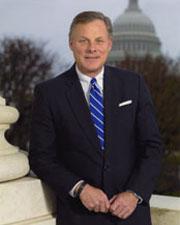
Mr. President, this is, plain and simple, about whether this Senate is going to allow legislation to go forward to reauthorize Ryan White, that allows the funding to follow the patients. What an…
Mr. President, this is, plain and simple, about whether this Senate is going to allow legislation to go forward to reauthorize Ryan White, that allows the funding to follow the patients. What an incredible thought, that we would be here at a stalemate over whether health dollars follow the individual HIV-positive and AIDS patients.
In North Carolina, we have gone on an aggressive program for volunteer
testing. The amazing thing we found out is that of those individuals now tested, 30 percent have full-blown aids, meaning that the options we have, that the health community has, are minimal from a standpoint of how we stop that disease in its tracks and give them any quality of life.
We are making the steps in North Carolina to try to identify the individuals who should be on a regimen of drugs. But by not allowing this bill to come to the floor for debate, we are denying the Senate the ability to bring the bill up and to consider the merits of it, and, yes, to amend it if we want to, to live with the majority of this body as to whether we change the funding formulas from what the committee has decided; which is, the funding should follow the patient.
My colleague from Oklahoma is an OB/GYN by profession. He has the medical degree. He understands the specifics of it. And the one thing that Tom Coburn has drilled in me over and over and over again is that to deny these individuals the ability to have the regimen of drugs that are available is to give them a death sentence. To deny this legislation to come up on this floor is to give a death sentence to somebody in America.
The likelihood is that some of those individuals with that death sentence live in North Carolina. Seventy-two percent of new North Carolina cases reported in 2005 were minority clients. Women of color in the South are 26 times more likely to be HIV positive than White females. In 2004, 66.7 percent of people living with AIDS in North Carolina were African American--the fifth highest rate in the Nation. The national average was 39.9 percent.
What is unique about this challenge of the demographic shift in where HIV and AIDS is affecting the U.S. population is that, for example, in North Carolina, in many cases, it is in rural North Carolina. The challenge is not only how you match the dollars for drugs with the patient, it is how you supply the transportation to the patient to get to the clinic where, in fact, they get their drugs. To deny the ability of the Senate to come to the floor and debate this bill, to bring it up and to address the merits of this formula change, to suggest that there is something wrong with allowing the funding to follow the patient--I am not sure I get it. I thought that is why America sent us here.
In 2004, North Carolina's contribution of $11.2 million a year represented the seventh highest among all States for ADAP programs in absolute dollars, and the second highest contribution as a State in percentage. Nobody can look at North Carolina and say we are not doing our share and more for the people who live in North Carolina.
But what we are denied by our inability to debate this legislation, to amend it, if some want to amend it, is to say that North Carolina will have to continue to make a bigger investment on the part of our State because certain States do not want to give up their Federal dollars, even though they no longer have the pool of HIV and AIDS patients.
In 2004--one comparison I will draw for this body--in Massachusetts, there were 8,254 individuals living with AIDS; in North Carolina, we had 7,245. Total Federal spending in Massachusetts for individuals living with AIDS was $18.6 million. In North Carolina, it was $8.1 million--$10 million shy of Massachusetts, with an affected AIDS population 1,000 less than Massachusetts. That one statistic shows the inequity that exists in the formula that we currently have within Ryan White.
One simple change means that funds will now follow the patients. That the concentration of dollars will go into the communities that affect the individuals who are infected with this disease.
I am not sure that many of us have stopped to focus on the fact that when the Federal Government makes an investment or the State government makes an investment to make sure that AIDS patients have the medications they need, we eliminate two hospital visits a year. A person living with AIDS today untreated will likely visit the hospital twice in any given year, for a week's stay each, once for a retinal infection, the second time for pneumonia. The average of those two stays is about $33,000
For an investment of slightly over $10,000 a year--part by the Federal Government, part by the State government, part by private entities--we can eliminate those two hospital visits.
So the inability to bring up this legislation, the inability to debate a change in Ryan White, an inability to let the money follow the patients means not only will New York keep their pot of money or California keep their pot of money, but it means North Carolina is going to pick up, in unrecoverable hospital expenses, about $22,000 per year per patient for whom we could not provide the medicine. So not only are we not investing the Federal money wisely because it is being invested in communities that do not have the patient population anymore, we are turning around, and the Federal Government is picking up, in the case of North Carolina, 60-plus percent of the Medicaid expense, or of the disproportionate share of the hospital expense in DSH payments, or, in fact, the hospital is sitting there with a $33,000 bill and somebody unable to pay for it, and potentially it gives them a collection problem.
This is an opportunity for us to fix something that is broken, for us to do something that every person, every Member of the Senate understands the equity and the fairness of; and that is, if we are going to make a Federal investment, let's make sure the dollars follow the individuals who are affected with HIV and AIDS.
This is an opportunity for us to understand that AIDS does not recognize State borders, that it does not recognize the difference between sexes or ethnic backgrounds, that it has now infiltrated rural areas the same way it did urban areas years ago when we were reluctant to come to this floor and talk about it.
This is a health problem in America. It deserves our attention today. It demands that we change the formula to make sure as many Americans as possible who are infected with AIDS are, in fact, treated, in part with the money we devote out of the taxpayers' pockets to do it. The inability to bring this legislation up--to stand up and suggest that we would like to bring it up, and there is an objection--is to say, no, we do not want to debate it. Why? Because they do not want to fix it. They would rather allow a death sentence to be applied to somebody, to many people, across this country.
So as Dr. Coburn said, dogs can be watched, midnight dinners can be had, but the fact is, this legislation is focused on how we get lifesaving drugs to individuals who are infected with HIV and AIDS. My hope today is that Members who are scared to have this debate will come to the floor and lift their hold, will agree to the unanimous consent request, and come down and have a debate on this and try to defend--try to defend--these numbers, try to tell me that having $18 million for 1,000 more HIV/AIDS patients is fair. In fact, it is not fair.
We are obligated--we are obligated--as Members of this body to change the formula so it represents where the best investment can be made, and to where the American people look at it and know we have responded in a fair and equitable way.
I thank the chairman for the committee's commitment to do this legislation, for the work of the chairman and his leadership in, quite frankly, coming up with a very difficult bill to address the input of many different regions of the country and many different States. But the same population--a population that was infected with HIV/AIDS, regardless of where they live, regardless of where they grew up, regardless of what their skin color is, regardless of whether they are male or female--they ought to be equitably treated as it relates to the distribution of Federal funds available for them to access lifesaving treatments and drugs for their disease.
My hope is that at the end of this day the Chair, the committee, but more importantly the individuals who are infected across this country, will, in fact, win and we will pass this legislation and change this unfair funding formula
I yield the floor.

Mr. President, I ask unanimous consent that the order for the quorum call be dispensed with. Mr. President, earlier today, my colleague, Senator Durbin of Illinois, took the floor to describe a…
Mr. President, I ask unanimous consent that the order for the quorum call be dispensed with.
Mr. President, earlier today, my colleague, Senator Durbin of Illinois, took the floor to describe a resolution he and I submitted and a number of others cosponsored with him to both recognize the contributions of our former colleague, Senator Paul Wellstone, and to, in that resolution which has now been submitted in the Senate, commit ourselves to making a mental health parity bill a high priority in the next Congress, the 110th Congress.
I want to join with Senator Durbin, Senator Coleman, and Senator Dayton, who also spoke on this topic today, in recognizing the contribution of our former colleague, Paul Wellstone, and to rededicating ourselves in his memory to trying to get this mental health parity bill passed once and for all.
It almost seems impossible that it was almost 4 years ago this next month when we tragically lost our friend and colleague, Paul Wellstone, and some others--his wife and others--in that tragic plane crash in Minnesota.
He was a very special individual to all of us. He was one of the best friends I ever had. Of course, I think he was to millions of other people around America. They thought he was one their best friends also because of what he stood for and what he fought for. He was always sticking up for the kind of little person--people who didn't have much voice or power around here.
Paul had one burning goal during his all-too-short tenure in the Senate, and that was to get mental health put on the same parity as physical health. He struggled mightily to get that done.
After his tragic death in October of 2002, many here talked about the need to pass in his memory the Paul Wellstone mental health parity bill. We still have not gotten it done. Four years later, we remember that political science professor who came to the Senate. He had a great impact.
Paul once said, politics is about what we create by what we do and what we hope for and what we dare to imagine. He dared to imagine and to fight for the end of neglect and denial surrounding issues of mental health, especially access to mental health services.
Right now, over 41 million persons suffer from moderate or serious mental disorders each year. Less than half receive any needed treatment. However, 80 to 90 percent of mental disorders are treatable by therapies and medications. Paul fought hard with his characteristic passion for the Mental Health Parity Act, to end this absurd practice of dividing mental health from physical health and putting them into different categories under health insurance.
Mental disorders account for 4 of the 10 leading causes of disability for persons age 5 and older. In fact, depression is the leading cause of disability in the United States. Tragically, mental disorders are also major contributors to mortality. Some 30,000 Americans die by suicide each year.
According to the Substance Abuse and Mental Health Services Administration, undertreated and untreated mental disorders cost the Nation in excess of $200 billion annually, hurting the economy, the profitability of businesses, and, of course, our Government budgets.
For example, a report released earlier this month by the Department of Justice found that more than half of all prison and jail inmates, including 56 percent of State prisoners, 45 percent of Federal prisoners, and 64 percent of local jail inmates were found to have a mental health problem.
We do not treat the mental health; we hire more police. People with mental health problems cause problems in society, and they turn, perhaps, to crime or illicit drugs to somehow treat themselves and their mental disorders and they wind up in our jails. And we pay and we pay and we pay for this as a society. More than half of all of the people in jails and prison in America have mental health problems.
A lot of opponents of mental health parity claim it will drive up the cost of health care. However, an interesting study released on March 30, 2006, in the New England Journal of Medicine released results of a study that evaluated the Federal Employees Health Benefits Program, the one we are under, to which we all belong. This has provided insurance parity for mental health since 2001. The researchers found that when the care was managed, the cost of coverage for mental health problems attributable to parity did not increase the cost, and the quality of the care remained constant.
Interesting. In our own health benefits program since 2001 we have had mental health parity. And guess what. The costs have not gone up, and the quality of care has remained constant. The Wellstone Mental Health Parity Act is modeled after the mental health benefits provided through the Federal program.
Many cost studies miss something that is very important: they fail to calculate and quantify the benefits and savings that will result from parity. They fail to weigh the offsetting cost-benefits to employers from increased productivity, reduced sick leave, reduced disability costs. Indeed, a true comprehensive assessment of the costs of parity must take into account the costs of not providing parity, including the economic costs in the workplace, the cost to taxpayers of shifting of burden to public systems--as I mentioned earlier, our prisons and jails--the cost of care of homeless persons, the cost of care of our public mental health systems, the increased cost in emergency room visits. Add up all that and the cost of not treating people with mental illnesses comes to around $79 billion a year.
When workers suffering from depression receive treatment, many of the medical costs decline by $882 per employee per year. Absenteeism drops by 9 days. Again, if we provide that care, we are saving money and increasing productivity.
Also, the good news is that millions of people with mental illness can recover. I don't know why so many people think once you have a mental illness, that person is doomed for life. That is like saying if I have a physical illness, forget it, I have to have it for the rest of my life. Not true. It is the same for mental health. People have problems; they need help; they get it; they get over it. They can reclaim their lives if they are provided treatment and support in a timely fashion.
To that end, it is time to do away with the discriminatory practice of treating mental and physical illnesses as two different categories under insurance. It is time to do away with the barriers to mental health treatment and coverage. It is time to pass mental health parity.
I might remind the Senate, we did pass it once on the 2002 appropriations bill. I happened to be chairman that year on the health appropriations bill. We passed mental health parity in the Senate. It got voiced-voted. No one even objected. Imagine that. We passed it. It went to conference. We kept it in on the Senate side, but we went to conference with the House and we lost it because the House objected to it, by two or three votes. By two or three votes in conference we lost it. We came that close in 2002 to getting mental health parity.
What has happened since? Why have we fallen so far backward? Why hasn't the Senate, since that time, brought it up? As I said, in 2002, we did it. Since 2003, it has not even been brought up. Hopefully, in the next Congress, we will bring it up again, we will pass it again, like we did before.
For those who had the privilege of serving with Paul Wellstone, his spirit is still very much with us. He still inspires us and he still calls us to conscience. Each day that we fail to pass this legislation, as we have for years, we are cheating millions of Americans. Each day that we do not step up to the plate and provide adequate mental health coverage to our citizens, we cheat them from reclaiming their health and well-being, and we starve society of the talent, contributions, and productivity they have to offer. It is a disservice to society to sweep mental illness under the rug and to deny people access and coverage of adequate treatment.
Congress should make the Wellstone Mental Health Equitable Treatment Act a priority for the 110th Congress. With widespread support and widespread need, passage of this legislation is long overdue.

Mr. President, I ask unanimous consent that the order for the quorum call be rescinded. Mr. President, at 5:45, in just 15 minutes, we will have an opportunity to vote on the nominee to head the Food…
Mr. President, I ask unanimous consent that the order for the quorum call be rescinded.
Mr. President, at 5:45, in just 15 minutes, we will have an opportunity to vote on the nominee to head the Food and Drug Administration. I want to first of all commend my friend, the chairman of our human resource committee, Senator Enzi, for his leadership over this period of time in giving the assurance to the agency, and much more importantly to the American people, that we are going to have someone in charge of this agency able to exercise executive decisions, to make sure the agency itself is going to fulfill its role in protecting the health of the American people. So first of all, I thank my colleague and friend, Senator Enzi, for making sure we are going to get an opportunity to vote.
I thank the majority leader, Senator Frist, for making sure that we were not going to leave this session without having a final vote on the nominee.
In the last 5 years, only in one of those years did we have a head of the FDA. The rest of the time, they were ``acting.'' A good deal of the time, there was virtually no presence. This is the most important health agency that guides and guards American's health, the health of our children, the health of the elderly, and the health of families in our Nation. So this is a very important point, and I welcome the opportunity to urge the Senate to approve Andrew von Eschenbach for this position.
As I mentioned, the Food and Drug Administration oversees the products that account for fully a quarter of the entire U.S. economy. Every day, the agency makes decisions that mean the difference between life and death for countless patients. Millions of Americans rely on drugs the FDA approves to protect them from sickness, and every family in America counts on the FDA to see that the food they eat is free from contamination.
Now we are in the life science century, and the opportunities for breakthroughs with new drugs is unlimited. With the progress we have made in the Human Genome Project and the sequencing of the genes, the research that is being done across this Nation, the possibilities are virtually unlimited. But it is all new science. We have to make sure that this agency which is going to make the judgments and decisions about approval or disapproval is going to have the best in terms of scientists, the best in terms of leadership. That is at issue here if we do not have someone who is going to be the head of the FDA to make sure the agency that has responsibility for the safety of prescription drugs is going to work in ways to protect the American consumer; that the agency that is in charge of the food safety in this country is going to work to ensure that it is going to be effective for the American people.
Now the agency itself, the FDA, urgently needs treatment. For too long, it has been without a confirmed leader. It has become a ship without a captain, lacking the initiative and confidence that only a confirmed commissioner can bring. Year after year, under this administration, the FDA has been allowed to drift, and year after year the challenges that face the agency have grown.
Think of the controversies--about antidepressants, about the withdrawal of Vioxx, about the sale of Plan B over the counter, about adequate review of drugs on the market. The agency has had to struggle unfairly with difficult scientific questions, inadequate resources and authority, and political pressures to ignore the science that must be-- good science has to be at the heart of its mission.
Finally, the day is here when the Senate can act to confirm a commissioner whose job No. 1 will be to restore the leadership to this essential agency and begin the process of addressing the many major concerns that have gone unmet for so long.
Dr. von Eschenbach is a good choice to lead the FDA. At the National Cancer Institute, he led bold initiatives on the human genome and nanotechnology. As a physician for patients with cancer and a survivor of cancer himself, he brought an indispensable patient-centered perspective to the Cancer Institute, and he will bring that to the Food and Drug Administration as well.
Dr. von Eschenbach was able to find a solution to the controversy about allowing the over-the-counter sales of Plan B. We may never know the battles he had to fight and win to achieve that solution, but his integrity and tenacity in achieving a solution speak volumes for his character and his commitment to public health.
FDA has long been regarded as the gold standard in regulatory work. That will continue to be true only if it makes independent, science- based decisions, in both fact and appearance, and under Dr. von Eschenbach's leadership, we expect FDA to make those discussions solely on the basis of science and in the best interests of public health. To do the job we expect----
I ask, if there is no objection, that I be able to proceed for another 4 minutes?
Mr. President, we have to make sure the agency itself is going to have the adequate resources that are going to be necessary to protect the public interest. What we are talking about here is making sure they have the best, in terms of science--in terms of prescription drugs and the new breakthroughs. We have the whole range of new medical devices which are out there. The United States is leading the way. We want to make sure they are safe and effective. The agency has important responsibilities in terms of the safety of our food supply. We have given it additional kinds of responsibilities to deal with the challenges of the war on terror.
This agency has enormous responsibilities in terms of the consumers and the families of this Nation. It needs the strong leadership which I think the nominee can bring, and it needs the kind of support from the Congress that
will permit it to be the true gold standard for safety and for improving the health of the American people.
As other agencies are set up around the world--in Western Europe and now even in Asia--the place they look is at the FDA, and for very good reason. We want this agency to be the best. It can be the best. With a new leader and hopefully with the new Congress giving the agency the kind of support it should have, we can make sure the health of the American people in these important areas is going to be secure for the future.
Again, I thank my friend and colleague from Wyoming for his persistence and tenacity in making sure where we are this evening. We would not be here if it had not been for his good work on this issue, as in so many others. I thank him, and the American people ought to know that this is an enormously important vote to protect their interests. I hope this nominee is approved overwhelmingly.
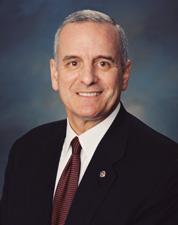
Mr. President, I thank and commend my friend and colleague, the assistant Democratic leader from Illinois, Senator Durbin, for submitting the Senate resolution honoring the memory of the late Senator…
Mr. President, I thank and commend my friend and colleague, the assistant Democratic leader from Illinois, Senator Durbin, for submitting the Senate resolution honoring the memory of the late Senator Paul Wellstone from Minnesota, my friend of 22 years, my colleague and mentor for my first 2 years in the Senate.
I also thank Senator Coleman, my present colleague, for his cosponsorship of this resolution and making it a bipartisan statement. I am proud to join as a cosponsor of the resolution.
It is hard to believe that it has been almost 4 years--it will be on October 25, 2006, when we will not be in session--since the terrible plane crash occurred that took the lives of Paul Wellstone, U.S. Senator from Minnesota, his wife and partner of 39 years, Sheila Wellstone, his daughter Marcia; the Democratic Party associate chair from Minnesota, Mary McEvoy; one of Paul's longtime valued Senate staffers here in Washington, Tom Lapic; and a young Minnesota aide, Will McLaughlin, as well as two pilots.
One of Paul's most important causes was that of mental health parity. The illness of a family member made this a very personal cause for him, as well as his compassion for those throughout this country who suffer from some form of mental illness and are unable to get the treatment they deserve and which is medically available because insurance companies will not pay for and treat mental illness with the same parity they do other physical health problems.
Senator Wellstone found a valuable partner in the distinguished Senator from New Mexico, Mr. Domenici. Together they worked on a bipartisan basis for several years against the fervent opposition of the medical insurance industry to pass mental health parity legislation.
In the aftermath of Senator Wellstone's death, then-majority leader of the Senate Tom Daschle succeeded in getting through the Senate the Wellstone-Domenici legislation, which passed the Senate but unfortunately hit opposition by the House of Representatives. And once again the medical insurance industry prevented one of Paul's legislative dreams from becoming law in 2002.
Despite assurances beginning in January of 2003 from the new Senate majority leadership that the Senate would act on successor legislation in honor of Senator Wellstone and pass mental health parity, despite the best efforts of Senator Domenici, who was then joined on our side of the aisle by Senator Kennedy and our own caucus leaders, Senator Reid and Senator Durbin, the Senate has neither considered as a body nor passed mental health parity in either the 108th Congress or the 109th Congress.
In other words, during the last 4 years following Senator Wellstone's terrible tragedy, the Senate has not acted to pass this legislation.
That is why Senator Durbin's resolution today is so timely and so important in these final days of the 109th session. It states that Senator Wellstone should be remembered for his compassion and leadership on social issues, and the Congress should act to end discrimination against citizens of the United States who live with a illness by passing legislation relating to mental health parity as a priority for the 110th Congress.
One of Paul's favorite quotes was that of a rabbi many years ago who concluded by saying: If not now, when? If not now, unfortunately, then at least in the 110th Congress, over the next 2 years, it is my fervent hope, although I will not be here, and even though my colleague, Senator Paul Wellstone, will not be here, his spirit will continue to carry this legislation forward, and with the leadership of Senator Durbin and others who have championed this cause in the Senate and with greater understanding perhaps on the other side of Capitol Hill in the House about the importance of this legislation to millions and millions of Americans, this would be one of Senator Wellstone's proudest moments. It would be one of the Senate's and Congress's great accomplishments, if mental health parity were to be made the law of this country for the millions of those who would benefit from it.
I again thank Senator Durbin.
I yield the floor.
I thank the Senator from Illinois. Senator Wellstone was an eternal optimist. I share the Senator's hope that something might be possible this year. If not, this resolution passing on that responsibility to the 110th Congress is very timely and appropriate. I am glad to cosponsor it.
Estate Tax
Mr. President, I object, not on my account but on behalf of some of my Senate colleagues who, I stress, want to join with the program.
I commend the chairman for his leadership on behalf of this legislation and the support of the reauthorization, but they object to the permanent reduction in funding for their respective States which would occur under the formula the chairman referenced. They share my hope, along with the chairman, that this issue can be satisfactorily resolved for all concerned before the expiration, September 30, so that this--I think we all agree--very important and valuable program benefiting all of our States can continue uninterrupted.
I do object on their behalf.
Mr. President, again, to make the record clear, I am not objecting on my own account but on behalf of my other Senate colleagues. I thank the chairman for that improvement in the funds that are going to Minnesota. I strongly support the program and intend to vote for it.
I thank the chairman again for his leadership and his continuing efforts to get this important legislation reauthorized.
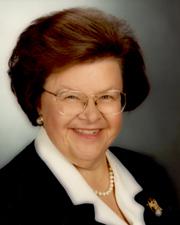
Mr. President, I rise before you today to discuss the nomination of Andrew Von Eschenbach as Commissioner of the FDA. I first want to say that I love the FDA. FDA is in my home state of Maryland. It…
Mr. President, I rise before you today to discuss the nomination of Andrew Von Eschenbach as Commissioner of the FDA.
I first want to say that I love the FDA. FDA is in my home state of Maryland. It employs over 10,000 of my constituents. It is right down the road from the NIH. I am proud to have all that research at NIH and then have FDA in Maryland standing up for the food safety of the American people, looking out to make sure that the drugs and the technologies that we use are safe.
Over the years, I have fought for the right facilities, the right resources, and now the right leadership at the FDA. Dr. Von Eschenbach is an experienced clinician and researcher and as the former Director of National Cancer Institute, NCI, I presume he is committed to the mission of FDA. However, I have concerns. I have yellow flashing light about his commitment to reform over drug safety, to not politicize science, and to establish a channel where employees can speak truth to power.
This is important. As we consider the nomination of Dr. Von Eschenbach, we must address one of the most important issues facing our Nation: the loss of confidence in our Government's ability to ensure the safety of our food, our drugs, and our medical devices. The FDA has always been the gold standard in maintaining the safety and efficacy of our drugs and medical devices.
Yet today the Agency is being politicized and degraded. The current administration has shown a persistent pattern of placing politics before science; making appointments based on ideology instead of competency; stifling scientists whose findings do not meet political objectives; making decisions based on politics, rather than sound science.
Nowhere is this more evident than at the FDA. Today, FDA is facing a crisis: There is a crisis of morale. There is a crisis of confidence in the reliability of FDA decisions. There is a crisis about whether there are scientists operating under a gag rule, putting politics above science. There is a crisis ensuring the reliability and safety of our drugs.
This summer, Union of Concerned Scientists released its survey of the scientists at the FDA. These scientists are my constituents. They found the morale of trusted and respected employees has been battered by years of weak leadership. This survey is important because it gives a public voice to scientists who aren't in a position to place their jobs on the line to suffer retaliation for speaking the truth and to potentially jeopardize their families.
The FDA needs a major overhaul and a culture change at the highest levels in order to continue to meet its mission. The FDA needs to reestablish its relationship with its own scientists. The FDA's focus should be only on science and the public good. And I am hoping that Dr. Von Eschenbach will be the strong leader the FDA needs to accomplish this overhaul.
My criterion for looking at every nomination are competence, integrity,
commitment to the mission of the Agency.
Competence: Management expertise is essential to effectively run FDA without redtape and bureaucracy. The FDA has over 10,000 dedicated employees and has a budget of nearly $2 billion. Strong management skills and leadership are essential to ensure that FDA can efficiently and effectively carry out its many responsibilities.
Integrity: The individual must be well-respected by patient/consumer groups and the industry so that FDA commands the respect of the public and the industry it regulates. The FDA Commissioner must also be an honest broker and listener who can make tough calls on contentious issues.
Commitment to the mission of the Agency: Decisions must be made based on sound science and public health, not ideology. The nominee must maintain the FDA gold standard of safety and efficacy, ensuring timely approval of new therapies to save lives, help patients live longer and improve their quality of life and ensuring safety of our food supply.
The FDA needs strong leadership. Dr. Von Eschenbach is an experienced and respected scientist. We need his leadership to help Congress establish the legislative framework needed to reform FDA: We need to restore the morale at FDA; we need to restore confidence in the FDA for all Americans; and we need to restore FDA to the world's premier food and safety regulatory agency.
We need his commitment to ensure that the best possible science informs the decisions the FDA makes every day. We need him to ensure a culture of openness so that management listens to and addresses the concerns of your employees. We need him to make significant changes to transform the Agency to the gold standard it once was.
FDA sets the gold standard. Yet today we have ideology over science, ideology over competence. I strongly believe the FDA needs a strong permanent Director. I will therefore vote for Andrew Von Eschenbach in the hopes that he can become that strong leader FDA needs and the American public deserves.
Show 11 more
Mr. President, I rise in strong support of the nomination of Dr. Andrew von Eschenbach to be Commissioner Food and Drugs. I am pleased that the Senate is considering Dr. von Eschenbach's nomination…
Mr. President, I rise in strong support of the nomination of Dr. Andrew von Eschenbach to be Commissioner Food and Drugs.
I am pleased that the Senate is considering Dr. von Eschenbach's nomination and I strongly urge my colleagues to support him because the FDA needs a permanent Commissioner to lead the agency. The FDA has been criticized time and time again over this. To me, the first step toward promoting stability in the agency is for the Senate to confirm an FDA Commissioner. Dr. von Eschenbach is a capable administrator, extremely knowledgeable about health care and food and drug policy, and we can count on him to do the right thing. It is past the time that he be confirmed.
I had the opportunity to work with Dr. von Eschenbach when he was the Director of the National Cancer Institute and found him to be personable and engaging. I also had a long meeting with Dr. von Eschenbach before his Senate confirmation hearing and was very impressed with his in depth knowledge on matters before the Food and Drug Administration. But even more impressive, Dr. von Eschenbach truly listened to my ideas regarding the FDA, and I greatly appreciated it. It is clear that he intends to work closely with the Congress.
The bottom line is that I am convinced Dr. von Eschenbach is the best person for the job, and the sooner we get him confirmed, the better.
I would like to take a moment to talk about FDA-related issues facing my home State of Utah and where Dr. von Eschenbach's strong involvement will be crucial.
As my colleagues are aware, Utah is home to the largest concentration of dietary supplement companies in our Nation, so ensuring that the Dietary Supplement Health and Education Act, DSHEA, law is strongly and appropriately enforced is a high priority of mine.
I have been told by every FDA Commissioner since Dr. Kessler that the FDA has adequate authority under DSHEA to make certain the supplement marketplace is safe, so it is my hope that Dr. von Eschenbach will make this a priority during his tenure as FDA Commissioner.
In addition, as I have told him on more than one occasion, it is essential for Dr. von Eschenbach to work to finalize and implement good manufacturing practices--GMPs--for supplements as authorized by DSHEA. It is 12 years since they were authorized. And, despite the repeated contacts Senator Harkin and I have made, the reportedly drafted regulations have still not been issued. I want to encourage strongly Dr. von Eschenbach to address this matter once and for all.
We will also be counting on the good doctor to implement the new system of mandatory reporting of serious adverse events--AERs--for nonprescription drugs and dietary supplements that is contained in S. 3546, the Hatch-Durbin bill we passed last night. It is my hope the House will pass the bill today--and it can be sent to the President for signature. When enacted, the Hatch-Durbin-Harkin-Enzi-Kennedy bill will require manufacturers of supplements and over-the-counter drugs to report to FDA any reports of serious problems associated with the use of the products. This is an important consumer protection bill, and it is important that FDA seek the funding to implement the program as Congress intends. I stand ready to work with the agency on this.
Another concern I have expressed to Dr. von Eschenbach and his agency is the need to look out for the ``little guy'' once he becomes Commissioner. Utah is the home to more than 100 medical device companies, many of them small, and I want Dr. von Eschenbach and his staff to treat these companies fairly, especially when the FDA officials conduct inspections. There have been several complaints from manufacturers about the tactics that the FDA inspectors have taken. I think these complaints have merit. All I ask of Dr. von Eschenbach is that Utah companies be treated fairly by the FDA.
I also am deeply concerned about the agency's lack of funding. This has been a growing concern, especially as it affects implementation of DSHEA, the new AEER system, and also the review of generic drug applications. While I realize that FDA has a lot of responsibilities, ranging from ensuring the safety of drugs and medical devices to protecting our country's food supply, it simply isn't fair to continue to pile on these responsibilities without providing the FDA with adequate funding. I assure Dr. von Eschenbach that I will work with him and my colleagues on the Senate Appropriations Committee and the Senate HELP Committee to ensure that the agency is provided with sufficient funding.
I urge my colleagues to vote in favor of Dr. von Eschenbach today so that the agency will finally have a permanent leader who will look out for the best interests of both the American people and an important Federal agency--the FDA.
Mr. President, I thank the Senator from Massachusetts, Mr. Kennedy, for his tremendous effort over the last 2 years as we have worked on health issues but particularly as we have worked on the FDA.…
Mr. President, I thank the Senator from Massachusetts, Mr. Kennedy, for his tremendous effort over the last 2 years as we have worked on health issues but particularly as we have worked on the FDA. The Food and Drug Administration is critical to the people of this country, and Senator Kennedy and I have been asking to have a fully confirmed person heading that up every opportunity we have had. We have been reminding people they did not want to be the one objecting if there happened to be a national safety crisis in food or health. It is just so critical.
People say he is ``acting.'' When you are the acting person in a position, you really do not have the authority. It means people are looking over your shoulder, seeing what you are doing, making sure you are dotting every ``I'' and crossing every ``t'' and following every rule and listening to every agency that has any control over you. Someone who is fully confirmed can be the boss.
A lot of people would say: Why would this highly qualified doctor take this job?
I am sure now that he has been through the confirmation process, he is probably thinking: Why I would take that job? I am hoping he is not. In fact, earlier today I called him to let him know that the delay in getting a final vote on his confirmation had nothing to do with him, that we had some other logistical process things we were going through, that there would be a final vote today, and that I suspected, in light of the cloture vote, there would not be any problem. I am pleased that it still looks that way. I am anxious to call him and let him know he is fully confirmed as a commissioner and he can start to work on some of the morale problems that he talked about, can start to work on some of the other vision things he has in mind, and people will know he has the full authority to do that.
I do want to remind people that the FDA's mission is broad. It regulates food, it regulates drugs, it regulates biologics--and I wish I had time to explain all of what that is--medical devices. You probably didn't know that he handles animal feed, and that is because animals are ingested and could cause a problem, too. He is also in charge of cosmetics. For every dollar Americans spend, this agency regulates 25 cents of that dollar in products.
As science progresses, the challenges to regulation will grow. The FDA regulates a host of new products that blur the FDA's traditional boundaries, and that is one of the reasons the Senator from Massachusetts and I have been working on a FDA reform bill for a year and a half. We have now held hearings on that.
It is a very bipartisan bill. We have had some outstanding comments. There is a possibility to make the agency better, and we are going to continue to work on that so that all the new innovations that require a nimble and responsive agency to regulate them, and resources to match, will be in place so that he can do the kind of job he needs to do.
This is such a critical role in our Nation's public health, it is such an important agency, I do ask for people to give him a resounding vote in this confirmation.
Again, I thank Senator Kennedy, who is the ranking member on the committee and soon to be the chairman of the Health, Education, Labor, and Pensions Committee, for his hard work and support during the process. I think it is time to bring this process to a close so we can get him confirmed as quickly as possible and have a true, fully confirmed Commissioner of Food and Drug.
I thank Dr. von Eschenbach for his patience with our process and for the work he has done in spite of the process. I look forward to getting to see the kind of job he will do as a fully confirmed physician. I ask for your vote in support of him.
I yield the floor.
Mr. President, I ask for the yeas and nays.
I ask unanimous consent that the President be immediately notified of the Senate's action and that the Senate return to legislative session.
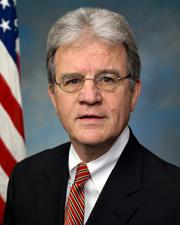
Mr. President, by objecting to moving this bill, we need to look at the real lives that are getting ready to be harmed. Not only is the funding for the program going to be cut to the poorest of the…
Mr. President, by objecting to moving this bill, we need to look at the real lives that are getting ready to be harmed. Not only is the funding for the program going to be cut to the poorest of the poor by the formula in the preexisting Ryan White Act, but also the money for New York and California is going to be cut. The New York delegation, for example, argues that updating the formulas is devastating their State's infrastructure. A closer look reveals that the impact on New York, like other States with large urban areas, is not so great.
The national average funding per AIDS case in 2006 was $1,613. New York's average was $2,122--33 percent more than the national average. Under the corrected funding formulas, the national average in 2007 would be $1,793; New York's would still be higher at $2,107, just 5 percent less than the State currently has, so people who are getting no treatment now, especially minority women where this disease has ravaged and is growing at a larger proportion, do not have access to any care.
What we are really saying is to avoid a 5-percent cut, we are going to eliminate access for large numbers of minority women in this country who are infected with this virus and have no access to drugs, have no access to treatment today because the dollars have not followed the epidemic.
The political response to this, even though it might be parochial, is wrong for this country. It is wrong for those who have no benefit today to continue to be denied benefits because some group might lose a small percentage when, in fact, a very large number of people are going to be benefited by the new Ryan White fund.
We need to be very careful. The last Ryan White law was very specific in what is getting ready to happen. The number of people waiting for drugs is going to shoot through the ceiling if we do not pass the bill because of the funding formula that was in there to force us to pass a bill.
What we have said is we are going to object on parochial interests, a 4- or 5-percent cut, but the reason we are going to object, we do not care that other people are going to have no care, no treatment, no drugs, no access, so what we are really doing is we are not taking away any significant care, but we are markedly reducing an opportunity for life for those who are the least able to care for themselves.
Just a couple of other examples. The New York Times noted that out of this $2,107, we have dog-walking paid for through AIDS funds, we have candlelight dinners paid for for AIDS recipients--this at the same time an African-American woman in Atlanta, in Greensboro, or in Tulsa cannot get the lifesaving drugs she needs for tomorrow, the drugs that will save her life, allowing her to continue to be a mother.
There have been a lot of people who have worked very hard to get Ryan White reauthorized. I thank them personally for that. It diminishes the Senate when we think of the parochial and not the whole.
The long-term former funding for Ryan White was based on AIDS cases. The new funding is based on HIV and AIDS cases. This new funding in this new bill says that 75 percent of the money has to go to treatment--we have never had that before--to really make a difference in people's lives.
I am disappointed that we are not going to be able to do this bill, but my disappointment is nothing compared to the people who aren't going to get care, who aren't going to have a future, who aren't going to have a life if this is not changed. I thank the chairman for his hard work. I thank the Senator from North Carolina for his work and Senator Jeff Sessions, as well. This is a disease which is moving hard and heavy to minority communities, to the South. If we do not recognize that they ought to have equal rights for treatment and care, there is something wrong with us.
I yield the floor.
Mr. President, I am pleased to be joined by my distinguished colleagues, the Senator from Mississippi, Mr. Cochran, the Senator from Indiana, Mr. Lugar, and the Senator from Delaware, Mr. Carper, in…
Mr. President, I am pleased to be joined by my distinguished colleagues, the Senator from Mississippi, Mr. Cochran, the Senator from Indiana, Mr. Lugar, and the Senator from Delaware, Mr. Carper, in introducing the Alternative Diesel Standard Act of 2006.
Last summer, Congress passed the Energy Policy Act, which included a bold, bipartisan initiative to help wean our Nation from its petroleum dependency. This initiative, known as the Renewable Fuels Standard, established that it is the policy of the United States that the 140 billion gallon national gasoline pool will consist of at least 7.5 billion gallons of ethanol by the year 2012.
We have seen tremendous response to this new policy. Almost 30 new ethanol plants have been proposed to be constructed in my State of Illinois alone, and many more are proposed nationwide. By comparison, over the past 30 years, no new petroleum refineries have been built in the United States. The Renewable Fuels Standard is probably one of the single most important legislative actions taken by Congress in recent years to strengthen our domestic energy security, and the legislation we introduce today takes this policy one step further by addressing the 40 billion gallon national diesel pool.
Petroleum-based diesel is used in a wide variety of transportation modes: transit buses; semitrucks; ships; heavy duty construction, farming and mining equipment; military vehicles; locomotives; barges; large scale generators; and in a range of cars and trucks. While not as large of a market as gasoline, petrodiesel is enormously significant to our economy, and reducing our reliance on foreign feedstocks for this diesel is of equal importance in our efforts to increase energy security.
Our bill, the Alternative Diesel Standard, simply requires that by the year 2015, the national diesel pool must consist of at least 2 billion gallons of alternative and renewable diesels.
This is but a modest 1 percent of the national diesel supply--hardly painful for the petroleum industry. It would not in any way dent the oil industry's record-shattering profits. Instead, it establishes certainty to those who know that alternative diesels can provide a real solution to our dependence on foreign oil and who are prepared to invest in alternative diesel production on a commercial scale.
Right now, there is an estimated 180 million gallons of biodiesel production capacity in the United States. Fifty-four companies have reported plans to construct dedicated biodiesel plants in the near future, but those plans are dependent upon regional and national demand prospects.
Moreover, entrepreneurs across the Nation have proven that we can make diesel from other plant oils, like sunflower seeds, or coal, manure, animal fats, and yes, even from recycled plastics or garbage. This bill sends a signal to those entrepreneurs that a market is planned in the future for these domestically produced fuels, attracting the necessary investment to establish a national infrastructure of domestic fuel production capabilities.
If we are serious about reducing our country's dependence on imported petroleum and insulating our economy from future supply disruption shocks--whether from the volatile Middle East or natural disasters such as Katrina--encouraging the construction of more domestic alternative fuel production capacity must be part of that strategy. Several billion gallons of alternative diesels are possible within the timelines proposed in our legislation, making another bold step to create jobs in rural America and strengthen our economic security. An Alternative Diesel Standard is the right course for the Nation's future. I hope my colleagues will join me in cosponsoring this legislation, and I ask their support for swift enactment.

Mr. President, I rise to introduce legislation that will take a bold step in reducing our dependence on fossil fuel and foreign oil. I am pleased to be joined by Senator Johnson and others in…
Mr. President, I rise to introduce legislation that will take a bold step in reducing our dependence on fossil fuel and foreign oil. I am pleased to be joined by Senator Johnson and others in introducing the ``10 by 10 Act.''
The ``10 by 10 Act'' will require that 10 percent of each gallon of motor fuel sold beginning January 1, 2010, contain at least 10 percent renewable fuel. The ``10 by 10 Act'' is a signal that Congress remains interested and adamant in seeking energy independence by promoting the development of renewable fuels in the United States.
As President Bush stated in his State of the Union Address, America is addicted to oil. He also declared that we could displace at least 75 percent of the oil we import from the Middle East by 2025. I am here to say to America's agriculture community, that we're serious and we're going to do something about it.
Because the U.S. imports more than 60 percent of the crude oil we need, we have become dangerously reliant on foreign sources of energy. It is a threat to our national security for the United States to be dependent upon countries like Iran and Venezuela for our energy needs. It is also a threat to our economic security to be dependent on foreign countries for the energy that drives our economy. It is up to our farmers and ranchers to help liberate our consumers and our economy from the stranglehold of OPEC and other foreign countries on our energy needs.
This legislation will demonstrate to consumers, in a commonsense way, that each and every gallon of gasoline will contain at least 10 percent of domestically produced renewable fuel. It will show that we are serious about reducing our dependence on foreign oil, and it will show in a tangible way that we are working to reduce that dependence.
The ``10 by 10 Act'' is a commitment to our constituents that we are working to lower that dependence, and reduce our consumption of foreign oil in every gallon of fuel they pump. With this legislation, Americans would know with certainty that 10 percent of each gallon of motor fuel was home-grown by farmers and ranchers right here in America.
It is important for consumers to recognize that for the vast majority of cars on the road today, no modifications are necessary to operate on a 10-percent renewable fuel blend. No significant changes are required to the fuel distribution network to allow for a 10-percent blend. The only thing standing in the way of reduced dependence on foreign oil is a signal from Congress that we recognize the virtue of homegrown alternatives to foreign oil.
Today, ethanol, a renewable fuel produced from corn, is blended in more than 30 percent of the gasoline sold in the United States. There are currently 101 biorefineries prducing nearly 5 billion gallons of ethanol annually. By the end of 2007, it is projected that we will have the capacity to produce nearly 7 billion gallons annually.
We owe it to the American people to pursue aggressive policies to free our country from our foreign oil dependence. I hope my colleagues will join me in this effort to replace 10 percent of each gallon of gasoline with homegrown, environmentally friendly, renewable fuel.
I ask unanimous consent that the text of the bill be printed in the Record.
Mr. Speaker, could I ask for a copy of the legislation at this time? We seem to be concerned about the fact that changes have been made that we were not aware of on the Democratic side. Mr. Speaker,…
Mr. Speaker, could I ask for a copy of the legislation at this time? We seem to be concerned about the fact that changes have been made that we were not aware of on the Democratic side.
Mr. Speaker, I yield myself such time as I may consume.
Mr. Speaker, I rise in support of S. 3546, the Dietary Supplement and Nonprescription Drug Consumer Protection Act. By some estimates, the dietary supplement industry is a $20 billion industry. Over half the American population regularly uses dietary supplements, with as many as 60 percent of Americans using dietary supplements daily in an effort to maintain or improve their healthy lifestyles.
Many responsible dietary supplement companies and manufacturers already voluntarily report serious adverse events associated with their products to the FDA. However, in order to ensure the safety of consumers, all companies should be required by law to report such events. This bill accomplishes that goal.
The legislation before us today would amend the Food, Drug, and Cosmetic Act to require that the manufacturer, packer or distributor of a dietary supplement or over-the-counter drug notify the FDA within 15 business days of any serious adverse event reports it receives that are associated with one of their dietary supplements or over-the-counter products.
A serious adverse event is described as a health-related event that results in death, a life-threatening experience, in-patient hospitalization, a persistent or significant disability or incapacity, or congenital anomaly or birth defect.
Adverse event reports provide an early warning signal to the FDA about potential product problems, like product contamination or adulteration, tampering, bioterrorism and ingredient safety issues. By requiring that this information be submitted to a single source, manufacturers increase the likelihood that problems will be identified more quickly and fewer consumers will be affected.
Although the FDA currently receives adverse event reports from consumers, health care providers, poison control centers and even many manufacturers on a voluntary basis, this legislation will ensure that a greater number of serious adverse event reports are transmitted to the FDA for review.
Consumers should be assured that when a serious incident happens, the manufacturer will be held responsible for informing the Federal agency that regulates these products. Adverse event reporting by the manufacturer is already required for other FDA regulated products, such as medical devices, prescription drugs and certain over-the-counter- drugs. It is time that we require the same reporting standards for dietary supplements, and this change will help protect consumers and build greater confidence in the safety of dietary supplements.
Again, I would like to thank Senators Hatch, Harkin and Durbin, as well as all the industry and consumer groups who worked hard on developing this legislation, and I urge my colleagues to join me in supporting it.
Mr. Speaker, I reserve the balance of my time.
Mr. Speaker, I reserve my time.
Mr. Speaker, I yield back the balance of my time, and urge support of the bill.
Mr. President, today, the Senate adopted a bipartisan bill that provides the Food and Drug Administration with the tools it needs to help monitor the safety of dietary supplements. Dietary…
Mr. President, today, the Senate adopted a bipartisan bill that provides the Food and Drug Administration with the tools it needs to help monitor the safety of dietary supplements.
Dietary supplements are safely consumed by millions of Americans every day. I myself take a multivitamin every morning. The vast majority of these supplements do not result in harm to the consumer.
Unfortunately, this is not the case for all supplements. Some cause dangerous health problems: increased blood pressure, heart attack, stroke, seizures and liver failure. Ephedra is the most well-known among these.
Under the Dietary Supplement Heath and Education Act, DSHEA, which passed in 1994, supplement manufacturers are not required to prove their products are safe or effective before they are marketed: supplements are assumed safe until proven unsafe.
The bill we passed today will help the FDA identify products that may be causing harm to consumers.
In 2000, the FDA contracted with the Institute of Medicine at the National Academies of Science to develop a scientific framework for the evaluation of dietary supplements under DSHEA.
IOM's proposals flowed from their first and essential recommendation to Congress: Make adverse event reporting mandatory. They asserted that ``adverse event reports have considerable strength as potential warning signals of problems requiring attention, making monitoring by the FDA worthwhile.''
Unfortunately, under current law, reporting is voluntary and it is not working. The Office of the Inspector General at the Department of Health and Human Services, HHS, estimated in 2001 that less than 1 percent of all adverse events associated with dietary supplements are reported to the FDA.
My own experience reinforces the need for a mandatory system of reporting. Metabolife told the FDA in February of 1999 that, ``Metabolife has never been made aware of any adverse health events by consumers of its products. Metabolife has never received a notice from a consumer that any serious adverse health event has occurred because of ingestion of Metabolife 356.''
The Justice Department began investigating the truthfulness of that statement and found that Metabolife was holding 16,500 adverse event reports, including almost 2,000 significant cardiac, neurological and psychiatric reports.
The Dietary Supplement and Nonprescription Drug Consumer Protection Act will prevent this scenario from ever happening again. Manufacturers of over-the-counter drugs and dietary supplements will be required to send these reports to the FDA.
I would like to thank Senators Hatch, Harkin, Enzi and Kennedy, who have worked with me for the last 3 years on this important issue.
Mr. Speaker, I rise in support of S. 3546, the Dietary Supplement and Nonprescription Drug Consumer Protection Act. I am the sponsor of the companion bill, H.R. 6168, here in the House. S. 3546 would…
Mr. Speaker, I rise in support of S. 3546, the Dietary Supplement and Nonprescription Drug Consumer Protection Act. I am the sponsor of the companion bill, H.R. 6168, here in the House.
S. 3546 would require mandatory adverse event reporting of serious events for dietary supplements and over-the-counter drugs, OTCs, within the FDA.
Currently, an adverse event reporting system for supplements and some OTCs exists, yet it is strictly voluntary. Under the proposed system, manufacturers, packers or distributors of OTC drugs or dietary supplements in the United States must report to the FDA within 15 business days any serious adverse event associated with their products. Serious events include those that result in death, a life-threatening experience, inpatient hospitalization, disability or incapacity, birth defect, or medical/surgical intervention to prevent one of these outcomes.
S. 3546 brings needed regulation to guarantee consumer protection from non-legitimate companies. This legislation will expose corrupt businesses that are misleading consumers and breaking the law, as well as protecting individuals from serious health risks.
S. 3546 would not restrict nor limit access to dietary supplements but in fact would strengthen the regulatory structure for dietary supplements building greater consumer confidence in this category of FDA-regulated products.
Mandatory adverse event reporting would not affect the regulation of dietary supplements under DSHEA. Although manufacturers would be required to report serious adverse events to FDA, the Food Drug and Cosmetic Act clearly distinguishes dietary supplements from drugs.
S. 3546 would actually counter critics who believe dietary supplements are under-regulated and should be treated as drugs.
The dietary supplement industry is a $20 billion industry. It is estimated that over 60 percent of Americans regularly use dietary supplements to improve health. Consumers should be confident that these dietary supplements are legitimate.
S. 3546 is supported by the major consumer and trade associations. Including the Consumer's Union, the Center for Science in the Public Interest, the Consumer Healthcare Products Association, the National Nutritional Foods Association, the Council for Responsible Nutrition, the American Herbal Products Association, and the United Natural Products Alliance.
The Dietary Supplement and Nonprescription Drug Consumer Act is necessary legislation to safeguard Americans and uncover illegal manufacturers who are jeopardizing consumer's health.
Mr. President, in a couple of minutes we are going to turn to a very important vote, a vote that to me is significant because it touches every single American in some shape or form. Much has been…
Mr. President, in a couple of minutes we are going to turn to a very important vote, a vote that to me is significant because it touches every single American in some shape or form. Much has been said over the course of today about the scope of the FDA, the importance of having an FDA Commissioner, a permanent FDA Commissioner, and we will realize that shortly.
Earlier this year we celebrated the 100th anniversary of the Food and Drug Administration, which is an administration that I have used professionally in my previous profession in everything from the thousands of prescriptions I have written, to investigational drugs, to left ventricular devices, to lasers and artificial hearts. I have seen first hand how important it is to have an appropriate regulatory agency there. The Food and Drug Administration, as we all know, as we have said this afternoon, is America's first scientific regulation body. While the agency has adapted and changed with the times, it has remained true to its purpose of protecting interests of everyone who is listening to me, the American consumer.
In a few minutes we will vote on the nomination of a very good friend, Dr. Eschenbach, to the position of Commissioner of the Food and Drug Administration.
I have known Dr. Eschenbach, again professionally, and I have had mutual patients with him. And he has assisted in many ways as we have looked at appropriate therapy for individuals from across the country. He is currently serving as Acting Commissioner. I have interacted with him in that regard. He has demonstrated a capacity to lead and to administer in an exceptional way the Food and Drug Administration with sensitive issues on a daily basis. It is important that we have a permanent person in that position, and he is the ideal person, the ideal candidate to do just that.
In both his professional and personal life, Dr. Eschenbach has experience: as a cancer survivor, as Director of the National Cancer Institute, literally a nationally renowned urologic surgeon and oncologist, which all attest to the superlative qualifications to handle that challenging job, as we all know, as FDA Commissioner.
I hope colleagues will join me in supporting Dr. Eschenbach's nomination.
Mr. President, I ask unanimous consent I have 2 minutes as in morning business. Mr. President, I note that the distinguished Senator from Tennessee, Senator Lamar Alexander, is in the Chamber. I am…
Mr. President, I ask unanimous consent I have 2 minutes as in morning business.
Mr. President, I note that the distinguished Senator from Tennessee, Senator Lamar Alexander, is in the Chamber. I am sure he has already spoken this afternoon, but I was not present because I was attending another meeting.
Senator, if you do not feel good this afternoon, I don't know what we are going to do in the Senate in terms of qualifying you to be happy. I don't know what else we will do to make you happier than what we are going to do tonight or during the next week or so on this competiveness measure.
Senator Alexander came to the Senate, and before his first term has expired he has taken the lead, without anyone wanting to run around and try to figure out who should get the lead, on this mammoth piece of legislation. It falls automatically that Lamar Alexander deserves the credit for getting it started. It was his idea. He recruited the junior Senator from New Mexico.
They asked me, as members of my committee, if they could take the proposition of what we could do to better America's position in a competitive world, if they could take that to the Academy of Sciences to get a report so we could adopt a report during this calendar year.
Believe it or not, they did that. As a result, 71 Senators cosponsored the legislation. As a result, we will have introduced a bill today that almost takes care of every recommendation that committee made to the Congress. We are having it introduced officially by the leadership this evening. It will be held and passed by this Senate before we adjourn this year.
Imagine that, for a Senator who has just come to the Senate. If he cannot say and put up whatever he puts up, matters of high esteem, completed by him, something that he can be proud of, that is this legislation.
There will be a day when it passes that he can be happier, but he will be overjoyed today when he sits down and thinks for a moment of what is accomplished for America to get moving to develop our brain power where we could, where we can, as we can, and as we should, without any doubt.
I compliment the Senator.
I yield the floor.
I thank the Senator.
Mr. President, I thank my colleague from Illinois for submitting this resolution both on the legacy of Paul Wellstone and, in particular, focusing on this issue of mental health parity. Paul…
Mr. President, I thank my colleague from Illinois for submitting this resolution both on the legacy of Paul Wellstone and, in particular, focusing on this issue of mental health parity.
Paul Wellstone and I disagreed on a lot of issues. One of the great things about Paul Wellstone is that even if you disagreed with him, you admired his passion--his passion which was reflected when we had our debates. He was always energized. He was real. He was very real.
One of the things he was very passionate about was mental health parity and doing the right thing for millions of Americans. His Senate family has been touched by the tragedy of mental illness--touched. Millions of Americans have been touched or impacted by the tragedy of mental illness. The reality is there is treatment available. We can deal with this. We can lift up lives to make people whole and productive. There is a path to do this. There is a path that my predecessor laid out with the help of Senator Domenici in the early 1990s. We made some headway, but we didn't go far enough. We know what the voids are. We know what the gaps are. We have a path to get there. We are close. The problem is ``close'' may be good in bocce ball, but it is not good in legislation.
I have been here 4 years. It is one of my hopes that on one of the things that Senator Wellstone and I fully agreed on, which is the importance of providing true mental health parity, is that we can get it done. We are not there yet. We need to get it done. I hope that as we move forward and when we come back and finish this session--we are not going to get it done now, but I hope folks will reflect on what is the right thing. It is the right thing. With this resolution we are honoring the legacy of a great Senator, we honor the legacy of someone who had great passion, and we do the right thing for millions of Americans.
Let us get mental health parity through. It is the right thing and I hope we can get it done. Again, I thank my colleague from Illinois for raising this issue.
Mr. President, I yield the floor.
Bill Text
5 versions available
        [Congressional Bills 109th Congress]
[From the U.S. Government Publishing Office]
[S. 3546 Enrolled Bill (ENR)]

S.3546

One Hundred Ninth Congress

of the

United States of America

AT THE SECOND SESSION

Begun and held at the City of Washington on Tuesday,
the third day of January, two thousand and six

An Act

To amend the Federal Food, Drug, and Cosmetic Act with respect to
serious adverse event reporting for dietary supplements and
nonprescription drugs, and for other purposes.

Be it enacted by the Senate and House of Representatives of the
United States of America in Congress assembled,

SECTION 1. SHORT TITLE.

This Act may be cited as the ``Dietary Supplement and
Nonprescription Drug Consumer Protection Act''.

SEC. 2. SERIOUS ADVERSE EVENT REPORTING FOR NONPRESCRIPTION DRUGS.

(a) In General.--Chapter VII of the Federal Food, Drug, and
Cosmetic Act (21 U.S.C. 371 et seq.) is amended by adding at the end
the following:

``Subchapter H--Serious Adverse Event Reports

``SEC. 760. SERIOUS ADVERSE EVENT REPORTING FOR NONPRESCRIPTION DRUGS.

``(a) Definitions.--In this section:
``(1) Adverse event.--The term `adverse event' means any
health-related event associated with the use of a nonprescription
drug that is adverse, including--
``(A) an event occurring from an overdose of the drug,
whether accidental or intentional;
``(B) an event occurring from abuse of the drug;
``(C) an event occurring from withdrawal from the drug; and
``(D) any failure of expected pharmacological action of the
drug.
``(2) Nonprescription drug.--The term `nonprescription drug'
means a drug that is--
``(A) not subject to section 503(b); and
``(B) not subject to approval in an application submitted
under section 505.
``(3) Serious adverse event.--The term `serious adverse event'
is an adverse event that--
``(A) results in--
``(i) death;
``(ii) a life-threatening experience;
``(iii) inpatient hospitalization;
``(iv) a persistent or significant disability or
incapacity; or
``(v) a congenital anomaly or birth defect; or
``(B) requires, based on reasonable medical judgment, a
medical or surgical intervention to prevent an outcome
described under subparagraph (A).
``(4) Serious adverse event report.--The term `serious adverse
event report' means a report that is required to be submitted to
the Secretary under subsection (b).
``(b) Reporting Requirement.--
``(1) In general.--The manufacturer, packer, or distributor
whose name (pursuant to section 502(b)(1)) appears on the label of
a nonprescription drug marketed in the United States (referred to
in this section as the `responsible person') shall submit to the
Secretary any report received of a serious adverse event associated
with such drug when used in the United States, accompanied by a
copy of the label on or within the retail package of such drug.
``(2) Retailer.--A retailer whose name appears on the label
described in paragraph (1) as a distributor may, by agreement,
authorize the manufacturer or packer of the nonprescription drug to
submit the required reports for such drugs to the Secretary so long
as the retailer directs to the manufacturer or packer all adverse
events associated with such drug that are reported to the retailer
through the address or telephone number described in section
502(x).
``(c) Submission of Reports.--
``(1) Timing of reports.--The responsible person shall submit
to the Secretary a serious adverse event report no later than 15
business days after the report is received through the address or
phone number described in section 502(x).
``(2) New medical information.--The responsible person shall
submit to the Secretary any new medical information, related to a
submitted serious adverse event report that is received by the
responsible person within 1 year of the initial report, no later
than 15 business days after the new information is received by the
responsible person.
``(3) Consolidation of reports.--The Secretary shall develop
systems to ensure that duplicate reports of, and new medical
information related to, a serious adverse event shall be
consolidated into a single report.
``(4) Exemption.--The Secretary, after providing notice and an
opportunity for comment from interested parties, may establish an
exemption to the requirements under paragraphs (1) and (2) if the
Secretary determines that such exemption would have no adverse
effect on public health.
``(d) Contents of Reports.--Each serious adverse event report under
this section shall be submitted to the Secretary using the MedWatch
form, which may be modified by the Secretary for nonprescription drugs,
and may be accompanied by additional information.
``(e) Maintenance and Inspection of Records.--
``(1) Maintenance.--The responsible person shall maintain
records related to each report of an adverse event received by the
responsible person for a period of 6 years.
``(2) Records inspection.--
``(A) In general.--The responsible person shall permit an
authorized person to have access to records required to be
maintained under this section, during an inspection pursuant to
section 704.
``(B) Authorized person.--For purposes of this paragraph,
the term `authorized person' means an officer or employee of
the Department of Health and Human Services who has--
``(i) appropriate credentials, as determined by the
Secretary; and
``(ii) been duly designated by the Secretary to have
access to the records required under this section.
``(f) Protected Information.--A serious adverse event report
submitted to the Secretary under this section, including any new
medical information submitted under subsection (c)(2), or an adverse
event report voluntarily submitted to the Secretary shall be considered
to be--
``(1) a safety report under section 756 and may be accompanied
by a statement, which shall be a part of any report that is
released for public disclosure, that denies that the report or the
records constitute an admission that the product involved caused or
contributed to the adverse event; and
``(2) a record about an individual under section 552a of title
5, United States Code (commonly referred to as the `Privacy Act of
1974') and a medical or similar file the disclosure of which would
constitute a violation of section 552 of such title 5 (commonly
referred to as the `Freedom of Information Act'), and shall not be
publicly disclosed unless all personally identifiable information
is redacted.
``(g) Rule of Construction.--The submission of any adverse event
report in compliance with this section shall not be construed as an
admission that the nonprescription drug involved caused or contributed
to the adverse event.
``(h) Preemption.--
``(1) In general.--No State or local government shall establish
or continue in effect any law, regulation, order, or other
requirement, related to a mandatory system for adverse event
reports for nonprescription drugs, that is different from, in
addition to, or otherwise not identical to, this section.
``(2) Effect of section.--
``(A) In general.--Nothing in this section shall affect the
authority of the Secretary to provide adverse event reports and
information to any health, food, or drug officer or employee of
any State, territory, or political subdivision of a State or
territory, under a memorandum of understanding between the
Secretary and such State, territory, or political subdivision.
``(B) Personally-identifiable information.--Notwithstanding
any other provision of law, personally-identifiable information
in adverse event reports provided by the Secretary to any
health, food, or drug officer or employee of any State,
territory, or political subdivision of a State or territory,
shall not--
``(i) be made publicly available pursuant to any State
or other law requiring disclosure of information or
records; or
``(ii) otherwise be disclosed or distributed to any
party without the written consent of the Secretary and the
person submitting such information to the Secretary.
``(C) Use of safety reports.--Nothing in this section shall
permit a State, territory, or political subdivision of a State
or territory, to use any safety report received from the
Secretary in a manner inconsistent with subsection (g) or
section 756.
``(i) Authorization of Appropriations.--There are authorized to be
appropriated to carry out this section such sums as may be
necessary.''.
(b) Modifications.--The Secretary of Health and Human Services may
modify requirements under the amendments made by this section in
accordance with section 553 of title 5, United States Code, to maintain
consistency with international harmonization efforts over time.
(c) Prohibited Act.--Section 301(e) of the Federal Food, Drug, and
Cosmetic Act (21 U.S.C. 331(e)) is amended by--
(1) striking ``, or 704(a);'' and inserting ``, 704(a), or
760;''; and
(2) striking ``, or 564'' and inserting ``, 564, or 760''.
(d) Misbranding.--Section 502 of the Federal Food, Drug, and
Cosmetic Act (21 U.S.C. 352) is amended by adding at the end the
following:
``(x) If it is a nonprescription drug (as defined in section 760)
that is marketed in the United States, unless the label of such drug
includes a domestic address or domestic phone number through which the
responsible person (as described in section 760) may receive a report
of a serious adverse event (as defined in section 760) with such
drug.''.
(e) Effective Dates.--
(1) In general.--Except as provided in paragraph (2), the
amendments made by this section shall take effect 1 year after the
date of enactment of this Act.
(2) Misbranding.--Section 502(x) of the Federal Food, Drug, and
Cosmetic Act (as added by this section) shall apply to any
nonprescription drug (as defined in such section 502(x)) labeled on
or after the date that is 1 year after the date of enactment of
this Act.
(3) Guidance.--Not later than 270 days after the date of
enactment of this Act, the Secretary of Health and Human Services
shall issue guidance on the minimum data elements that should be
included in a serious adverse event report described under the
amendments made by this Act.

SEC. 3. SERIOUS ADVERSE EVENT REPORTING FOR DIETARY SUPPLEMENTS.

(a) In General.--Chapter VII of the Federal Food, Drug, and
Cosmetic Act (21 U.S.C. 371 et seq.) is amended by adding at the end
the following:

``SEC. 761. SERIOUS ADVERSE EVENT REPORTING FOR DIETARY SUPPLEMENTS.

``(a) Definitions.--In this section:
``(1) Adverse event.--The term `adverse event' means any
health-related event associated with the use of a dietary
supplement that is adverse.
``(2) Serious adverse event.--The term `serious adverse event'
is an adverse event that--
``(A) results in--
``(i) death;
``(ii) a life-threatening experience;
``(iii) inpatient hospitalization;
``(iv) a persistent or significant disability or
incapacity; or
``(v) a congenital anomaly or birth defect; or
``(B) requires, based on reasonable medical judgment, a
medical or surgical intervention to prevent an outcome
described under subparagraph (A).
``(3) Serious adverse event report.--The term `serious adverse
event report' means a report that is required to be submitted to
the Secretary under subsection (b).
``(b) Reporting Requirement.--
``(1) In general.--The manufacturer, packer, or distributor of
a dietary supplement whose name (pursuant to section 403(e)(1))
appears on the label of a dietary supplement marketed in the United
States (referred to in this section as the `responsible person')
shall submit to the Secretary any report received of a serious
adverse event associated with such dietary supplement when used in
the United States, accompanied by a copy of the label on or within
the retail packaging of such dietary supplement.
``(2) Retailer.--A retailer whose name appears on the label
described in paragraph (1) as a distributor may, by agreement,
authorize the manufacturer or packer of the dietary supplement to
submit the required reports for such dietary supplements to the
Secretary so long as the retailer directs to the manufacturer or
packer all adverse events associated with such dietary supplement
that are reported to the retailer through the address or telephone
number described in section 403(y).
``(c) Submission of Reports.--
``(1) Timing of reports.--The responsible person shall submit
to the Secretary a serious adverse event report no later than 15
business days after the report is received through the address or
phone number described in section 403(y).
``(2) New medical information.--The responsible person shall
submit to the Secretary any new medical information, related to a
submitted serious adverse event report that is received by the
responsible person within 1 year of the initial report, no later
than 15 business days after the new information is received by the
responsible person.
``(3) Consolidation of reports.--The Secretary shall develop
systems to ensure that duplicate reports of, and new medical
information related to, a serious adverse event shall be
consolidated into a single report.
``(4) Exemption.--The Secretary, after providing notice and an
opportunity for comment from interested parties, may establish an
exemption to the requirements under paragraphs (1) and (2) if the
Secretary determines that such exemption would have no adverse
effect on public health.
``(d) Contents of Reports.--Each serious adverse event report under
this section shall be submitted to the Secretary using the MedWatch
form, which may be modified by the Secretary for dietary supplements,
and may be accompanied by additional information.
``(e) Maintenance and Inspection of Records.--
``(1) Maintenance.--The responsible person shall maintain
records related to each report of an adverse event received by the
responsible person for a period of 6 years.
``(2) Records inspection.--
``(A) In general.--The responsible person shall permit an
authorized person to have access to records required to be
maintained under this section during an inspection pursuant to
section 704.
``(B) Authorized person.--For purposes of this paragraph,
the term `authorized person' means an officer or employee of
the Department of Health and Human Services, who has--
``(i) appropriate credentials, as determined by the
Secretary; and
``(ii) been duly designated by the Secretary to have
access to the records required under this section.
``(f) Protected Information.--A serious adverse event report
submitted to the Secretary under this section, including any new
medical information submitted under subsection (c)(2), or an adverse
event report voluntarily submitted to the Secretary shall be considered
to be--
``(1) a safety report under section 756 and may be accompanied
by a statement, which shall be a part of any report that is
released for public disclosure, that denies that the report or the
records constitute an admission that the product involved caused or
contributed to the adverse event; and
``(2) a record about an individual under section 552a of title
5, United States Code (commonly referred to as the `Privacy Act of
1974') and a medical or similar file the disclosure of which would
constitute a violation of section 552 of such title 5 (commonly
referred to as the `Freedom of Information Act'), and shall not be
publicly disclosed unless all personally identifiable information
is redacted.
``(g) Rule of Construction.--The submission of any adverse event
report in compliance with this section shall not be construed as an
admission that the dietary supplement involved caused or contributed to
the adverse event.
``(h) Preemption.--
``(1) In general.--No State or local government shall establish
or continue in effect any law, regulation, order, or other
requirement, related to a mandatory system for adverse event
reports for dietary supplements, that is different from, in
addition to, or otherwise not identical to, this section.
``(2) Effect of section.--
``(A) In general.--Nothing in this section shall affect the
authority of the Secretary to provide adverse event reports and
information to any health, food, or drug officer or employee of
any State, territory, or political subdivision of a State or
territory, under a memorandum of understanding between the
Secretary and such State, territory, or political subdivision.
``(B) Personally-identifiable information.--Notwithstanding
any other provision of law, personally-identifiable information
in adverse event reports provided by the Secretary to any
health, food, or drug officer or employee of any State,
territory, or political subdivision of a State or territory,
shall not--
``(i) be made publicly available pursuant to any State
or other law requiring disclosure of information or
records; or
``(ii) otherwise be disclosed or distributed to any
party without the written consent of the Secretary and the
person submitting such information to the Secretary.
``(C) Use of safety reports.--Nothing in this section shall
permit a State, territory, or political subdivision of a State
or territory, to use any safety report received from the
Secretary in a manner inconsistent with subsection (g) or
section 756.
``(i) Authorization of Appropriations.--There are authorized to be
appropriated to carry out this section such sums as may be
necessary.''.
(b) Prohibited Act.--Section 301(e) of the Federal Food, Drug, and
Cosmetic Act (21 U.S.C. 331(e)) is amended by--
(1) striking ``, or 760;'' and inserting ``, 760, or 761;'';
and
(2) striking ``, or 760'' and inserting ``, 760, or 761''.
(c) Misbranding.--Section 403 of the Federal Food, Drug, and
Cosmetic Act (21 U.S.C. 343) is amended by adding at the end the
following:
``(y) If it is a dietary supplement that is marketed in the United
States, unless the label of such dietary supplement includes a domestic
address or domestic phone number through which the responsible person
(as described in section 761) may receive a report of a serious adverse
event with such dietary supplement.''.
(d) Effective Date.--
(1) In general.--Except as provided in paragraph (2), the
amendments made by this section shall take effect 1 year after the
date of enactment of this Act.
(2) Misbranding.--Section 403(y) of the Federal Food, Drug, and
Cosmetic Act (as added by this section) shall apply to any dietary
supplement labeled on or after the date that is 1 year after the
date of enactment of this Act.
(3) Guidance.--Not later than 270 days after the date of
enactment of this Act, the Secretary of Health and Human Services
shall issue guidance on the minimum data elements that should be
included in a serious adverse event report as described under the
amendments made by this Act.

SEC. 4. PROHIBITION OF FALSIFICATION OF REPORTS.

(a) In General.--Section 301 of the Federal Food, Drug, and
Cosmetic Act (21 U.S.C. 331) is amended by adding at the end the
following:
``(ii) The falsification of a report of a serious adverse event
submitted to a responsible person (as defined under section 760 or 761)
or the falsification of a serious adverse event report (as defined
under section 760 or 761) submitted to the Secretary.''.
(b) Effective Date.--The amendment made by this section shall take
effect 1 year after the date of enactment of this Act.

SEC. 5. IMPORTATION OF CERTAIN NONPRESCRIPTION DRUGS AND DIETARY
SUPPLEMENTS.

(a) In General.--Section 801 of the Federal Food, Drug, and
Cosmetic Act (21 U.S.C. 381) is amended--
(1) in subsection (a), by inserting after the third sentence
the following: ``If such article is subject to a requirement under
section 760 or 761 and if the Secretary has credible evidence or
information indicating that the responsible person (as defined in
such section 760 or 761) has not complied with a requirement of
such section 760 or 761 with respect to any such article, or has
not allowed access to records described in such section 760 or 761,
then such article shall be refused admission, except as provided in
subsection (b) of this section.''; and
(2) in the second sentence of subsection (b)--
(A) by inserting ``(1)'' before ``an article included'';
(B) by inserting before ``final determination'' the
following: ``or (2) with respect to an article included within
the provision of the fourth sentence of subsection (a), the
responsible person (as defined in section 760 or 761) can take
action that would assure that the responsible person is in
compliance with section 760 or 761, as the case may be,''; and
(C) by inserting ``, or, with respect to clause (2), the
responsible person,'' before ``to perform''.
(b) Effective Date.--The amendments made by this section shall take
effect 1 year after the date of enactment of this Act.

Speaker of the House of Representatives.

Vice President of the United States and
President of the Senate.