Community Disaster Loan Act of 2005
Legislative Activity
Stay on top of the latest movement without scrolling through every action
Became Public Law No: 109-88.
October 7, 2005
View full timeline
Introduced in Senate
October 7, 2005
Introduced in the Senate, read twice, considered, read the third time, and passed without amendment by Unanimous Consent. (consideration: CR S11280-11285; text as passed Senate: CR S11281-11282)
October 7, 2005
Received in the House.
October 7, 2005 • 11:19 AM
Message on Senate action sent to the House.
October 7, 2005
Mr. Baker asked unanimous consent to take from the Speaker's table and consider. (consideration: CR H8794-8798)
October 7, 2005 • 2:55 PM
RESERVATION OF OBJECTION - Mr. Oberstar rose and reserved his right to object to the consideration of S. 1858.
October 7, 2005 • 2:55 PM
Mr. Oberstar continued to reserve his right to object to the consideration of S. 1858.
October 7, 2005 • 3:03 PM
WITHDRAWAL OF RESERVATION OF OBJECTION - Mr. Oberstar withdrew his objection to the consideration of the measure.
October 7, 2005 • 3:14 PM
RESERVATION OF OBJECTION - Mr. Obey rose and reserved the right to object to the consideration of S. 1858.
October 7, 2005 • 3:15 PM
Passed/agreed to in House: On passage Passed without objection.(text: CR H8798)
October 7, 2005 • 3:23 PM
On passage Passed without objection. (text: CR H8798)
October 7, 2005 • 3:23 PM
Motion to reconsider laid on the table Agreed to without objection.
October 7, 2005 • 3:23 PM
Cleared for White House.
October 7, 2005
Presented to President.
October 7, 2005
Signed by President.
October 7, 2005
Became Public Law No: 109-88.
October 7, 2005
Floor Debate
14 membersWhat members said about S. 1858 on the floor
 MLL
MLL RHB
RHB TRCDV
TRCDV JLO+9
JLO+9
Floor Debate
14 membersWhat members said about S. 1858 on the floor
Mr. President, I thank, so much, the Senator from Delaware who, before he was a Senator--because he wasn't born one either--was a Governor of Delaware. Before he was Governor, he was a husband and a…
Mr. President, I thank, so much, the Senator from Delaware who, before he was a Senator--because he wasn't born one either--was a Governor of Delaware. Before he was Governor, he was a husband and a father, which he still is. I know he does a magnificent job at family and in the Senate because I have seen him here at late hours.
Last night this Senator from Delaware, who does not, obviously, have a dog in this hunt, stood through the night and negotiated with myself and with my colleague from Louisiana, with Senator Frist, with Senator Reid, and we negotiated and offered one compromise after another in meetings, on the telephone, on the floor, when we could speak--because speech was limited last night. Despite the notion that is out there that Senators can speak any time they want, the rules of the Senate actually prevent Senators from speaking. So I was not able to speak as much as I would have liked through the night last night. When I was not able to speak on the floor, we were in meetings, in phone calls, speaking with the White House and the House leadership and Republican colleagues and Democratic colleagues, trying to work through this situation.
We put our best efforts forward. We are now down to this time, which is basically the end of this debate, having passed a bill by Senator Vitter and Senator Frist that will basically allow us to have the loans we seek, loans that are so necessary, but a bill that forces us to take it in a discriminatory fashion.
I believe this Senator has shown, on many occasions, a willingness to compromise and to work through difficult situations. I helped negotiate No Child Left Behind on this floor, one of the premier centerpieces of the current President's administration, of his agenda, even when half of my caucus was opposed--not sort of opposed but very opposed. But I knew what was best for Louisiana was to move forward because we had already gone down the road of accountability. It was showing some results. The children in my State were learning. The gap between the rich and the poor was closing, not because the rich were coming down but because the poor were coming up.
White children and Black children, who had been by law separated for over 150 years in schools, were then thrust together in the 1960s and 1970s. I believed that law, and I still believe this law, could help lift those who had limited opportunities. I have worked with Senators on both sides of the aisle, for the 8 years that I have been here, to try to craft and negotiate some of the toughest legislation the Senate has seen--compromise on missile defense, compromise on Corps of Engineers to move a WRDA bill. I worked for 10 years to compromise the Conservation and Reinvestment Act where 4,500 organizations in this country, from the most liberal to the most conservative, came together one time on one bill to provide coastal money for all the communities in the Nation: 10 years of meetings, 10 years of phone calls, 10 years of speeches, 10 years of pleas, 10 years of press conferences, 10 years of alliance building, only to get down to the last minute some years ago to be told, with 72 signatures on that bill at the last minute, 5 years ago: Senator, we cannot bring your bill up, there is an election around the corner and it may have repercussions for one or two people here. We can't do it.
You could have taken a knife and stabbed it in my heart, but I stood there and took it, not because it was me but because the people I represent I knew were getting a bad deal. But in my heart I knew that I and our delegation had literally done everything we could possibly do. When it came to the end, the death was quick.
When I got back in the next session, after my State had been stabbed in the heart and left for dead--which we have died, through this hurricane--I started putting yet another bill together because there is nothing wrong with me that I don't know how to work through difficult situations. My family has been doing it a very long time.
I thank Senator Clinton for her remarks. She obviously understands what the people of New York went through. I also thank Senator Schumer. Although he was not here in person, he was here in spirit. He and Senator Clinton stood by the Republican mayor at the time, Rudy Giuliani, lifted him up and helped him. No second-guessing; they helped him and they lifted the city up.
I thank Senator Jeffords, who has been a champion. He stood at the Leeville Bridge with me. I have been on so many trips down to Louisiana I lose count, but one of them I remember very well. Senator Jeffords came down with me, so far to the bottom of Louisiana if he had taken one more step he would have been in the Gulf of Mexico. There is not much down there--no big cities, no big money, no big press conferences. There is hardly a camera at the end of LA-1, at Port Fourchon, but Senator Jeffords went. He stood there, and while I was explaining to him the difficulty of getting people out in an evacuation for a hurricane on a highway that goes underwater when there is rain, let alone when a category 5 hurricane comes bearing down on you--he stood there on the bridge with me and at the moment--if I could have scripted it myself I could not have done it any better, and people who were not there are not going to believe what I am going to say but I have a lot of witnesses--at the very moment I was pointing to the Leeville Bridge, a shrimp trawler came in, lifted their nets up as they do--they look like butterflies out on the gulf--they lifted their nets up and ran into the bridge, with Senator Jeffords on it, and shook the bridge and shut it down like that.
The words had just come out of my mouth: Senator Jeffords, not only is the road a problem but when the hurricane comes, if this bridge shuts down, there is no way out. And the shrimp trawler hit the bridge.
He said to me, laughing with his good sense of humor: Senator, don't you think you went a little too far to make your point?
And we had a big laugh about it, not that I laughed about the shrimp trawler, but we literally cannot believe that and have talked about it for 3 years.
Our strength is found at home in our neighborhoods, in our churches, on corners, in our workplaces, and in our places of worship. Right here is where our strength is found--not in anyplace overseas, right here at home.
I am going to wrap up by showing you pictures of the homes to make my point. This is our home on the gulf coast. After the photographer took this picture, the commentary in the National Geographic magazine was something like: It looks like a weapon of mass destruction went off on the gulf coast. This is exactly what would happen if a weapon of mass destruction would go off, except you wouldn't have the trees and maybe the beach would be a little disheveled. That is what it looks like. It was a storm of massive destruction.
Our strength begins at home.
The underlying bill is sending $415 billion overseas. We ask for a loan program of $1 billion already allocated under the same terms and conditions that everyone in America has received. And we are told no. It was too much to do.
I am going to close with this.
This is a picture of New Orleans. It doesn't look like this today because all the water has gone down. But when people say, Why can't you be a little bit more self-reliant, I am not sure any city in America could stand itself up by itself with no loans, no grants, with the police force being laid off, a fire department being laid off, city workers being laid off, an electric company taking bankruptcy, no water in the pipes. And when we come to ask for a loan, we are told: Sorry, there is no money in the Treasury. We have made other arrangements for the taxes that you have paid over the last 300 years.
Let me submit for the Record a letter from the U.S. Conference of Mayors
which they sent to this Senate. They said:
We greatly appreciate Congress' attention to America's
cities devastated by Hurricane Katrina, and now Hurricane
Rita, and to those cities home to hundreds of thousands of
evacuees. The leadership of the U.S. Conference of Mayors,
convened in Long Beach on September 22-24, resolved that
Congress must pass legislation to provide direct fiscal
assistance to cities devastated by Hurricanes Katrina and
Rita--
All cities, cities that are Republican cities and cities that are Democratic cities, communities that do not vote for Democrats and communities that do not vote for Republicans--all cities.
Most importantly, we urge the Senate to reject language
that would for the first time in history remove the
possibility that communities' disaster loans be forgivable,
if needed, due to the dire situation many of the impacted
cities will continue to face in the months and years ahead.
It goes on to say they are going to keep a vigil. I hope somebody keeps the candle burning.
I ask unanimous that the letter be printed in the Record.
Mr. President, I have shown all the pictures I can show for the week. I have done all the talking I can do for today. But I can promise you this. This talking will continue and these meetings will continue and this debate will continue. It is not going away.
The leadership of the House of Representatives needs to be put on notice that this debate is going to go on for a very long time, until we get relief, recovery, respect, and the dignity that we deserve as American citizens from Louisiana to Texas to Alabama to Mississippi and the people whom we represent, Black and White, rich and poor, young and old, small and large businesses alike, and our faith-based community, get the respect it deserves from the floor of this Senate and the Congress of the United States, and gets the help it needs to get through and rebuild.
I assure you that we will rebuild this coast. We will rebuild the gulf coast. It was paid for by a great President, President Jefferson, at 3 cents an acre in 1803 where he borrowed money. He knew what he was borrowing money for. He had a good reason to borrow it, and he bought the Louisiana Purchase. Andrew Jackson came and defended it. His statue never went underwater.
We will rebuild this region all through the gulf coast and into Louisiana--the ports, the energy infrastructure, turn our lights on again, and keep the lights on all over America, to try to keep people's bills as low as we can and keep their heat on this winter, which is approaching. Even if you do not give us one penny, even if you do not lend us money, we have been self-reliant for over 300 or more years. The people here are pretty tough and it takes a lot more than this to beat our spirit.
The bill is gone. It is the best we could do. It is not the best we could have done, but it is what we have. We will live with it, but we will not stop this debate.
I yield the floor.
I suggest the absence of a quorum.
Mr. Speaker, I ask unanimous consent to take from the Speaker's table the Senate bill (S. 1858) to provide for community disaster loans, and ask for its immediate consideration in the House. Mr.…
Mr. Speaker, I ask unanimous consent to take from the Speaker's table the Senate bill (S. 1858) to provide for community disaster loans, and ask for its immediate consideration in the House.
Mr. Speaker, will the gentleman yield?
Mr. Speaker, there is within the construction of FEMA a loan program called the Community Disaster Loan Program. Currently as constructed, there is a $5 million limit per loan per community under the rules that govern distributions of these loans. There is also a funding limitation of some considerable concern in light of the community needs pursuant to Hurricanes Katrina and Rita.
The purpose of this legislation is to designate $700 million of previously appropriated funds for the purpose of making them available under the provisions of the current Community Disaster Loan Program.
Secondly, the bill would waive the $5 million arbitrary cap in light of the current need, but only as to the $700 million specified, and only as to the final disposition of the need for Hurricanes Katrina and Rita.
Pursuant to those modifications, the Senate has also adopted a provision which would not allow the waiver of repayment which has been historically the case over the course of the administration of the Community Disaster Loan Program. The bill as now constructed does not permit the waiver of repayment of these loan obligations. This will in effect create a $700 million loan program which must be repaid by the communities which have suffered the Katrina-Rita losses without a limit as to the $5 million cap on a per-loan consideration.
Mr. Speaker, I certainly appreciate the gentleman from Minnesota yielding and just wish to express appreciation for those concerns he has noted. Certainly, the repayment obligation should be met at some point. The arbitrary deadline, in fact, may be problematic going forward.
I would suggest in consultation with the other members of the Louisiana delegation, we fully intend to examine this going forward and hope to have the opportunity to bring our concerns to the attention of this body and the Senate as well. The principal concern, as the gentleman has identified, is the Senate has passed this vehicle in its current construct. If we were to amend it as suggested, it would have to return to that body for their agreement.
We are very concerned with potential layoffs occurring next week in various municipalities. So this loan package is very much an emergency issue; and albeit with the nonwaiver of repayment provision, we fully support it in its current form, given the constraints we face.
Mr. Speaker, I appreciate the courtesy. I shall be brief. I wish to express appreciation to those Members who brought to the House's attention that the waiver of repayment has been stricken from the bill, but I would also indicate that in discussions with people and in the loan construction packages they have great latitude as to terms and conditions of repayment. They have been quite assuring that they will work with communities in a manner which is responsible to assure relief is provided, but that the taxpayers of the United States have some assurance that, when possible, communities will give back that which was extended during times of hardship.
I would also want to point out that there literally have been billions of dollars made available to constituents in Louisiana of great scope and consequence from the FEMA checks to the provision of temporary housing. There has been a great deal of work conducted here.
I wish to express appreciation for the administration and all those who are engaged in this work and to the people of this great country, who have given
voluntarily huge charitable contributions to various organizations to be of assistance to us. We are indeed appreciative, and we do not wish to leave the House floor today with the impression that Louisianans have been ignored. Far from it.
We have a long way to go. There is much work to do. There is suffering still far too rampant in our communities. This act today will go another small step in helping those people get back to normality. But there is a lot happening as fast as can be conducted, I believe, in the State of Louisiana, and I am sure in other coastal States as well, and I would like the record to reflect some balance, that it is not as fast as everyone would like, but help is coming, and I appreciate the gentleman's allowing me to make that statement.
Mr. Speaker, I certainly understand the reason for the gentleman's inquiry and the illustrative list gentleman presents is very reasonable. In other circumstances, we found ourselves with the luxury of a little time with which to consider the matter. If we were to agree to that modification, I understand the matter would be referred to the Senate for further consideration and may well put in jeopardy the adoption ultimately of this loan program, which we are hoping to have in effect and available on Monday morning to affected communities.
I have, however, conversed with the gentleman from Alaska (Chairman Young), the ranking member, the gentleman from Minnesota (Mr. Oberstar) and others on the committee who have jurisdiction over FEMA matters in
which this loan program is domiciled, and have assurances from them that we will visit the gentleman's concerns and adopt a reporting regime, if not exactly, very similar to this.
I would be supportive of and I am sure all members of the Louisiana delegation who are here on the floor would also support the gentleman's request, but would respectfully ask, given the concerns of time and the issues at hand, that the gentleman would withdraw his objection. We would be happy to note formally in the record our agreement to proceed with the gentleman on our return to work absent the Columbus Day recess to achieve the gentleman's interest.
Mr. Speaker, if the gentleman will yield further, I thank the gentleman for his question. I would point out, we would act forthwith, and perhaps there would be additional items that we would be interested in having reported to us on the matter of these loan dispositions. So we have some accountability to our constituencies and know what local governments are seeking in the way of assistance and how we may further provide aid.
So the gentleman's point is important to us in the delegation as well as to the gentleman for his own satisfaction that the funds are being used appropriately.
I would like to have the possibility of working with the gentleman's staff over the recess week we are about to enter into, in consultation with the staff from the offices of the gentleman from Minnesota (Mr. Oberstar) and the gentleman from Alaska (Chairman Young), to try to perfect a reporting regime that the gentleman and I and the chairman would find acceptable to achieve his goals, and it would be obtained as soon as agreement can be obtained. I would commit our delegation to be fully supportive of that effort.
Reserving the right to object. Mr. President, I ask unanimous consent to address the Senate for 5 minutes. Mr. President, folks who might be watching this debate across the country may be wondering…
Reserving the right to object.
Mr. President, I ask unanimous consent to address the Senate for 5 minutes.
Mr. President, folks who might be watching this debate across the country may be wondering what this is all about. Let me try to simplify it as best I can.
Over the last month or so, the Congress has appropriated some $61 billion to be used to assist in the reconstruction, the aid, and the housing of a lot of people whose lives have been disrupted and in some cases destroyed. There are a number of cities, towns, and jurisdictions within that region where their revenue base--the ability to raise taxes and to provide essential services--is gone. Of that $61 billion, FEMA is not authorized to extend or lend that money to those cities or towns or jurisdictions without our authorization.
The legislation that is before us today would authorize the movement of about $750 million from FEMA to be able to lend that money to some of these cities, towns, parishes, and jurisdictions so that hospitals can be helped and police, fire services, and other services can be extended even though the revenue base has dried up under all of this water.
Historically, when FEMA has been given the authority to extend this money, to lend money to other communities, other cities, other States, the loans have in some cases been forgiven. It did not require an act of Congress to do that. It did not require any particular action by OMB or certification by OMB to do that. It occurred under the law. The loans were forgiven.
Senator Levin mentioned earlier that a number of jurisdictions, a number of local government borrowers borrowed money extended through FEMA to help these communities in their most tough times, in Idaho, in West Virginia, Pennsylvania, Alabama, Arizona, and others. They did not have to come and ask for an act of Congress to get that forgiveness. They didn't have to go to OMB and say please forgive this loan. The loans were forgiven.
Senator Clinton spoke a bit earlier as well and talked about the generous assistance that the taxpayers of this country provided to New York City on the heels of 9/11. Mr. President, $20 billion was the amount of money, almost a direct infusion. I thought it was loan. For all these years I thought it was a loan that was forgiven. I was wrong. It was a grant--just a gift to the people of New York as they struggled to recover from their tragedy.
The tragedy that has fallen on the folks along the gulf coast is every bit as bad for a lot of them as what happened in New York on 9/ 11. Yet we are not prepared to provide a grant to those communities, those cities, so they can provide essential services. Frankly, none of us are calling for doing that.
FEMA has all this money we provided them. Absent some legislation today, they are not able to extend any of that money to help these communities and cities. The legislation is designed to say we are going to allow FEMA to extend those loans.
But unlike the way we treated New York, which got a grant, not a loan, and unlike the loans that were extended to all the communities listed on this sheet of paper whose loans were forgiven and did not even require our action or OMB's forgiveness, we say with respect to the folks on the gulf coast: We are not going to forgive your loan.
Carl Levin--Senator Levin--and I spent a good deal of time last night trying to put together a compromise. I appreciate very much the cooperation of Senator Landrieu to help find that compromise and Senator Vitter and certainly Senator Frist. Senator Levin and I, at the midnight hour last night, were down in the House and found Congressman Lewis, the chairman of the Appropriations Committee, and said to him: What if we provide a change in language in this bill so, in order to forgive a loan that FEMA would make under the authorization of this bill, it would require an act of Congress? The Senate and House and President would have to concur in that forgiveness.
He said he thought that was a reasonable idea and thought even the House might go along with that.
I am disappointed to hear this morning that is not going to happen. Senator Frist, last night in conversation after midnight with Senator Levin and me, said he thought that was a reasonable idea. He couldn't commit himself to make it happen, but he thought that was a reasonable approach, and, frankly, I do, too. For the life of me, I do not see why that is not acceptable.
If we were to include language--and we are not going to get the chance do this because Senator Levin's amendment is not going to be made in order, but if we were to include language that said an act of Congress was required in order to forgive loans made by FEMA to these jurisdictions in their hour of need, that is a very high standard. It is a standard we never set for these communities. It is a standard we never set for New York.
The greatest irony to me is, going back, we didn't require an act of Congress or intervention of OMB to enable the forgiveness of these loans. Going forward, as I read the legislation--going forward, if you are from Delaware or from Michigan or if you are from Georgia and your communities seek a loan from FEMA in a similar situation, an emergency, moneys that have been authorized and appropriated, you don't have to get an act of Congress to have that loan forgiven. You don't have to get any special approval from OMB so the loan can be forgiven. It can be forgiven.
Yet in this case, with respect to the Gulf Coast States, we do not allow that to happen. Going back in time and going forward in time it looks to me as if we protect the rest of us. We allow for the loans to be forgiven for the other 49 States or 48 States. But not in this case. That does not make sense. That does not make sense.
As we move to pass the legislation, I echo what some of my other colleagues
have said. We can do better. When we have an opportunity to return, in a week or so, my earnest hope is that we will do better.
In closing, I say to my friend and colleague, Senator Landrieu, it has been an honor to stand by her side in this struggle. The people of Louisiana are fortunate to have Senators with that kind of passion and care for them. I hope, as we go forward working with Senator Vitter, we can get to an outcome that is fair to the people you represent.
I yield the floor.
Mr. President, the last 24 hours has been a frustrating and disappointing time for me, quite frankly--frustrating because as we face an unprecedented crisis along the gulf coast, some elements of the…
Mr. President, the last 24 hours has been a frustrating and disappointing time for me, quite frankly--frustrating because as we face an unprecedented crisis along the gulf coast, some elements of the Senate have acted as they often do by giving speeches and filibustering.
When I ran for the Senate last year, that is what I heard the most from real people in real life in real towns and cities across Louisiana. They did not get that disconnect. There were real issues on the ground they had dealt with every day in their lives, and yet so often the response of some in the Senate was to give speeches, to obstruct, and to filibuster. So I have to say particularly in these circumstances, when my State and the gulf coast face unprecedented obstacles and hurdles, it has been frustrating to get that response from the other side in the Senate. But we have moved through that, and I am glad.
Just a few minutes ago, we sent over to the House a significant measure to try to get some immediate relief to local governmental entities so that they can sustain essential services, police and fire and hospitals and the like. That is vitally important.
When others have been filibustering, making speeches, and delaying, particularly in the last 24 hours, I tried to do something constructive. What I did is what I have done for the last 10 days-- working on this vital issue, trying to get something meaningful, important, and positive done. When others gave speeches about what the perfect language would be, I actually talked to other folks who were clearly going to be involved in the process at the White House, at OMB, and in the House of Representatives to understand what the best language would be that we could hopefully pass this week. I continued that work last night, again as others were giving speeches and holding up action. I continued that work talking to dozens of people to try to get something important and significant done. Across the board, that included Members here, members of the administration, and Members of the House.
Senator Levin, the distinguished Senator from Michigan, mentioned one conversation with the chairman of the House Appropriations Committee. I followed up with the chairman of the House Appropriations Committee. I talked to him after that conversation, and it was crystal clear to me from my conversation with him that significant elements of the House of Representatives needed to see that at least at the front end, this was a loan program. We can talk later about what we will do at the back end, how things proceed, what the financial picture looks like in the future, but at least in the front end, it is very clear that they want to frame it as a loan program. That is the only reason I accepted that language, because I actually want to do something. I actually want to get needed help today, not in 2 weeks when it will be too late for so many of those communities and local jurisdictions of government that need to preserve their police, fire, and hospital services. That is the only reason I have focused on this particular version of the bill and that particular language.
Several speakers on the other side called it discriminatory. Let me explain a few other ways in which it is discriminatory because it is discriminatory in at least three other ways, and I am pretty darn proud of being able to negotiate those three other discriminatory provisions. No. 1, for the first time ever that I am aware of, ever in history, we are moving emergency Stafford Act funds that have already been appropriated by the Congress into this community disaster loan program under homeland security so it can be used for ongoing expenses, ongoing salaries, and other expenses of local government. That has never happened before. That is discriminatory, and I am proud of that discriminatory provision.
Secondly, we are lifting the cap on this program that ordinarily limits these funds to $5 million per entity of local government. We are blowing well past that, and there are significant numbers of local government entities, such as the city of New Orleans, that will be able to get loans way in excess of that, perhaps 10, 11, 12 times in excess of that in the case of the city of New Orleans. That is discriminatory because it has never happened before. It is discriminatory in our favor because we needed it.
So there are many provisions in this version of the bill that were discriminatory in our favor because these are unusual circumstances and call for absolutely dramatic action. So I am proud of being able to negotiate those. I accept this other provision because, again, what is important to real people in the real world in the real devastated area is that we get real help to them today--not give a speech, not filibuster, but get real help to them today and not simply pass it off for 2 weeks or a month. I am hopeful that is what this bill which we have just passed through the Senate will do.
It has not yet cleared the House, and immediately from this floor, I will go to the House and continue my discussions which were begun over a week ago with House leaders, House Members, to try to ensure that this type of strong, effective action actually happens today.
I thank the Chair for his indulgence. It certainly was not my plan or my actions which caused this 24 hours of obstruction, filibuster, and frustration. I share that frustration, and I thank everyone who has worked constructively on trying to get something done, everyone here, everyone in the U.S. House, everyone in the administration, and OMB, whose help put that together.
I yield back my time.
Mr. Speaker, reserving the right to object, under my reservation, I ask the gentleman from Louisiana (Mr. Baker) to explain the substance of the bill. I yield to the gentleman from Louisiana. Further…
Mr. Speaker, reserving the right to object, under my reservation, I ask the gentleman from Louisiana (Mr. Baker) to explain the substance of the bill.
I yield to the gentleman from Louisiana.
Further reserving the right to object, and I thank the gentleman for that explanation. Earlier this week, under the leadership of our chairman of the Subcommittee on Water Resources of the Committee on Transportation and Infrastructure, the gentleman from Tennessee (Mr. Duncan), 10 House Members traveled to the three principally affected Gulf States to see firsthand the effects of Hurricane Katrina.
We met with officials in Baton Rouge at the Joint Operation Center for New Orleans and then on through Mississippi and Alabama, during which session the gentleman from Louisiana (Mr. Baker) made, I thought, a superb, a superlative presentation of the history of the storm and the disastrous affects of Katrina and the consequences on the people and the businesses and the need for reconstruction.
Citizens of the Gulf States are doing everything they can to pick up where the storm left off and rebuild their lives. As we saw, nearly a month after the storm, they are still hurting. After 5 weeks of debris removal, the debris remaining is overwhelming.
Local governments' tax base is gone. In our meeting with Mayor Nagin, the mayor of New Orleans, he pointed out that the city of New Orleans accounts for 35 percent of the total economy of the State of Louisiana.
Of course, we also know very well that New Orleans is the world's most important grain export facility. Yet grain is backed up all along the Mississippi, the soybean crop coming in that will not be able to move until New Orleans is able to operate.
In the course of our meeting, Mayor Nagin said, with a heavy heart, with candor, that he had to leave that meeting and go to another news conference to announce layoff of half of the municipal workforce of New Orleans because the city has no revenue coming in and no ability to pay its workforce.
But it was not just New Orleans. We heard that in Bay St. Louis, we heard it in Biloxi, we heard it in Mobile. We saw the pain. This legislation is desperately needed. I support the transfer of $750 million already appropriated in the emergency supplemental of September 8, transferring that money to FEMA, to the community disaster loan program.
I support waiver of the current $5 million cap, but I think it is hard to swallow the insistence by the Office of Management and Budget that the loan
forgiveness provision is discontinued. I look back over the major hurricanes of the last decade and a half: 1889, Hurricane Hugo, Virgin Islands, $50 million forgiven; 1992, Hurricane Andrew, Homestead, Florida, $10 million forgiven; Kauai in Hawaii, 1992, $50 million, Hurricane Iniki, forgiven; Virgin Islands, 1995, Hurricane Marilyn, $127 million, forgiven. Every penny, principal and interest, forgiven. They needed it. It was desperate for those communities. They needed the loan forgiveness.
The damage from Katrina as we have seen is unprecedented. It is heart-breaking, it is devastating. It has affected the gentleman from Louisiana personally, his family, his constituents. It has affected my own family. My wife's brothers still live in New Orleans. One completely lost his home and a second home in Pass Christian.
The situation in Slidell, Louisiana, they would be eligible for a loan of $5 million. But if they do not recover within 3 years, the loan and interest under current law must be forgiven. Under the bill pending, Slidell will have to repay. If they have not rebuilt their economy, if they have not reconstructed, how are they going to repay?
Now, I am sure that colleagues in the committee will say, welcome back, we will fix this at a later time. Now is the time to fix it. I understand, we are not going to stand in the way of the administration's policy priority here. I think we all accept that with great reluctance and heavy heart. We need to resolve to come back and address this at a later time.
Further reserving the right to object, I yield to the gentleman from Louisiana.
Further reserving the right to object, I appreciate the gentleman's predicament and position, but I am also quite certain that within our committee, we will revisit this issue. I certainly intend to take the first opportunity to do so to correct what I think is an imbalance.
Mr. Speaker, I am happy to yield to the gentleman from Louisiana (Mr. Melancon) under my reservation.
Mr. Speaker, further reserving the right to object, I yield to the gentlewoman from New York.
Mr. Speaker, I thank the gentlewoman from New York (Mrs. Maloney) for her observations.
I am happy to yield further to the gentleman should he wish.
Mr. Speaker, reclaiming my time, I thank the gentleman for his observation. Again, I wish other Members had been present to hear his discussion and presentation of the State of affairs of the pre- and post-Katrina effects in Louisiana and throughout the gulf. The gentleman has certainly become a scholar of the issue.
Mr. Speaker, I include for the record at this point a compilation of the expenditures by FEMA and insured losses for fiscal year 1980 through 2000.
Mr. Speaker, I withdraw my reservation of objection.
Show 8 more
Reserving the right to object. Mr. President, first, I ask unanimous consent that I be allowed to explain an amendment which I am going to ask the majority leader to accept as part of this unanimous…
Reserving the right to object.
Mr. President, first, I ask unanimous consent that I be allowed to explain an amendment which I am going to ask the majority leader to accept as part of this unanimous consent request, and that I be allowed to proceed for 4 minutes to explain what this amendment does.
Mr. President, we have all gotten up on this floor and talked about the urgent necessity of helping the people of Louisiana, Alabama, Mississippi, and Texas. We have all been on this floor talking about the uniqueness of the disaster which is called Katrina. Every one of us goes back home. We received into our homes, our churches, our synagogues people who have been displaced by Katrina. Our people have responded magnificently to this disaster, to this catastrophe back home.
Now the question is whether we in the Congress are going to be helpful to the victims in a way which we have been helpful in so many other disasters of a smaller magnitude by providing a loan so that operations can continue, or whether we are going to incorporate a provision in this loan which has never been incorporated before in any loan ever made to a community that obtained a loan under this law.
We have never imposed this restriction that is in this bill on any community in this country. We have lent money to Ricksburg, ID; we have lent money to Johnstown, PA; we have lent money to Clifton, AZ; we have lent money to Albian Borough, PA; we have lent money to Vassar, MI, in my home State.
There are occasions when those loans have been forgiven, and in the ones I just listed--and I want the majority leader to understand the depth of the feeling on this issue because it can happen to any of us-- the loans I just listed, including one to my home State, have been forgiven when they met the conditions of the Stafford Act for forgiving loans.
But now we are telling the victims of the worst disaster we have had in this country that the Stafford Act provisions, which, under certain circumstances, could permit the forgiveness of a loan, will not be available to them. My amendment does not turn this loan into a grant.
If my amendment is accepted, it would provide that the same terms and conditions under which this loan is made will be the terms and conditions that have been applied to other loans.
To discriminate against these people who have been so victimized, to me, is unthinkable--that we would single them out for discriminatory language. I don't believe we can operate this way, and I don't believe the House would reject our language if my amendment is accepted.
The Senator from Delaware and I went over to the House last night. We talked with the chairman of the Appropriations Committee, and he indicated that the language which I am going to suggest would be acceptable to him. He didn't speak for the whole House, obviously, and if the Senator from Delaware chooses to comment on this, I think he will restate what I just stated as being accurate.
My request, my plea, is that we adopt language which strikes the discriminatory provision which allows the Stafford Act forgiveness to be considered with these loans the way it has been considered with all other loans. That is my plea. And my plea is incorporated in an amendment.
My amendment, which I ask the majority leader to consider, would strike the word ``not'' in the bill where it says:
. . . that loans may not be canceled.
Strike the word ``not'' and substitute the words ``may be canceled pursuant to the Stafford Act,'' and with an additional requirement, ``with the approval of the Congress.''
I suggest we add an additional safeguard, the safeguard of the Stafford Act, which has been applied to all other loans, but in addition to that, add a requirement that if there is forgiveness, it could only happen with the approval of the Congress. That is a double safeguard. That still would single them out as no others have been singled out, but at least it would keep the possibility explicit in the bill that under the circumstances that are provided for every other loan, that these loans might be forgiven should Congress so choose.
I have been told we can always do that; we always have that power, and we do. It is implicit. But I think we should make it explicit to give people the assurance that in addition--it is bad enough to be victims of this hurricane; it is doubly bad to be victims of discriminatory language. And we are not going to walk down that road. We are going to hold our hand out to you and not insult or offend at the same time.
I ask the leader whether he would amend his unanimous consent proposal to strike the word ``not'' on page 2, line 10, and substitute the words ``only with the approval of the Congress''?
Parliamentary inquiry.
Does the Senator from Delaware or any other Senator not have the right to reserve the right to object?

Mr. Speaker, reserving the right to object to the gentleman's request, it is my understanding that this bill allows $750 million of the $50 billion in disaster relief funding that we provided to be…
Mr. Speaker, reserving the right to object to the gentleman's request, it is my understanding that this bill allows $750 million of the $50 billion in disaster relief funding that we provided to be used for loans to assist local governments in providing essential local services. It is also my understanding, as has been discussed here, that there is a ``fig leaf'' attached to this bill, at least it has been called that by some, which would create the impression that these communities are going to be provided loans, rather than grants, and that these loans must be repaid.
I would simply make this observation: This country forgave debt to Eastern Europe, billions of dollars worth of debt. We forgave debt to the tune of billions of dollars for Third World debt. Yet we are being told today that somehow we are supposed to believe that the communities who are supposedly assisted by this legislation will in some way be able to pay back the debt which they would incur under this legislation.
I think we are fooling the American people if we pretend that those communities are going to have the capacity any time soon to repay those debts, and I suspect that this provision is here more to deceive the American people about the true cost than to in fact reflect reality.
I think that if we are going to be honest with the American people and if we are going to be fair to the recipient communities, we need to recognize that these communities are not likely to have any ability to repay that was any greater than the ability of Eastern Europe or the Third World to repay the debts that we forgave in those cases a long time ago. That is one concern I have with the bill.
The second concern I have with the bill is a conservative concern, if you will, because while it is assumed that this bill will provide loans for functions such as police protection, fire fighting and everyday emergency work, in fact there is no guarantee that that is the only purpose for which these funds will be used. Because of that, I want to ask the gentleman whether or not he would be amenable and whether the majority leadership would be amenable to adding the following section to the legislation that the gentleman seeks to have considered. That
I yield to the gentleman from Louisiana.
Mr. Speaker, continuing my reservation, I have been told by several people that they do not want me to pursue this because ``the Senate is going out of session and it will be hard to get an amended version considered by the Senate.''
Heaven forbid that we should ask the Senate to come back and work on something of this urgency. This is the same Senate that did not hesitate to come back in order to tell one American family, the Schiavo family, how they should deal with an end-of-life issue for one of their family members, and yet we are told that we should not build in this protection for the taxpayer because it might inconvenience the other body.
I am very reluctant to agree to proceeding with this legislation without this reporting requirement because, as we have just discovered under the previous $50 billion that we provided to FEMA, they have given us a miserable explanation of the money that they have spent so far. They have given us meaningless spreadsheets and money defined in very broad, meaningless categories that tells the Congress nothing that will enable us to exercise our responsibilities as watchdogs of the public purse.
So, I guess my question is, if I withdraw my reservation, how soon can we expect to have this kind of reporting requirement brought to the House so that we know that in fact the money which is being provided will be used only for the purpose for which it is described today?
I yield to the gentleman from Alaska.
Mr. Speaker, continuing my reservation, I thank both gentlemen for their responses. Let me say that while I intend to withdraw my reservation, given those assurances, I would hope that that would happen as soon as possible, and I would also hope that sometime, somewhere, someone will explain to me why we can forgive billions of dollars of debt to the Third World, billions of dollars of debt to Eastern Europe, but not recognize that American citizens may need that same privilege.
Mr. Speaker, I withdraw my reservation of objection.
Mr. President, I rise today first to pay tribute to the senior Senator from Louisiana for her courage, her strength, and her resolve. I have been so amazed and impressed at the way she has been…
Mr. President, I rise today first to pay tribute to the senior Senator from Louisiana for her courage, her strength, and her resolve. I have been so amazed and impressed at the way she has been willing to continue to be on this floor, regardless of how tired she became, in order to fight for the people of Louisiana. I hope everyone in Louisiana understands what she is doing on their behalf and on behalf of all of those in the entire gulf region.
What is so disappointing for me is to see that this has not been a bipartisan effort. It seemed reasonable to me. I represent Michigan, and fortunately we have not been in a situation like my colleagues from New York or the gulf or California. So far--knock on wood--we have not had to face that kind of a catastrophe. But I found what the Senator from Louisiana was asking for very reasonable.
On a bipartisan basis, we have appropriated $61 billion to be used through FEMA. We assumed it would be already being used for the things the Senator
talked about. I was shocked to learn that those funds had not been released to help local communities, as we have been told, and that the process was not moving as it should when people are so desperately in need of support, whether it be the small businesses, the families, the seniors, the cities.
When the Senator from Louisiana asked us for a very modest request of allowing $1 billion of $61 billion to be used directly and immediately to help those who have been so devastated, we do not have bipartisan support for that. I was very disappointed that both Senators from Louisiana were not standing together for that, very surprised that instead what we see is an alternative that comes back that is not only less than what is needed but has restrictions that have not been put on other States and other communities. The caps being talked about being raised in terms of loans have been done before, but it is my understanding that no community has been asked before to guarantee a repayment on those loans. I do not know why anyone would support that kind of an effort for their State or their communities to be treated differently than other States or other communities.
If I were in that position, I would not want to say to my folks: I trust you less than I trust the folks in New York; I voted for a different set of rules for what happened in New York, what happened in relation to Washington, DC, and the Pentagon. I certainly would not want to be in a situation of saying that I would vote for rules that were penalizing my own people or saying we do not trust you as much as we trust people in other places. So I am surprised and disappointed, and I know the senior Senator from Louisiana, Ms. Landrieu, is as concerned, surprised, and deeply disappointed, certainly, as I am and more than I am because she is working on this every single day.
I just want to indicate that we could have done better, and I believe working together America can do better. I believe we can do better for the people of Louisiana and the gulf coast than what has been offered and passed here today. I know the senior Senator from Louisiana has worked very hard in order to put forward proposals that are better and that would do better than what has been achieved today.
I commend her once again and thank her on behalf of all of us who at any moment could find ourselves in the same situation, could find ourselves fighting for our people because of a devastating attack or natural disaster. I hope I would have the courage of conviction, the compassion, and the strength that the Senator from Louisiana has shown and I know will continue to show.
I yield back.
Mr. Speaker, I am new to the House, so maybe I should not be so shocked, so disappointed at what I have seen and heard this week. Maybe failing to address critical needs in a crisis is normal here.…
Mr. Speaker, I am new to the House, so maybe I should not be so shocked, so disappointed at what I have seen and heard this week. Maybe failing to address critical needs in a crisis is normal here. Maybe if I had been here a few terms, I would understand that is just part of the job to smile when you get nothing and then you say it is a good compromise.
Maybe with a little seniority, I would understand what it means to be a Member of the House of Representatives, to shake a lot of hands, make speeches on the floor, and deeply hope that your district ends up okay.
But I am new to this House. I do not understand. I do not understand why we cannot do what is so obviously the right thing. I do not understand how good people can have their hands so completely tied by leadership that refuses to let their Members voice their conscience. I have friends here and on the other side of the aisle. I do not understand why after asking me personally what they can do to help with this terrible tragedy, they are unable to explain to me why we have to compromise.
I am new here, Mr. Speaker. I heard the President make promises in Jackson Square, and I believed them. I believed the White House when they told me Wednesday that they would help local governments survive so that we can lay the ground work to rebuild. I believed the Louisiana Senators when they said they were committed to the same simple request.
Maybe it is because I am new, but what I am having trouble with today, Mr. Speaker, is the idea that this House would seek to put the people under south Louisiana under more debt and more pain. The loans that should be grants are about to become huge millstones around the necks of the people of south Louisiana when we act today.
When we leave this afternoon, we will have sent its local government along the gulf coast to hundreds of millions of dollars of debt. Why? That is what I ask. Why?
Senator Vitter tells us that it is the only way for this to pass the House. The only way he says that the leadership in this body will lift a finger to help the people in need in Louisiana, Mississippi, and Alabama is if we impose a crushing debt on them. All the signs point in the same direction, Mr. Speaker. The problem is here.
Senator Vitter worked in this House for 6 years and knows this leadership. He has placed the blame squarely at their feet, and I think they owe the entire gulf coast a explanation. Who is this compromise supposed to help, and why is it being done on the backs of those who need the help the most? Why have 90 percent of previous loans been forgiven, and why will loans for future disasters be forgiven but not these?
I will have to support this, Mr. Speaker. Then I am going to go back home, look my local leaders in the eye and tell them to take the money and run. Their Federal Government let them down again, just like we failed in the early days after this storm. They will be asked in 3 years to pay back the money, and that should have been a gift.
My advice to them, again, will be take the money and run. Spend it on your sheriffs' deputies, your firefighters, your public hospitals. Spend it and do not pay it back.
Mr. Speaker, I was sent here to do a job, to work for people that I represent, every day without exception, as hard as I know how. After Katrina and Rita, that focus has only sharpened. I now represent more homeless, broken and suffering people than almost anybody in this body. They have been drowned by the water, whipped by the wind, and now, Mr. Speaker, failed by the House.

Reserving the right to object. Mr. President, let the Record be spread with my admiration for the senior Senator from the State of Louisiana for her tireless work on behalf of the people of…
Reserving the right to object.
Mr. President, let the Record be spread with my admiration for the senior Senator from the State of Louisiana for her tireless work on behalf of the people of Louisiana. I think most all of us would agree that this bill is imperfect, and that is an understatement. But I so appreciate the enthusiasm, the diligence, the hard work of my friend from the State of Louisiana, Senator Landrieu.
Also, once this bill passes--and it will pass--I think the focus then moves to the other side of the Capitol. I hope those people who are listening to this who have connections with the administration would assist us in getting the House to do the right thing: not only pass what we have done here, but hopefully take out this provision which I
think is different than the people of the State of Louisiana thought they would get.
I hope that by the time the House closes business today, we have a better product than what we have here. I also think it is important for me, having expressed my appreciation to the Senator from Louisiana--I acknowledged the senior Senator, but I acknowledge the work of the junior Senator from Louisiana. They have worked together. I understand that. It is a difficult situation in which we find ourselves based on that storm none of us anticipated, at least I did not.
We are going to have to continue to work our way through this. Even though the devastation of the storm has left the mind's eye of most people momentarily--and it is only momentarily--it is so easy to conjure up in our minds the images we saw--we simply need to help those people who have been forced to leave their homes and take their children to other places.
It is a terrible situation, and we need to help. This is a first step in helping, even though, as the Senator from New York so clearly opined, this is not the best solution. It is a solution.
I again want the Record to be spread with the fact that I appreciate the work of the Senators from Louisiana, especially my friend, Ms. Landrieu.
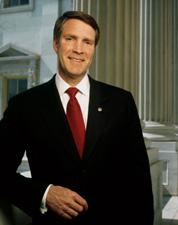
Mr. President, I ask unanimous consent that the Senate proceed to the consideration of S. 1858, the Vitter bill, which is at the desk, that the bill be read three times, passed, and that the motion…
Mr. President, I ask unanimous consent that the Senate proceed to the consideration of S. 1858, the Vitter bill, which is at the desk, that the bill be read three times, passed, and that the motion to reconsider be laid upon the table.
Mr. President, I object to the request.
Mr. President, regular order.
Mr. President, for the last 24 hours, we have dealt with an issue that centers around the Vitter bill and the proposal to appropriately be able to modify, increase the amounts of loans and loan programs. We have struggled to come to the point we have today, which maximizes our likelihood, having just passed the Vitter bill, to get language to the House of Representatives before they leave today so that we can respond to the very real needs of the local communities in New Orleans.
We have been working actually for about 10 days on the specific issue of being able to support local government, law enforcement, and hospitals. The step we just took in passing the Vitter bill maximizes our chance today of getting a bill to the House, which we will do, of having the House address it in the next few hours, and having this relief being made available to the people of New Orleans.
There have been a lot of suggestions in terms of language and changes in words, all of which is fine, and some of the language is even very reasonable in terms of the language itself, but after discussions with Republican leadership, the administration having fully vetted the language that is in the Vitter bill, I strongly believe that this gives us the best chance to respond to the very real needs of the people of New Orleans.

Mr. Speaker, I am not going to object, even though this legislation is flawed in many ways, as my colleague pointed out, because we all understand the tremendous need for the people in the gulf…
Mr. Speaker, I am not going to object, even though this legislation is flawed in many ways, as my colleague pointed out, because we all understand the tremendous need for the people in the gulf region. I am not a Representative from the gulf coast, but I certainly understand the impact on tax revenues after a disaster. Repealing the $5 million cap on community disaster loans is something that I have been working on along with the New York delegation, ever since New York suffered at least $5 billion in lost tax revenues following 9/11 and the loss from the gulf region maybe more.
The bill before us lifts the $5 million cap, but it adds a provision that has never, ever been seen before with these loans. It prohibits, literally prohibits, the Federal Government from forgiving any part of these loans. This is incredibly important because there has been a long history of canceling these loans after they are given.
I have here with me, Mr. Speaker, a list of all the previous disaster loans that have been forgiven. So why are we now putting this terrible burden on the people in the gulf region?
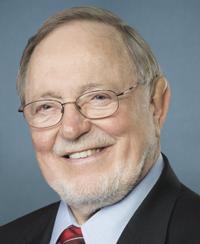
Mr. Speaker, will the gentleman yield? Mr. Speaker, I have not communicated with the gentleman from Minnesota, because I support what the gentleman wants to do, but I would suggest that if the…
Mr. Speaker, will the gentleman yield?
Mr. Speaker, I have not communicated with the gentleman from Minnesota, because I support what the gentleman wants to do, but I would suggest that if the gentleman from Minnesota and I can reach this agreement, and I am sure we can, we can come out with a resolution out of our committee immediately and bring it to the floor under unanimous consent, because what I think what the gentleman is asking is very legitimate.
I will commit that to the gentleman as chairman of the committee, and I am sure the gentleman from Minnesota and I can work that out. So I give you that commitment.
Show 2 more
Mr. Speaker, I ask unanimous consent that all Members may have 5 legislative days within which to revise and extend their remarks and include extraneous material on S. 1858.
Mr. Speaker, I ask unanimous consent that all Members may have 5 legislative days within which to revise and extend their remarks and include extraneous material on S. 1858.
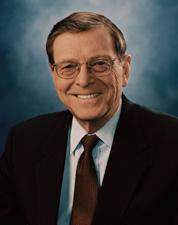
Mr. President, I ask unanimous consent that the order for the quorum call be rescinded.
Mr. President, I ask unanimous consent that the order for the quorum call be rescinded.
Bill Text
4 versions available
        [Congressional Bills 109th Congress]
[From the U.S. Government Publishing Office]
[S. 1858 Enrolled Bill (ENR)]

S.1858

One Hundred Ninth Congress

of the

United States of America

AT THE FIRST SESSION

Begun and held at the City of Washington on Tuesday,
the fourth day of January, two thousand and five

An Act

To provide for community disaster loans.

Be it enacted by the Senate and House of Representatives of the
United States of America in Congress assembled,

SECTION 1. SHORT TITLE.

This Act may be cited as the ``Community Disaster Loan Act of
2005''.

SEC. 2. DISASTER LOANS.

(a) Essential Services.--Of the amounts provided in Public Law 109-
62 for ``Disaster Relief'', up to $750,000,000 may be transferred to
the Disaster Assistance Direct Loan Program for the cost of direct
loans as authorized under section 417 of the Robert T. Stafford
Disaster Relief and Emergency Assistance Act (42 U.S.C. 5184) to be
used to assist local governments in providing essential services:
Provided, That such transfer may be made to subsidize gross obligations
for the principal amount of direct loans not to exceed $1,000,000,000
under section 417 of the Stafford Act: Provided further, That
notwithstanding section 417(b) of the Stafford Act, the amount of any
such loan issued pursuant to this section may exceed $5,000,000:
Provided further, That notwithstanding section 417(c)(1) of the
Stafford Act, such loans may not be canceled: Provided further, That
the cost of modifying such loans shall be as defined in section 502 of
the Congressional Budget Act of 1974 (2 U.S.C. 661a).
(b) Administrative Expenses.--Of the amounts provided in Public Law
109-62 for ``Disaster Relief'', up to $1,000,000 may be transferred to
the Disaster Assistance Direct Loan Program for administrative expenses
to carry out the direct loan program, as authorized by section 417 of
the Stafford Act.

Speaker of the House of Representatives.

Vice President of the United States and
President of the Senate.