Mr. Speaker, I yield myself such time as I may consume. Mr. Speaker, I thank the gentleman for yielding me the customary 30 minutes. Mr. Speaker, I think America is pretty apprehensive this morning,…
Mr. Speaker, I yield myself such time as I may consume.
Mr. Speaker, I thank the gentleman for yielding me the customary 30 minutes.
Mr. Speaker, I think America is pretty apprehensive this morning, certainly those who know that two American Presidents and one Governor of Kansas have tried trickle-down fairly recently and found it did not work at all and, indeed, caused great economic harm. But we are walking into trickle-down once again.
I think there is a word that describes when you do the same thing over and over again expecting a different result--I won't use that word, but I suspect most of us know exactly what I am talking about-- particularly at this time when this economy was really booming, really doing well.
I appreciate that there were pockets where people were not getting jobs, and this was pointed out by Richard Neal frequently last evening. We have such a skills gap that jobs are going unfilled in America, and that is what we really should be working on today.
The fact is that corporations are awash with money. The stock market is booming, and we have the lowest unemployment rate in 17 years. Why in
the world would we trifle with that to try a failed trickle-down policy again?
Now, emergency procedures were used to bring the bill up before us today. Now, what is this urgent attention that nobody could have any amendments or anything, that it was an emergency?
We are not reauthorizing the Children's Health Insurance Program, which a lot of people think is an emergency because it provides healthcare to more than 9 million children. We are not reauthorizing community health centers, which serve more than 25 million people; and, after killing Planned Parenthood--the money--that means a lot more people will need a community health center. We are not renewing the Perkins Loan Program, which many low-income students rely on for their education.
Those three programs expired on September 30, but we are not considering them today. Instead, despite a record of 86 months of job growth--every single month for 86 months we have grown jobs--and an unemployment rate that remains steady, the majority is prioritizing tax cuts--not tax cuts for the middle class.
Don't let anybody tell you that this is tax reform. It isn't. It is a moving around of rates, but very specifically geared toward helping the rich with nothing much for the middle class who work hard to make ends meet, but tax cuts for the wealthy. The middle class will see their money go directly to the rich.
That is what the bill was designed to do. You can tell by who wrote it. There is not a single Democratic fingerprint or breath anywhere to be found. Instead, it was crafted by the lobbyists who virtually run Washington under the majority's leadership. Some swamp clearing.
Consider this: there are 11,000 registered lobbyists in Washington, D.C. More than half of them--more than half of 11,000--reported working on the issues involving taxes during the first three quarters of this year. Each of the 20 organizations that hired the most lobbyists to work on tax issues have reported lobbying specifically on tax reform, covering the matters included in this bill.
Now, this is the quote of all time. One lobbyist admitted to The New York Times that few Members actually had any influence on the final product. He said, ``You are dealing with 14 people instead of 535 people,'' saying specifically, as much as possibly could be said, that the 535 people in the Congress representing the people of the United States didn't do a thing on this. They wrote it.
The New York Times has reported that the travel industry lobbyists directly emailed those writing the bill to kill an amendment on tourism because a competitor who favored it has been critical of President Trump.
Business lobbyists, after already securing a lower corporate tax rate in an early version of the bill, called the members of the majority and made it even more favorable to them. They secured the removal of the corporate alternative minimum tax, a provision designed for the very rich to get away with paying no taxes at all, and we know some people who have done that.
The majority has been very clear about whom the bill is written for. One of the members of the majority, Congressman Chris Collins, said: ``My donors are basically saying, `Get it done or don't ever call me again.'''
But, Mr. Speaker, what about the average American? What about workers and members of the middle class who can't write big campaign checks or who don't have an army of lawyers to scour the Tax Code on their behalf? Those are the people who are going to be forced to pay the price for providing the wealthy with these tax cuts.
Former New York City Mayor Michael Bloomberg is certainly a man who prefers business and knows a thing or two about running a business. He recently wrote this:
``Corporations are sitting on a record amount of cash reserves: nearly $2.3 trillion. That figure has been climbing steadily since the recession ended in 2009, and it is now double what it was in 2001. The reason CEOs''--this is an important point. ``The reason CEOs aren't investing more of their liquid assets has little to do with the tax rate. CEOs aren't waiting on a tax cut to `jump-start the economy'--a phrase of politicians who have never run a company--or to hand out raises. It is pure fantasy to think that the tax bill will lead to significantly higher wages and growth, as Republicans have promised.''
Now, that is not somebody who is an enemy of business, and he has called this bill a trillion-dollar blunder.
This is really a remarkable time in the United States, knowing that we are on the brink of passing a bill that will adversely impact virtually every American except the rich. The majority has the votes, and there is not much Democrats can do to stop it.
Let me say again, I am glad the Democrats are not involved in writing it, but it is an insult to the word ``reform'' to associate it with this bill.
The American people know they are not getting what they were promised by the majority. We know the President campaigned mightily on doing away with carried interest, but it is still in the bill.
The bill hurts the middle class, children, veterans, and the elderly by limiting or outright eliminating many of the deductions that they rely on.
Under this bill, the personal exemption is eliminated, the mortgage interest deduction is limited, the State and local tax deduction is limited mightily, and the moving expense deduction for individuals has been eliminated. Even the Affordable Care Act's individual mandate is eliminated. That will cause premiums to go up by 10 percent for those in the individual market, and 13 million people will lose their insurance--13 million.
I want to pause on that because countless times I have stood here at this very spot when there were almost 60 bills to repeal and replace ObamaCare, so we have been able to insert this now in the tax bill, which will really hurt it. I have always wondered why there was such a rush to take healthcare away from persons, and I guess somehow that money--obviously, that Medicaid money--will pay for a lot of these tax cuts for the rich.
All the tax cuts made for individuals will expire in 2025, but the tax cuts for corporations are permanent. That is not what we call reform. That keeps our Tax Code complicated by design. Wealthy families and big corporations can continue taking advantage of a system that they helped create.
Broken promises are embedded throughout the legislation. For years, I have heard members of the majority come to the floor talking about the need to address the national debt. Apparently, that was little more than a talking point, because this bill explodes the deficit by $1.5 trillion and it is completely unpaid for. Because of that, Federal law requires cuts to programs Americans depend on, including a $25 billion cut to Medicare.
This isn't fear-mongering; this is fact. Speaker Ryan said just last week: ``We're going to have to get back next year.'' Next year we are going to say: Oh, my, we are going to have to do something about this spending and this debt, and so we will have to cut spending.
What is he going to cut? The things he has always wanted to cut. He says: ``We're going to have to get back next year at entitlement reform, which is how you tackle the debt and the deficit.''
We have known he has wanted to do that for a long time.
So let me say this to the public watching today: When this majority speaks of reform, you should be very worried about your future. They pushed this scam under the guise of so-called reform, but it is simply a corporate giveaway. Soon they will be back here talking about reforming Social Security and Medicare to pay for what is going to happen here today.
Let's call it what it really is: a systematic dismantling of the social contract. It will impact everyone from children to veterans to the disabled. It begins today with this bill to help the wealthy who haven't even asked for it.
Mr. Speaker, I reserve the balance of my time.
Mr. Speaker, I yield 1 minute to the gentleman from Texas (Mr. Doggett).
Mr. Speaker, I yield 1 minute to the gentlewoman from Florida (Ms. Castor), a conferee, I believe.
Mr. Speaker, I yield 1 minute to the gentleman from Kentucky (Mr. Yarmuth), the distinguished ranking member of the Budget Committee.
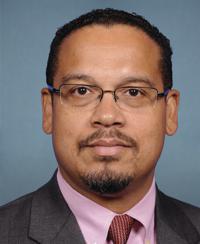
Mr. Speaker, I yield 1 minute to the gentleman from Minnesota (Mr. Ellison).
Mr. Speaker, I yield 2 minutes to the gentlewoman from California (Ms. Lee).
Mr. Speaker, I yield 1\1/2\ minutes to the gentleman from Rhode Island (Mr. Langevin).
Mr. Speaker, I yield 1 minute to the gentlewoman from Texas (Ms. Jackson Lee).
Mr. Speaker, I yield 2 minutes to the gentleman from Vermont (Mr. Welch).
Mr. Speaker, I yield 2 minutes to the gentlewoman from Connecticut (Ms. DeLauro).
Mr. Speaker, I yield myself such time as I may consume.
Mr. Speaker, this has been the most awful process. Mr. Barton wanted to know why the Democrats weren't involved. We weren't involved in any of it, for heaven's sake. We almost didn't get to see a copy of what they had.
But I think the debate we have had here today must be very similar to the one we had in the Reagan administration. And David Stockman, who talked Ronald Reagan into trickle down, he says today it didn't work. It didn't work then. It didn't work for President Bush. It didn't work for the Governor from Kansas, whose name escapes me for the moment. Very recently, it didn't work, and it isn't going to work this time.
So I am really appalled that we are doing it. But I have to say that this was the worst process that any of us have ever been through. We operated on Thomas Jefferson's manual in the Rules Committee. We didn't even come close.
Mr. Speaker, let me speak on the PQ. We must protect middle class families against the disastrous Republican tax plan, and if we defeat the previous question, I am going to offer an amendment that will prohibit any legislation from being considered on the floor that limits or repeals the State and local tax deduction or repeals the ACA's individual mandate.
Mr. Speaker, I ask unanimous consent to insert the text of my amendment in the Record, along with extraneous material, immediately prior to the vote on the previous question.
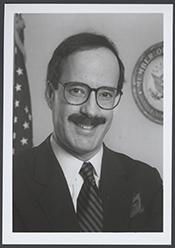
Mr. Speaker, I yield 1 minute to the gentleman from New York (Mr. Engel), the ranking member on the Committee on Foreign Affairs.
Mr. Speaker, I have one more speaker.
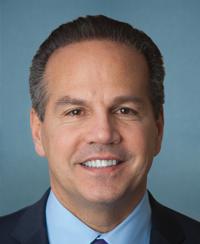
Mr. Speaker, I yield 1 minute to the gentleman from Rhode Island (Mr. Cicilline).
Mr. Speaker, I yield myself such time as I may consume.
Mr. Speaker, the Members of the majority have lined up today to tell the American people how great this bill is. If that is true, why were they afraid of holding a single hearing or listening to a single outside expert?
The 1986 tax bill had over 30 hearings and 430 witnesses and took well over a year; this one about three 3 months--written, apparently, by lobbyists. There wasn't a single hearing held on the text of this bill, not one. It was jammed through the Ways and Means Committee where our amendments, the Democrats', were blocked.
Democratic Members had under an hour to review the final text before voting. It was rushed to the Rules Committee a day earlier than announced with only 4 hours' notice, so nobody had any chance to read, and the majority there blocked 140 bipartisan amendments.
This has been a secretive process on both sides of the Capitol. Senators received the text of the final bill also within an hour of the vote. The nearly 500-page bill in the Senate was riddled with errors, last-minute edits, and illegible handwritten changes in the margins. There was a single meeting of a conference committee between the House and Senate. Members there were
prohibited from offering amendments or even seeing the negotiated text.
Imagine that, you couldn't even see what they were supposed to vote on. The Senators and Representatives sat around the table for show while the press reported that the deal, even before the meeting had started, had already been reached. The Democrats had no say at all.
House Ways and Means Chairman Kevin Brady says he is proud of this process, but it will take a separate bill just to correct some of the errors here. And there is no reason to believe he would include Democrats in that process either. It would be another partisan effort.
Let me remind everyone watching that we used emergency procedures to meet this onerous bill. In this Congress, disaster relief is not an emergency. Isn't that amazing? Funding CHIP and community health centers is not an emergency. Disaster funding is not an emergency. But rushing these tax cuts to the wealthiest among us is an emergency.
This bill, which has no deadline, is their top priority, while real emergencies are being ignored, and it is shameful. I urge a ``no'' vote on the previous question on the rule and the bill.
Mr. Speaker, I yield back the balance of my time.
Mr. Speaker, on that I demand the yeas and nays.
Mr. Speaker, I demand a recorded vote.