
S. 1158Senate115th Congress (2017-2019)Enacted

Elie Wiesel Genocide and Atrocities Prevention Act of 2018

Introduced May 17, 2017

AI-Generated Summary

Updated April 15, 2026 at 3:44 PM UTC

The Elie Wiesel Genocide and Atrocities Prevention Act of 2018 directs the U.S. government to strengthen its ability to stop genocide, war crimes, and other mass atrocities. It calls for better coordination among agencies, new training for diplomats in high‑risk countries, and regular reporting to Congress on prevention efforts. The law applies to federal agencies, foreign service officers, and partners involved in atrocity prevention worldwide.

Key Provisions

  • Calls on an interagency Atrocities Prevention Board (or successor) to meet regularly, monitor global risks, identify policy gaps, and recommend resources for atrocity prevention.
  • Amends the Foreign Service Act to require specific training for officers assigned to countries at risk of mass atrocities, covering early‑warning signs, conflict assessment, peacebuilding, and transitional justice.
  • Requires the President to submit a detailed report within 180 days of enactment and annually for six years, covering current prevention activities, funding, risk assessments, and recommendations for improving U.S. and multilateral responses.
  • Defines key terms such as genocide, atrocities, war crimes, and transitional justice, and states that the Act does not authorize the use of military force.

Legislative Activity

Stay on top of the latest movement without scrolling through every action

21 earlier actions
Became Law Latest Action

Became Public Law No: 115-441.

January 14, 2019

View full timeline
SenateIntro Referral

Introduced in Senate

May 17, 2017

SenateIntro Referral

Read twice and referred to the Committee on Foreign Relations. (Sponsor introductory remarks on measure: CR S3014-3015)

May 17, 2017

SenateCommittee

Committee on Foreign Relations. Ordered to be reported with an amendment in the nature of a substitute favorably.

June 26, 2018

SenateCommittee

Committee on Foreign Relations. Reported by Senator Corker with an amendment in the nature of a substitute. Without written report.

June 27, 2018

SenateCalendars

Placed on Senate Legislative Calendar under General Orders. Calendar No. 489.

June 27, 2018

SenateFloor

Measure laid before Senate by unanimous consent. (consideration: CR S7522-7524)

December 12, 2018

SenateFloor

The committee substitute withdrawn by Unanimous Consent. (CR S7522)

December 12, 2018

SenateFloor

Passed Senate with an amendment by Unanimous Consent.

December 12, 2018

HouseFloor

Received in the House.

December 13, 2018 • 1:07 PM

SenateFloor

Message on Senate action sent to the House.

December 13, 2018

HouseFloor

Held at the desk.

December 13, 2018 • 3:15 PM

HouseFloor

Mr. Royce (CA) moved to suspend the rules and pass the bill.

December 21, 2018 • 10:57 AM

HouseFloor

Considered under suspension of the rules. (consideration: CR H10546-10547)

December 21, 2018 • 10:58 AM

HouseFloor

DEBATE - The House proceeded with forty minutes of debate on S. 1158.

December 21, 2018 • 10:58 AM

HouseFloor

At the conclusion of debate, the Yeas and Nays were demanded and ordered. Pursuant to the provisions of clause 8, rule XX, the Chair announced that further proceedings on the motion would be postponed.

December 21, 2018 • 11:00 AM

HouseFloor

Considered as unfinished business. (consideration: CR H10574-10575)

December 21, 2018 • 4:30 PM

SenateFloor

Passed/agreed to in House: On motion to suspend the rules and pass the bill Agreed to by the Yeas and Nays: (2/3 required): 367 - 4 (Roll no. 489).(text: CR H10546-10547)

December 21, 2018 • 4:33 PM

HouseFloor

On motion to suspend the rules and pass the bill Agreed to by the Yeas and Nays: (2/3 required): 367 - 4 (Roll no. 489). (text: CR H10546-10547)

December 21, 2018 • 4:33 PM

HouseFloor

Motion to reconsider laid on the table Agreed to without objection.

December 21, 2018 • 4:33 PM

President

Presented to President.

January 2, 2019

Became Law

Signed by President.

January 14, 2019

Became Law

Became Public Law No: 115-441.

January 14, 2019

Floor Debate

18 members

What members said about S. 1158 on the floor

9 Republicans9 Democrats
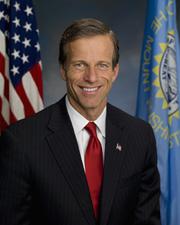
John Thune
Sen. John ThuneR-SD · May 17, 2017

Mr. President, there is no doubt that the last 8 years were not good ones for the American economy. Yearly economic growth under the Obama administration averaged just under 1.5 percent. That is less…

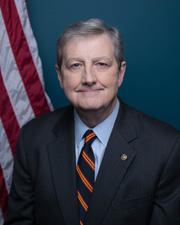
John Kennedy
Sen. John KennedyR-LA · May 17, 2017

Mr. President, I would like to talk today about the need for a work requirement in our Medicaid Program. In 1969, President Lyndon Johnson addressed the American people, and he talked about breaking…

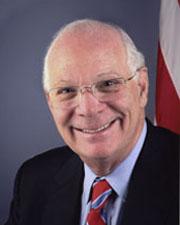
Benjamin L. Cardin
Sen. Benjamin L. CardinD-MD · May 17, 2017

Mr. President, April was Genocide Awareness and Prevention Month. It commemorated some of the most horrific genocides and atrocities of the 20th century: the siege of Sarajevo in April 1992, the…

Benjamin L. Cardin
Sen. Benjamin L. CardinD-MD · May 17, 2017

Mr. President, April was Genocide Awareness and Prevention Month. It commemorated some of the most horrific genocides and atrocities of the 20th century: the siege of Sarajevo in April 1992, the…

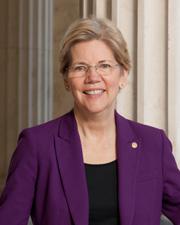
Elizabeth Warren
Sen. Elizabeth WarrenD-MA · May 17, 2017

Mr. President, I rise today to announce the reintroduction of the Bank on Students Emergency Loan Refinancing Act of 2017. This legislation would allow student loan borrowers to take advantage of…

Show 8 more
Earl Blumenauer
Rep. Earl BlumenauerD-OR-3 · Dec 21, 2018

Mr. Speaker, had I been present for the vote today on the enrollment correction to H.R. 4174, the Foundations for Evidence- Based Policymaking Act of 2017 (Roll no. 483), I would have voted ``aye.''…

Steve Daines
Sen. Steve DainesR-MT · May 17, 2017

Mr. President, I ask unanimous consent that the text of the bill be printed in the Record. Mr. President, the travel and tourism industry is a pillar of Montana's economy. Our wealth of public lands,…

Tim Kaine
Sen. Tim KaineD-VA · May 17, 2017

Mr. President, today I want to discuss legislation I am introducing, the School Infrastructure Modernization Act. To claim the federal tax credit for historic preservation, a building renovation must…

Anna G. Eshoo
Rep. Anna G. EshooD-CA-18 · Dec 21, 2018

Mr. Speaker, I was unable to be present during roll call vote number 483, 484, 485, 486, 487, 488, 489, 490, 491, 492, 493, 494, 495, 496, 497, 498, 499, and 500 on December 21, 2018, due to a death…

Edward R. Royce
Rep. Edward R. RoyceR-CA-39 · Dec 21, 2018

Mr. Speaker, I move to suspend the rules and pass the bill (S. 1158) to help prevent acts of genocide and other atrocity crimes, which threaten national and international security, by enhancing…

Elijah E. Cummings
Rep. Elijah E. CummingsD-MD-7 · Dec 21, 2018

Mr. Speaker, I yield myself such time as I may consume. Mr. Speaker, the resolution before us would change the enrollment of H.R. 4174 to make several corrections to the bill. Concerns were raised…

Paul Mitchell
Rep. Paul MitchellR-MI-10 · Dec 21, 2018

Mr. Speaker, I move to suspend the rules and agree to the concurrent resolution (H. Con. Res. 149) directing the Clerk of the House of Representatives to make certain corrections in the enrollment of…

Eliot L. Engel
Rep. Eliot L. EngelD-NY-16 · Dec 21, 2018

Mr. Speaker, I yield myself such time as I may consume. Mr. Speaker, I rise in support of this measure. This is an important bill that improves our ability to prevent and respond to genocides and…

Show 7 more
Cory Gardner
Sen. Cory GardnerR-CO · Dec 12, 2018

Mr. President, I ask unanimous consent that the Senate proceed to the immediate consideration of Calendar No. 489, S. 1158. I further ask unanimous consent that the committee- reported substitute…

Jim Costa
Rep. Jim CostaD-CA-16 · Dec 21, 2018

Mr. Speaker, due to unforeseen circumstances, I was unable to be in attendance for Roll Call Vote No. 500. Had I been present I would have voted YES.

Ann Wagner
Rep. Ann WagnerR-MO-2 · Dec 21, 2018

Mr. Speaker, I was unavoidably detained. Had I been present, I would have voted ``yea'' on rollcall No. 500. personal explanation

John Cornyn
Sen. John CornynR-TX · May 17, 2017

Mr. President, I ask unanimous consent that the text of the bill be printed in the Record.

Richard J. Durbin
Sen. Richard J. DurbinD-IL · May 17, 2017

Mr. President, I ask unanimous consent that the text of the bill be printed in the Record.

Thomas Massie
Rep. Thomas MassieR-KY-4 · Dec 21, 2018

Mr. Speaker, on that I demand the yeas and nays.

Thomas Massie
Rep. Thomas MassieR-KY-4 · Dec 21, 2018

Mr. Speaker, on that I demand the yeas and nays.

Bill Text

5 versions available

Reading Mode
Latest
Enrolled BillPublication date not provided

One Hundred Fifteenth Congress of the United States of America

2d Session

Begun and held at the City of Washington on Wednesday, the third day of January, two thousand and eighteen

S. 1158

AN ACT

To help prevent acts of genocide and other atrocity crimes, which threaten national and international security, by enhancing United States Government capacities to prevent, mitigate, and respond to such crises.

1.

Short title

This Act may be cited as the Elie Wiesel Genocide and Atrocities Prevention Act of 2018.

2.

Sense of congress

It is the sense of Congress that the United States Government’s efforts at atrocity prevention and response through interagency coordination, such as the Atrocities Prevention Board (referred to in this Act as the Board) or successor entity are critically important, and that appropriate officials of the United States Government should—

(1)

meet regularly to monitor developments throughout the world that heighten the risk of atrocities;

(2)

identify any gaps in United States foreign policy concerning regions or particular countries related to atrocity prevention and response;

(3)

facilitate the development and implementation of policies to enhance the capacity of the United States to prevent and respond to atrocities worldwide;

(4)

provide the President and Congress with recommendations to improve policies, programs, resources, and tools related to atrocity prevention and response;

(5)

conduct outreach, including consultations, not less frequently than biannually, with representatives of nongovernmental organizations and civil society dedicated to atrocity prevention and response;

(6)

operate with regular consultation and participation of designated interagency representatives of relevant Federal agencies, executive departments, or offices; and

(7)

ensure resources are made available for the policies, programs, and tools related to atrocity prevention and response.

3.

Statement of policy

It shall be the policy of the United States to—

(1)

regard the prevention of atrocities as in its national interest;

(2)

work with partners and allies, including to build their capacity, and enhance the capacity of the United States, to identify, prevent, and respond to the causes of atrocities, including insecurity, mass displacement, violent conflict, and other conditions that may lead to such atrocities; and

(3)

pursue a United States Government-wide strategy to identify, prevent, and respond to the risk of atrocities by—

(A)

strengthening the diplomatic, risk analysis and monitoring, strategic planning, early warning, and response capacities of the Government;

(B)

improving the use of foreign assistance to respond early, effectively, and urgently in order to address the causes of atrocities;

(C)

strengthening diplomatic response and the effective use of foreign assistance to support appropriate transitional justice measures, including criminal accountability, for past atrocities;

(D)

supporting and strengthening local civil society, including human rights defenders and others working to help prevent and respond to atrocities;

(E)

promoting financial transparency and enhancing anti-corruption initiatives as part of addressing causes of conditions that may lead to atrocities; and

(F)

employing a variety of unilateral, bilateral, and multilateral means to prevent and respond to atrocities by—

(i)

placing a high priority on timely, preventive diplomatic efforts; and

(ii)

exercising leadership in promoting international efforts to prevent atrocities.

4.

Training of foreign service officers in conflict and atrocities prevention

Section 708 of the Foreign Service Act of 1980 (22 U.S.C. 4028) is amended in subsection (a)(1)—

(1)

in subparagraph (B), by striking and at the end;

(2)

in subparagraph (C), by striking the period at the end and inserting ; and; and

(3)

by adding at the end the following new subparagraph:

(D)

for Foreign Service Officers who will be assigned to a country experiencing or at risk of mass atrocities, as determined by the Secretary of State, in consultation with the Director of National Intelligence and relevant civil society organizations, instruction on recognizing patterns of escalation and early warning signs of potential atrocities, and methods of preventing and responding to atrocities, including conflict assessment methods, peacebuilding, mediation for prevention, early action and response, and appropriate transitional justice measures to address atrocities.

.

5.

Reports

(a)

In general

Not later than 180 days after the date of the enactment of this Act and annually thereafter for the following six years, the President shall transmit to the Committee on Foreign Affairs and the Committee on Appropriations of the House of Representatives and the Committee on Foreign Relations and the Committee on Appropriations of the Senate a report, with a classified annex if necessary, that includes—

(1)

a review, in consultation with appropriate interagency representatives, including the Board, consisting of a detailed description of—

(A)

current efforts to prevent and respond to atrocities, based on United States and locally identified indicators, including an analysis of capacities and constraints for interagency detection, early warning and response, information-sharing, contingency planning, and coordination;

(B)

recommendations to further strengthen United States capabilities described in subparagraph (A);

(C)

funding expended by relevant Federal departments and agencies on atrocities prevention activities, including appropriate transitional justice measures and the legal, procedural, and resource constraints faced by the Department of State and the United States Agency for International Development throughout respective budgeting, strategic planning, and management cycles regarding support for atrocity prevention activities;

(D)

a global assessment of ongoing atrocities, including the findings of such assessment and, where relevant, the efficacy of any steps taken by the Board or relevant Federal agency to respond to such atrocities;

(E)

countries and regions at risk of atrocities, including a description of specific risk factors, at-risk groups, and likely scenarios in which atrocities would occur; and

(F)

the atrocities prevention training for Foreign Service officers authorized under subparagraph (D) of section 708(a)(1) of the Foreign Service Act of 1980, as added by section 4;

(2)

recommendations to ensure shared responsibility by—

(A)

enhancing multilateral mechanisms for preventing atrocities, including strengthening the role of international organizations and international financial institutions in conflict prevention, mitigation, and response; and

(B)

strengthening relevant regional organizations;

(3)

the implementation status of the recommendations contained in the previous review required by this section; and

(4)

identification of the Federal agencies and civil society, academic, and nongovernmental organizations and institutions consulted for preparation of such report.

(b)

Consideration of recommendations

The preparation of the report required by subsection (a) shall include a consideration of analysis, reporting, and policy recommendations to prevent and respond to atrocities produced by civil society, academic, and other nongovernmental organizations and institutions.

(c)

Availability to Congress

The report required by subsection (a) shall be made available to all members of Congress.

6.

Definitions

In this Act—

(1)

the term genocide means an offense under subsection (a) of section 1091 of title 18, United States Code;

(2)

the term atrocities means war crimes, crimes against humanity, and genocide;

(3)

the term transitional justice means the range of judicial, nonjudicial, formal, informal, retributive, and restorative measures employed by countries transitioning out of armed conflict or repressive regimes to redress legacies of atrocities and to promote long-term, sustainable peace; and

(4)

the term war crime has the meaning given the term in section 2441(c) of title 18, United States Code.

7.

Rule of construction

Nothing in this Act shall be construed as authorizing the use of military force.

Speaker of the House of Representatives

Vice President of the United States and President of the Senate