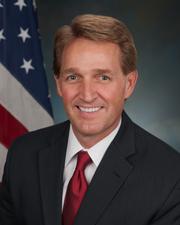
Mr. President, I wish to begin by noting that had the people of Arizona and America been truly lucky, my mother or father would have served in the U.S. House of Representatives and in the Senate. Everything I know about what matters most…
Mr. President, I wish to begin by noting that had the people of Arizona and America been truly lucky, my mother or father would have served in the U.S. House of Representatives and in the Senate. Everything I know about what matters most in life I learned first at their dinner table. For many reasons--they were otherwise preoccupied raising and feeding 11 children, working the land, running cattle to keep the F-Bar business going, and serving their church and community daily, and in too many other ways to count--my parents were too meaningfully occupied in life to detour to something that can be so frivolous as politics. So you got their son instead.
I rise to say, it has been the honor of my life to represent my home, Arizona, in the U.S. Senate and, before that, in the House of Representatives; that is, it has been the honor of my life after being Dean and Nerita's son, Cheryl's husband, and Ryan's, Alexis's, Austin's, Tanner's, and Dallin's father.
Through 18 years in Washington, our kids grew up thinking it was normal to have their faces plastered on campaign signs along the roadside when campaigns rolled around. They were dragged to countless fundraisers and campaign events. They were used to having their dad join them, sort of, with a choreographed wave on C-SPAN at dinnertime.
They spent summers in Washington catching fireflies and voting with their dad on the House floor. They served as interns and congressional pages. Much of it they enjoyed, some of it they endured, but through all of it, they were not just good sports but were extraordinarily understanding and supportive.
And Cheryl--well, Cheryl is the rock upon which our family is built. Her strength, equanimity, endless patience and love--her good humor even when congressional life was not always funny, and her belief, when disbelief would have been perfectly reasonable--these are but a few of the long list of things that leave me simply awestruck by my wife.
I think all of us who presume to hold these positions owe someone who loves us a debt we can never ever repay. If they cannot be repaid, they can at least be properly recognized--Cheryl, that girl I met on a beach so long ago, our wonderful children, my brothers, my sisters, our extended families.
John McCain often joked that the only way I ever got elected to anything was because of my hundreds of siblings and thousands of cousins. Well, the truth hurts, I reckon; Senator McCain just may have been on to something there. It was my honor to serve with him, as it has been my honor to serve with Senator Kyl.
Today I am filled with gratitude--gratitude for the privilege of loving and being loved by those people I mentioned and of serving the State and the country I love as well; grateful beyond measure and luckier than I deserve to be.
I leave here grateful and optimistic. I will always treasure the friendships that began here and the kindness shown to me and my family by all of you, my colleagues. I will forever cherish the work of our country that we were able to do together. From the bottom of my heart, I thank you all.
As I stand here today, I am optimistic about the future, but my optimism is due more to the country my parents gave to me than it is due to the present condition of our civic life. We, of course, are testing the institution of American liberty in ways that none of us ever imagined we would and in ways we probably never should again. My colleagues, to say that our politics is not healthy is somewhat of an understatement.
I believe we all know well that this is not a normal time and that the threats to our democracy from within and without are real, and none of us can say with confidence how the situation we now find ourselves in will turn out. Over the past 2 years, I have spoken a great deal on the subject from this Chamber, and there will be time enough later to return to it in other settings, but in the time I have here today, and with your indulgence, I instead wish to speak somewhat more personally.
As the authoritarian impulse reasserts itself globally, and global commitment to democracy seems to now be on somewhat shaky ground, I have been thinking a lot recently about the American commitment to democracy--where it comes from and how, if the circumstances were right, it might slip away.
This got me thinking back to when I was a much younger man and had the privilege of witnessing the birth of a new democracy in Africa. When I was about half the age I am now, for my church mission, I went to South Africa and Zimbabwe. I fell in love with the people in these countries.
When Cheryl and I were drawn back to Southern Africa a few years later for a job, we were in Windhoek, Namibia, in February of 1990, at the very moment that much of the world enslaved by totalitarianism was throwing off its shackles, and the free world that the United States had led since World War II was growing exponentially.
The Soviet Union was in a glorious free fall, shedding republics seemingly by the day, and Eastern Europe was squinting out into the light of liberation for the first time in 40 years. Free markets and free minds were sweeping the world. Freedom was breaking out in the Southern Hemisphere as well. The country where I was sitting that very morning was itself only days old.
In November of 1989--the same week the Berlin Wall came down--Namibia held its first election as an independent
nation, freed from the apartheid administration in South Africa. This had come to pass in no small part because of leadership from the United States, through the United Nations.
Just days earlier, an awe-inspiring document had been drafted only a few blocks away from where I sat in Windhoek--a new democracy's founding Constitution, the inspiration for which had been the marvel of free people everywhere and those who aspire to be free: the U.S. Constitution.
At the time, I was in Africa working for the Foundation for Democracy, trying to ensure that Namibia emerged from the process of gaining its independence as a democratic country. In my role at the foundation, I evangelized for democracy and democratic values, the benefits of which had been a given for me for my entire life.
I can safely say, though, that I learned more about democracy from the lives of those around me who aspired to it than those who experienced it as a birthright.
As I sat there in the brandnew African democracy, I read the speech that the playwright and new President of a newly democratic Czechoslovakia, Vaclav Havel, had just delivered before a joint session of the U.S. Congress, right across the way in the House Chamber. Havel, who had much of the previous decade in a Communist dungeon and whose last arrest as a dissident had been mere months before, was quite astonished to find himself president of anything, much less a country of his oppressors.
I sat there in Africa and read Havel's speech--an encomium to democracy, a love letter to America, literary and inspiring--and I was overcome by his words. There is nothing quite like the sensation of having someone who has been stripped of everything but his dignity reflecting the ideals of your own country back at you in such a way that you see them more clearly than ever before and maybe for the first time. In some ways, that man knows your country better than you know it yourself.
I can only imagine how surreal it must have felt for Havel as he stood before the entire Congress, the President's Cabinet, the diplomatic corps, Joint Chiefs of Staff assembled before him in the House Chamber of our Capitol Building, with the Vice President and Speaker of the House behind him, all standing in a sustained ovation, a deep respect from the oldest democracy in the world to the newest, whose leader had been a political prisoner just a season earlier.
Havel soberly poured out his gratitude to the United States for the sacrifice our country had made in liberating Europe once again and for the moral example of its leadership around the world in opposing the Soviet Union, ``the country,'' he said, ``that rightly gave people nightmares.''
Havel's awed appreciation for the values that too many of us might take for granted brought home to me, an American in my midtwenties sitting there in Africa, the power of the American example to the whole world and the humbling responsibilities that come with that power. It is no exaggeration to say that Havel's disquisition on democracy before Congress that day in 1990 was a turning point in my civic education.
Havel similarly called out to the whole world from Washington on that day in 1990, with grace and without rancor, but for one mistaken prophecy, which to me now reads as tragic, especially in the context of the here and now.
At the time, as the wall fell and the Soviet bloc that had been encased in Stalinism thawed, it was vogue among some historians, scholars, and others to declare ``the end of history''--that the big questions had been settled, that liberal democracy was triumphal and inexorable, and that the decline of the impulse to enslave whole countries was also inexorable. Freedom had won, it was said, and forever.
The historian Francis Fukuyama, who had coined ``the end of history'' in an essay a year before, was much in demand, and it was likely that Havel would have been inspired by the fervor, which might explain this passage from his speech.
He said:
I often hear the question: How can the United States of
America help us today? My reply is as paradoxical as my whole
life has been. You can help us most of all if you help the
Soviet Union on its irreversible but immensely complicated
road to democracy.
Of course, history was not over. The road to democracy is not irreversible--not in Moscow, not in America, not anywhere.
After erecting a Potemkin village for democracy for an agonizing decade or so, the Russians thrust forward a strongman amid the chaos, a strongman who was determined to reassemble the pieces of a broken empire, in the process strangling Russian democracy in its cradle.
Vladimir Putin would go on to be President, and he is President still, and just as he hijacked democracy in his own country, he is determined to do so everywhere.
Denial of this reality will not make it any less real. This is something that is staring us in the face, right now, as we are gathered here today.
As we in America--during this moment of political dysfunction and upheaval--contemplate the hard-won conventions and norms of democracy, we must continually remind ourselves that none of this is permanent, that it must be fought for continually.
Civilization and the victories of freedom--history itself--are not a matter of once achieved, always safe. Vaclav Havel lived this.
The lovers of democracy I met in Namibia lived this. Our children, whose rights and prerogatives have never been in doubt, are for the most part unaware of it. But we are being powerfully reminded just how delicate all of it is right now.
The stability of tested alliances, the steadiness of comportment, and the consistency of words and deeds sum up the best of water's-edge postwar American consensus on foreign policy.
It might seem that all of this has lately been tossed around like pieces on a board, but it is important to remember that we have seen such tumult before, and it is the genius of the architects of our liberty that we withstand it and emerge the stronger for it.
What struck me in Namibia that day with such force and has stayed with me ever since is how vital a beacon the United States is and has always been to the peoples of the world--both to those who are already free and those who still suffer tyranny.
It is a solemn obligation that we have as Americans. Let us recognize from this place here today that the shadow of tyranny is once again enveloping parts of the globe, and let us recognize as authoritarianism reasserts itself in country after country that we are by no means immune.
I stand here today, recognizing that I have had the good fortune during my time in the Senate to have been surrounded by supremely smart and dedicated staff, some of whom have worked for me for my entire 18 years in Washington.
My chiefs of staff--Steve Voeller, Margaret Klessig, Matt Specht, Chandler Morse, and Roland Foster have ably supervised a legislative team that included over the years people like Colleen Donnelly, Helen Heiden, Chuck Podalak, Kris Kiefer, Sarah Towles, Emily Nelson, Brian Canfield, Blake Tonn, Flaka Ismaili, Chance Hammock, Matt Sifert, Colin Timmerman, Melanie Lehnhardt, Hannah Grady, Brian Kennedy, Katie Jackson, James Layne, Andrea Jones, Kunal Parikh, Gary Burnett, Michael Fragoso, and so many others who drafted substantive legislation and consequential amendments that have been signed into law.
My schedulers, office managers, and press shop have been asked to explain a lot over the years, including my penchant for marooning myself on deserted islands, sometimes with people like Senator Martin Heinrich, or forced to explain why I had been chased by elephants in Mozambique with Senator Chris Coons--people like Celeste Gold, Meagan Shepherd, Caroline Celley, Megan Runyan, Christine Chucri, Michael Christifulli, Jacob McMeekin, Jason Samuels, Brownyn Lance, Liz Jones, Dan Mintz, Krista Winward, Jonathan Felts, Elizabeth Berry, and many more.
They have kept me largely out of controversy, if not out of elevators, during my entire time in office.
Dedicated caseworkers in my State offices have helped countless Arizonans with matters of immigration to veterans' issues to Social Security.
I am frequently stopped, as I am sure many of my colleagues are, in airports
and grocery stores and thanked for the good work done by my staff.
Thank you to Buchanan Davis, Mary Baumbach, Julie Katsel, Melissa Martin, Mike Nelson, Jeremy Thompson, Michael Vargas, Chris Stoller, Bob Brubaker, Blake Farnsworth, Chelsea Lett, Elizabeth Bustamante- Lopez, and so many others for such dedicated constituent work over the years.
To all who have served in my office: I will miss your wise counsel but, most of all, your friendship. Thank you.
I would also like to say a word of thanks to the institutional officers who serve the Senate so ably: the clerks, Parliamentarians, the floor staff, the pages, the Sergeant at Arms and his employees, and the Capitol Police, who keep us safe here in the Capitol and at times on distant baseball fields. I quite literally owe my life to them. Thank you.
As I give this last speech from the Chamber, I cannot help but look to my maiden speech I gave here just 6 years ago.
In it I talked about how 12 newly elected Senate freshmen in 2012 were invited to the National Archives and taken to the legislative vault, where we viewed the original signed copy of the first bill ever enacted by Congress, as well as other landmark pieces of legislation and memorabilia. Oaths of allegiance signed by Revolutionary War soldiers, witnessed by General Washington, documents and artifacts related to the Civil War, segregation, women's suffrage, and the civil rights movement were also on hand.
I noted that it was an affirmation to me of the tumultuous seas through which our ship of state has sailed for more than 200 years, with many brilliant and inspired individuals at the helm, along with personalities ranging from mediocre to malevolent. But our system of government has survived them all.
I also noted then and I will echo today that serious challenges lie ahead, but any honest reckoning of our history and our prospects will note that we have survived more daunting challenges than we now face. Ours is a durable, resilient system of government, designed to withstand the foibles of those who sometimes occupy these Halls, including yours truly.
So as I start a new chapter in the coming weeks, I am grateful most of all for the privilege of having served with all of you here.
It is my sincere hope that those in this body will always remember the words of Lincoln who said: ``We shall nobly save or meanly lose the last best hope of Earth.'' The way forward, he said, ``is plain, peaceful, generous, just--a way which, if followed, the world will forever applaud and God will forever bless.''
I yield the floor.