Senate Floor·September 17, 2026·p. S4774-S4775
← Back to Members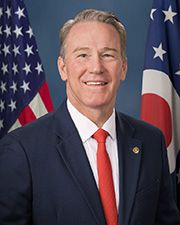
JH
Jon Husted
RepublicanSenate
OH
Service History
119th Congress (2025-2027)Senate
Currently Serving
OH
Jan 2025
to
Present
1
Terms Served
1
Congresses
0
Safe Wins (>10%)
Committee Assignments
Aging (Special) CommitteeChemical Safety, Waste Management, Environmental Justice, and Regulatory Oversight SubcommitteeChildren and Families SubcommitteeClean Air, Climate, and Nuclear Innovation and Safety Subcommittee SubcommitteeEmployment and Workplace Safety SubcommitteeEnvironment and Public Works CommitteeFisheries, Water, and Wildlife SubcommitteeHealth, Education, Labor, and Pensions CommitteePrimary Health and Retirement Security SubcommitteeSmall Business and Entrepreneurship Committee
Recent Sponsored Bills
S.Res. 867Senate119th Congress (2025-2027)
A resolution designating the week of September 14 through September 20, 2026, as "Interscholastic Athletic Administration Week".
Sponsored by Sen. Jon Husted (R-OH)
September 17, 2026
S. 5413Senate119th Congress (2025-2027)
A bill to withhold Federal highway funds from States that provide driver's licenses or identification cards to aliens who are unlawfully present in the United States, and for other purposes.
Sponsored by Sen. Jon Husted (R-OH)
September 16, 2026
S. 5392Senate119th Congress (2025-2027)
TEAM USA Act
Sponsored by Sen. Jon Husted (R-OH)
September 14, 2026
Recent Voting Record
View All Votes →Floor Statements
What Jon said on the floor, from the Congressional Record
Senate Floor·September 17, 2026·p. S4775-S4776
Unanimous Consent Requests (Executive Session)
Mr. President, America is expected to build the equivalent of 1,000 major data centers during the next 5 years. You heard that correctly--a thousand data centers within the next 5 years, with more than 2,000 projects currently being…
Mr. President, America is expected to build the equivalent of 1,000 major data centers during the next 5 years. You heard that correctly--a thousand data centers within the next 5 years, with more than 2,000 projects currently being proposed and tracked. We need to protect American ratepayers from footing the bill.
The clock is ticking, and we have no time for delay. Americans are becoming ever more reliant on computing power from data centers for their daily lives--from medicine to manufacturing, education to agriculture, and national defense to the way we deliver basic services. Data centers are used not just for AI. They support almost every aspect of modern life, including online shopping, streaming videos, social media, and the broadcast of this very debate.
To meet these consumer demands, Americans need an ample supply of electricity. This problem has been exacerbated by the fact that, due to Federal regulations over the past two decades, powerplants have been closed, decreasing the supply of electricity. Congress failed to stop this action. During the Obama and Biden years alone, 23 powerplants were closed in the State of Ohio, creating a supply-and-demand problem that drove up prices on consumers.
So, as we look to build the future, we must follow some basic principles of fairness.
The companies creating enormous new demands for electricity should pay the costs required to serve them--pretty simple. Working families, small businesses, and senior citizens should not open up their electric bills and discover they are paying for the power infrastructure needed by some large tech company in the world or in their neighborhood.
That is the principle behind the Ratepayer Protection Act.
When a very large electricity customer, such as a data center, connects to the grid, it requires investments in new generation, transmission lines, substations, and local distribution systems. The Ratepayer Protection Act would require State utility regulators to consider standards, ensuring that large load customers pay the full-- full--incremental costs of the infrastructure needed to serve it. Those standards could also require financial assurances so that families are not left paying for stranded infrastructure if the project is delayed, downsized, or abandoned. In plain language, if you create the cost, you should pay the cost.
This is not anti-technology legislation. It is pro-growth and pro- innovation. Mostly, it is procurement legislation. In fact, protecting ratepayers will make it easier, not harder, for America to build the technology infrastructure we need. Americans are understandably concerned about rising electric bills. If they believe every new data center will make their monthly bills go up, public opposition will grow, communities will reject plans, construction will slow, and China will gain ground.
The better approach is to establish clear rules from the beginning. Data centers should only be located where communities want them. They can bring billions of dollars in private investment; in construction work for electricians, pipefitters, equipment operators, and other skilled trades; as well as in revenue for schools and local services. But those benefits should not come with a hidden charge of electric bills for families, farmers, and small businesses.
When companies know up front that they will be responsible for their own energy costs, they can plan accordingly. That approach encourages innovation. It rewards those who find the most efficient ways to operate. It also creates an incentive to build more American energy in the most efficient manner possible. When energy supply adequately meets demand, it helps put down pressure on prices for consumers. It helps people save money; that is what it does. They keep more of their paychecks for what they need to spend for their priorities.
Providing modern benefits from innovation does not require us to choose between technological leadership and affordable electricity. We can do both. We can do both. We can build the computing capacity America needs, and we can produce the reliable energy it requires. We can protect families and small businesses from unfair costs.
The Ratepayer Protection Act rests on a principle every American understands: Pay your own way. This is how we make sure American families are not left footing the bill for the energy infrastructure required by data centers. Most importantly, it will help the American people keep more of what they earn.
So this brings me to this moment:
Yesterday, this bill passed the House of Representatives by a nearly unanimous vote of 417 to 3. That is right--417 Members of the U.S. House of Representatives voted to pass this bill, with only 3 objections. So the Members of the House did their jobs; they stood up for the American ratepayer. It is time for the Senate to do the same.
In a few moments, I am going to ask my colleagues in the Senate to support the Ratepayer Protection Act. Together, we can send this bill to the President's desk for his signature. The Ratepayer Protection Act represents the most meaningful, bipartisan step Congress can take to protect the American people from higher prices for electricity. I am here today because we can get this done. The House has already done it. The House has done its job. There is no need to wait and no need to delay.
If we get it done today, we say to the American people: We actually care. We heard you. We are going to get the job done.
It demonstrates Washington can work in a bipartisan way to address the problems that are most pressing to the American people. I am proud to have led this effort in the U.S. Senate, and I am going to urge unanimous consent for this commonsense bill.
Mr. President, as if in legislative session and notwithstanding rule XXII, I ask unanimous consent that the Senate proceed to the immediate consideration of H.R. 9340, which is at the desk; further, that the bill be considered read a third time and passed, and that the motion to reconsider be considered made and laid upon the table.
Mr. President, I ask unanimous consent to speak for an additional 1 minute.
Mr. President, I would just say this: I accept the Senator from New Mexico's concerns, but the reason I am proposing that we pass this piece of legislation is that it passed the House, 417 to 3. If the Senator from New Mexico's provision had passed the House 417 to 3, he would have had every right to stand up and ask that we do this.
Before we leave here, we ought to do something on a matter that the American people have asked us to do something about, and we have the opportunity to do that with the Ratepayer Protection Act. It is a shame that this opportunity has been missed today, but I will be back to push this issue forward. We have a bipartisan opportunity to get this done, and we should do it immediately.
Senate Floor·September 15, 2026·p. S4709-S4714
Protect College Sports Act (Executive Calendar)
Mr. President, I rise today to speak about the future of college athletics and American student-athletes. Congress is being asked to take action to save college sports. Well, as we consider what we need to do to save college sports, we…
Mr. President, I rise today to speak about the future of college athletics and American student-athletes.
Congress is being asked to take action to save college sports. Well, as we consider what we need to do to save college sports, we better make sure that we are focused on saving it for American student- athletes.
For generations, college sports have become a part of culture, particularly in a State like Ohio. A lot of States love their college sports. It is part of American culture and it is an important part of campus life for many American students and we want to make sure that that remains the case.
But sports mean so much more than that. So many of America's leaders have a sports background, whether that is in politics, business, or whatever it might be. For obvious reasons, it helps you build character. It makes you tougher. You learn discipline, teamwork, all of the things that are virtuous parts of succeeding in life.
I know this firsthand. I grew up very rural and went to high school in a small town, and no one in my family had attended college--no one. And the only thing I wanted to do as a kid is that I wanted to play college football.
I got to watch the Ohio State Buckeyes and even one of the Notre Dame Fighting Irish. You watched them when you were a kid on TV, and you said: Hey, I don't know anything about college, but I would like to go play college football.
And that is what got me interested in going to college--because I wanted to play college football. I literally didn't know a person who had gone to college other than my teachers and coaches. I didn't know anybody, but I wanted to go to college because I wanted to play college sports.
And if you want to play college sports, the pathway to developing you as a human being starts long before you graduate from high school because if you want to play college sports, you have got to prepare.
From the time you played Little League Baseball or maybe now youth
soccer, youth basketball, football--whatever your sport is--you start to develop yourself, your character, as a young person with that goal in mind, that one day maybe you can go play for that team that you dreamed of when you were a little kid.
For me, I ended up playing football at the University of Dayton. I was a highly prized recruit. I was the seventh-team running back when I got there. I bet most people didn't know that you could be that low on the depth chart. I actually was that low on the depth chart.
And as a matter of fact, the equipment manager didn't even want to give me a jersey number that I could be a running back because he said I was never going to play there.
But the good news is that if you develop that character that you get from sports like football, where you get knocked down and you got to get back up, you learn never to quit. That is why sports is such an important part of people's lives.
And, for me, that resilience paid off because, later, I ended up having the opportunity to be a starting defensive back, eventually became a national champion and an all-American.
I would never have developed that character without the opportunity to play sports, and I tell you today there is no way I would be standing here as a U.S. Senator if it weren't for college athletics, for giving me the chance to develop myself from a kid who grew up where they didn't know anybody that went to college to somebody who not only graduated but got a chance to succeed in athletics.
And I want that for everybody in this country. I want every kid-- little kid--who has a dream of going to play athletics, whether it is on the tennis team, golf team, hockey, whatever it is, that they have a chance to do that.
But, increasingly, American student-athletes are being denied this opportunity because more and more roster spots are going to student- athletes from other nations.
While the Protect College Sports Act takes a material step toward making our Nation's college sports leagues competitive again, it has one critical omission: It doesn't look out for American student- athletes in their academic and athletic journeys.
As I said, more scholarships--and in this case, roster spots--I am not talking about a scholarship. I am talking about a roster spot--a chance to play--are going to non-Americans.
And there is no incentive for colleges to prioritize American student-athletes. And with the NIL funds that are coming in, it is going to create a bigger and bigger incentive for pro athletes from other nations to come play college sports in America and take roster spots away from American citizens.
These taxpayer-funded institutions should prioritize American students, and, additionally, the Protect College Sports Act fails to address the gray area created by the overlap in immigration law and revenue-sharing structures.
Student-athletes often come to the United States under F-1 visa status. This visa status has strict limitations on compensation via employment.
But to avoid jeopardizing visa status, colleges and universities structure payments to international student-athletes as passive income out of revenue-sharing funds and get around those prohibitions, again, creating an incentive for more roster spots and more scholarships to go to student-athletes who are not American citizens.
It is not right. If you ask Congress to protect college sports, we should be protecting it for American student-athletes. And that is why I introduced the Training and Education for American Members in University Sports and Athletics Act--the TEAM USA Act--with House Education and Workforce Chair Walberg.
The TEAM USA Act would encourage universities to prioritize American students when recruiting the best talent, and the proposal places a 20- percent cap on international student roster spots per sport with delayed implementation so that current student-athletes are not disrupted.
So, understand, I am not calling for a ban. We welcome international student-athletes to America. Twenty percent of the roster spots--that is fine. But we have some rosters in which there is not a single U.S. citizen on that roster in some of our nonrevenue sports.
That is not right. It is not the way it should be. We support competition, but we want to make sure that it is a valuable opportunity for American student-athletes because sports were created not to make big revenue and big money for college athletic programs; they were created to build character amongst our students in our schools. It was designed originally to teach--yes, we want to have academics in our schools, but we also are going to have extracurricular athletics to teach physical fitness, toughness, leadership, and character. That is what it is all about, and to deny increasingly those opportunities to American student-athletes is wrong.
And so as Congress considers the future of NIL and college sports, protecting opportunities for American student-athletes must come first.
American colleges and universities are increasingly giving scholarships and these limited roster spots to foreign athletes, and the growth of NIL money only creates more incentives for foreign athletes to cash in on the American system at the expense of student- athletes in this country.
If the U.S. Congress is being asked to save college sports, we better darn sure make sure that we save it for American student-athletes.
I don't expect governments of other nations to look out for American student-athletes, but I sure expect the U.S. Government to look out for American student-athletes. And that is why I have introduced the legislation, why it needs to be part of this discussion, so that American student-athletes still have the opportunity, like lots of little boys and little girls out there today who dream, have a dream, to be able to play college sports one day, shouldn't see that opportunity given away to someone who is not an American citizen.
We can balance both. We can find a way to welcome the best from other nations and also protect roster spots for American student-athletes.
I yield the floor.