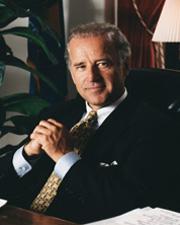
Farewell To The Senate
Mr. President, let me begin by thanking the leaders for their kind comments. It is true that I have been here a long time, I say to my friend from Kentucky. As a matter of fact, I say to my friend from Hawaii, I remember the first time I…
Mr. President, let me begin by thanking the leaders for their kind comments. It is true that I have been here a long time, I say to my friend from Kentucky. As a matter of fact, I say to my friend from Hawaii, I remember the first time I stood on the floor as a Senator of the United States. It was the desk directly to your left, Senator, the top row, second in. It was temporarily my desk. I remember standing and being told that the desk on my right was the desk of Henry Clay and on my left Daniel Webster because the senior Senators from the respective States got those desks. I say to my friend from California, it was the only time I can remember being speechless when I stood there, as a 30-year-old kid, thinking: Oh, my God.
Well, I never thought I would be standing here today. I never believed serving in this Chamber was my destiny, but it always was a big part of my dreams.
I remember vividly the first time I walked in this Chamber, I walked through those doors, but I walked through those doors as a 21-year-old tourist. I had been down visiting some of my friends at Georgetown University. I went to the University of Delaware. I had a blind date with a young lady from a school they used to call Visi Visitation-- which is now part of Georgetown. My good friend, a guy named Dave Walsh, was there. After the evening, staying at his apartment, I got up and--I shouldn't say this probably, but I will--I don't drink. Not for moral reasons, I just never had a drink. There is nothing worse than being a sober guy with a bunch of college guys who have a hangover the next morning.
So I got up and decided to get in the car--this is a true story, Senator Carper--and I drove up to the Capitol. I had always been fascinated with it. In those days, you could literally drive right up to the front steps. I was 21 years old. This was 1963. I say to my friend from Iowa, I drove up to the steps and there had been a rare Saturday session. It had just ended. So I walked up the steps, found myself in front of what we call the elevators, and I walked to the right to the Reception Room. There was no one there. The glass doors, those French doors that lead behind the Chamber, were open. There were no signs then. I just walked
in. Literally, I walked in, and I walked in down here, and I came through those doors. I walked into the Chamber and the lights were still on and I was awestruck, literally awestruck. I don't know what in God's name made me do it, but I walked up, I say to my friend from Arkansas, and I sat in the Presiding Officer's chair. I was mesmerized.
The next thing I know, I feel this hand on my shoulder and the Capitol Policeman picks me up and says: What are you doing? After a few moments he realized I was just a dumbstruck kid. He didn't arrest me or anything. That was the first time I walked onto the Senate floor. It is literally a true story.
By the way, just 9, 10 years later, I walked through those same doors as a Senator. A Capitol Hill policeman stopped me walking in and he said: Do you remember me? I said: No, sir. He said: I welcome you back to the Senate. He was retiring. He used to be a Capitol Hill policeman. He was retiring 2 weeks later. He said: Welcome to the floor, legally.
Well, it is sort of fitting to the way I started my career here. I may not be a young man anymore, but I am still awestruck. I am still awestruck by this Chamber. I think it brings my career full cycle, to know that while I was once detained for sitting in the Presiding Officer's chair, I will now occasionally be detained in the Presiding Officer's chair as Vice President of the United States of America.
The Senate has been my life, and that is not hyperbole; it literally has been my life. I have been a Senator considerably longer than I was alive before I was a Senator. I may be resigning from the Senate today, but I will always be a Senate man. Except for the title ``father,'' there is no title, including Vice President, that I am more proud to wear than that of a Senator of the United States.
When I arrived here, giants--giants--loomed over the landscape of the Senate, people with names such as Danny Inouye, Hubert Humphrey, Ed Muskie, William Fulbright, Jacob Javits, Mike Mansfield, Stuart Symington, Scoop Jackson, Sam Ervin, John McClellan, Warren Magnuson, Claiborne Pell, and a few others who are still here: Bob Byrd, and the lion of the Senate, Ted Kennedy. In those days, chairmen dominated. Literally, as Senator Inouye will remember, if a chairman said he wanted a vote, almost without exception, every other chairman voted with that chairman on a vote on the floor of the Senate in 1973. But the old ways of doing business and the old ways of thinking were, at that very moment in the Senate's history, beginning to change.
As my colleagues know, there is a longstanding tradition in the Senate--I think honored in the breach now more than the rule--but when I got here in 1973, it was mandatory that a new Senator would pay respects to the ``old bulls of the Senate.'' I never dreamed I would be an old bull of the Senate.
I remember the first appointment I made. It was to go see Senator John Stennis, chairman then of the Armed Services Committee. I now have Senator Stennis's office. I remember I walked in--and Senator Stennis had a great and large mahogany conference table that was a gift from the President of the Philippines to Vice President Barkley for the liberation of the Philippines. He used it as his desk. He had a blotter at one end of it. It seated--I don't know how many people it seats--15 people. It was a desk with a group of leather chairs around it.
I walked in--and those who remember John Stennis, he talked at you like this when he talked; he always put his hand up like this--he looked at me and he said: Young man, sit down, sit down. And he patted the leather chair next to him, so I dutifully sat down. He said: Congratulations. He said: May I ask you a question? I said: Yes, sir, Mr. Chairman. He said, What made you run for the Senate? Being tactful, as I always am, I answered honestly without thinking. I said: Civil rights, sir. As soon as I did, I could feel the beads of perspiration pop out on my head, and I thought: Oh, my God. He looked at me and he said--absolutely true story--he said: Good, good, good. That was the end of the conversation. Well, that was 1973.
In 1988, time had transpired; he had become my good friend. We shared a hospital room, a hospital suite at Walter Reed for a number of months. He had lost his leg to cancer. It was during that period when President Bush was coming into office. As the tradition is, as all my colleagues know, you get to choose your offices based on seniority as they come up, as offices come open. I have always thought--we all think our offices are the finest--I always thought of his office, which had been the office of a man whom he never referred to by his first name that I can remember, and the man after whom the Russell Building is named, Chairman Russell. It had been his office.
I walked down to look at his office. It was that period in December when no one was around. The elections were over. I walked in, and I think his secretary of 30 some years--I think her name was Mildred. My memory is not certain on that, but I think her name was Mildred. I walked into the anteroom to his office, and all these boxes were piled up. He was packing up 40-some years of service.
She said: Senator, welcome. Welcome. You all are going to take our office?
I said--I think her name was Mildred: I don't know, Mildred, I am going to check. I said: Is the chairman in?
She said: No, you go right in the office.
I went in the office. Without her knowing it, Senator Stennis had come in through the other door of the hallway and was sitting there in his wheelchair in the same exact spot, with one leg, staring out the window of that office that looks out onto the Supreme Court.
I said: Oh, Mr. Chairman, I apologize. I apologize for interrupting.
He said: No, Joe, come in, sit down, sit down.
I sat down in that chair, and what astounded me, I say to Senator Boxer, is he looked at me and said: Joe, do you remember the first time you came to see me? I hadn't. I told this story about Senator Stennis to my friend from Mississippi before, as he walks on the floor.
He asked me: Do you remember?
I said: No, I don't.
He said: I asked you why you ran for the Senate.
I said: Oh, I remember. I was a smart, young fellow, wasn't I.
He looked at me and said: You all are going to take my office, aren't you, Joe? He caressed that table, the table he loved so much. He caressed it like it was an animate object.
He said: You are going to take my office?
I said: Yes, sir, I am.
He said: I wanted to tell you then in 1973, and I am going to tell you all, this table here was the flagship of the Confederacy.
If you read ``Masters of the Senate'' about Johnson's term, you will see in the middle of the book a picture of the table in my office with the famous old southern segregationist Senators sitting around that table chaired by Senator Russell.
He said: This was the flagship of the Confederacy. Every Tuesday, we gathered here under Senator Russell's direction to plan the demise of the civil rights movement from 1954 to 1968. It is time this table passes from a man who was against civil rights into the hands of a man who is for civil rights.
I found it genuinely, without exaggeration, moving. We talked a few more minutes. I got up and when I got to the door, he turned to me in the wheelchair and said: One more thing, Joe. The civil rights movement did more--more--to free the White man than the Black man.
I looked at him and said: Mr. Chairman, how is that? Probably Thad will only remember as well as I do.
He went like this: It freed my soul; it freed my soul.
Ladies and gentlemen of the Senate, I can tell you that by his own account, John Stennis was personally enlarged by his service in the Senate. That is the power of this institution. Men and women who come to Washington, who come in contact with folks in different parts of the country that we represent, with slightly different cultural backgrounds, different religions, different attitudes about what makes this country great, all races, all religions, and it opens a door for change. I think it opens a door for personal growth, and in that comes the political progress this Nation has made.
I learned that lesson as a very young Senator. I got here in 1973, and one of the people, along with Danny and others on this floor who kept me here, was Mike Mansfield, the majority leader. He used to once a week have us report to his office, which is where the leader's office is on the other side. He really was doing it, in retrospect, to take my pulse, to see how I was doing.
I walked in one day through those doors on the Republican side, and a man who became my friend, Jesse Helms, and his wife Dot--who is still my close friend and I keep in contact with her--I walked through those doors, and Jesse Helms, who came in 1972 with me, was standing in the back excoriating Bob Dole for the Americans with Disabilities Act.
I walked through the floor on my way to my meeting with Senator Mansfield. I walked in and sat down on the other side of his desk. Some of you remember he smoked a pipe a lot of times when he was in his office. He had the pipe in his mouth and looked at me and said: Joe, looks like something is bothering you.
I said: Mr. Leader, I can't believe what I just heard on the floor of the Senate. I can't believe that anyone could be so heartless and care so little about people with disabilities. I tell you, it makes me angry, Mr. Leader.
He said: Joe, what would you say if I told you that 4 years ago, maybe 5, Dot Helms and Jesse Helms were reading, I think the Charlotte Observer, the local newspaper, and they saw a piece in the paper about a young man in braces who was handicapped at an orphanage. He was in his early teens. All the caption said was the young man wanted nothing more for Christmas than to be part of a family.
He said: What would you say if I told you Dot Helms and Jesse Helms adopted that young man as their own child?
I said: I would feel like a fool, an absolute fool.
He said: Well, they did.
He said: Joe, every man and woman sent here is sent here because their State recognizes something decent about them. It is easy to find the part you don't like. I think your job, Joe, is to find out that part that caused him to be sent here.
He said: Joe, never question another man's motive. Question his judgment but never his motive.
I think I can say without fear of contradiction, I have never questioned any one of your motives. I learned that lesson very early at the hands of iron Mike Mansfield who had more character in his little finger than the vast majority of people we know have in their whole bodies.
That advice has guided me, and hopefully well, and I hope it guides this Congress because those who are willing to look for the good in the other guy, the other woman, I think become better people and become better and more able legislators.
This approach allowed me to develop friendships I would never have expected would have occurred. I knew I would be friends with Danny Inouye who came to campaign for me. I knew I could be friends with Ted Kennedy. And I knew I could be friends with Fulbright and Humphrey and Javits, men with whom I shared a common view and a common philosophy. But I never thought--I never thought--I would develop deep personal relationships with men whose positions played an extremely large part in my desire to come to the Senate in the first place to change what they believed in--Eastland, Stennis, Thurmond. All these men became my friends.
As Senator Hatch will remember, I used to go over after every executive session of the Senate Judiciary Committee and go into Jim Eastland's office, which was catercorner, and sit down and he allowed me to ask him a lot of dumb questions as a young kid would want to ask: Who is the most powerful man you ever met, Senator? What is the most significant thing that has ever occurred since you have been here?
On that score, he looked at me and said: Air conditioning.
I said: I beg your pardon?
He said: The most significant thing that happened since I got here was air conditioning.
I thought: Wow, that is kind of strange.
He said: You know, Joe, before we had air conditioning, all that recessed lighting all used to be great big pieces of glass like in showers. He said: Come around May, that Sun--he used to use a little bit of profanity which I will not use for appropriate reasons--that darn Sun would beat down on that dome, hit that glass, act like a magnifying glass and heat up the Chamber, and we would all go home in May and June for the year. Then we put in air conditioning, stayed year round and ruined America.
(Laughter.)
Senator Stennis was my genuine friend. But one of the most unlikely friendships was Strom Thurmond. Some of you knew my relationship with Strom. Did I ever think when I got here I would become friends with Strom Thurmond? He stood for everything--I got started because of civil rights. Yet on his 100th birthday, certainly thereafter, on his death bed I got a phone call from his wife Nancy. She said: I am standing here at the nurse's station, Joe, with the doctor. I just left Strom. He asked me to call you. He wants a favor.
I said: Of course, Nancy, whatever he wants.
She said: He would like you to do his eulogy.
Well, I never thought in my wildest dreams that this place, these walls, the honor that resides, would put me in a position where a man whose career was one of the most interesting in modern American history asked me to do his eulogy. I never worked so hard on a eulogy in my whole life. I think I was completely truthful--truthful to the best of my knowledge.
As I said, he was a man who reflected the ages. He lived in three different ages, three different parts of American history. I remind people, which some will not remember, by the time he resigned, he had the highest percentage of African Americans working in his office as any Senator. He voted for the reauthorization of the Voting Rights Act. He had, in my view, I believe, changed.
This is an incredible place, I say to my colleagues, an incredible place. It has left me with the conviction that personal relationship is the one thing that unlocks the true potential of this place. Every good thing I have seen happen here, every bold step taken in the 36-plus years I have been here, came not from the application of pressure by interest groups but through the maturation of personal relationships.
Pressure groups can and are strong and important advocates, but they are not often vehicles for compromise. A personal relationship is what allows you to go after someone hammer and tongs on one issue and still find common ground on the next. It is the grease that lubricates this incredible system we have. It is what allows you to see the world from another person's perspective and allows them to take the time to see it from yours.
I am sure this has not been my experience alone. In a sense, I am probably preaching to the choir of the very men and women sitting in this Chamber who have experienced similar things.
One of the most moving things I ever saw in my life was on the floor of the Senate. The year was 1977. We were about to adjourn for the year. There was a vote cast, and as we all do, we assembled in the well to vote.
One of my personal heroes, Hubert Humphrey, was literally riddled with cancer. He died very shortly thereafter. He showed up, like Dewey Bartlett of Oklahoma, he showed up every single day knowing he literally had days to live. He walked down this aisle--because I was standing back here. I have been on this back row for years, with my good friend Fritz Hollings for 34 years.
He walked down the aisle, and as he did, Barry Goldwater came through the doors and was coming down the aisle to vote. Barry Goldwater and Hubert Humphrey shared virtually nothing in common philosophically. They had a pretty tough campaign in 1964. It got pretty rough. Barry Goldwater saw Hubert and walked up and gave him a big bear hug. He kissed him and Hubert Humphrey kissed him back. And they stood there in a tight embrace for minutes, both crying. It brought the entire Senate to tears. But to me--to me--it was the mark of a storied history of this place. Hubert loved it here. He once said:
The Senate is a place filled with good will and good
intentions, and if the road to hell is paved with them, then
this is a pretty good detour.
Friendship and death are great equalizers. Death will seek all of us at some point, but we must choose to seek friendship. I believe our ability to work together with people with whom we have real and deep and abiding disagreements, especially in these consequential times, is going to determine whether we succeed in restoring America. I think it is literally that fundamental and basic.
Things have changed a great deal since I first arrived here. There were no women in the Senate. Margaret Chase Smith had just retired and it would be 6 years until the next woman was elected in her own right, and that was Nancy Kassebaum. Today, there are 16 women in the Senate, and we need many more, but that is progress.
Our proceedings in those days were not televised. They didn't have fax machines, let alone e-mail. I remember the fights we used to have in conference about whether we would actually spend money for computers. Remember those fights? Some of the older guys thought: Computers? Why are we going to waste the taxpayers' money and put computers in our offices? I am almost embarrassed to acknowledge that. That makes me a ``pretty old dude,'' as the kids would say.
I often hear Senators lament today that the 24-hour news cycle and the need to go back home every weekend--or in my case every night-- makes it harder than it used to be to get to know one another, to share a meal. Not long after I first was elected, there was an accident in my family, and I didn't want to stay. Senators Humphrey and Kennedy and Mansfield and Hollings, among others, said: Just stay 6 months. It was not unusual in those days for there to be groups of Senators who, with their spouses, would take turns once a month having dinner for the rest of the Senators. Senator Eagleton of Missouri, who recently passed away and was a good friend; Senator Gaylord Nelson and his wife, who was incredible and who has also recently passed away; Senator Hollings; and my friend--and he is my friend--Senator Ted Stevens from Alaska had one of those groups, along with a guy named Saxby from Ohio, who became Attorney General. While I never, ever stayed in Washington, particularly in those days, they insisted I come, and I would go to those dinners. I was a kid, I was single, but they included me. The truth of the matter is, they went a long way toward saving my life, changing my life.
You know, for the first time in 36 years, I am going to have a home in Washington--public housing--and I hope Jill and I can use it to help bring us all together. I hope it can be used to foster deepening relationships. We all are so busy in our own careers it is awfully hard to do it anymore.
I have seen Senators who have come to this institution to attack it-- because that is how they got here, they attacked it. They called it useless and venal. Attitudes such as that, which have been observed in the past, can sometimes become self-fulfilling prophesies. But if you come here with a dedication to hard work, an open mind, some good faith, and to make progress, that, too, can become a self-fulfilling prophecy.
In 1837, Ralph Waldo Emerson, in his Phi Beta Kappa address to Harvard, said:
Meek young men grow up in libraries, believing it their
duty to accept the views which Cicero, which Locke, which
Bacon have given, forgetful that Cicero, Locke, and Bacon
were only young men in libraries when they wrote those books.
I am told today by the Senate Historian that there have been over 1,900 Senators who have served. I have served with more than 320 of them, and I have learned something from every one of them. As a matter of fact, I was also given a piece of discouraging information as well; that only 19 Senators in the history of the United States of America have ever served as long as I have, one of whom is in this Chamber. As I said, I have learned a lot from them, and I can tell you from experience that most of them are only seen as giants in the hindsight of history. At the time, they were legislators trying to do their best.
I look in my desk and I see the names carved in the drawer. Maybe the public doesn't know how much like kids we are. We get here, and we come over here after the Senate is closed and we sit there, somewhat embarrassed, and we actually carve our names in the drawers of the desk, in the bottom. It is a tradition. Maybe there is someone who didn't do it, but I don't know of anyone, even the most sophisticated among us. I look in the desk drawer I have and I see names of famous Delawareans, such as the longest serving family in the history of the State of Delaware--the Bayards. Six have been Senators. But I also see the names of Scoop Jackson and John F. Kennedy and others in my drawer. Look in your desk and you will see names you recognize as well, and you all know them. Forty years from now, when someone opens your desk and looks at your name, will they think of you the way I think of these men? To me, that is a test we each are going to have to meet.
With the gravity of the challenges we face today comes--as every similar moment in our history--the most significant opportunity for change, the most significant opportunity for progress. I firmly believe this, too, can be an era of legends, of giants. But this much I know: Our Nation desperately needs it to be.
During my first term in the Senate, when I spoke out in favor of campaign finance reform at a Democratic caucus--and Senator Inouye may remember this; he was then Secretary of the Senate--the President pro tempore, Jim Eastland, listened intently in what is now called the Mansfield Room. When I got finished with my impassioned speech about the need for public financing, he stood--and he hardly ever spoke at the caucus, as Senator Inouye will remember--and he always wore a glen plaid suit and always had a cigar in his mouth about as big as a rubber hose--and he leaned up at the table in the front--and he never stood completely straight--and he sought recognition and he leaned up, put himself halfway up, took the cigar out of his mouth, and he said:
Joe, they tell me ya'll are the youngest man to ever get
elected to this August body--
I wasn't. There was one younger than me popularly elected, but I didn't dare correct him. He said:
Let me tell you something, Joe: Ya'll make many more
speeches like you did here today, you're going to be the
youngest one-term Senator in the history of the United States
of America.
I walked out of that conference, as I have said to Leader Reid, and walked in here--and we didn't used to have those booths by the phone-- and Warren Magnuson, who also smoked a cigar, pulled out his cigar and said: Biden, come here. Can you imagine calling to a Senator and saying: Come here. He said: Stop this stuff. I didn't work this darned hard--a little different language used--I didn't work this darned hard the past 30 years to have some sniveling little competitor get the same amount of money as me. Stop it. Stop it.
I walked away as politely and as quickly as I could. I never dreamed--I never dreamed--that nearly four decades later I would be elected to a seventh term to the Senate of the United States. Never, ever dreamed it. Thirty-six years ago, the people of Delaware gave me, as they have given you in your States, a rare and sacred opportunity to serve them. As I said, after the accident, I was prepared in 1973 to walk away from that opportunity. But men such as Ted Kennedy and Mike Mansfield and Hubert Humphrey and Fritz Hollings and Dan Inouye convinced me to stay--to stay 6 months, Joe. Remember that? Just stay 6 months. And one of the true giants of the Senate, who thank God is still with us, Robert C. Byrd, without any fanfare, in late December, in a cold, driving rain, drove to Wilmington, DE, stood outside a memorial service at a Catholic Church for my deceased wife and daughter, soaking wet in that cold rain, and never once came to see me, just to show his respect, and then got back in the automobile and drove back to Washington, DC.
This is a remarkable place, gentlemen and ladies. And as I healed, this place became my second family, more than I suspect it is for most. I needed it, and for that I will be forever grateful--forever grateful. So to the people of Delaware, who have given me the honor of serving them, there is no way I can ever express to them how much this meant to me. To my staff, past and present, and all those on the floor,
past and present, dedicated to making this institution run, including the young pages, wide-eyed and hopefully going home and wanting to come back someday in our spots, thank you for everything you have done for me. I suspect you have done for me more than you have done for most.
To my children, Hunter and Ashley and Beau, if I was nothing else, I would be content to be the father of such wonderful people. To my grandchildren, who constantly remind me why the decisions we make in this August body are so important, and to my Jill, you once saved my life, and you are my life today, I thank all of you. I thank all my colleagues for making my Senate service possible and this next chapter in my career in life so hopeful.
I came here to fight for civil rights. In my office now sits that grand conference table that once was used to fight against civil rights, and I leave here today to begin my service to our Nation's first African-American President. The arc of the universe is long, but it does indeed bend toward justice, and the Senate of the United States has been an incredible instrument in assuring that justice.
So although you have not seen the last of me, I say for the last time, and with confidence in all of you, optimism in our future, and a heart with more gratitude than I can express, I yield the floor.
(Applause, Senators rising.)
Thank you very much. You have been one of my closest friends and confidants and you will continue to be, and I appreciate your sentiment.
I would like, if I may, Mr. President, to thank my friend from Utah for his kind comments. We have been buddies for a long time. I hope that continues in my new job.