Extension of Remarks·April 28, 2010·p. E701
← Back to Members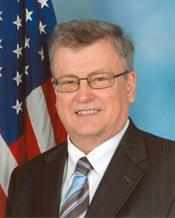
Mark E. Souder
RepublicanHouse
IN - District 3
Service History
111th Congress (2009-2011)House
IN - District 3
2008 General Election
Mark E. Souder: 55.04%+15.34%155,693 votes • Defeated Michael A. Montagano
2008 General Election
Mark E. Souder: 55.04%+15.34%
155,693 votes • Defeated Michael A. Montagano
Mark Edward SouderREP
Winner
155,693 votes(55.04%)
Michael A. MontaganoDEM
112,309 votes(39.7%)
William R. LarsenLIB
14,877 votes(5.26%)
Total votes: 282,879
Jan 2009
to
Dec 2010
110th Congress (2007-2009)House
IN - District 3
2006 General Election
Mark E. Souder: 54.28%+8.57%95,421 votes • Defeated Thomas E. Hayhurst
2006 General Election
Mark E. Souder: 54.28%+8.57%
95,421 votes • Defeated Thomas E. Hayhurst
Mark Edward SouderREP
Winner
95,421 votes(54.28%)
Thomas E. HayhurstDEM
80,357 votes(45.72%)
Total votes: 175,778
Jan 2007
to
Dec 2009
109th Congress (2005-2007)House
IN - District 3
2004 General Election
Mark E. Souder: 69.21%+38.43%171,389 votes • Defeated Maria M. Parra
2004 General Election
Mark E. Souder: 69.21%+38.43%
171,389 votes • Defeated Maria M. Parra
Mark Edward SouderREP
Winner
171,389 votes(69.21%)
Maria M. ParraDEM
76,232 votes(30.79%)
Total votes: 247,621
Jan 2005
to
Dec 2007
108th Congress (2003-2005)House
IN - District 3
2002 General Election
Mark E. Souder: 63.14%+28.69%92,566 votes • Defeated Jay A. Rigdon
2002 General Election
Mark E. Souder: 63.14%+28.69%
92,566 votes • Defeated Jay A. Rigdon
Mark Edward SouderREP
Winner
92,566 votes(63.14%)
Jay A. RigdonDEM
50,509 votes(34.45%)
Michael W. DonlanLIB
3,531 votes(2.41%)
Total votes: 146,606
Jan 2003
to
Dec 2005
107th Congress (2001-2003)House
IN - District 4
2000 General Election
Mark E. Souder: 62.28%+26.88%131,051 votes • Defeated Michael Dewayne Foster
2000 General Election
Mark E. Souder: 62.28%+26.88%
131,051 votes • Defeated Michael Dewayne Foster
Mark Edward SouderREP
Winner
131,051 votes(62.28%)
Michael Dewayne FosterDEM
74,492 votes(35.4%)
Michael W. DonlanLIB
4,887 votes(2.32%)
Total votes: 210,430
Jan 2001
to
Dec 2003
106th Congress (1999-2001)House
IN - District 4
Jan 1999
to
Dec 2001
105th Congress (1997-1999)House
IN - District 4
Jan 1997
to
Dec 1999
104th Congress (1995-1997)House
IN - District 4
Jan 1995
to
Dec 1997
View Full Service History (8 terms)Show Less
8
Terms Served
8
Congresses
4
Safe Wins (>10%)
Committee Assignments
We do not have any committee assignments for this member in our current dataset. Please check back later for updates.
Recent Sponsored Bills
H.R. 4624House111th Congress (2009-2011)
To designate the facility of the United States Postal Service located at 125 Kerr Avenue in Rome City, Indiana, as the "SPC Nicholas Scott Hartge Post Office".
Sponsored by Rep. Mark E. Souder (R-IN)
February 9, 2010
H.R. 4323House111th Congress (2009-2011)
To amend the Internal Revenue Code of 1986 to allow a credit against tax for certain costs relating to compliance with financial regulations.
Sponsored by Rep. Mark E. Souder (R-IN)
December 15, 2009
H.Res. 577House111th Congress (2009-2011)
Recognizing the Nation's orthopedic industry for its continued legacy of innovation in providing devices that relieve the pain of, and restore mobility to, active duty armed service members, veterans, and patients of all ages from all walks of life.
Sponsored by Rep. Mark E. Souder (R-IN)
June 23, 2009
Recent Voting Record
View All Votes →H.Res. 12565/20/2010
Congratulating Phil Mickelson on winning the 2010 Masters golf tournament.
H.Res. 13635/20/2010
Granting the authority provided under clause 4(c)(3) of rule X of the Rules of the House of Representatives to the Committee on Education and Labor for purposes of its investigation into underground coal mining safety.
H.Res. 13635/20/2010
Granting the authority provided under clause 4(c)(3) of rule X of the Rules of the House of Representatives to the Committee on Education and Labor for purposes of its investigation into underground coal mining safety.
Floor Statements
What Mark said on the floor, from the Congressional Record
House Floor·March 20, 2010·p. H1783-H1788
Cold War Veterans Recognition Day
House Floor·March 20, 2010·p. H1788-H1793