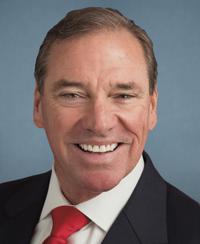
Recognizing Colonel Robert W. Rust
Mr. Speaker, I rise today to recognize Colonel Robert W. Rust, whose actions helped prevent an assassination attempt on President John F. Kennedy before he took the oath of office. Colonel Rust passed away on September 1, 2024, in Florida…
Mr. Speaker, I rise today to recognize Colonel Robert W. Rust, whose actions helped prevent an assassination attempt on President John F. Kennedy before he took the oath of office.
Colonel Rust passed away on September 1, 2024, in Florida at the age of 96. He was laid to rest at Arlington National Cemetery in March of 2025.
Colonel Rust had a long career in public service and law enforcement, serving as a Marine Patrol Officer for the City of Miami; Assistant U.S. Attorney for the Department of Justice for the Southern District of Florida; Chief Assistant County Prosecutor; State Representative for the Palm Beach and Martin Counties in the Florida House of Representatives; and U.S. Attorney for the Department of Justice for the Southern District of Florida from 1969 to 1977 before returning to privately practice law until his retirement in 1989. These are only a few of his many accomplishments and positions over his long life.
In December 1960, during his time as Assistant U.S. Attorney for the Department of Justice, he used his authority to protect the then President-Elect John Fitzgerald Kennedy by intercepting the attempted assassin Richard Paul Pavlick.
After his Presidential win, Kennedy vacationed at his family's estate in Palm Beach, Florida. Richard Pavlick followed Kennedy from New England to Florida, planning to carry out a suicide car bombing targeting the 35th President. Pavlick waited for an opportunity when Kennedy would not be with his wife, Jacqueline, and their two young children.
Acting on a tip from Postmaster Thomas Murphy of Belmont, New Hampshire, Assistant U.S. Attorney Robert Rust and John Marshall, Agent in Charge of the Secret Service for South Florida, intercepted Pavlick after he was detained by Palm Beach motorcycle police officer Lester Free for a traffic infraction. Agent Marshall persuaded Pavlick to sign a consent-to-search form, which led to the discovery that his car was filled with dynamite. Rust had traced Pavlick's purchase of the dynamite to New Hampshire, uncovering that Pavlick had followed President-elect Kennedy to Florida with the intent to assassinate him.
Assistant U.S. Attorney Rust subsequently charged Pavlick federally with attempting to bomb a church, which had recently become a federal crime. At that time, it was not yet a federal crime to murder or threaten a President or President-elect; previous assassinations had been prosecuted only under state law. Rust and Marshall also persuaded Pavlick to sign a consent form to search his motel room. After obtaining his signed consent, they discovered a manifesto detailing his intent to assassinate Kennedy.
Around this time, the Secret Service detail assigned to Kennedy's Florida visit checked into a hotel across the street. Kennedy was scheduled to arrive in Palm Beach the following day. Rust and Marshall then walked the handcuffed Pavlick over to the Secret Service. Pavlick was ultimately committed to an institution after it was determined that he had a history of mental illness.
This attempt on President Kennedy's life is often overlooked due to an airline accident that occurred the same day and, of course, because of his tragic death nearly three years later.
Rust received the Secret Service Treasury Department Award of Merit in 1964, as well as a letter of commendation from U.S. Secret Service Chief U.E. Baughman.
In 1961, at the beginning of the 87th Congress, Public Law 87-829 was introduced and passed the following year, extending Secret Service protection to include Presidents-elect, Vice Presidents-elect, former presidents, and their families--considering the threat the previous December.
Without Colonel Rust's efforts, Pavlick could have inflicted great harm on the future President and innocent Americans around him, I am proud to honor his legacy with these remarks today.