House Floor·December 20, 2012·p. H7415
← Back to Members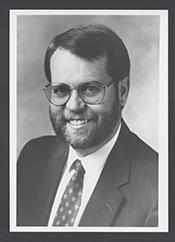
Steven C. LaTourette
RepublicanHouse
OH - District 14
Service History
112th Congress (2011-2013)House
OH - District 14
2010 General Election
Steven C. LaTourette: 64.92%+33.47%149,878 votes • Defeated William Michael O'Neill
2010 General Election
Steven C. LaTourette: 64.92%+33.47%
149,878 votes • Defeated William Michael O'Neill
Steven C. LaTouretteREP
Winner
149,878 votes(64.92%)
William Michael O'NeillDEM
72,604 votes(31.45%)
John M. JelenicLIB
8,383 votes(3.63%)
Total votes: 230,865
Jan 2011
to
Dec 2013
111th Congress (2009-2011)House
OH - District 14
2008 General Election
Steven C. LaTourette: 58.32%+19.58%188,488 votes • Defeated William Michael O'Neill
2008 General Election
Steven C. LaTourette: 58.32%+19.58%
188,488 votes • Defeated William Michael O'Neill
Steven C. LaTouretteREP
Winner
188,488 votes(58.32%)
William Michael O'NeillDEM
125,214 votes(38.74%)
David MackoLIB
9,511 votes(2.94%)
Total votes: 323,213
Jan 2009
to
Dec 2011
110th Congress (2007-2009)House
OH - District 14
2006 General Election
Steven C. LaTourette: 57.55%+18.5%144,069 votes • Defeated Lewis R. Katz
2006 General Election
Steven C. LaTourette: 57.55%+18.5%
144,069 votes • Defeated Lewis R. Katz
Steven C. LaTouretteREP
Winner
144,069 votes(57.55%)
Lewis R. KatzDEM
97,753 votes(39.05%)
Werner J. LangeN
8,500 votes(3.4%)
Total votes: 250,322
Jan 2007
to
Dec 2009
109th Congress (2005-2007)House
OH - District 14
2004 General Election
Steven C. LaTourette: 62.75%+25.5%201,652 votes • Defeated Capri S. Cafaro
2004 General Election
Steven C. LaTourette: 62.75%+25.5%
201,652 votes • Defeated Capri S. Cafaro
Steven C. LaTouretteREP
Winner
201,652 votes(62.75%)
Capri S. CafaroDEM
119,714 votes(37.25%)
Total votes: 321,366
Jan 2005
to
Dec 2007
108th Congress (2003-2005)House
OH - District 14
2002 General Election
Steven C. LaTourette: 72.12%+44.3%134,413 votes • Defeated Dale Virgil Blanchard
2002 General Election
Steven C. LaTourette: 72.12%+44.3%
134,413 votes • Defeated Dale Virgil Blanchard
Steven C. LaTouretteREP
Winner
134,413 votes(72.12%)
Dale Virgil BlanchardDEM
51,846 votes(27.82%)
Sidney J. StoneIND
113 votes(0.06%)
Total votes: 186,372
Jan 2003
to
Dec 2005
107th Congress (2001-2003)House
OH - District 19
2000 General Election
Steven C. LaTourette: 64.81%+32.87%206,639 votes • Defeated Dale Virgil Blanchard
2000 General Election
Steven C. LaTourette: 64.81%+32.87%
206,639 votes • Defeated Dale Virgil Blanchard
Steven C. LaTouretteREP
Winner
206,639 votes(64.81%)
Dale Virgil BlanchardDEM
101,842 votes(31.94%)
Sidney J. StoneLIB
10,367 votes(3.25%)
Total votes: 318,848
Jan 2001
to
Dec 2003
106th Congress (1999-2001)House
OH - District 19
Jan 1999
to
Dec 2001
105th Congress (1997-1999)House
OH - District 19
Jan 1997
to
Dec 1999
104th Congress (1995-1997)House
OH - District 19
Jan 1995
to
Dec 1997
View Full Service History (9 terms)Show Less
9
Terms Served
9
Congresses
6
Safe Wins (>10%)
Committee Assignments
We do not have any committee assignments for this member in our current dataset. Please check back later for updates.
Recent Sponsored Bills
H.R. 4934House112th Congress (2011-2013)
To extend the temporary suspension of duty on 4,8-Dicyclohexyl -6-2,10-dimethyl -12H-dibenzo[d,g][1,3,2]- dioxaphosphocin.
Sponsored by Rep. Steven C. LaTourette (R-OH)
April 26, 2012
H.R. 4946House112th Congress (2011-2013)
To suspend temporarily the duty on Benzene, polypropene derivatives.
Sponsored by Rep. Steven C. LaTourette (R-OH)
April 26, 2012
H.R. 4945House112th Congress (2011-2013)
To suspend temporarily the duty on D-Galacto-D-mannan.
Sponsored by Rep. Steven C. LaTourette (R-OH)
April 26, 2012
Recent Voting Record
View All Votes →H.Res. 8441/1/2013
Providing for consideration of the Senate amendments to the bill (H.R. 8) to extend certain tax relief provisions enacted in 2001 and 2003, and to provide for expedited consideration of a bill providing for comprehensive tax reform, and for other purposes.
H.R. 67261/1/2013
Congressional Pay Freeze and Fiscal Responsibility Act
H.R. 81/1/2013
American Taxpayer Relief Act of 2012
Floor Statements
What Steven said on the floor, from the Congressional Record
House Floor·December 20, 2012·p. H7415
Hour Of Meeting On Tomorrow
House Floor·December 11, 2012·p. H6683-H6684